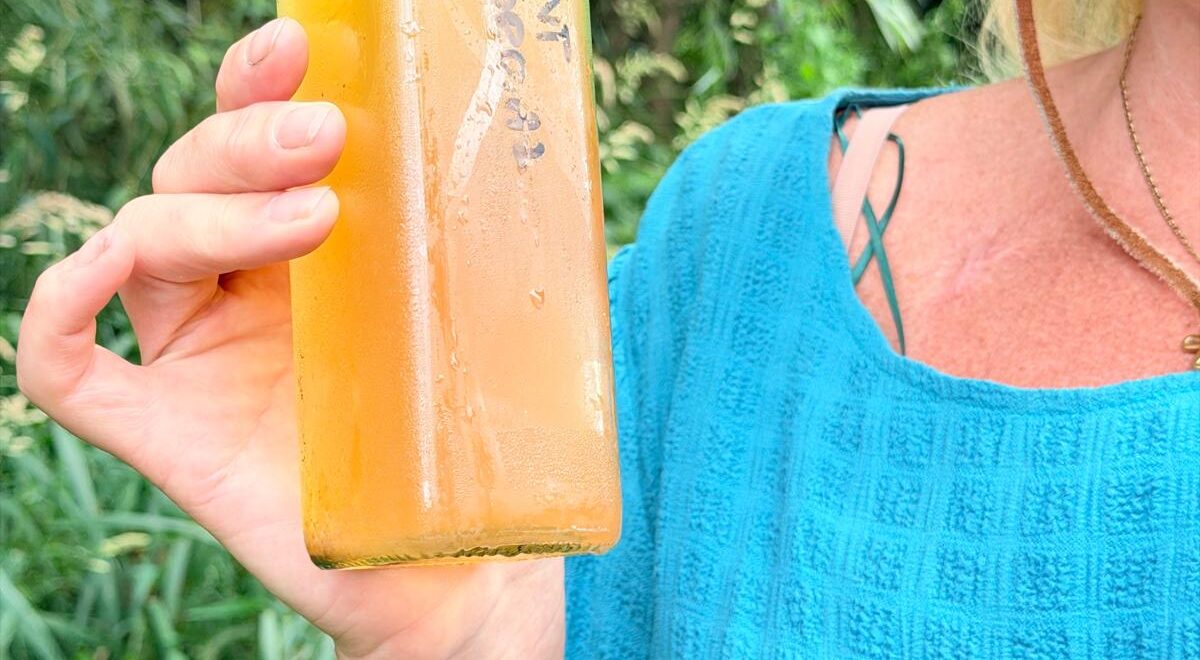

A fresh, intensely minty cordial made using the whole above-ground plant
Water Mint cordial is a wonderfully refreshing way to capture the strong flavour of this aromatic wild plant. Unlike our delicate flower cordials, where we avoid boiling the flowers, this recipe uses a different method: the whole above-ground plant — stems, leaves and seeds where present — is cooked in water to extract as much flavour as possible.
The stems are not wasted. We simmer the plant until they soften, then squeeze the cooked material firmly to release the remaining minty liquid before finishing the drink as a cordial.
And, as always with our cordials, the aim is not to drown the wild flavour in sugar. Add only enough sweetness to balance the acidity and bring the Water Mint flavour alive.
🌿 Forage for
Water Mint (Mentha aquatica)
Use the whole clean above-ground plant:
- Leaves
- Stems
- Flowering tops
- Seeds or seed heads when present
Choose strongly aromatic plants — gently rub a leaf and look for that unmistakable mint scent.
📅 Foraging Time
Late spring through autumn.
The flavour will change slightly through the season:
- Younger growth gives a fresher flavour
- Flowering plants can be highly aromatic
- Later-season plants allow you to use mature stems and seed heads
📍 Foraging Site
Commonly found around:
- Pond margins
- Stream edges
- Riverbanks
- Wet ditches
- Marshy ground
- Damp meadows
Only gather from clean, unpolluted water environments.
⏳ Patience Required
⭐⭐ (Easy) – simple cooking, squeezing and finishing
🧺 Ingredients
- Plenty of fresh Water Mint — whole above-ground plant, including leaves and stems
- Water
- Fresh lemon juice or sliced unwaxed lemons
- Citric acid
- Granulated sugar — added gradually and only to taste
There is deliberately no large fixed amount of sugar. The quantity depends on the strength of your mint extraction and the acidity from the lemon and citric acid.
👩🍳 To Do
- Gather your Water Mint
Collect fresh, strongly aromatic Water Mint from a clean site. Use the leaves, stems and flowering or seed heads where present. - Wash thoroughly
Because Water Mint grows in wet habitats, wash it particularly carefully in clean water. - Place the whole plant into a large pan
Add the stems, leaves and seed heads. Do not discard the stems — they still contain flavour. - Add water
Add enough water to cover the plant material. Do not use more water than necessary, as too much will dilute the finished cordial. - Add lemon and citric acid
Add enough lemon and citric acid to brighten the flavour. Taste as you go. - Bring to the boil
Unlike delicate Elderflower or Meadowsweet cordial, this recipe benefits from cooking. Bring the Water Mint and water to the boil. - Simmer until the stems soften
Reduce the heat and continue simmering. Give the tougher stems time to soften and release their flavour. - Cook a little longer if needed
Check the stems. If they are still firm, continue simmering until the plant material is thoroughly softened. - Strain
Pour the mixture through a colander, fine sieve or muslin, collecting all of the beautifully aromatic liquid. - Squeeze firmly
This is an important part of the recipe. Once cool enough to handle safely, press and squeeze the softened plant material firmly to extract the mint-rich liquid still trapped inside the stems and leaves. Don’t waste that flavour! - Return the liquid to the pan
Pour the strained and squeezed Water Mint infusion back into a clean saucepan. - Heat gently
Begin reheating the liquid. - Add sugar gradually
Add a little sugar, stir until dissolved, then taste. - Keep tasting
Add only enough sugar to soften the acidity and help the mint flavour come forward. Do not overdo the sugar. - Stop when the Water Mint flavour kicks in
The finished cordial should taste unmistakably fresh and minty — not like sugar water with a hint of mint. - Bottle
Pour hot into clean, sterilised bottles and seal appropriately. For longer storage sterilize afterwards.
🍽️ Serving Suggestions
- Dilute with very cold still water
- Add sparkling water and plenty of ice
- Serve with fresh lemon
- Add cucumber slices
- Mix into summer mocktails
- Use in cocktails
- Add to iced tea
- Freeze into ice cubes
- Drizzle lightly over fruit salad
- Mix with apple juice for a fresh wild drink
💪 Nutritional Benefits
Mints have a long history of traditional use, particularly in preparations associated with:
- Digestion
- Bloating
- Refreshment
- Cooling drinks
- Aromatic herbal infusions
Water Mint contains aromatic oils responsible for its characteristic scent and flavour.
However, cordial should be enjoyed as a food and drink rather than treated as a medicine.
⚠️ Safety & Foraging Note
Always ensure correct identification before consuming any wild plant.
Water Mint grows in wet habitats, so site selection is especially important. Avoid gathering from:
- Polluted waterways
- Stagnant or foul-smelling water
- Areas downstream of sewage discharge
- Agricultural runoff zones
- Heavily contaminated urban ditches
Wash gathered plants thoroughly before use.
Take care around water. Do not enter deep water, unstable banks or fast-flowing streams to gather plants.
Harvest responsibly, taking only part of a healthy patch and leaving plenty for wildlife and continued growth.
Because this recipe deliberately uses less sugar than many conventional cordials, do not rely on sugar alone as a preservative. Keep refrigerated and consume promptly, or freeze for longer storage.
🌿 Join a Foraging Course
Water Mint is a wonderful example of how familiar flavours can be found growing wild — and how different plants need different preparation methods to capture their best qualities.
If you’d like to learn more about edible plants, trees, flowers and fungi safely and practically, join one of our foraging courses: