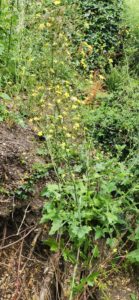
A delicate woodland relative of lettuce with small yellow flowers and a preference for shady walls
Wall Lettuce is a graceful but often overlooked wild plant found in shady woodlands, hedge banks and, as its name suggests, growing around old walls. A member of the daisy family, it is related to lettuces and produces a loose, branching display of tiny yellow flower heads.
For foragers, the young leaves are of interest as a wild green, although they become increasingly bitter as the plant matures. It is also a lovely plant for learning identification, particularly because its small flowers have a very distinctive feature: each flower head typically contains only five yellow florets.
🌳 Habitat
Commonly found in:
- Shady woodland
- Woodland edges
- Hedge banks
- Old walls and ruins
- Shaded lanes and paths
- Rocky banks
- Damp, sheltered places
Wall Lettuce generally prefers shade or partial shade and is often associated with woodland conditions rather than open sunny ground.
🔍 Identification Features
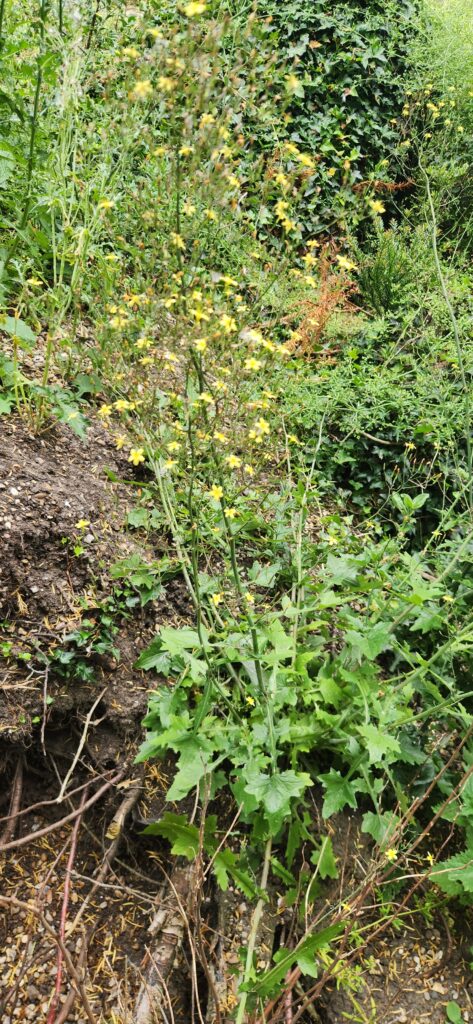
- Slender, upright plant, often around 30–100 cm tall
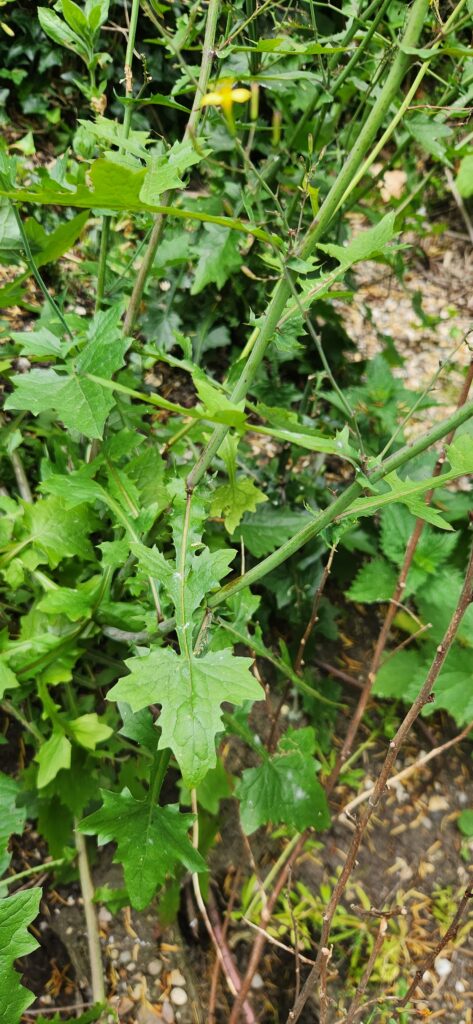
- Lower leaves are deeply lobed
- Leaves often have a larger triangular terminal lobe
- Smaller side lobes point backwards towards the leaf base
- Upper leaves become smaller and less divided
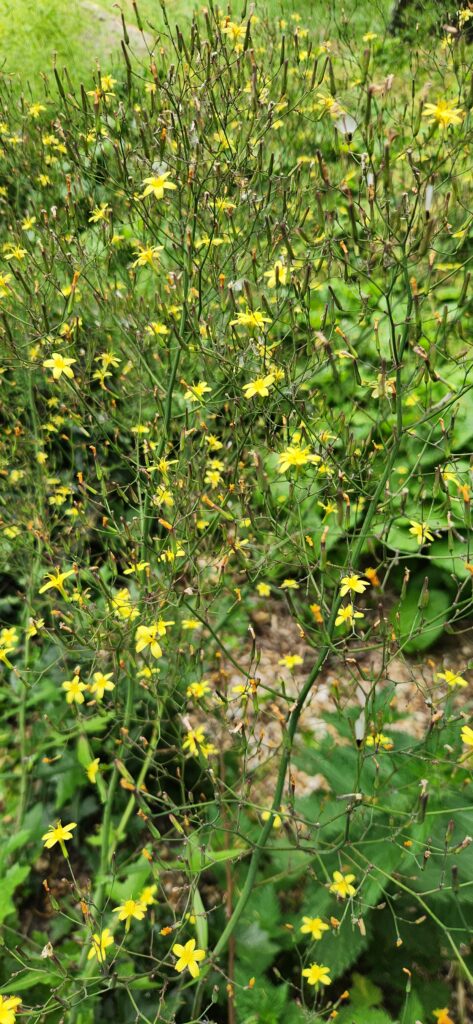
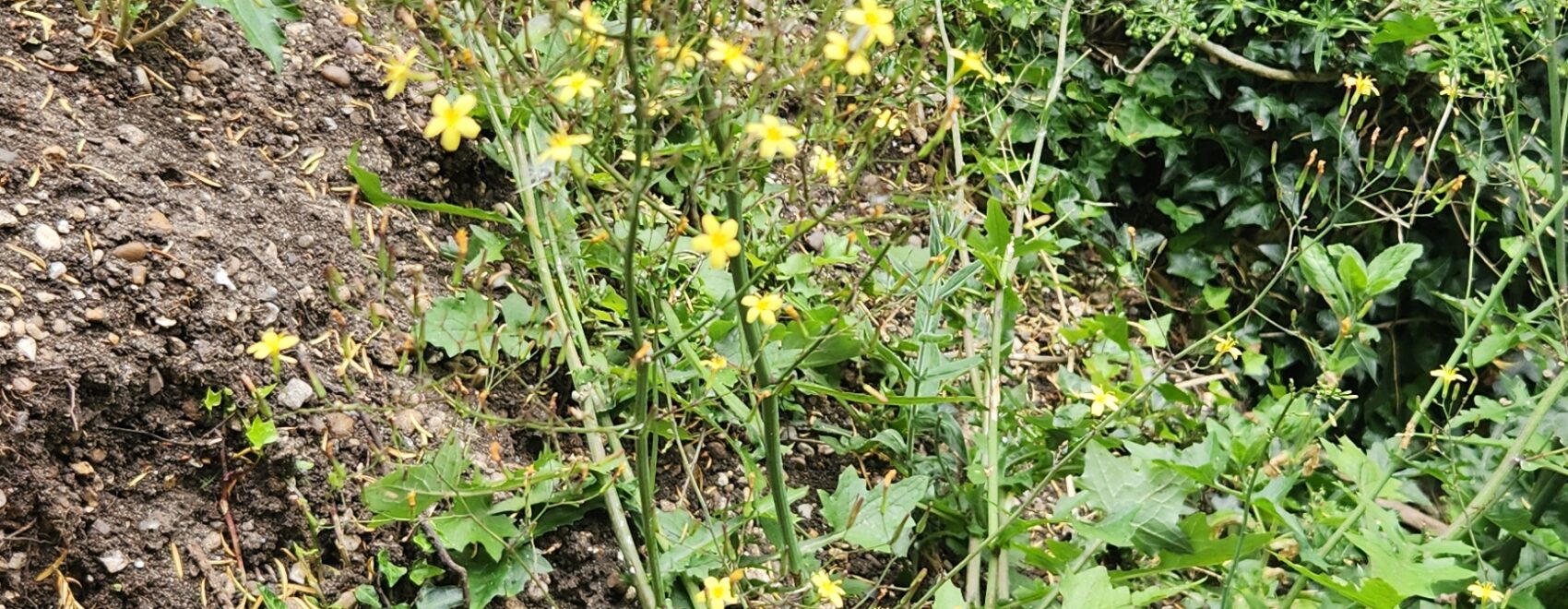
- Thin, branching stems
- Small yellow flower heads held in loose, airy clusters
- Each flower head typically has just five yellow florets
- Produces a white milky sap when damaged
The combination of deeply lobed leaves, delicate branching habit and tiny five-floreted yellow flower heads is particularly useful for identification.
⚠️ Lookalikes
- Prickly Lettuce (Lactuca serriola) – usually found in sunnier, more disturbed habitats and has distinctive prickles along the underside of the leaf midrib
- Smooth Sow-thistle (Sonchus oleraceus) – generally more robust, with larger yellow flower heads
- Nipplewort (Lapsana communis) – another common woodland plant with small yellow flowers, but with differently shaped leaves and flower heads
- Other wild lettuces and yellow-flowered members of the daisy family
Pay particular attention to the five-floreted flower heads, leaf shape and shady habitat.
🍴 Edibility
Young leaves are edible and can be used:
- Raw in small quantities
- Mixed into salads with milder greens
- Cooked as a green vegetable
- Added to soups
- Wilted into savoury dishes
The flavour is generally mild to slightly bitter when young but becomes noticeably more bitter as the plant matures.
For the best texture and flavour, gather young leaves before flowering.
🌿 Ecology & Traditional Uses
Wall Lettuce is primarily a plant of shaded and semi-shaded habitats and can be an attractive feature of woodland edges and old stone structures.
Its delicate yellow flowers are visited by small insects, while its ability to grow in cracks, banks and shaded walls makes it a good example of how plants adapt to very specific habitats.
As a wild relative of lettuce, it also provides an interesting opportunity to explore the relationship between familiar cultivated vegetables and their wild relatives.
Unlike some other wild lettuces, Wall Lettuce is not particularly famous as a major traditional medicinal herb, and its value is better understood as an edible wild green and ecologically interesting woodland plant.
📅 Season
- Young leaves: Spring to early summer
- Flowers: Summer into early autumn
- Seeds: Late summer to autumn
Young spring growth is generally the best stage for culinary use.
⚠️ Health Warning
Always ensure correct identification before consuming any wild plant.
Wall Lettuce produces a milky latex and can become increasingly bitter as it matures. Try only a small quantity initially, particularly if you have not eaten it before.
Avoid harvesting from old walls that may have been treated with chemicals, sprayed areas, polluted roadsides or contaminated urban ground.
As with all wild greens, consume as part of a varied diet rather than in excessive quantities.
🌿 Join a Foraging Course
Wall Lettuce is a wonderful example of a plant that many people walk past without noticing. Once you learn its delicate branching shape and tiny five-floreted flowers, it becomes a fascinating addition to your wild plant knowledge.
Not sure about plant identification? Join us for the next foraging event in Charnwood, Leicestershire.