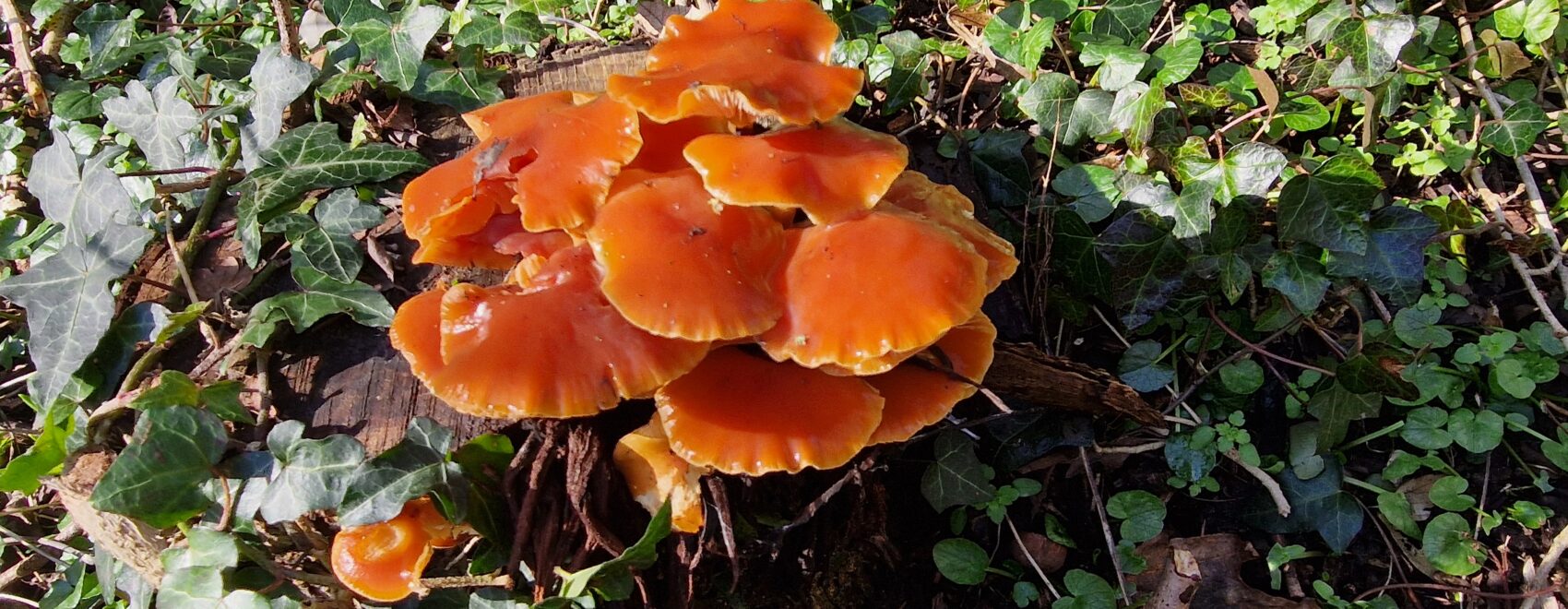
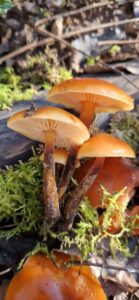
The Edible Velvet Shank (Flammulina velutipes) is a popular winter foraging mushroom, prized for its ability to thrive in cold temperatures and its rich, slightly sweet flavor. Cook before consumtion. However, it bears a resemblance to the highly toxic Funeral Bell (Galerina marginata), making correct identification essential for safe consumption.
Other Names:
- Winter Mushroom
- Enokitake (cultivated form)
Not sure about mushroom identification? Join us for the next foraging event in Charnwood, Leicestershire.
Habitat
The Velvet Shank is commonly found on decaying hardwood, particularly elm, oak, and ash. It prefers cooler temperatures, often appearing from late autumn to early spring, even when frost is present. This species typically grows in clusters on logs, stumps, or fallen branches, making it a valuable winter mushroom when few other fungi are available.
The Funeral Bell, however, grows in similar habitats—on decaying wood—but can also be found on coniferous trees. This overlap in habitat underscores the importance of cautious identification.
Identification Features
Velvet Shank (Flammulina velutipes)
- Cap: Smooth, orange to amber-brown, slightly sticky when wet, 2–10 cm in diameter.
- Gills: Pale yellow to white, attached or slightly decurrent.
- Stem: Velvety texture, dark brown to black at the base, often curving.
- Spore Print: White.
- Smell and Taste: Mild and pleasant.
Lookalike: Funeral Bell (Galerina marginata) – Highly Toxic
- Cap: Light brown to cinnamon-brown, smooth, 1.5–5 cm in diameter.
- Gills: Rusty brown, crowded.
- Stem: Smooth, tan to brown, often with a ring.
- Spore Print: Rusty brown.
- Smell and Taste: No distinctive odor, but highly toxic if consumed.
Edibility
The Velvet Shank is edible and delicious, often used in soups, stir-fries, and ramen. Its cultivated form, Enokitake, is widely available in grocery stores. However, due to the risk of confusing it with the deadly Funeral Bell, careful identification is crucial. Do not consume any wild mushrooms unless you are 100% certain of their identity.
Recipes:
Ecological Role
As a saprotrophic fungus, the Velvet Shank helps decompose dead wood, recycling nutrients back into the ecosystem. Its ability to thrive in cold conditions makes it an essential part of winter forest biodiversity.
Foraging Season
- Velvet Shank: Late autumn to early spring, often appearing after frost.
- Funeral Bell: Late summer to autumn, but can persist into colder months.
Health Warning
While the Velvet Shank is edible, misidentification with the deadly Funeral Bell can be fatal. The Funeral Bell contains amatoxins, which cause severe liver and kidney damage, often leading to death. Always consult an expert before consuming wild mushrooms.
Join Our Foraging Events!
Explore the fascinating world of fungi with expert guidance. Whether you’re new to foraging or an experienced enthusiast, our guided walks in Charnwood, Leicestershire, provide a safe and educational experience.
Stay safe, forage responsibly, and enjoy the beauty of nature!


