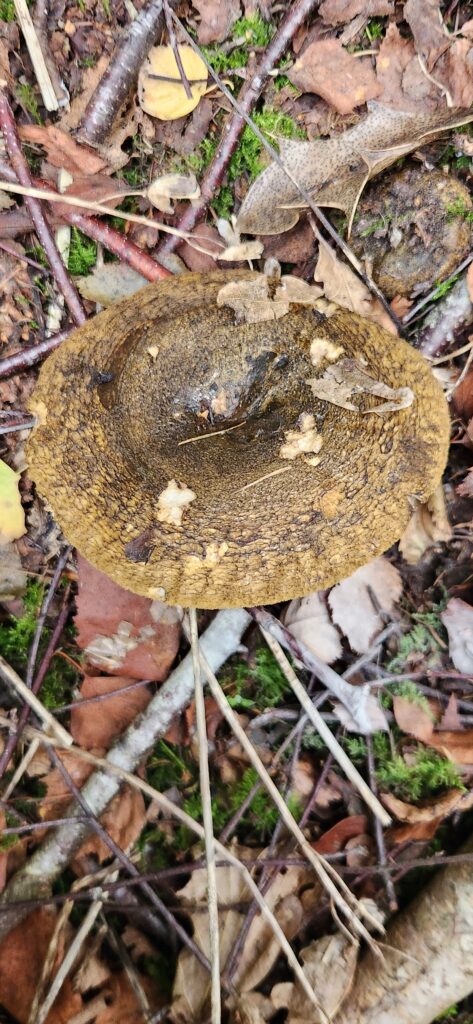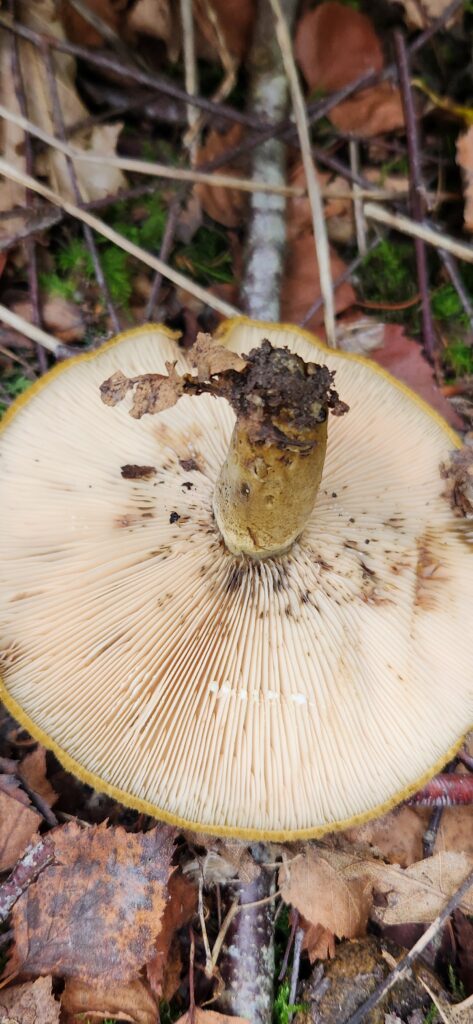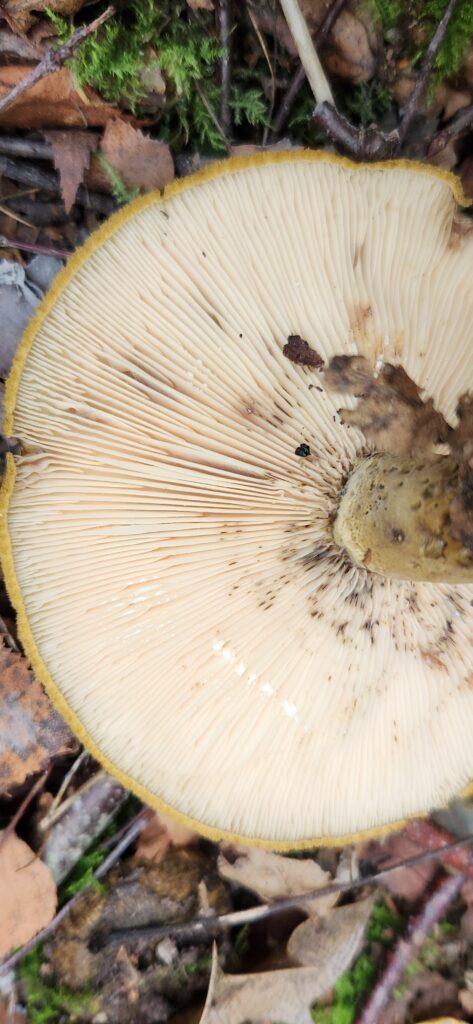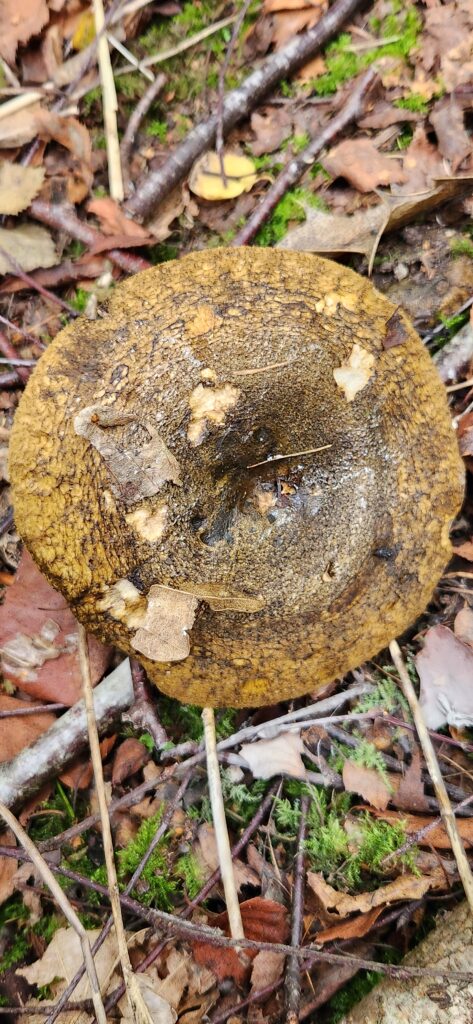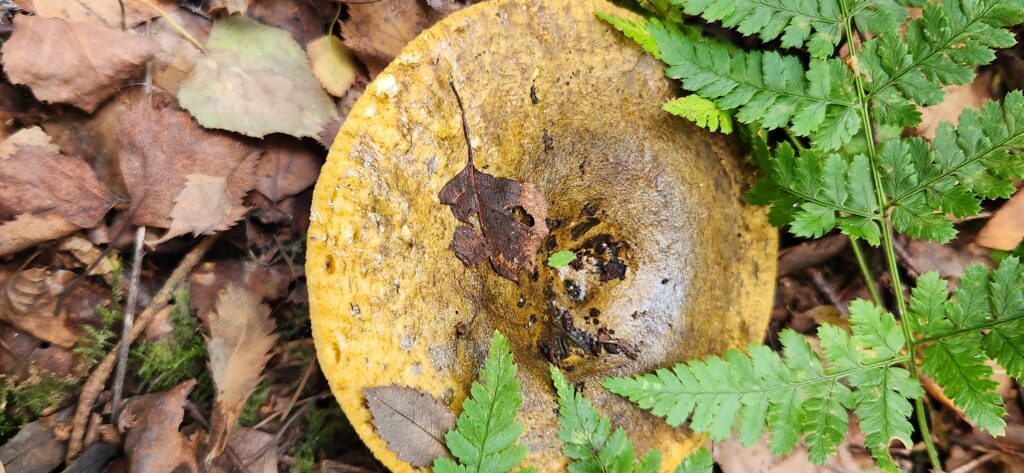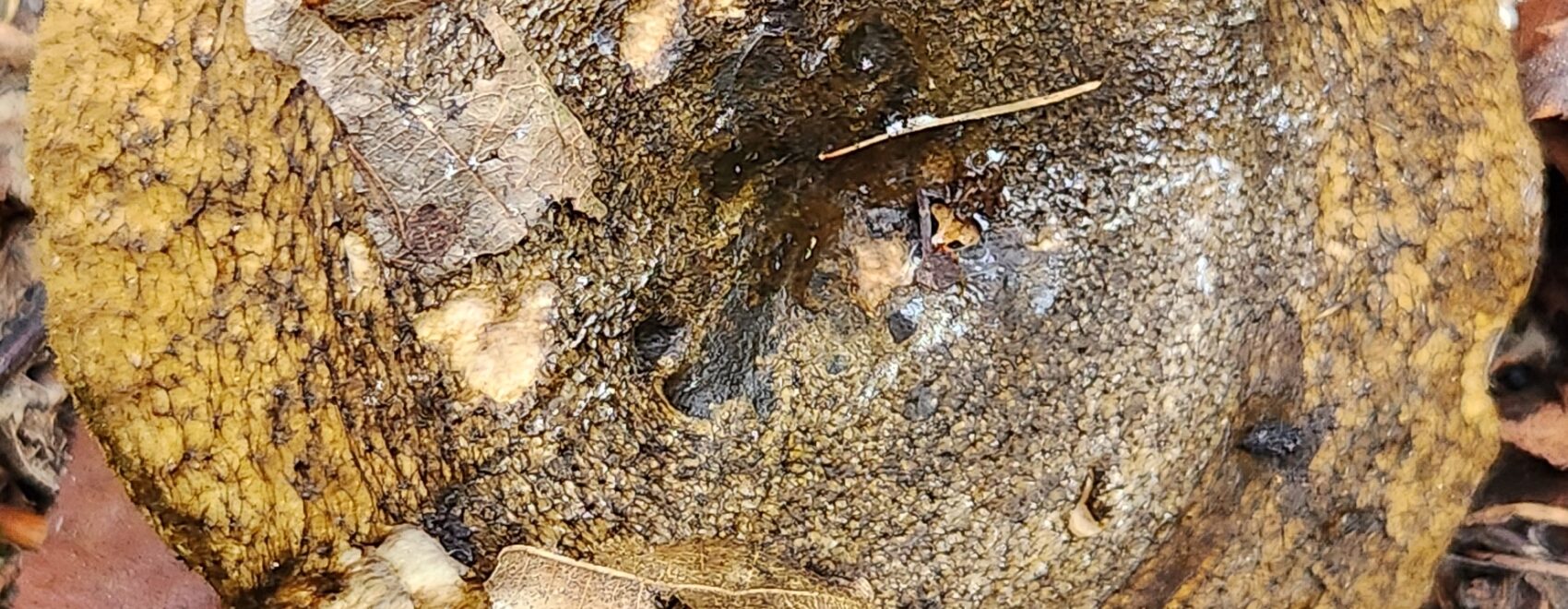

A distinctive, dark-capped milkcap easily recognised by its sticky, olive-brown surface and strong smell.
Other names: Sooty Milkcap, Dirty Milkcap
Not sure about mushroom identification? Join us for the next foraging event in Charnwood, Leicestershire.
Habitat
The Ugly Milkcap is commonly found in damp woodlands, especially among birch and conifer trees. It often grows in groups on mossy or acidic soil, and can appear in both deciduous and mixed forests.
Identification Features
Cap: 6–15 cm across, convex when young, flattening and often developing a shallow depression in the centre. The cap is dark olive-brown to blackish, sticky when wet, and often collects leaf litter.
Gills: Crowded and creamy-white, turning yellowish or brown with age. When damaged, they exude a white, milky latex that slowly turns yellowish.
Stem: Short and stout, matching the cap colour but slightly paler; surface sometimes roughened or spotted.
Smell: Slightly unpleasant, sometimes described as earthy or fishy.
Texture: Firm and brittle.
Spore Print: Cream to pale yellow.
Edibility
Although sometimes eaten in parts of Eastern Europe after extensive soaking or pickling, the Ugly Milkcap is not recommended for consumption in the UK. It can cause gastrointestinal upset and has an unpleasant taste if prepared incorrectly.
Foraging Season
Fruits from late summer through autumn (August to November), particularly after wet weather.
Health Warning
Not recommended for eating. This species can cause stomach irritation and is easily confused with other toxic milkcaps. Always ensure positive identification before handling or consuming any wild mushrooms.
Join us for a foraging adventure in Charnwood, Leicestershire! Whether you’re a beginner or a seasoned forager, our events are a great way to learn about and identify edible fungi in their natural habitat.