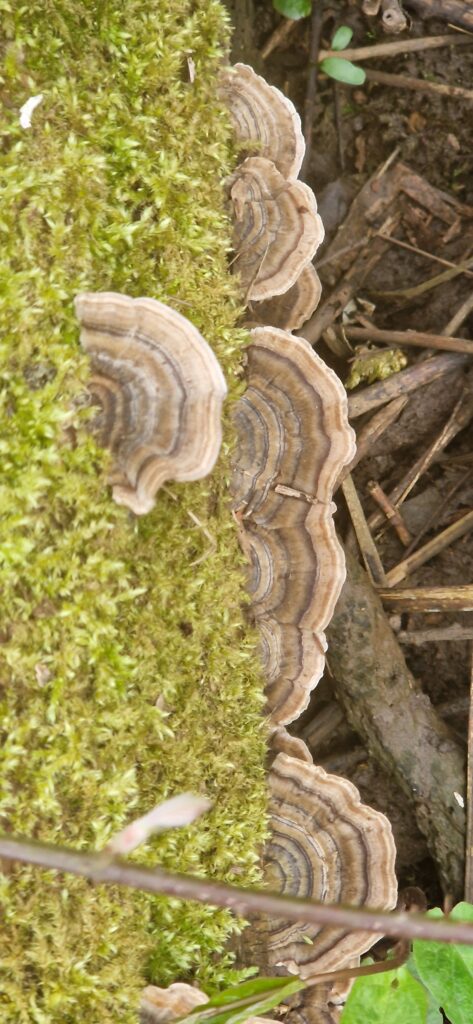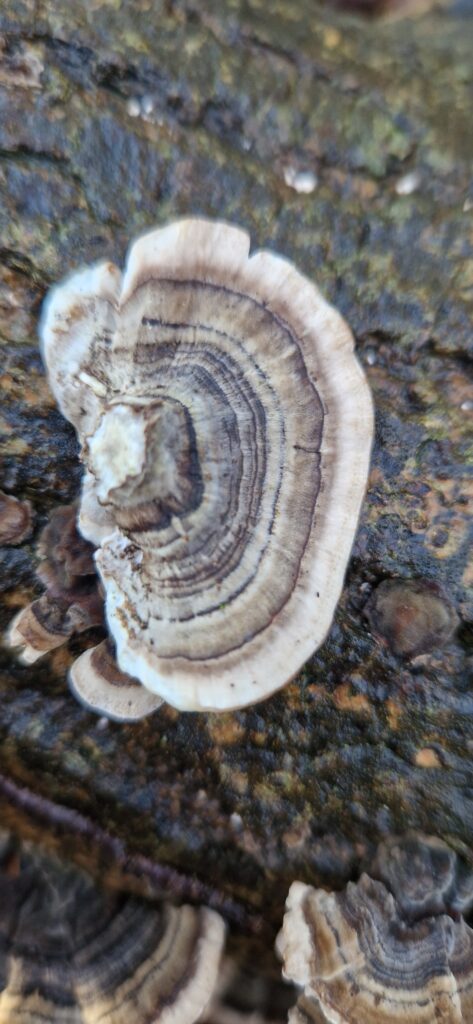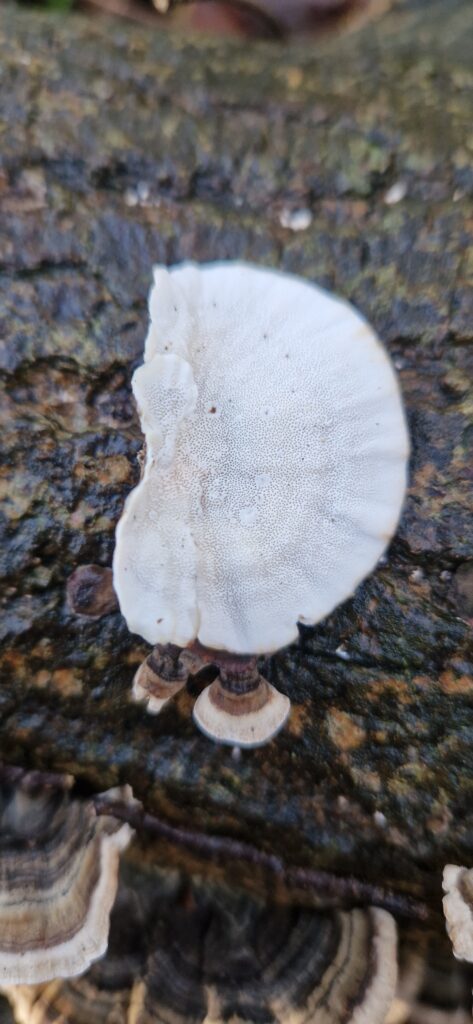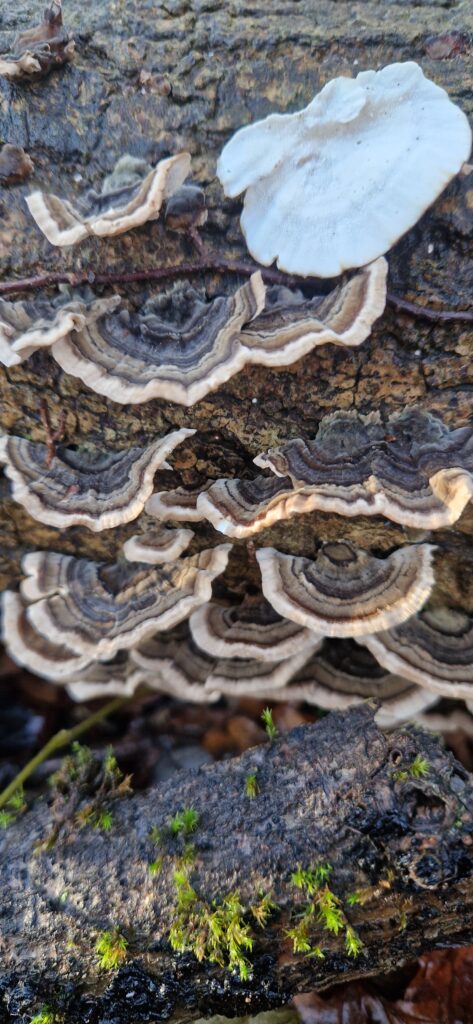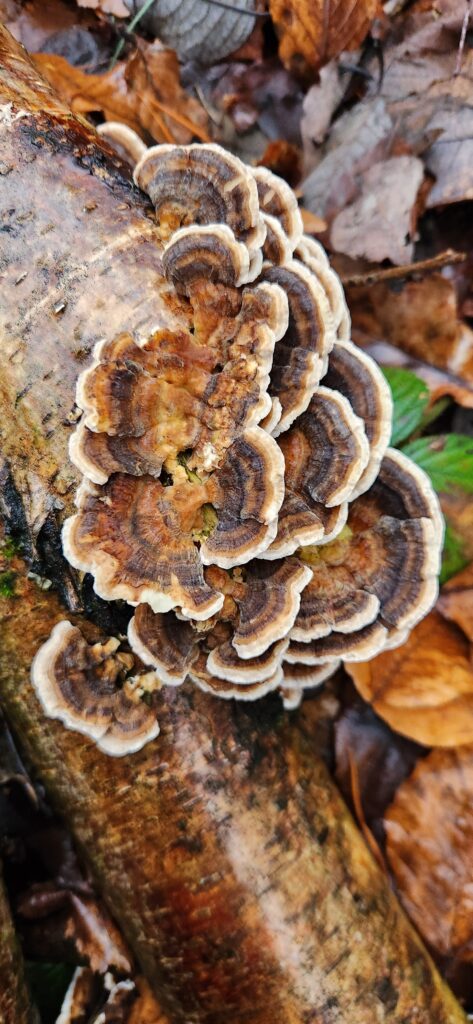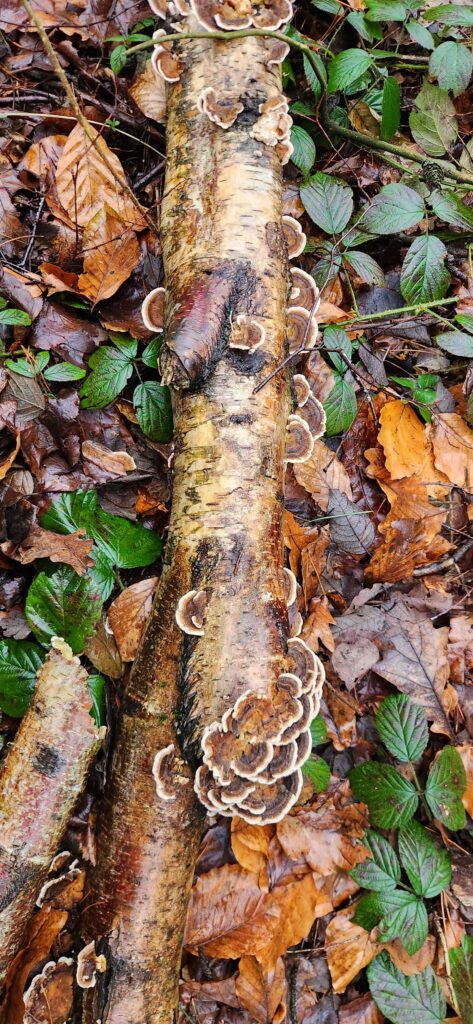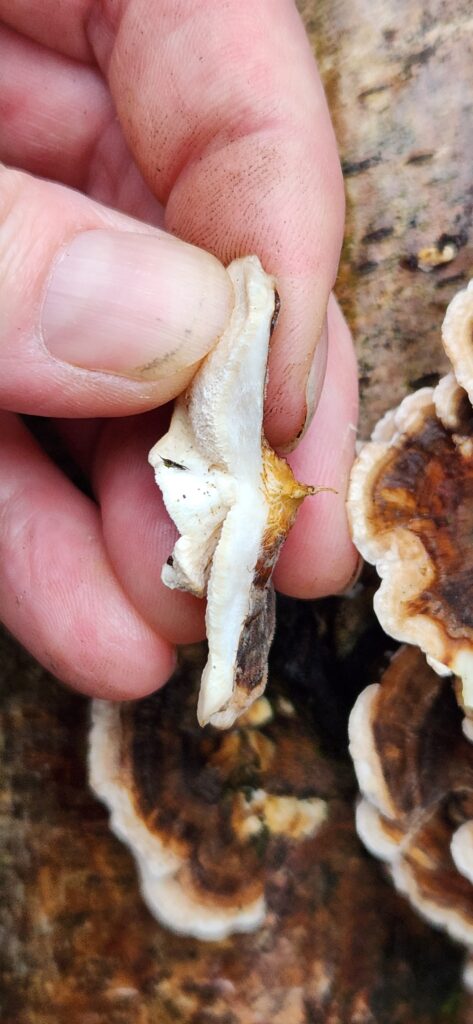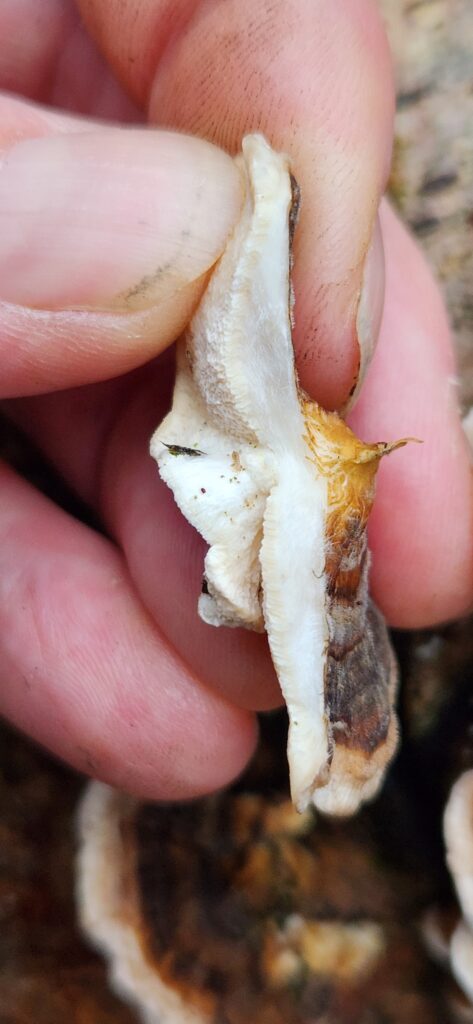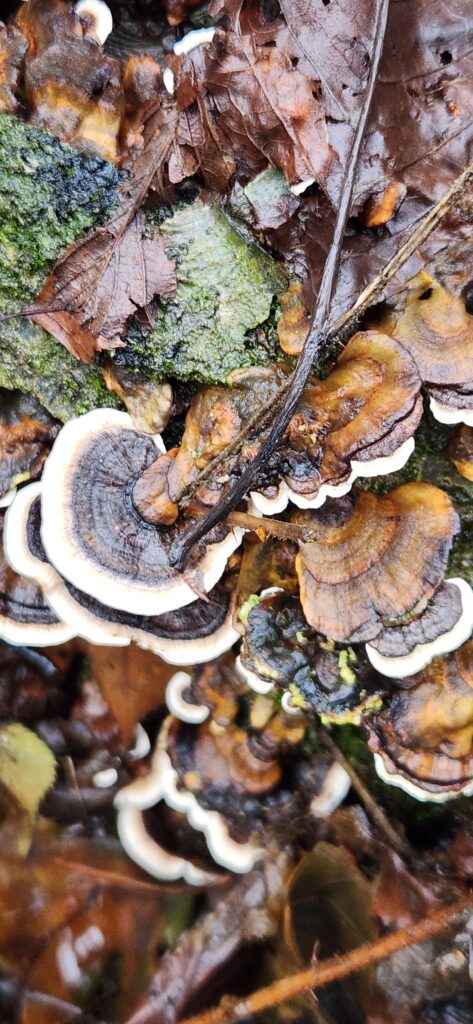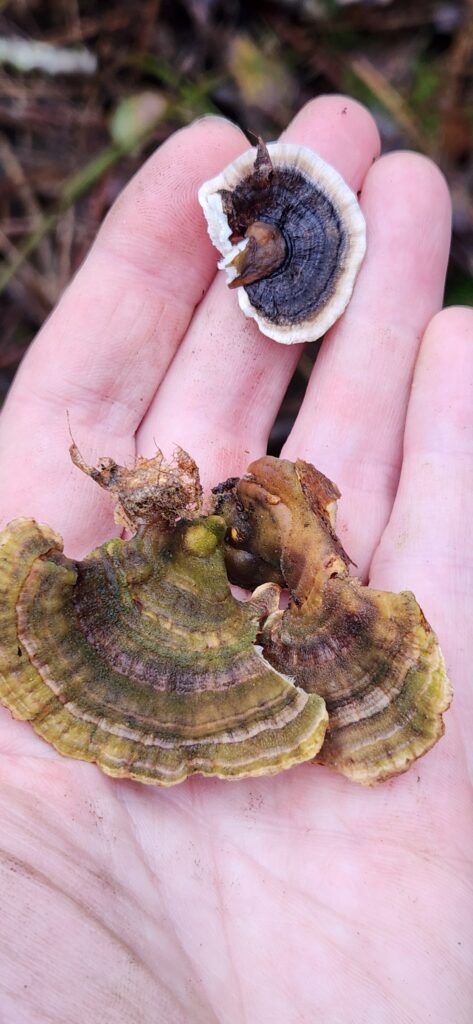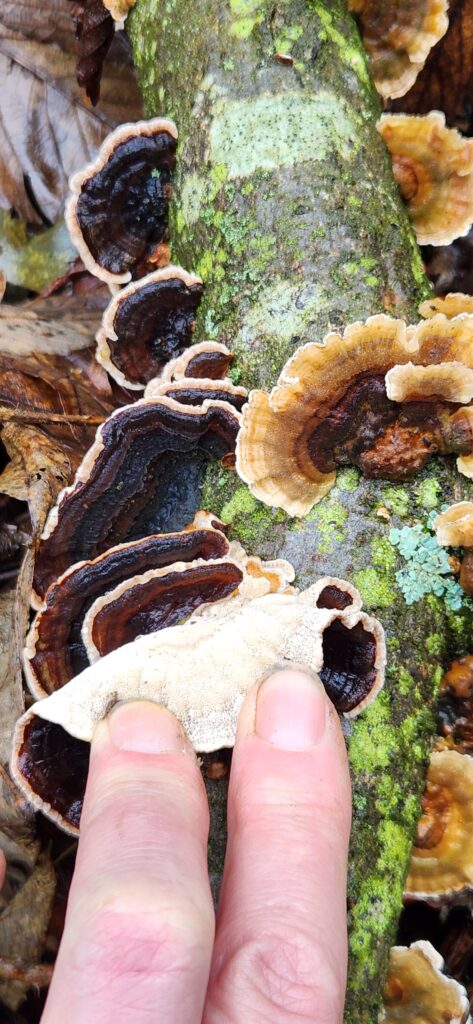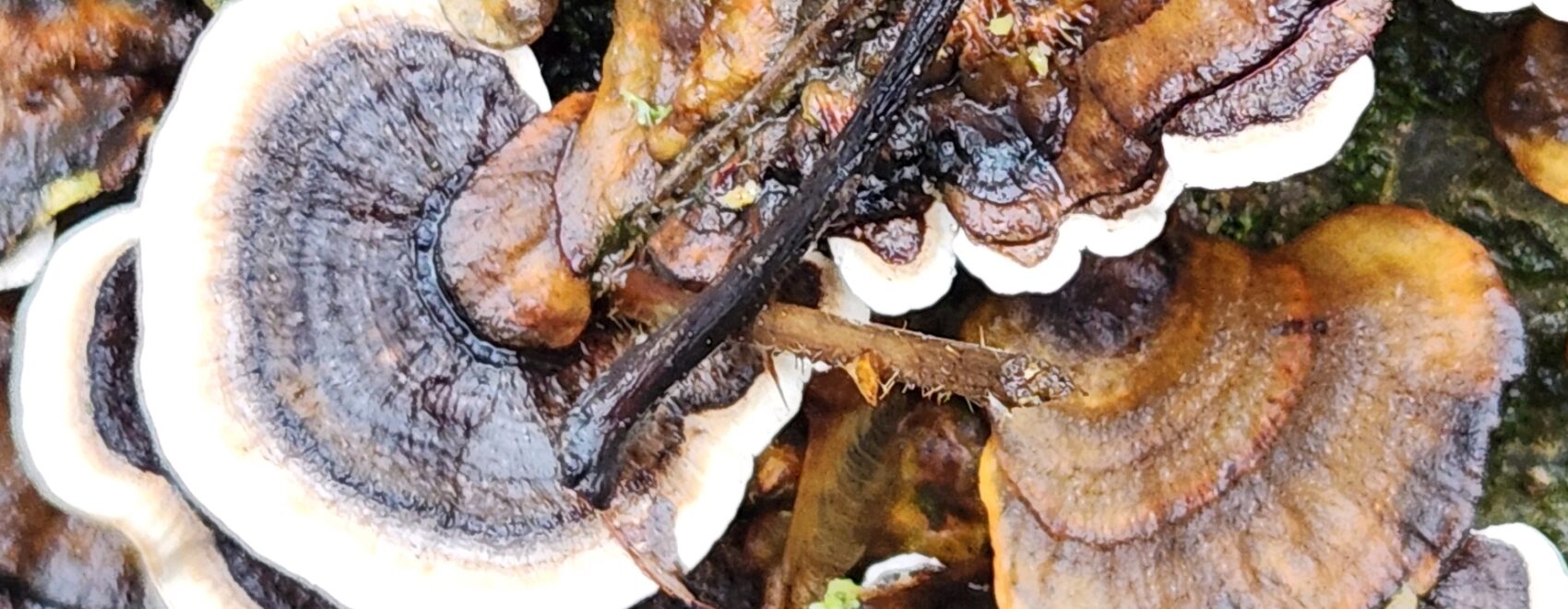

The Turkey Tail mushroom is a remarkable and vibrant fungus known for its multicolored, fan-shaped caps that resemble the tail feathers of a turkey. Widely admired for its medicinal properties, it’s also a fantastic find for foragers and nature enthusiasts exploring the woodland floor.
Other names: Many-Zoned Polypore, Rainbow Fungus.
Not sure about mushroom identification? Join us for the next foraging event in Charnwood, Leicestershire!
Habitat
Turkey Tail mushrooms are commonly found on dead or decaying hardwood logs and stumps, often in shaded, damp woodland environments. They are widespread and thrive in temperate regions across Europe, North America, and Asia. This species grows in layered, overlapping clusters, creating beautiful natural displays year-round.
Identification features
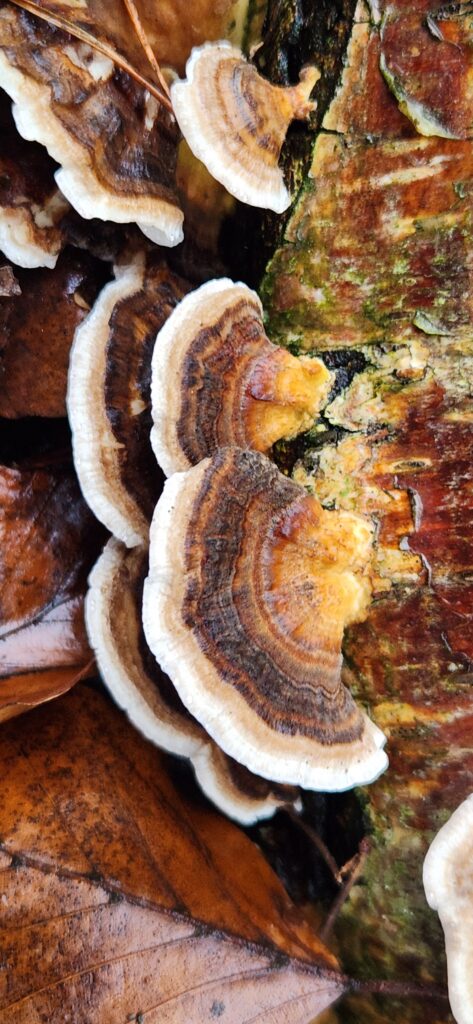
Shape: Thin, fan-shaped, or semicircular caps that grow in overlapping tiers, typically 2–8 cm wide.
Color: Bands of vibrant colors, including shades of brown, white, gray, blue, and orange, with a velvety texture.
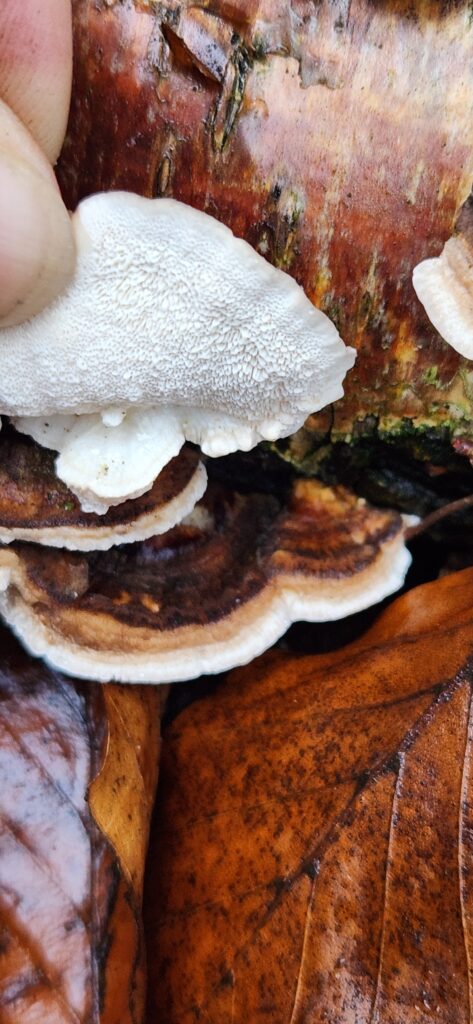
Texture: Leathery and tough, with a smooth underside covered in tiny, densely packed pores.
Spore Print: White.
Smell and Taste: Earthy and woody, not suitable for eating raw due to its tough texture.
Lookalikes
- False Turkey Tail (Stereum ostrea): Similar in appearance but lacks pores on the underside, having a smooth, leathery surface instead.
- Trametes hirsuta: Slightly larger and more uniformly gray, with a hairier texture.
Edibility
Turkey Tail mushrooms are not typically eaten due to their tough and leathery texture, but they are highly valued for their medicinal properties. They are commonly used to brew teas or make extracts and tinctures. Known for their immune-boosting potential, Turkey Tail mushrooms have been a staple in traditional medicine for centuries.
Ecological role
As a saprotrophic fungus, Turkey Tail mushrooms play a vital role in decomposing dead wood, recycling nutrients, and supporting woodland ecosystems. Their presence often indicates healthy, biodiverse woodlands.
Foraging season
Turkey Tail mushrooms can be found year-round, with peak growth in autumn and winter. Look for their colorful, tiered caps on fallen logs or decaying stumps, particularly in damp and shaded areas.
Health warning
While Turkey Tail mushrooms are safe to use in teas and tinctures, proper identification is crucial to avoid confusion with inedible lookalikes. Always ensure you are confident in your identification before harvesting.
Explore the wonders of wild fungi by joining our foraging events in Charnwood, Leicestershire! Whether you’re new to foraging or a seasoned enthusiast, our guided courses are the perfect way to discover the beauty of the fungal kingdom.