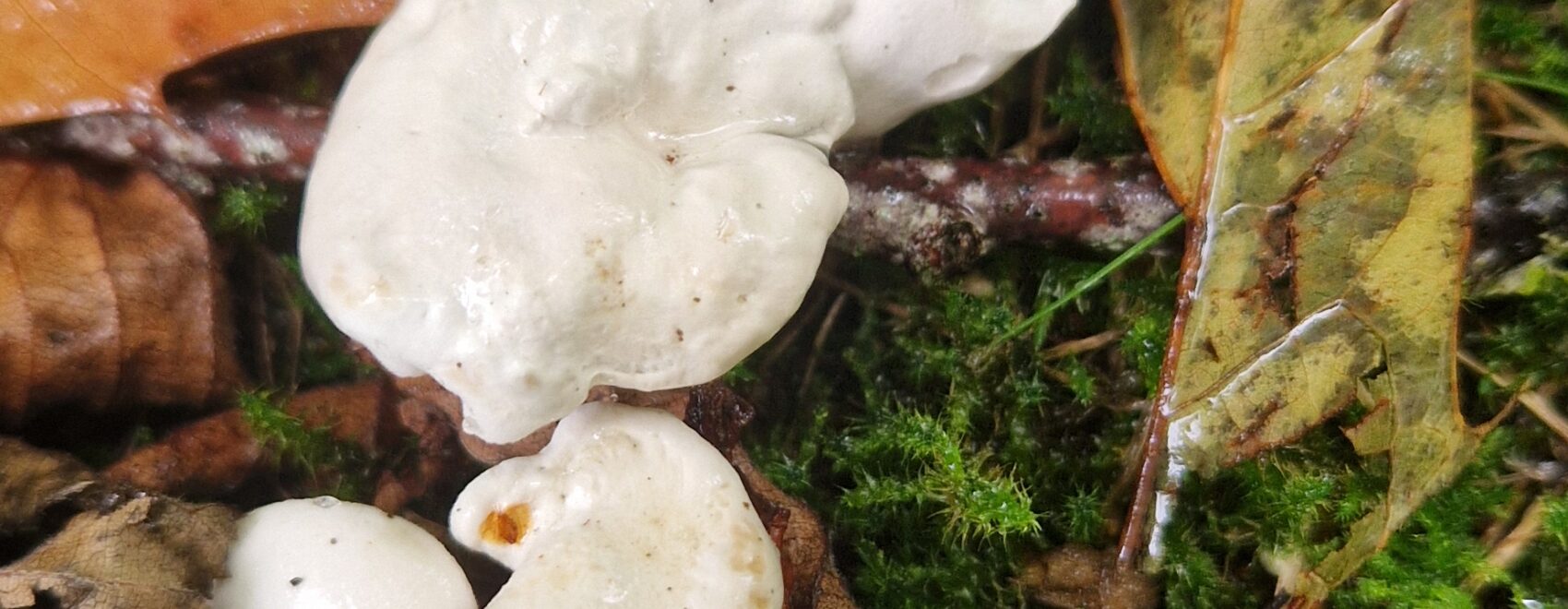
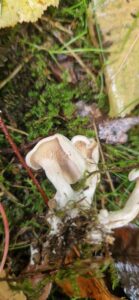
The Miller is a distinctive and pleasantly fragrant wild mushroom found across UK woodlands and grasslands. Known for its sweet, mealy aroma (reminiscent of freshly ground flour), this species is a favourite among experienced foragers for its unique scent, delicate flavour, and ease of recognition when correctly identified.
Other names: “The Sweetbread Mushroom” or simply “Mealy Mushroom.”
Not sure about mushroom identification? Join us for the next foraging course in Charnwood, Leicestershire.
Habitat
The Miller is typically found in broadleaf woodlands, grassy clearings, and hedgerows, often appearing near beech, oak, or birch trees. It can also be found on woodland edges and grassy banks, especially where leaf litter remains damp.
It’s most commonly seen in the late summer to autumn months, usually from August to October in the UK. The Miller grows either solitarily or in small groups, often in the company of other late-season mushrooms.
Identification Features
Shape:
The cap starts convex, flattening with age and often becoming slightly depressed in the centre.
Cap:
Smooth and pale grey-white to buff, with a soft, suede-like texture when fresh. It often discolours slightly with age or handling.
Gills:
The gills are decurrent (running down the stem), closely spaced, and start white before turning pinkish as the spores mature — a key identifying feature.
Stem:
Short, solid, and the same colour as the cap or slightly paler. The stem surface is smooth and often slightly tapering at the base.
Flesh and Smell:
White throughout, giving off a strong, flour-like aroma — hence the name The Miller. This scent is one of the best ways to confirm identification.
Spore Print:
Pink, another key feature separating it from toxic lookalikes.
Size:
Cap diameter ranges from 4 to 10 cm, with stems usually 2 to 5 cm tall.
Similar Species
⚠️ Caution:
The Miller can be mistaken for poisonous white mushrooms, particularly species of Clitocybe, such as the Fool’s Funnel (Clitocybe rivulosa) and the Ivory Funnel (Clitocybe dealbata) — both of which are toxic and lack the Miller’s pink spores and strong floury scent.
Always check for:
- Pink spore print (not white)
- Mealy smell
- Decurrent gills and smooth cap
If in any doubt, do not consume.
Edibility
When correctly identified, The Miller is considered edible and good, with a mild, mealy flavour that works well in mixed mushroom dishes. It’s best cooked rather than eaten raw.
Recommended culinary uses:
- Sautéed with butter and herbs
- Added to creamy sauces or risottos
- Dried and powdered to enhance soups or broths
As always, try a small amount first, as individual reactions to wild fungi can vary.
Ecological Role
The Miller is a saprotrophic fungus, helping to decompose fallen leaves and organic matter, returning nutrients to the soil. It plays an important role in maintaining the health and biodiversity of UK woodland ecosystems.
Its appearance often coincides with late-season foraging, marking the transition from summer to autumn in many British woodlands.
Foraging Season
The Miller is typically found from August to October, thriving during cooler, damp weather after rainfall. Look for it along woodland paths, grassy edges, and clearings.
In Leicestershire, it’s most often seen in mixed woodland areas with rich, undisturbed leaf litter.
Health Warning
While The Miller is edible, it must be identified with absolute certainty, as several white or pale mushrooms are dangerously toxic. Never rely on a single feature — always confirm with multiple characteristics, including the smell, spore colour, and gill attachment.
If you’re unsure, join one of our guided foraging courses to learn how to safely identify mushrooms in their natural habitats.
Folklore and Curiosity
The name Miller comes from the strong smell of flour but it really smells more like sperm. Foragers traditionally used the scent as a “trustworthy test” of safety, though modern identification always requires more than smell alone.
Join a Foraging Course
Discover the fascinating world of UK wild mushrooms with Charnwood Foraging. Learn how to safely identify edible species like The Miller, understand their ecological importance, and gain confidence exploring Leicestershire’s beautiful woodlands.
👉 Join our next foraging course in Charnwood, Leicestershire