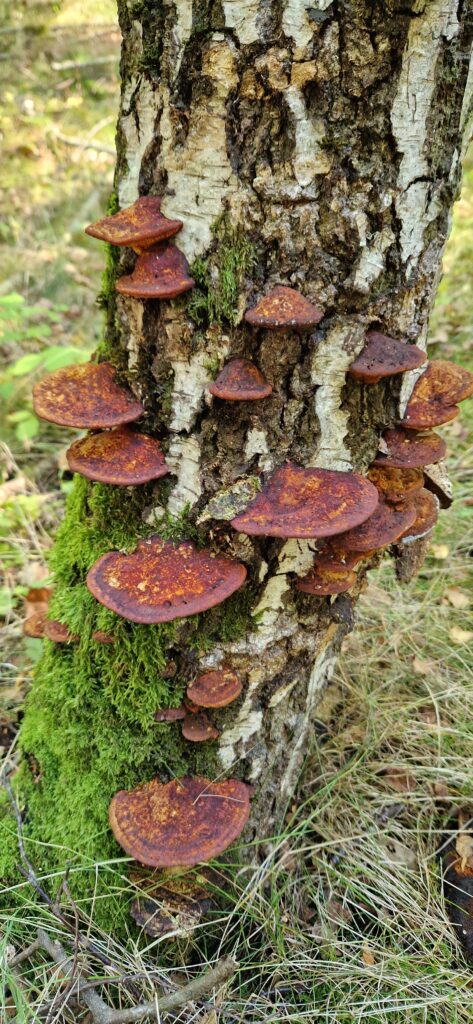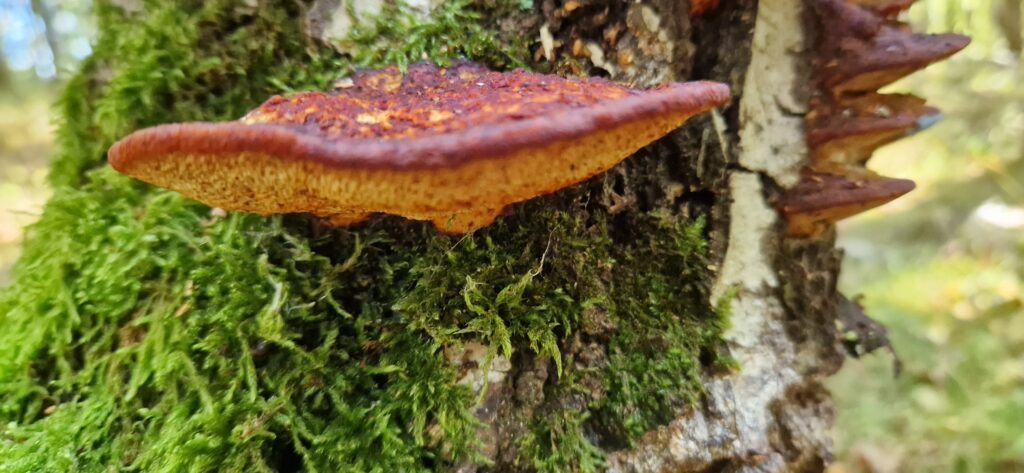
The Blushing Bracket (Daedaleopsis confragosa) is a striking and versatile polypore fungus commonly found on dead or decaying wood. Recognizable by its distinct color changes when touched or bruised, this species is a fascinating example of nature’s intricate designs. Though not typically edible, the Blushing Bracket plays a vital role in forest ecosystems by breaking down wood and returning nutrients to the soil.
Natural Habitat
The Blushing Bracket is widely distributed across temperate regions and is often found in:
- Woodlands: Growing on dead wood, particularly on birch, willow, and other deciduous trees.
- Fallen Logs and Branches: Commonly seen on decaying trunks, stumps, and branches.
- Parks and Gardens: Occasionally found in managed areas where decaying wood is left undisturbed.
This species can be found year-round but is most prominent in late autumn and winter when other fungi are less active.
Identification
Cap
- Shape: Semi-circular to kidney-shaped, often forming overlapping tiers.
- Color: Pale brown to reddish-brown, with zones of lighter and darker shades. Turns pinkish or reddish when bruised, giving it the “blushing” name.
- Texture: Smooth to slightly velvety when young, becoming rougher with age.
- Size: Typically 5-15 cm across.
Pores
- Structure: Elongated and maze-like, resembling a labyrinth rather than round pores.
- Color: Creamy white to pale brown, darkening with age.
- Reaction: Pores blush reddish when damaged or handled.
Stem
- Absent; the fungus grows directly from wood.
Spore Print
- Color: White.
- Texture: Fine and powdery.
Edibility and Uses
The Blushing Bracket is considered inedible due to its tough texture and lack of palatability. However, it has been used in traditional medicine in some cultures and is valued for its ecological role as a wood-decayer.
Foraging Tips
Identification:
- Look for bracket-like growths on dead wood with distinct reddish bruising on the cap and pore surface.
- Note the maze-like pores, which are a key distinguishing feature.
Sustainability:
- Avoid removing this fungus, as it contributes to nutrient cycling and provides habitats for insects and microorganisms.
Folklore & History
Though not deeply rooted in folklore, the Blushing Bracket’s unique ability to change color has made it a subject of interest for naturalists and fungi enthusiasts. Its role as a decomposer highlights the interconnectedness of life in forest ecosystems.
Conclusion
The Blushing Bracket (Daedaleopsis confragosa) is a remarkable and ecologically significant fungus. Its blushing reaction to touch, maze-like pores, and presence on dead wood make it an intriguing species to observe in its natural habitat. While not edible, it serves as a reminder of the essential roles fungi play in sustaining and rejuvenating ecosystems. Encountering this fungus offers a chance to appreciate the beauty and complexity of the natural world.