
The Sulphur Tuft (Hypholoma fasciculare) is one of Britain’s most striking — and most poisonous — common woodland fungi. Its bright yellow-green caps and dense, clustered growth make it an easy species to spot, but it should never be eaten. Despite its cheerful appearance, it contains toxins that can cause severe stomach pain, vomiting, and diarrhoea.
Similar species
Sulphur Tuft can be mistaken for other tuft-forming woodland mushrooms such as Velvet Shank (Flammulina velutipes), which is edible and often grows in winter. The key difference is in the colour — Sulphur Tuft has a sulphur-yellow cap and greenish gills, while Velvet Shank is orange-brown with pale gills and a velvety stem. Confusing the two can have serious consequences, so careful identification is essential.
Not sure about mushroom identification? Join us for the next foraging event in Charnwood, Leicestershire.
Habitat
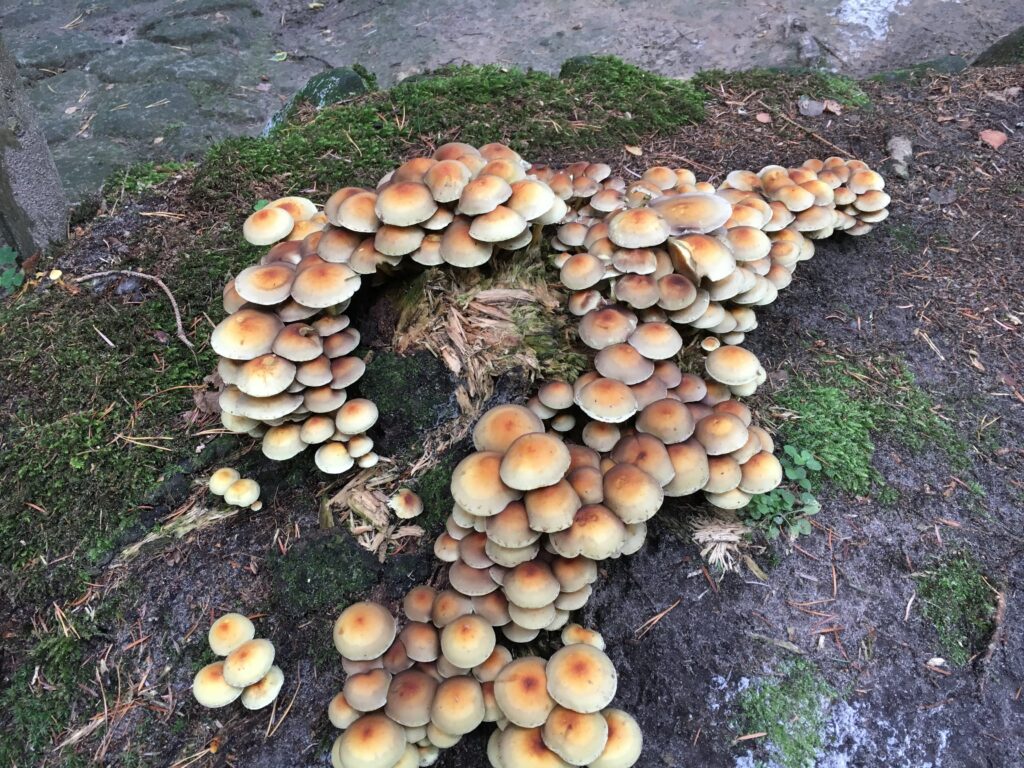
Sulphur Tuft grows in dense clusters on decaying wood, particularly stumps and fallen trunks of broadleaf trees such as beech, oak, and birch. It thrives in damp woodland and is often seen throughout spring, summer, and autumn. Even in winter, you might spot its bright yellow clusters adding colour to a shaded log.
Identification features
Cap:
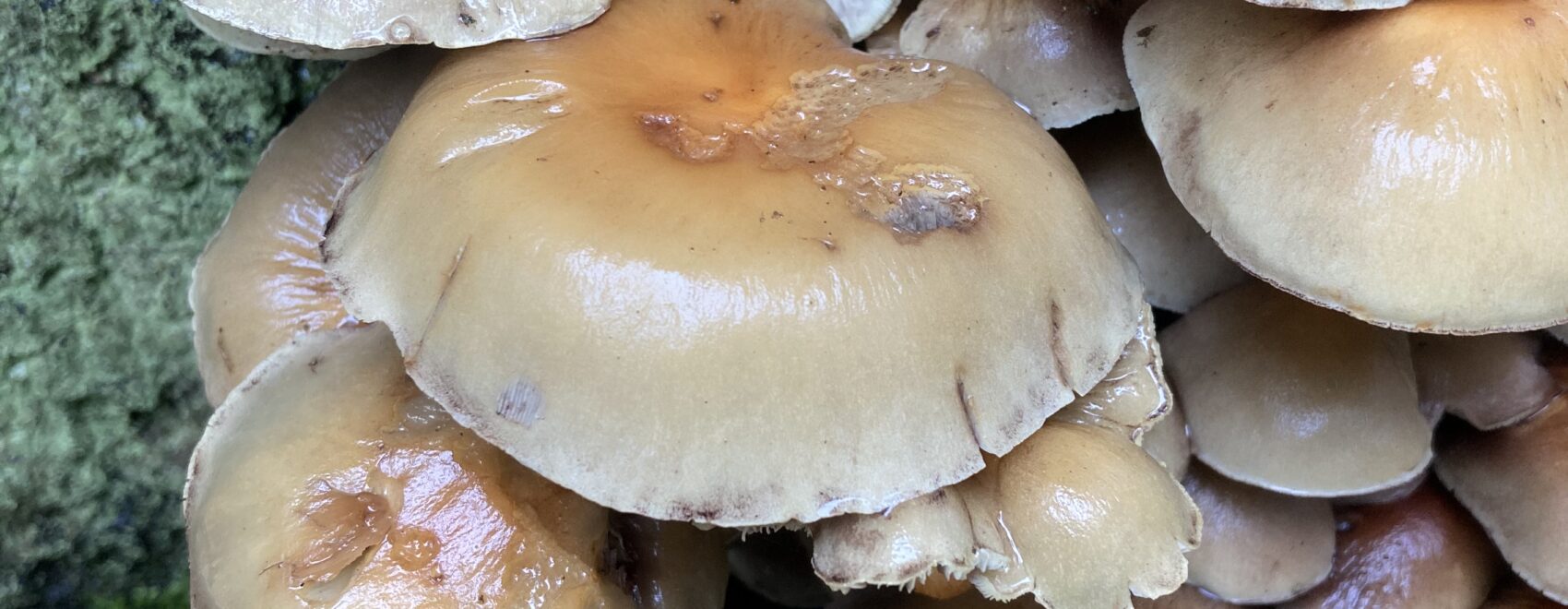
The cap is bright sulphur-yellow, often darker towards the centre with an orange-brown tinge. It measures 2–6 cm across, convex when young and flattening with age.
Gills:
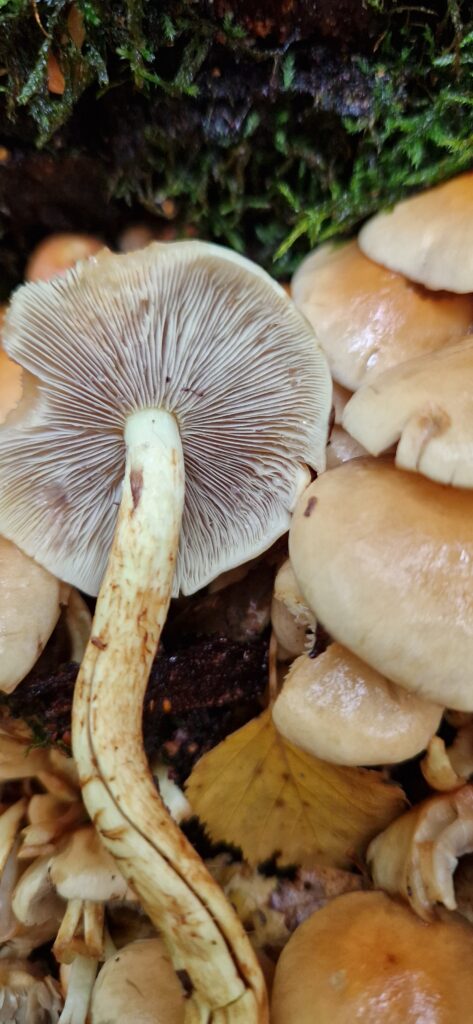
Initially yellow-green, the gills soon turn dark olive or greenish-black as the spores mature — a key feature distinguishing it from edible lookalikes.
Stem:
The stem is slender, fibrous, and yellow, sometimes with an orange tinge near the base. It lacks a ring and often darkens toward the bottom.
Flesh:
Pale yellow, sometimes turning greenish, with a very bitter taste (though tasting is not recommended due to toxicity).
Edibility and Toxicity
The Sulphur Tuft is highly poisonous. Eating it can cause violent gastrointestinal symptoms, including intense abdominal pain, nausea, vomiting, and diarrhoea. While not usually fatal, the effects can be severe and may last for several hours.
Its bitter flavour is nature’s warning sign — even a small amount can trigger poisoning. No amount of cooking or processing makes it safe.
Because it often grows near edible species, it’s vital to recognise its vivid yellow colours and greenish gills before foraging any tufted mushrooms from rotting wood.
Historical and Ecological Notes
Although dangerous to humans, the Sulphur Tuft plays an important role in nature as a wood-rotting fungus, helping to break down dead trees and recycle nutrients back into the forest ecosystem. It’s also aesthetically striking, brightening fallen logs with its neon yellow clusters long after most other mushrooms have disappeared.
Some traditional field guides mention that its bitter taste once served as a natural warning indicator for students learning mushroom identification — though today, this is discouraged for safety reasons.
Foraging Season
Sulphur Tuft can appear almost year-round, though it is most abundant from late spring to late autumn. It tends to grow in large, crowded clumps that can cover an entire tree stump, making it a distinctive and common sight in British woodlands.
Health Warning
⚠️ The Sulphur Tuft is poisonous and should never be eaten.
It can cause severe gastrointestinal distress, and there is no safe method of preparation. Its vivid colour and abundance make it a valuable teaching species — a reminder that not everything bright and beautiful in the woods is safe to consume.
Join us for a foraging adventure in Charnwood, Leicestershire! Whether you’re a beginner or a seasoned forager, our events are a great way to learn about and identify edible fungi in their natural habitat.