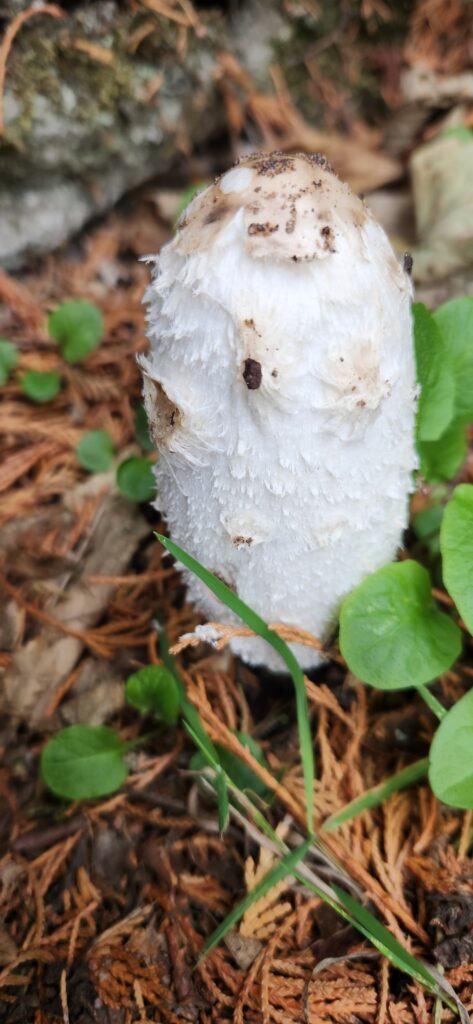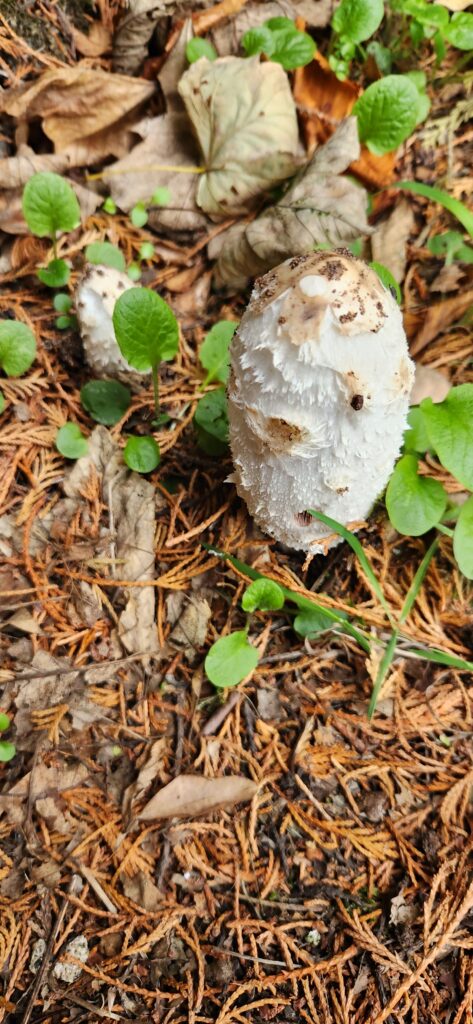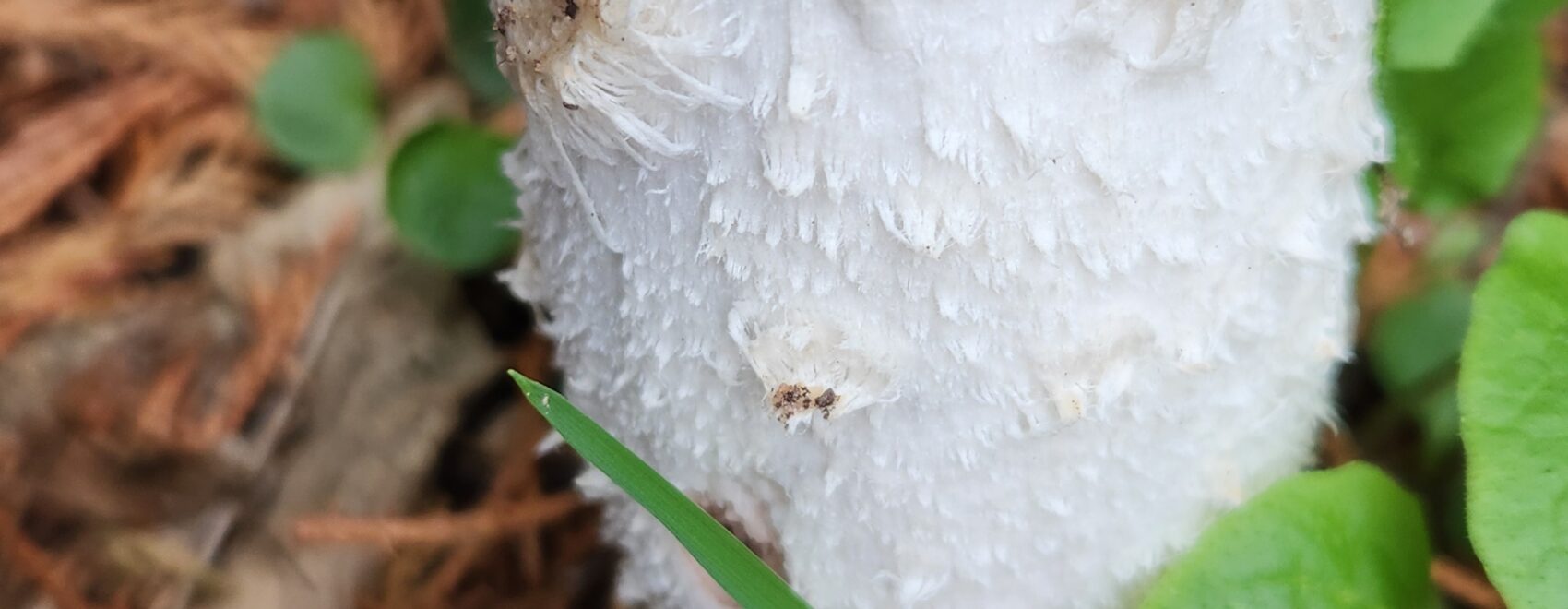
Shaggy Inkcap is a distinctive and easily recognisable mushroom, famous for its white, cylindrical, shaggy cap that turns inky as it matures. Popular with beginner foragers, this species is considered edible when young and is often sought after for its delicate flavour.
Not sure about mushroom identification? Join us for the next foraging course in Charnwood, Leicestershire, and learn how to safely identify fungi in the wild.
Habitat
Shaggy Inkcap is found in grasslands, meadows, roadside verges, parks, and woodland clearings, often appearing in nutrient-rich soils such as lawns, pastures, or composted areas. It is widespread across the UK and Europe and often appears in small groups or scattered clusters, particularly after rainfall.
Identification features
Cap:
The cap is cylindrical when young, expanding to a bell-shape with age, measuring 5–12 cm tall. It is white with shaggy scales, sometimes tinged with grey, and turns black and liquefies (deliquesces) as the spores mature, creating the characteristic inky texture.
Gills:
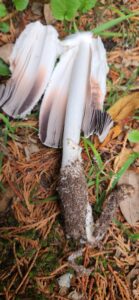
The gills are initially white, turning grey and then black as the mushroom ages. They liquefy along with the cap, producing a black “ink” that can be used historically for writing.
Stem:
The stem is tall, slender, and hollow, usually 8–20 cm high and 1–2 cm thick. It has a moveable ring (annulus) that is often white and prominent in young mushrooms.
Flesh:
Soft, white, and fragile, becoming watery as the mushroom matures.
Spore print:
Black.
Smell and taste:
Mild and pleasant when young; becomes unpleasant as it ages and deliquesces.
Lookalikes
- Common Inkcap (Coprinopsis atramentaria) – Smaller, greyish, and can cause severe reactions if consumed with alcohol.
- Magpie Inkcap (Coprinopsis picacea) – Black-and-white patterned, much larger, and mushy when old.
- Other inkcap species – Differentiated by cap shape, colour, and habitat.
Edibility
Shaggy Inkcap is edible when young, before the cap begins to deliquesce. It is prized for its delicate texture and mild flavour, often sautéed or added to omelettes and soups.
⚠️ Important: Only consume fresh, young specimens, and cook thoroughly. Avoid older, inky mushrooms.
Ecological role
Shaggy Inkcap is saprotrophic, feeding on decaying organic matter in soil and contributing to nutrient cycling in grasslands and woodland edges. Its presence indicates healthy, fertile soil.
Foraging season
Most commonly found from late summer to late autumn, particularly after rainfall. It is one of the earliest inkcaps to appear in grassy areas and is easy to spot due to its distinctive white, shaggy cap.
Health warning
While edible when young, Shaggy Inkcap must be correctly identified before consumption. Confusion with other inkcaps, especially those that interact poorly with alcohol, can lead to illness. Always forage responsibly and seek expert guidance if unsure.
Join us for a foraging adventure in Charnwood, Leicestershire! Whether you’re a beginner or a seasoned forager, our events are a great way to learn about and identify edible fungi in their natural habitat.