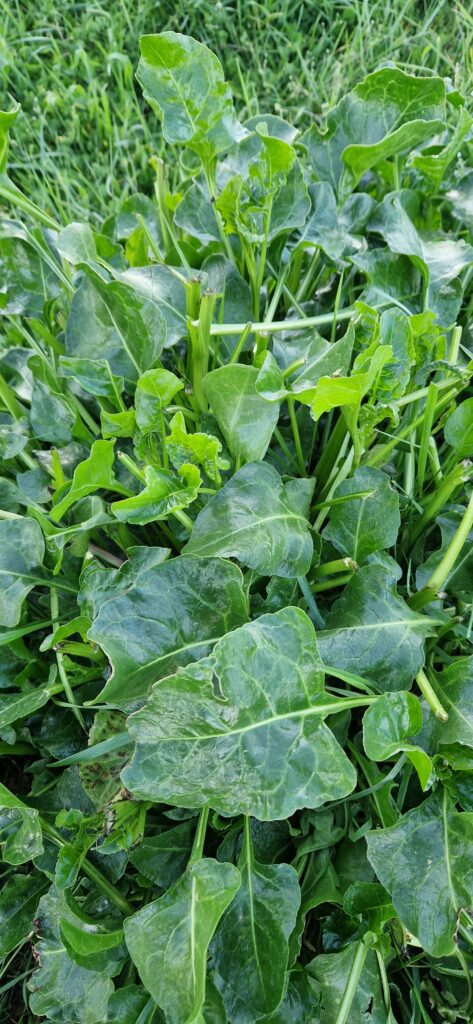
Sea Beet is the wild ancestor of cultivated beetroot and chard, found along UK coastlines. With its succulent, green leaves and mild salty flavour, it has been a traditional food plant for centuries and is still valued by foragers for salads, cooking, and pickling.
Not sure about plant identification? Join us for the next foraging course in Charnwood, Leicestershire, and learn how to safely identify wild plants.
Habitat
Sea Beet grows in coastal habitats, including cliffs, shingle beaches, saltmarsh edges, and rocky shorelines. It tolerates salty, windy conditions and thrives in well-drained, sandy or stony soils. In the UK, it is common along southern, western, and eastern coasts.
Appearance
Leaf Description
Leaves are succulent, dark green, and slightly glossy, with wavy or crinkled margins. They grow in a basal rosette and become smaller along the flowering stalk. Leaves are thick and fleshy, reflecting their adaptation to coastal conditions.
Flower Description
Sea Beet produces small, greenish-white flowers on tall spikes during summer, often forming dense clusters at the top of the stems. Flowers are less showy than the leaves but attract pollinators.
Stem Description
Stems are erect, thick, and slightly succulent, often branching near the top to support the flowering spike. Plants can reach up to 1 metre in height.
Fruit / Seed Description
The plant produces small, round seeds within tiny fruits. Seeds are hardy and disperse easily along coastal sites.
Edibility
Sea Beet is edible and highly nutritious, with a flavour slightly saltier and more intense than cultivated beet. Both leaves and young shoots can be eaten raw or cooked. Historically, it was used in soups, stews, salads, and pickles.
Recipes
- Sea Beet Salad – young leaves mixed with mild greens and lemon juice
- Sautéed Sea Beet – lightly cooked with olive oil and garlic as a side dish
- Pickled Sea Beet – preserve young leaves in vinegar for a tangy condiment
(Always forage from clean coastal areas, away from polluted waters or roadsides.)
Nutritional Value & Health Benefits
Sea Beet is rich in vitamins A, C, and K, as well as iron, calcium, and magnesium. Its mineral-rich leaves make it particularly valuable as a wild green for supporting overall health.
Foraging Season
- Leaves and shoots: spring to late summer
- Flowers: summer
- Best flavour: young leaves before flowering
Folklore & Interesting Facts
- Sea Beet is the wild ancestor of modern beetroot and chard, offering a glimpse into ancient coastal diets.
- Historically, it was a staple for coastal communities, both for flavour and nutrition.
- Its ability to thrive in harsh, salty conditions makes it an excellent plant for sustainable foraging.
Health Warning
Ensure correct identification before harvesting, as other coastal plants may look similar. Avoid collecting from polluted or sprayed areas.s with all wild plants, correct identification is essential, and consumption should be moderate due to its strong mustard compounds.
Not sure about plant identification? Join us for the next foraging event in Charnwood, Leicestershire.