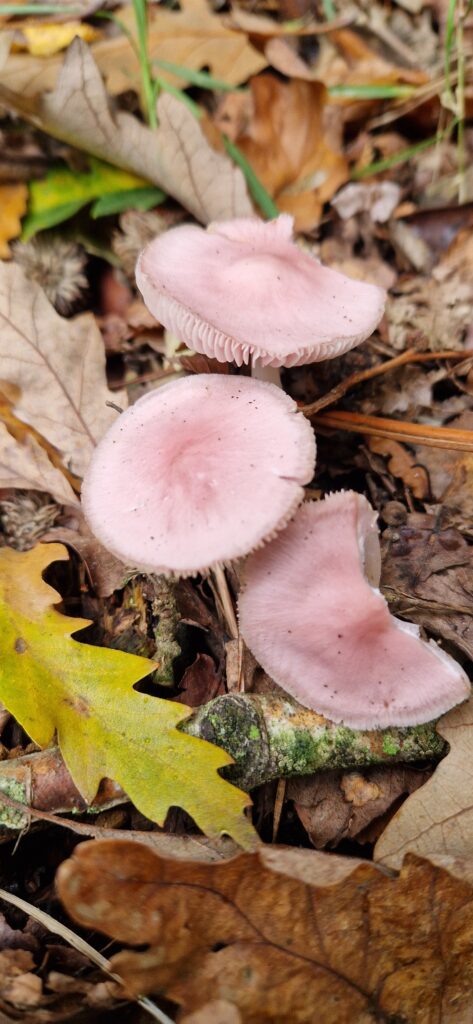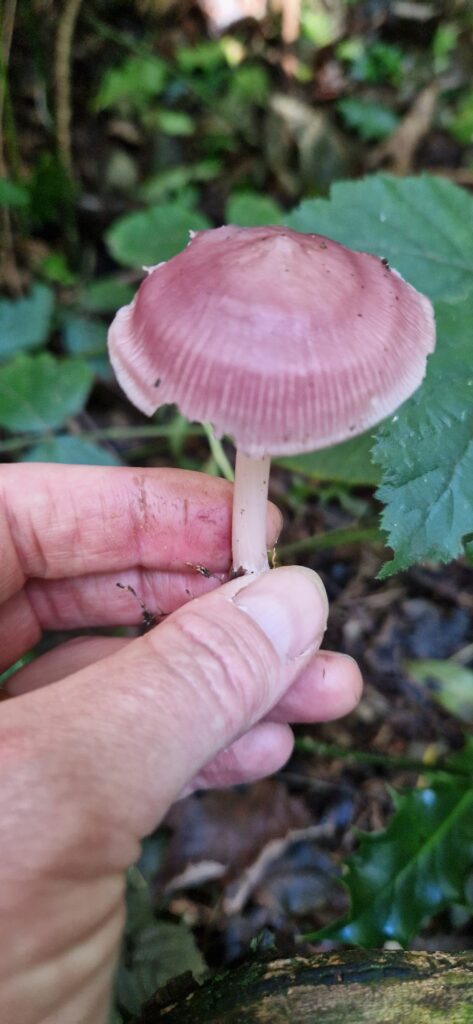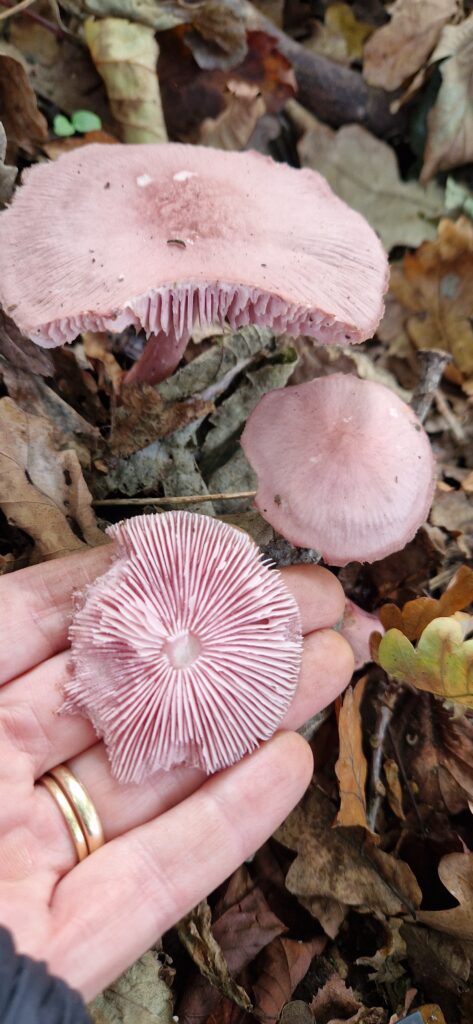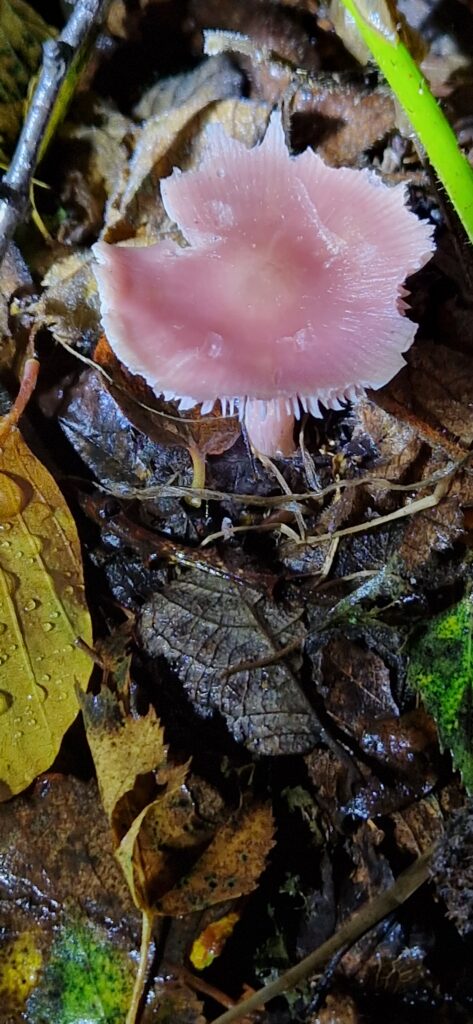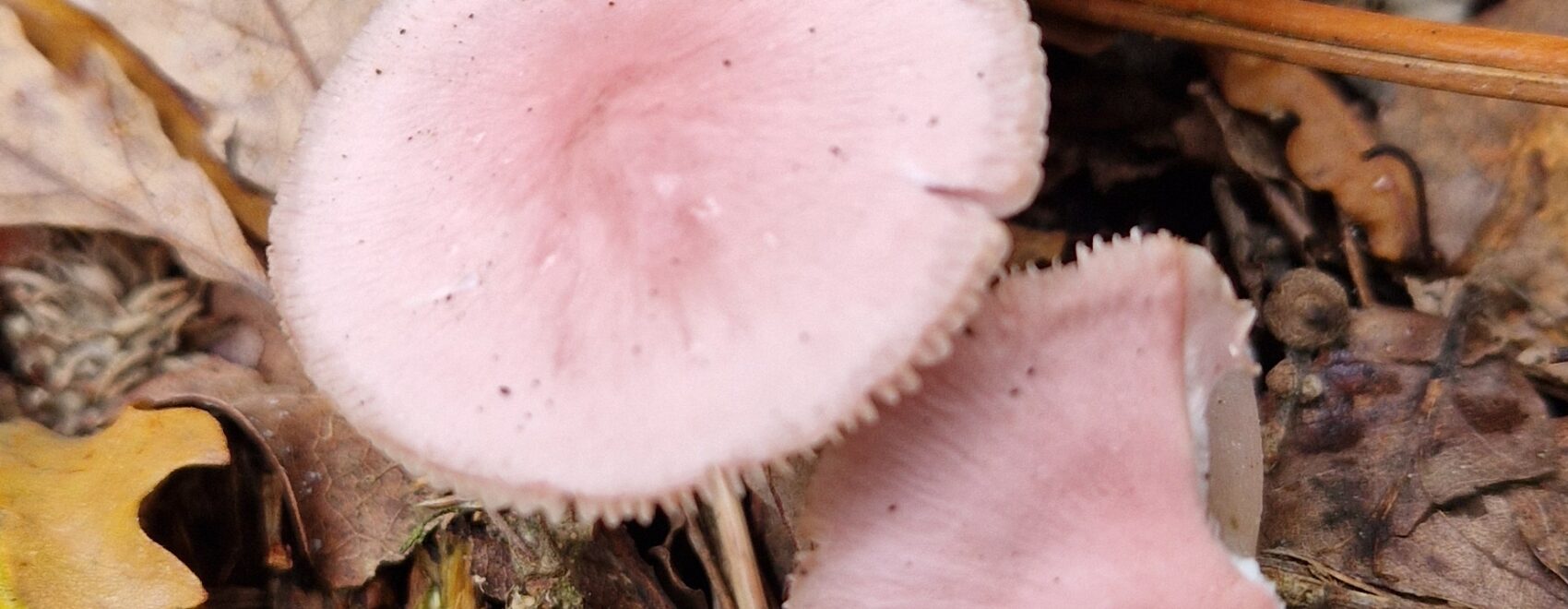
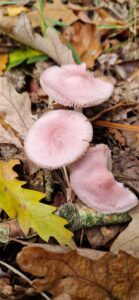
Rosy Bonnet (Mycena rosea) is a species of small mushroom found in woodlands and grassy areas similar with slightly larger Lilac Bonet. The gills of the Lilac Bonnet (Mycena pura) are a phosphorescent and glow in the dark. These delicate fungi are known for their charming lilac to pinkish-purple caps, which make them stand out in the forest floor. While both species share many similarities, they differ in subtle ways, and foragers should be aware of these distinctions when identifying them.
Other names: Lilac Bonnet, Rosy Bonnet.
Not sure about mushroom identification? Join us for the next foraging event in Charnwood, Leicestershire.
Habitat
Both Mycena pura (Lilac Bonnet) and Mycena rosea (Rosy Bonnet) are typically found in damp, shaded woodlands, where they grow on decaying organic matter such as fallen leaves, twigs, and branches. These mushrooms are particularly common in moist, acidic soils and are often spotted in the late summer and autumn. Both species can also appear in grassy areas near trees or in woodland clearings.
Identification features
Cap:
- Lilac Bonnet: The cap of this species is a pale lilac to violet color, smooth, and initially bell-shaped before flattening with age. It often has a faint, granular texture and can show signs of fading or discoloration over time.
- Rosy Bonnet: The cap of the Rosy Bonnet is a slightly deeper pink or rosy color, with a similar bell-shaped appearance that flattens with age. The cap surface is smooth and glossy, sometimes exhibiting a more vibrant hue, particularly in younger specimens.
Gills: Both species have closely spaced gills that are free from the stem. The gills are typically white to pale pink, which darkens as the mushroom matures. These gills are delicate and can be hard to distinguish in older specimens.
Stem:
- Lilac Bonnet: The stem is slender and pale purple or pink, often exhibiting a fine, fibrous texture. It may be darker near the base.
- Rosy Bonnet: The stem of the Rosy Bonnet is similar but can have a more reddish-pink hue, especially when younger. It is delicate and slender, with a smooth surface.
Spore Print: Both species have a white to pale cream spore print, which is common among mushrooms in the Mycena genus.
Smell and Taste: Both mushrooms have a mild, earthy aroma, typical of Mycena species, with a somewhat indeterminate taste.
Lookalikes
- Lilac Fibercap: While not as closely related, it can be confused with the Lilac Bonnet, both are poisonous. Lilac Fibercap has white/grey gills
- Amethyst Deceiver: The Amethyst Deceiver is a close lookalike to the Lilac Bonnet, as both share a similar lilac to purple color. The Amethyst Deceiver has purple gills, more spaced-out gills and a more fibrous stem that can help distinguish it. The Amethyst Deceiver is edible, unlike the Lilac Bonnet, which is inedible.
Edibility
Both the Lilac Bonnet and Rosy Bonnet are now classes as poisonous due to small amount of toxins contents. Careful – these were once considered edible and older books may still say so. While not highly toxic, they are not to be considered for culinary use. It’s best to admire these mushrooms for their beauty rather than their potential for the table.
Ecological role
The Lilac and Rosy Bonnets play a vital role in the ecosystem by decomposing organic material, such as dead leaves, twigs, and wood. These fungi help break down the material and recycle nutrients back into the soil, contributing to the health of woodland habitats. As decomposers, they play a crucial part in the forest’s nutrient cycling process.
Foraging season
Both species typically fruit from late summer to autumn, often after periods of rain, when conditions are damp and humid. They are commonly found in shaded, woodland environments, especially in areas rich in decaying organic material. Keep an eye out for them in areas with dense ground cover or near the bases of trees.
Health warning
While both species are not toxic, correct identification is still crucial when foraging. Mistaking these delicate fungi for other species could lead to misidentification, and while they are not dangerous, consuming any wild mushroom without proper knowledge can be risky. Always consult an expert before harvesting wild mushrooms for consumption.
Join us for a foraging course in Charnwood, Leicestershire, and learn how to safely identify mushrooms like the Lilac Bonnet and Rosy Bonnet!