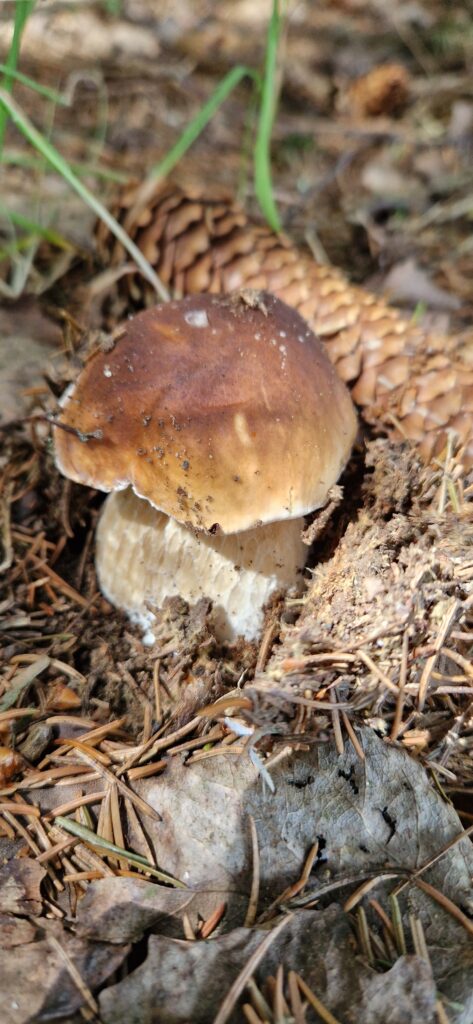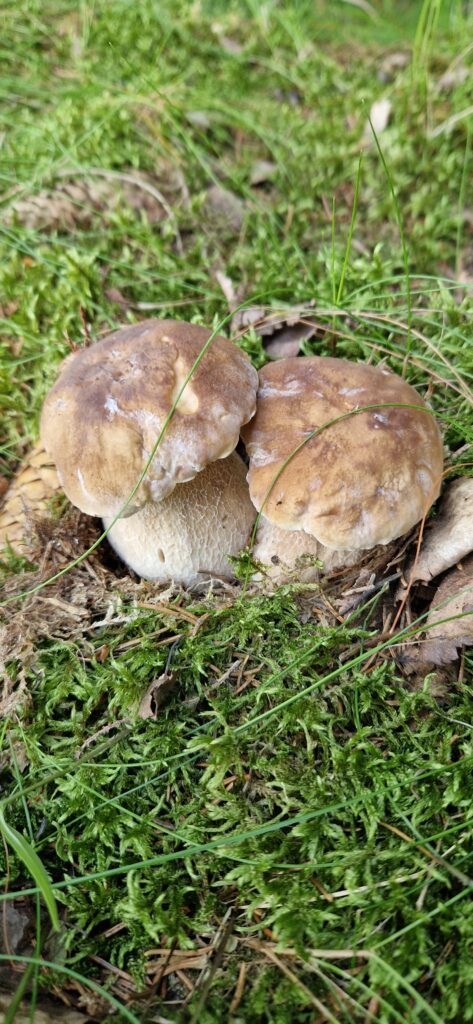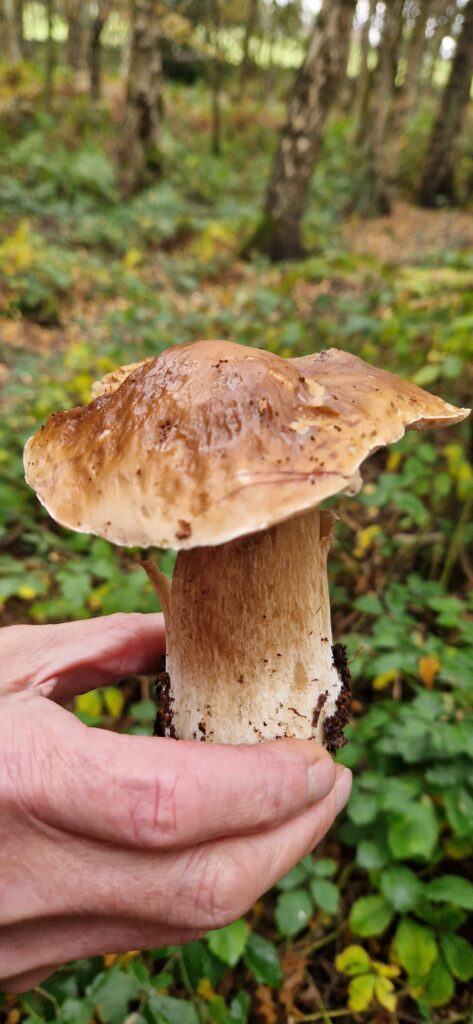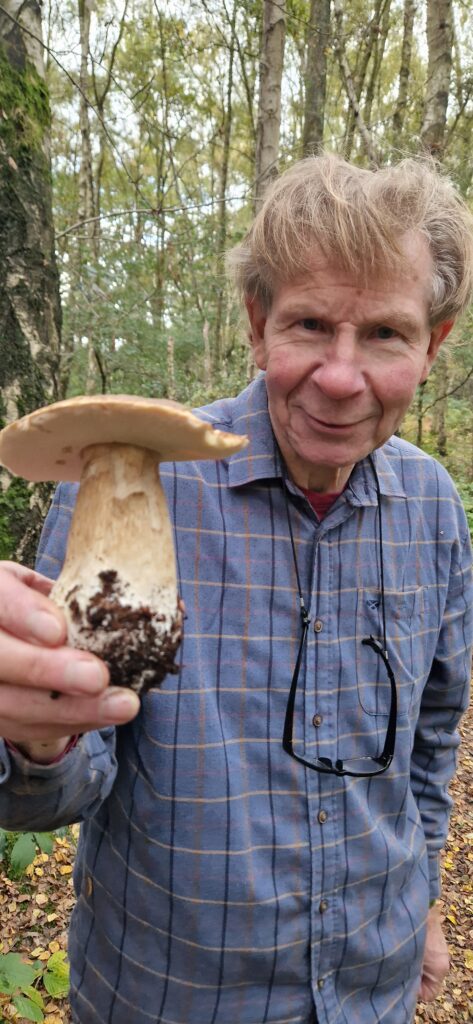
Penny Bun (Boletus edulis), also known as the King Bolete, is one of the most sought-after wild mushrooms, renowned for its size, flavor, and versatility in cooking. Often considered a delicacy, this mushroom is a favorite among foragers and chefs alike.
Other names: King Bolete, Porcini, Cèpe.
Not sure about mushroom identification? Join us for the next foraging event in Charnwood, Leicestershire.
Habitat
The Penny Bun thrives in temperate forests and woodlands, often forming symbiotic relationships with a variety of trees, such as pines, spruces, oaks, and beeches. It can be found in both coniferous and broadleaf forests across Europe, North America, and parts of Asia. This mushroom fruits during late summer and autumn, typically after periods of rainfall.
Identification features
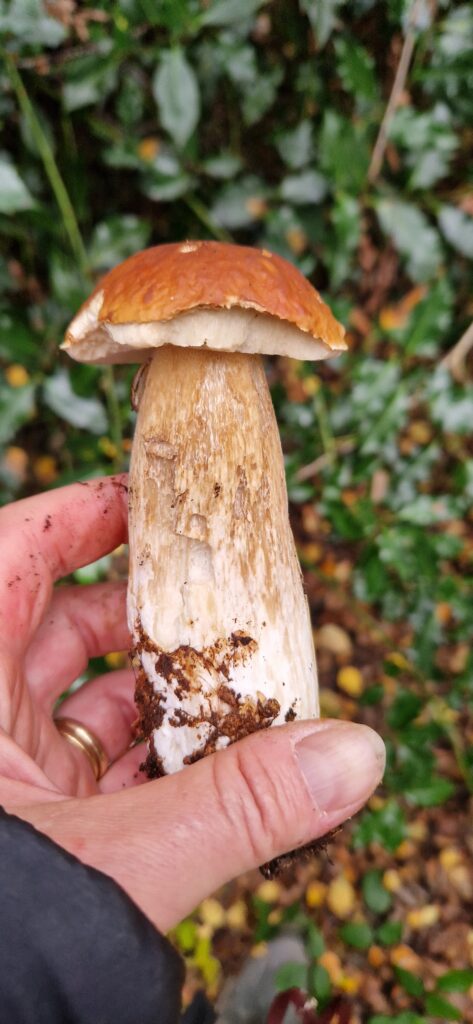
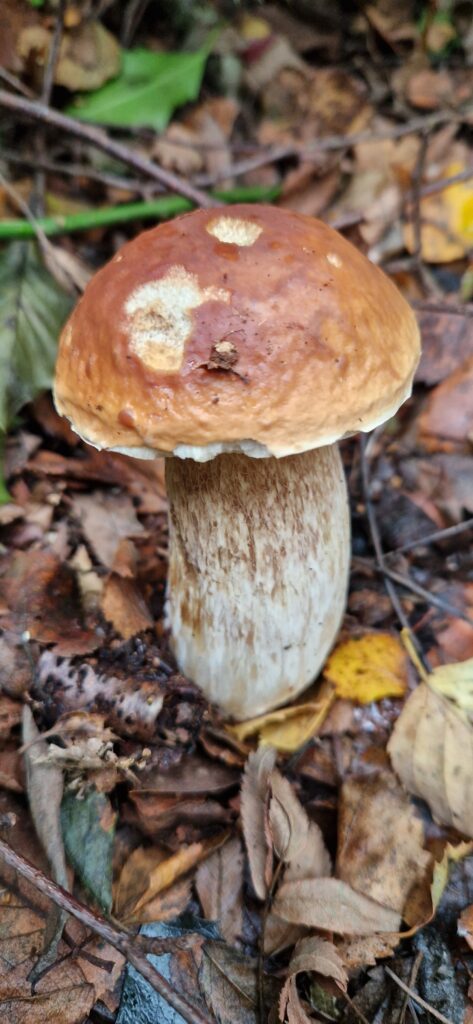
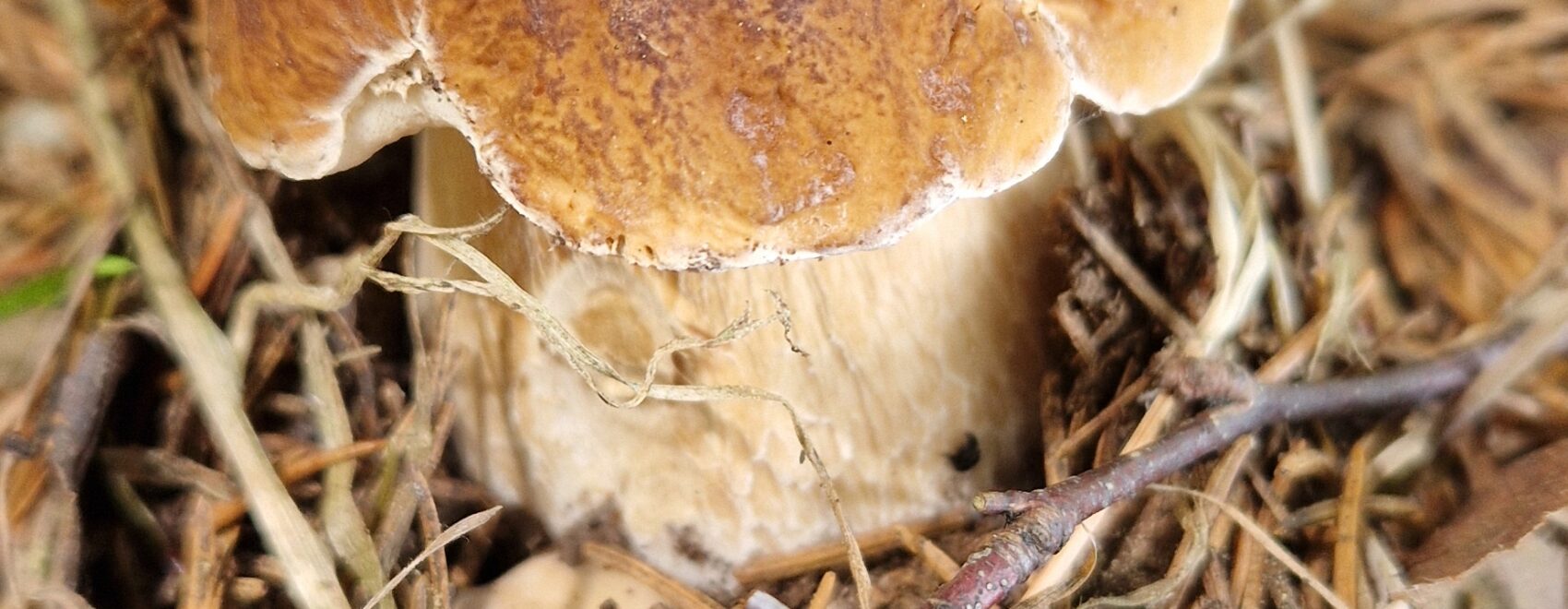
Cap: The cap is large and convex, often up to 25 cm in diameter, with a rich brown color. The surface is smooth and dry, sometimes with a slightly velvety texture. The cap color can range from light brown to dark reddish-brown, depending on age and environmental conditions.
Pores: The underside of the cap is covered with a fine, spongy layer of white to yellowish pores, which turn greenish or brown as the mushroom matures. These pores are an important distinguishing feature of boletes.
Stem: Thick, swollen, and pale in color, the stem is typically light brown or pale yellowish with a net-like pattern near the top. The stem is robust and can grow up to 20 cm tall and 8 cm wide.
Spore Print: Olive-brown to greenish-brown.
Smell and Taste: The Penny Bun has a strong, nutty, and earthy aroma when fresh, and its taste is mild but savory, making it a prized ingredient in many dishes.
Lookalikes
- Bitter Bolete (Tylopilus felleus): While similar in shape and size, the Bitter Bolete has a pinkish-brown spore print and a very bitter taste. The pores of the Bitter Bolete are also paler, and the stem has a more pronounced reddish tint.
Edibility
The Penny Bun is highly regarded for its culinary value. It is considered a delicacy in many parts of the world, especially in Italian and French cuisine. The flavor is rich and earthy, perfect for a variety of dishes including risottos, soups, and pasta. It can be cooked fresh, dried, or preserved. Dried Penny Buns retain their flavor and can be rehydrated for use in stews or sauces.
Ecological role
As a mycorrhizal fungus, the Penny Bun forms a mutualistic relationship with tree roots, helping the trees absorb nutrients while benefiting from sugars produced by the trees. This symbiotic relationship is vital to forest health and ecosystem balance. The presence of Penny Buns in an area is often an indicator of a healthy, biodiverse forest ecosystem.
Foraging season
The Penny Bun fruits from late summer to autumn, typically after periods of rain. It is often found in woodland areas, particularly near the base of trees, where its mycorrhizal relationship thrives. Look for this mushroom in areas with rich, well-drained soil and plenty of shade.
Health warning
While the Penny Bun is widely regarded as edible and delicious, it is important to be cautious when foraging for boletes. Some boletes can be toxic, and proper identification is crucial. Never consume a bolete without confirming its identity, and always avoid mushrooms that show signs of decay, as they can harbor harmful bacteria.
Join us for a foraging adventure in Charnwood, Leicestershire, to discover the wonders of the Penny Bun and other incredible wild mushrooms! Whether you’re an experienced forager or a beginner, our foraging courses are the perfect way to learn more about these edible treasures and how to identify them safely in the wild.