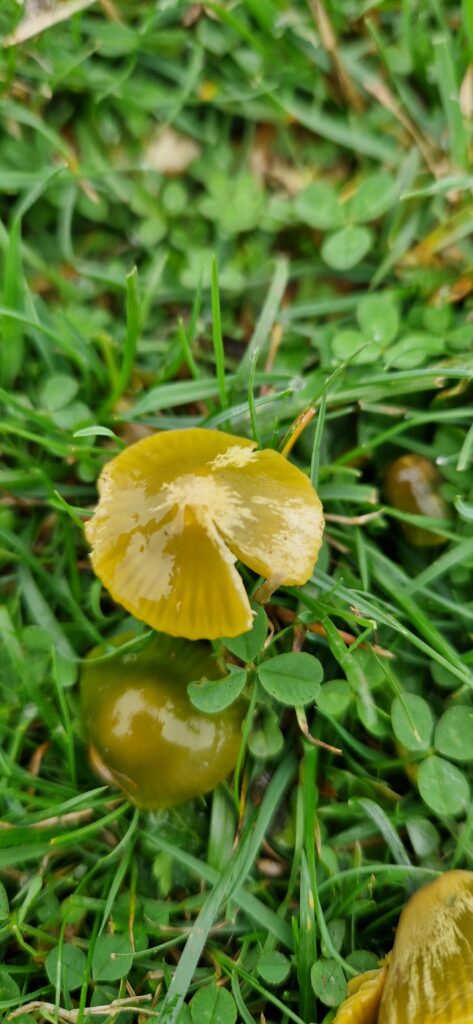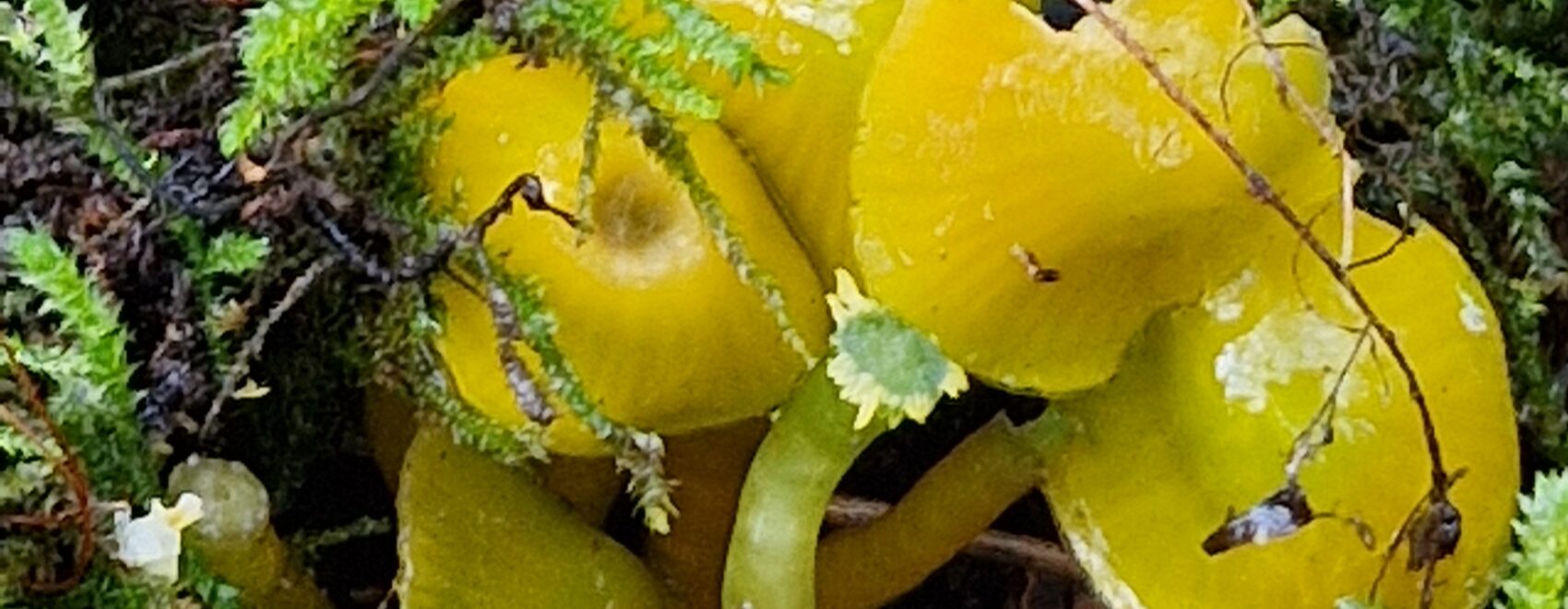
The Parrot Waxcap (Gliophorus psittacinus), also known as the Parrot Toadstool, is one of the most colourful and eye-catching fungi found in the UK. With its bright green, yellow, and orange tones, it looks almost tropical — a rare sight among British mushrooms. This small, slimy waxcap grows in old, unimproved grasslands, meadows, and lawns that have not been treated with fertilisers or pesticides.
Parrot Waxcaps are a wonderful indicator of ancient, undisturbed grassland ecosystems, making them as ecologically valuable as they are beautiful.
The Hygrocybe family includes many brightly coloured species such as the Scarlet Waxcap (Hygrocybe coccinea), Golden Waxcap (Hygrocybe chlorophana), and Blackening Waxcap (Hygrocybe conica). The Parrot Waxcap can be recognised by its unique greenish hues and viscous (slimy) cap and stem.
Although classed as edible, it is not commonly eaten due to its small size, slimy texture, and conservation importance.
Not sure about mushroom identification? Join us for the next foraging event in Charnwood, Leicestershire.
Habitat
The Parrot Waxcap thrives in unimproved grasslands, old pastures, and cemeteries — habitats that have not been disturbed or enriched by fertiliser use. They prefer short, mossy grass and are typically found in groups or scattered individuals.
In the UK, they are most abundant in late autumn, especially from September through November, when damp conditions bring out their vibrant colours.
Identification features
Cap:
The cap is small (1–3 cm) and distinctly slimy, with colours ranging from bright green in young specimens to yellow, orange, or even reddish tones as it matures. The cap often fades with age but remains sticky to the touch.
Gills:
The gills are pale yellow to greenish, broadly attached, and widely spaced. They often show tinges of the same bright colours as the cap.
Stem:
The stem is slender, cylindrical, and very slippery, matching the cap in colour — usually green at the top and yellowish towards the base. It is 2–6 cm long and up to 0.5 cm thick, with a translucent, jelly-like appearance when fresh.
Flesh:
Soft and watery, with a mild, earthy smell and no distinctive taste.
Edibility
The Parrot Waxcap is technically edible, but not recommended for eating. It is small, slippery, and of poor culinary value. More importantly, waxcaps are increasingly considered ecologically important, serving as indicators of healthy grassland habitats — so they’re better admired than eaten.
Recipes
While not a good candidate for cooking, the Parrot Waxcap can be appreciated for nature photography, education, and conservation awareness. Foragers are encouraged to photograph rather than pick this stunning species to help preserve waxcap meadows.
Vitamins & Health Benefits
The Parrot Waxcap hasn’t been extensively studied for nutritional content, but like most mushrooms, it’s likely to contain fibre, B vitamins, and trace minerals. Its main value, however, lies in its role as a biodiversity indicator, signalling the presence of ancient, undisturbed soils and thriving ecosystems.
Foraging Season
The Parrot Waxcap appears from September through November, occasionally lingering into early December in mild years. Look for it in old, unimproved grasslands and mossy lawns — places where time seems to have stood still.
Health Warning
Although not poisonous, the Parrot Waxcap belongs to a group with many similar-looking species, some of which are inedible or of uncertain safety. Accurate identification is essential. Moreover, because these mushrooms grow in ecologically sensitive habitats, foragers are encouraged to observe rather than collect them.
Join us for a foraging adventure in Charnwood, Leicestershire! Whether you’re a beginner or a seasoned forager, our events are a great way to learn about and identify edible fungi in their natural habitat.