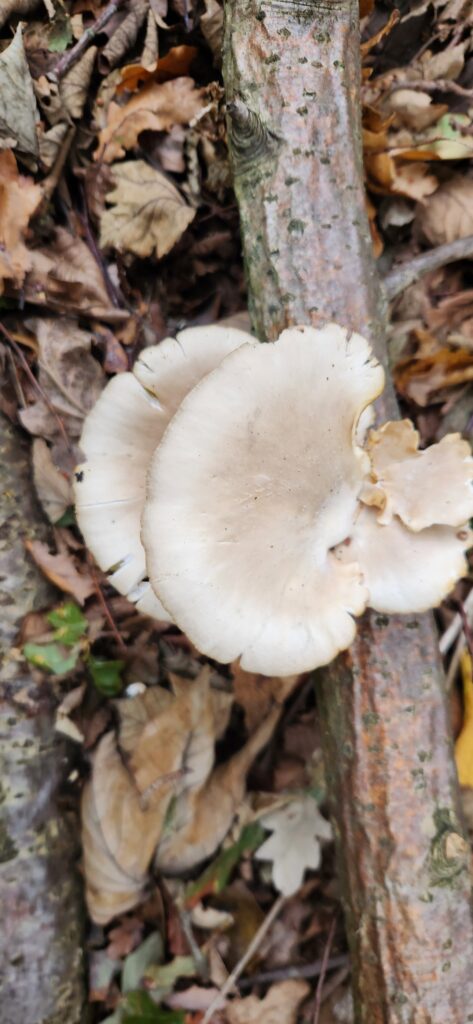

The Pale Oyster Mushroom is a delicate and elegant species in the Pleurotus genus, closely related to the better-known Pleurotus ostreatus (the common Oyster Mushroom). Distinguished by its lighter colouring and preference for warmer weather, it’s a prized find among foragers and mushroom growers alike. With its mild, nutty flavour and smooth texture, it’s both delicious and ecologically important, helping recycle dead wood into nutrient-rich soil.
Other names: “Phoenix Oyster,” “Summer Oyster,” “Lung Oyster.”
Not sure about mushroom identification? Join us for the next foraging event in Charnwood, Leicestershire!
Habitat
The Pale Oyster Mushroom is a saprophytic fungus, meaning it feeds on decaying wood. It’s commonly found growing on dead or dying deciduous trees, especially beech, willow, and poplar, and occasionally on conifers.
Unlike the common Oyster Mushroom, which thrives in cooler autumn weather, Pleurotus pulmonarius tends to appear in late spring through early autumn, making it one of the summer oyster species.
Look for it:
- On fallen logs, stumps, or standing dead wood.
- In sheltered, humid areas of woodland.
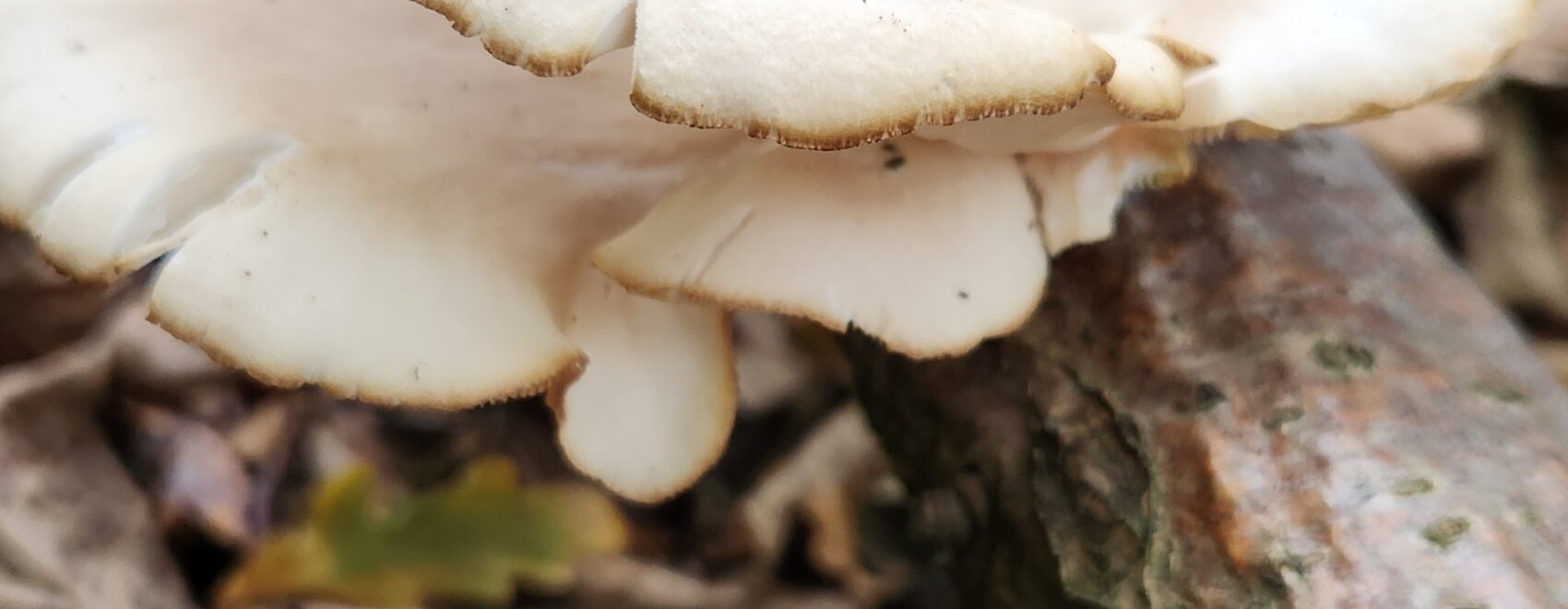
- Often growing in clusters, with overlapping caps like oyster shells.
This species is widespread throughout Europe, North America, and Asia.
Identification Features
Cap:
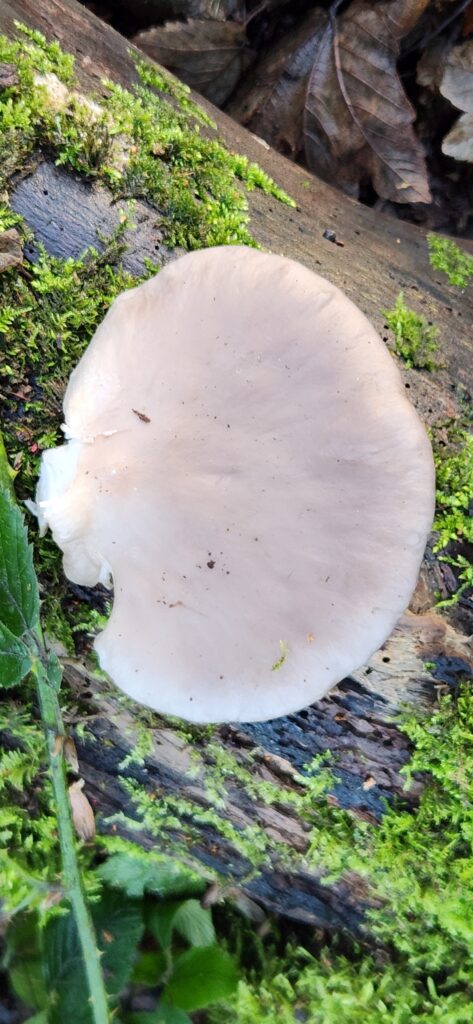
- Creamy white to pale tan, often with a subtle greyish or buff tint.
- Fan- or shell-shaped, sometimes slightly lobed or irregular.
- Smooth surface, sometimes with a faint velvety sheen when young.
- Typically 5–15 cm across, occasionally larger in ideal conditions.
Gills:
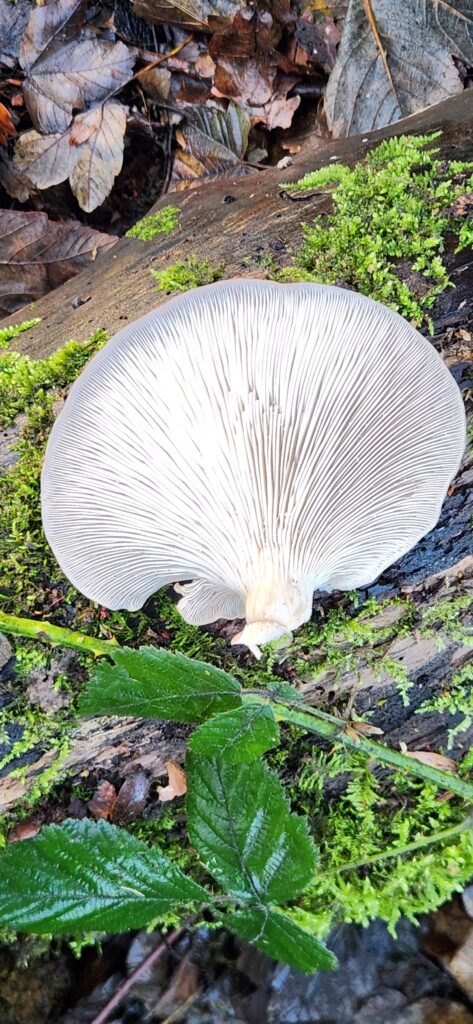
- White to cream, crowded, and decurrent (running down the stem).
- Sometimes forked near the stem.
Stem (Stipe):
- Short and off-centre, or sometimes absent if the mushroom grows directly from the side of a log.
- White to pale cream, often slightly hairy near the base.
- Lacks a ring.
Flesh:
- White, firm, and elastic when young, becoming softer with age.
Spore Print:
- White to pale lilac-grey.
Smell and Taste:
- Mild, slightly sweet, or faintly anise-like.
Comparison: Pale Oyster vs. Common Oyster
| Feature | Pale Oyster (P. pulmonarius) | Common Oyster (P. ostreatus) |
|---|---|---|
| Colour | Creamy white to pale tan | Grey, blue-grey, or brownish |
| Season | Spring to early autumn | Late autumn to winter |
| Shape | More upright, smaller clusters | Broader, flatter caps |
| Temperature Preference | Warmer climates | Cooler climates |
| Texture | Slightly more delicate | Firmer and thicker flesh |
Edibility
The Pale Oyster Mushroom is edible, choice, and highly regarded. It has a mild, nutty flavour with a delicate aroma and is versatile in cooking.
Cooking Tips:
- Excellent fried in butter or olive oil with garlic and herbs.
- Works beautifully in stir-fries, pasta dishes, risottos, and soups.
- Can also be dried or used in stocks
Recipes:
Like all wild mushrooms, it should be thoroughly cooked before eating. Avoid very old or decaying specimens, which can become rubbery or bitter.
Ecological Role
The Pale Oyster plays a vital part in woodland ecosystems as a saprotroph — it breaks down tough lignin and cellulose in dead wood, returning nutrients to the soil and aiding forest regeneration.
It’s also known for its nematode-trapping ability — the mycelium can paralyse and consume microscopic worms, obtaining nitrogen from them, an impressive adaptation that highlights the complexity of fungi.
Foraging Season
You can find the Pale Oyster Mushroom from late spring through early autumn, especially after warm, humid weather. In the UK, it’s often one of the first Oyster species to appear after the cool months, and it may continue fruiting sporadically until early autumn if conditions remain moist.
Look carefully on fallen logs, stumps, or shaded deadwood, particularly in broadleaf woodlands around Leicestershire and the wider Midlands.
Health and Identification Warning
While Pale Oyster is a safe and edible species, always be certain of identification before consumption. Some toxic lookalikes, such as Angel’s Wings (Pleurocybella porrigens), can appear similar but grow on conifer wood and have thinner, more translucent caps.
Always:
- Confirm identification with multiple features.
- Avoid collecting from polluted sites or old, rotting wood.
- Cook thoroughly before eating.
Join us for a foraging adventure in Charnwood, Leicestershire! Whether you’re a beginner or a seasoned forager, our events are a great way to learn about and identify edible fungi in their natural habitat.