Other names: Moon Daisy, Marguerite, Dog Daisy
Habitat
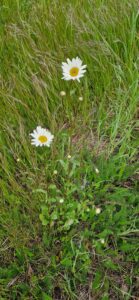
The Oxeye Daisy is a familiar sight across the UK, brightening meadows, roadside verges, and grasslands from late spring into summer. Native to Europe and Asia but now found across much of the world, it thrives in well-drained soils and enjoys full sun. You’ll often find it growing in unmanaged pastures or open grassy areas, where its tall, graceful stems and large white blooms stand proudly among the grasses.
Appearance
Leaf Description
At the base, oxeye daisies produce a rosette of spoon-shaped leaves, somewhat similar to the common daisy, but much larger. As the plant grows taller, the stem leaves become narrower, toothed, and alternate along the stem. The leaves are a rich green and slightly rough to the touch.
Flower Description
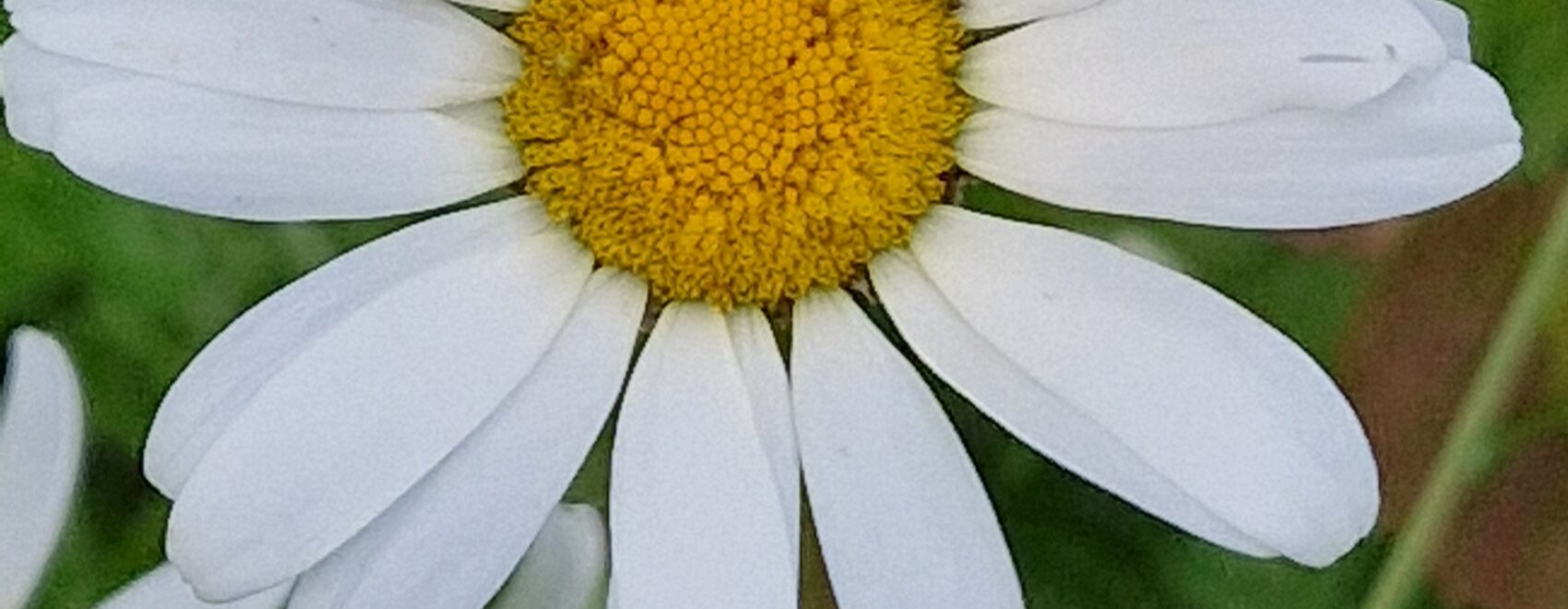
The flowers are the largest of our native daisies, measuring 5–7 cm in diameter. Each bloom features a bright yellow central disc surrounded by white ray florets, forming the classic daisy appearance. The flowers open during the day and close at night, following the light like small suns in a meadow.
Stem Description
Oxeye daisies have upright, unbranched stems that can grow up to 60 cm tall. Each stem typically supports a single flower head, rising above the grasses and swaying gently in the wind.
Fruit/Seed Description
After flowering, oxeye daisies produce tiny, ribbed achenes (seed-like fruits) without a pappus, meaning they don’t float far on the breeze. Instead, they tend to reseed nearby, gradually forming colonies that can carpet an area in white and gold.
Edibility
Oxeye daisies are edible, though their flavour is strong and slightly bitter. The young leaves can be eaten raw in salads or lightly cooked like spinach. The flower buds are sometimes pickled in vinegar as a caper substitute, and the petals can be used as an edible garnish in summer dishes.
Recipes
- Pickled Daisy Buds: Collect tight, unopened buds and preserve them in vinegar with herbs for a tangy condiment.
- Summer Salad: Toss young oxeye daisy leaves with milder greens, lemon juice, and oil for a wild twist.
- Decorative Petals: Sprinkle fresh petals over desserts, cocktails, or cordials for a delicate, floral finish.
(As always, only forage from clean, pesticide-free areas away from roadsides or sprayed fields.)
Nutritional Value & Health Benefits
Oxeye daisies contain vitamin C, tannins, and antioxidant compounds. Traditionally, daisy infusions were used as a digestive aid and to ease coughs or colds. The plant also features in herbal preparations for minor wounds and bruises, though it is used sparingly due to its bitterness.
Foraging Season
You’ll usually find oxeye daisies in full bloom from May to September. Young leaves are best gathered in spring, before the plant flowers. Buds can be picked in late spring to early summer for pickling.
Folklore & Interesting Facts
The oxeye daisy has long been a symbol of purity, innocence, and new beginnings. In folklore, young women would pluck the petals while chanting “He loves me, he loves me not,” seeking answers about their romantic fate. Its Latin name, Leucanthemum vulgare, comes from the Greek words leukos (white) and anthemon (flower).
These flowers were once used in love charms and divination, and their bright white faces have inspired countless poems and songs celebrating the simple beauty of summer meadows.
Health Warning
Although generally safe, oxeye daisies belong to the Asteraceae family, which also includes ragweed and chrysanthemums. People with allergies to this plant family should avoid consuming them. Always ensure plants are correctly identified before eating, and only forage with permission when on private land.