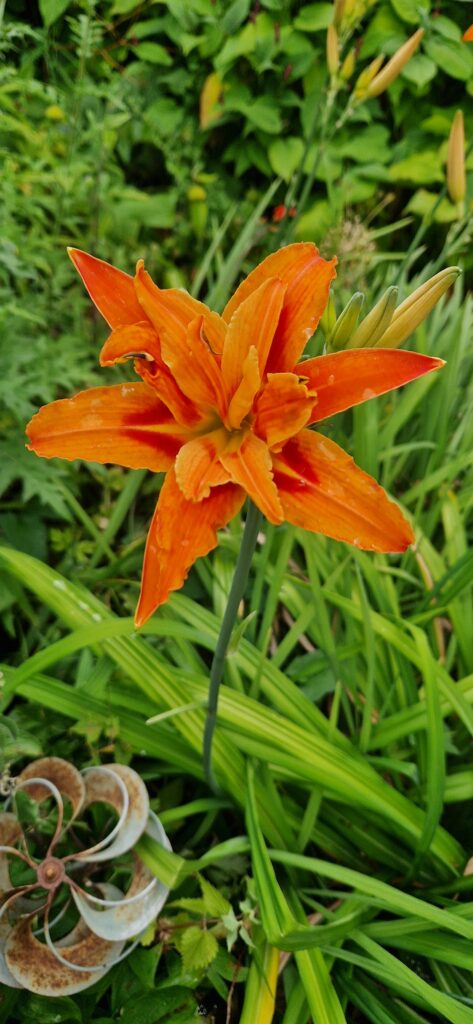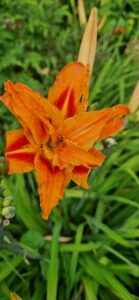
Orange Daylily is a vibrant and widely recognised flower commonly seen along hedgerows, roadsides, gardens, and grassy banks during the summer months. While admired for its bright orange, trumpet-shaped blooms, it is also an edible plant with a history of culinary use. However, proper identification is crucial to ensure safety when foraging.
Not sure about plant identification? Join us for the next foraging course in Charnwood, Leicestershire, and learn how to safely identify wild plants.
Habitat
Orange Daylily thrives in well-drained soils along hedgerows, embankments, gardens, and meadows. It prefers sunny or partially shaded locations and often naturalises in areas where it has been planted, forming striking swathes of colour.
Identification Features
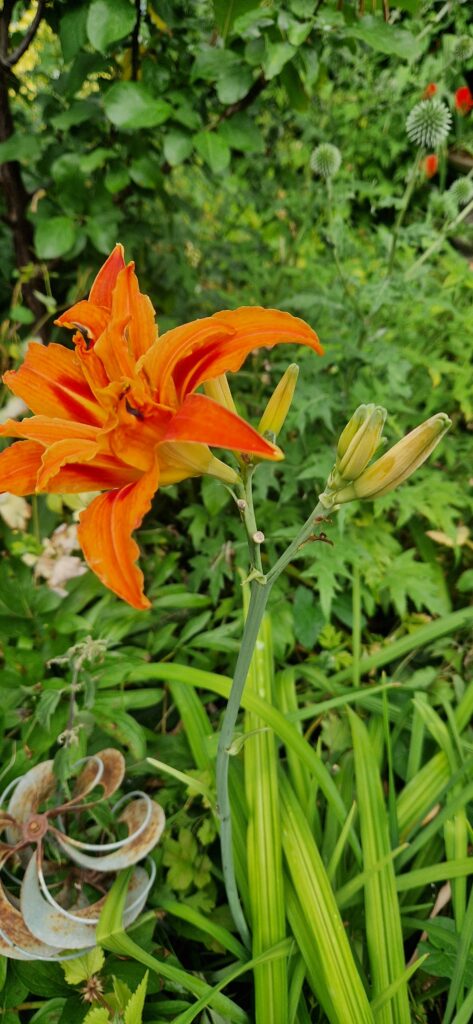
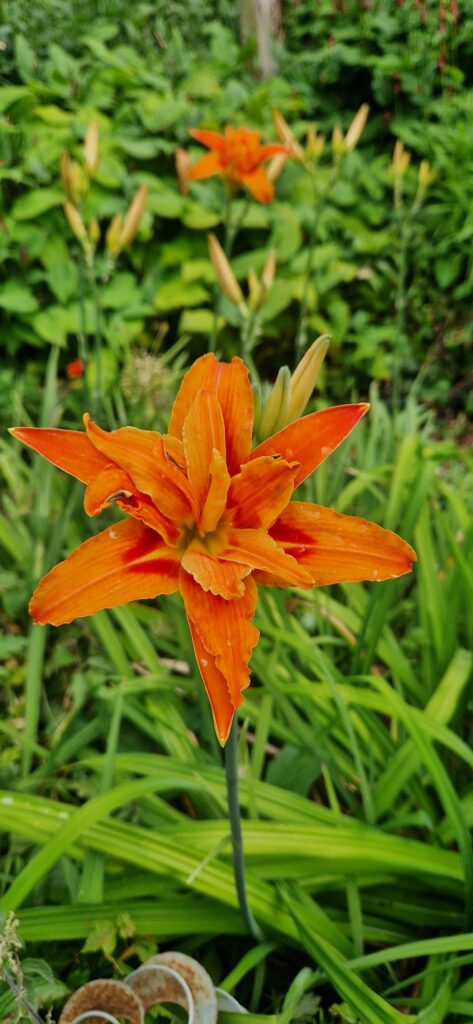
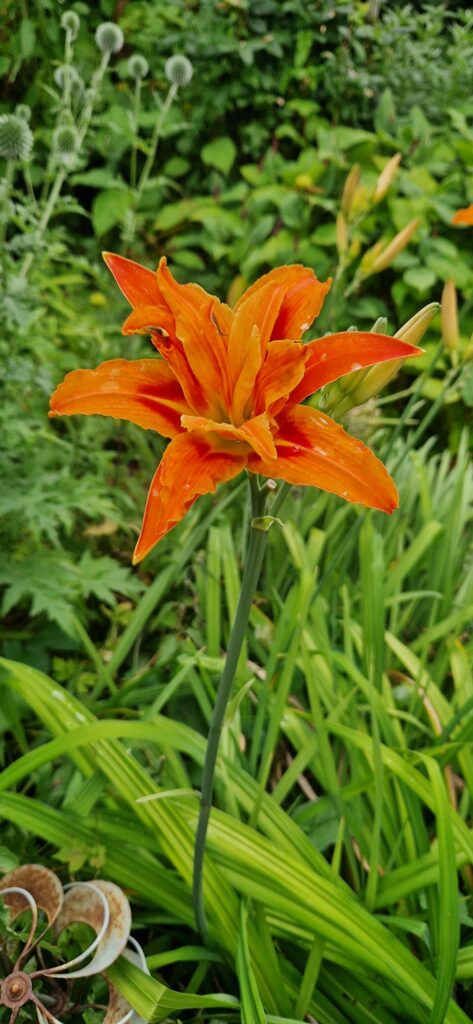
- Bright orange, trumpet-shaped flowers, usually 10–15 cm long
- Flowers typically open for just one day, giving the plant its common name
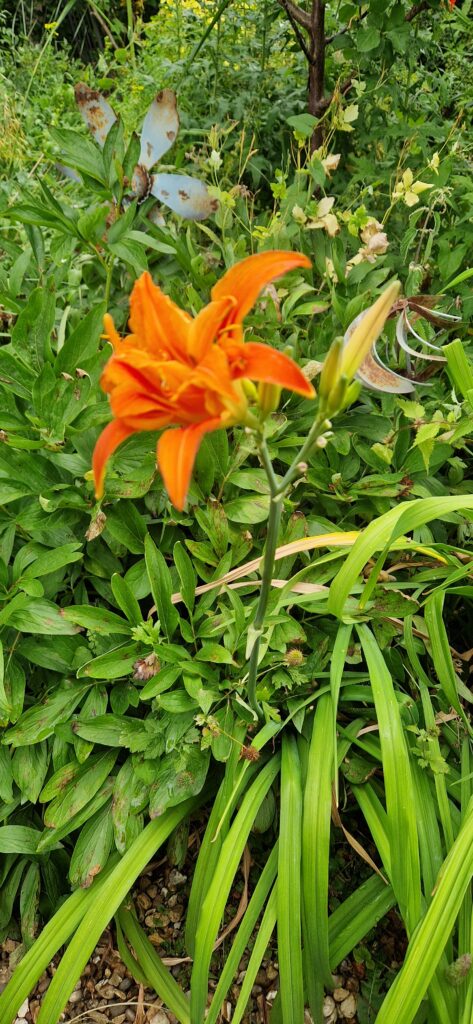
- Long, strap-like green leaves growing from a basal clump
- Stems are leafless and can reach up to 1 metre in height
- Flower buds are elongated and clustered at the top of the stem
- Distinctive fragrance is subtle, often sweet
Lookalikes
Orange Daylily can be confused with other Hemerocallis cultivars, but these are generally also edible. Care should be taken to avoid true lilies (Lilium spp.), which can be toxic. Key distinctions include the single-day bloom, basal leaf clumps, and lack of a woody stem.
Edibility
Young flower buds and petals of Orange Daylily are edible and can be used in salads, stir-fries, or as a garnish. The flavour is mildly sweet and slightly crunchy. Flowers should be harvested when fresh and tender.
Ecology
Orange Daylily is not native to the UK but has become naturalised in many areas. It attracts pollinators such as bees and butterflies and provides nectar for insects. While it can spread aggressively, it is valued for its ornamental and culinary properties.
Season
The main flowering season is June to September, with fresh buds available for culinary use throughout this period.
Health & Safety Warning
Always ensure accurate identification before consuming any wild plant. Avoid harvesting plants from roadsides or contaminated soils to reduce the risk of pollutants.
Not sure about plant identification? Join us for the next foraging event in Charnwood, Leicestershire.