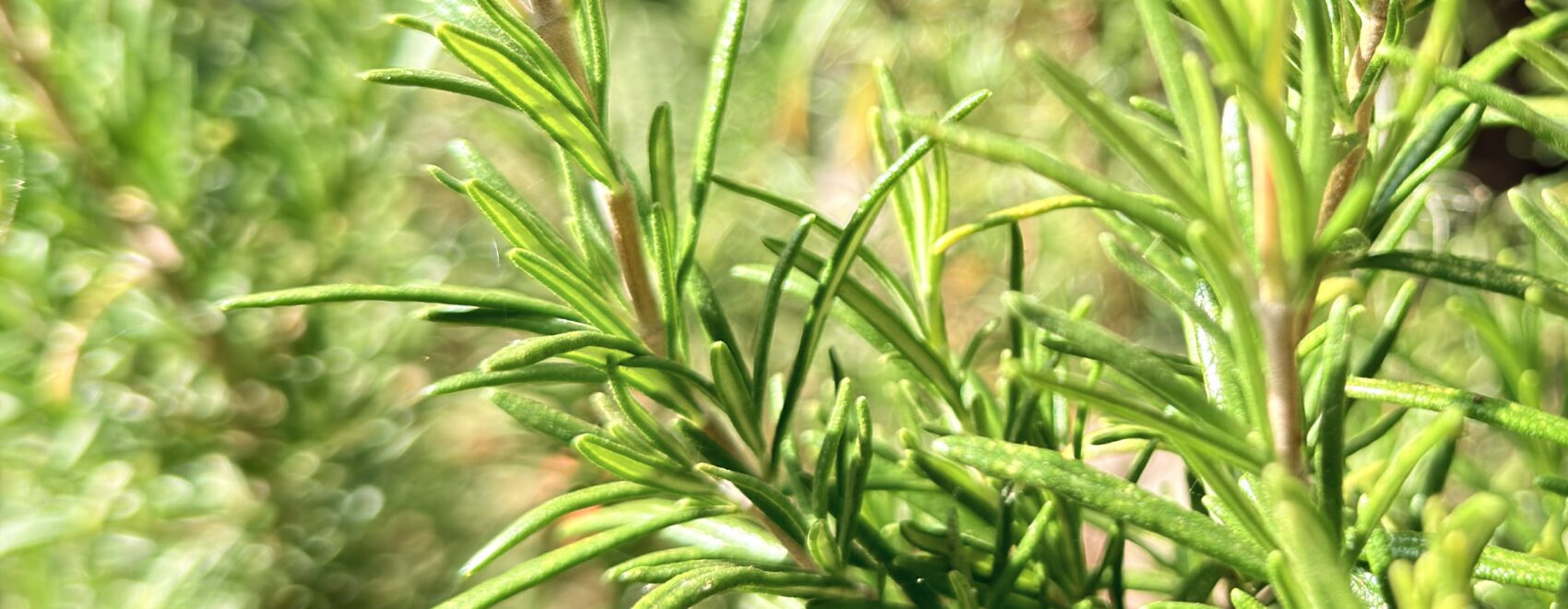

A Traditional Herbal Infusion
Rosemary (Salvia rosmarinus, formerly Rosmarinus officinalis) has been treasured for centuries for its aromatic leaves and its place in traditional herbal medicine. An infused oil is one of the easiest ways to capture the plant’s fragrance and beneficial compounds, making it a popular base for homemade balms, massage oils and natural skincare products.
This simple preparation has been passed down through generations and remains a favourite in many home herbal apothecaries today.
Want to learn more about rosemary? Visit our Rosemary plant guide to discover how to identify, grow and harvest this wonderful herb.
Ingredients
- Fresh rosemary (wilted for 24–48 hours) or dried rosemary
- Olive oil, sweet almond oil or another carrier oil
- Clean glass jar with a lid
- Fine sieve or muslin cloth
- Sterilised glass bottle or jar for storage
Method
- If using fresh rosemary, allow it to wilt for a day or two after harvesting to reduce its moisture content.
- Chop the rosemary lightly to expose more surface area.
- Place the herb into a clean, dry glass jar.
- Pour over enough carrier oil to completely cover the rosemary.
- Seal the jar and leave it to infuse in a warm, dark place for 2–4 weeks, shaking gently every few days.
- Strain through muslin or a fine sieve.
- Pour the infused oil into a clean, labelled bottle and store in a cool, dark place.
Traditional Uses
Traditionally, rosemary infused oil has been used:
- As a massage oil for tired muscles.
- As a base for homemade herbal balms and salves.
- To nourish dry skin.
- As part of traditional hair care routines, particularly for the scalp.
These uses are based on traditional herbal knowledge rather than established clinical evidence.
Learn More
Join one of our foraging and herbal workshops to discover how everyday plants can be transformed into simple traditional preparations. You’ll learn about sustainable harvesting, safe preparation methods and the fascinating history behind many of Britain’s best-loved medicinal plants.
Disclaimer: This recipe is shared for educational purposes only and reflects traditional herbal practices passed down through generations. It is not intended as medical advice, diagnosis or treatment. Always consult a qualified healthcare professional before using herbal preparations, particularly if you have a medical condition, are taking medication, are pregnant or breastfeeding. Carry out a patch test before applying any herbal preparation to the skin, and discontinue use if irritation occurs.el of experience.you can experiment with mushrooms of different colours through out the year white.