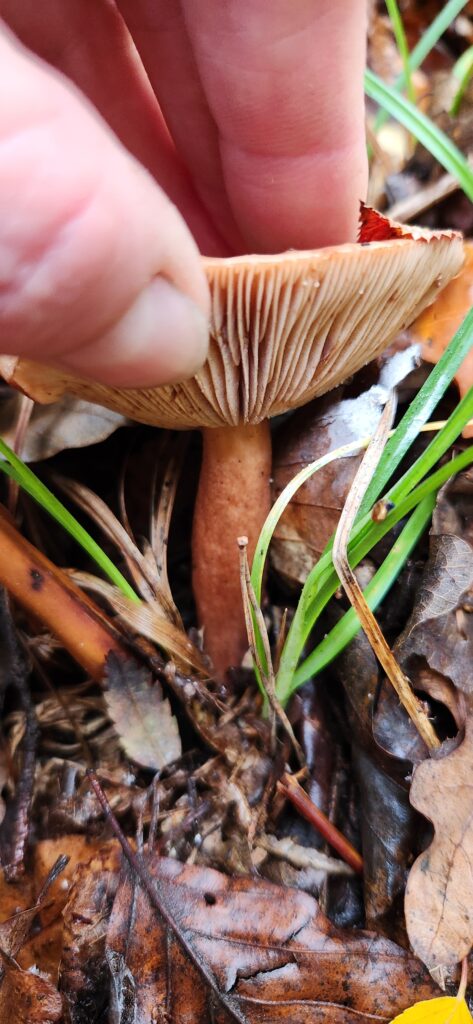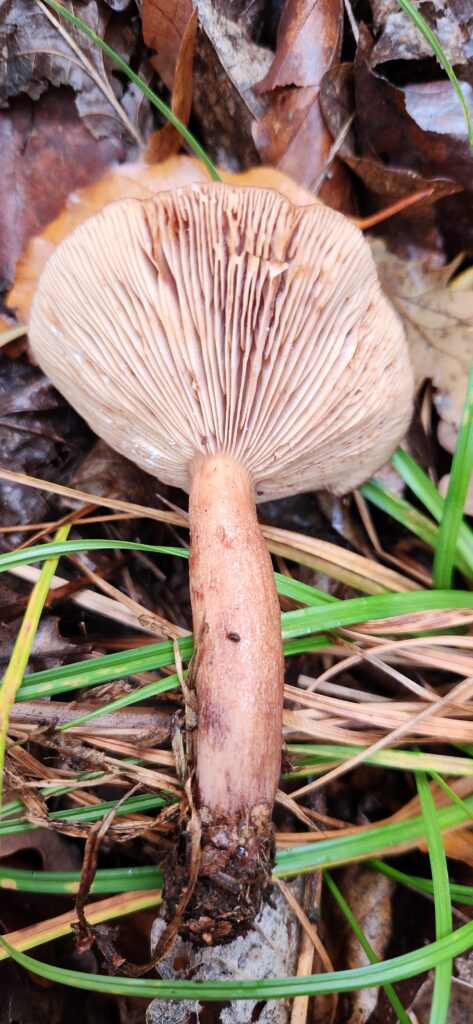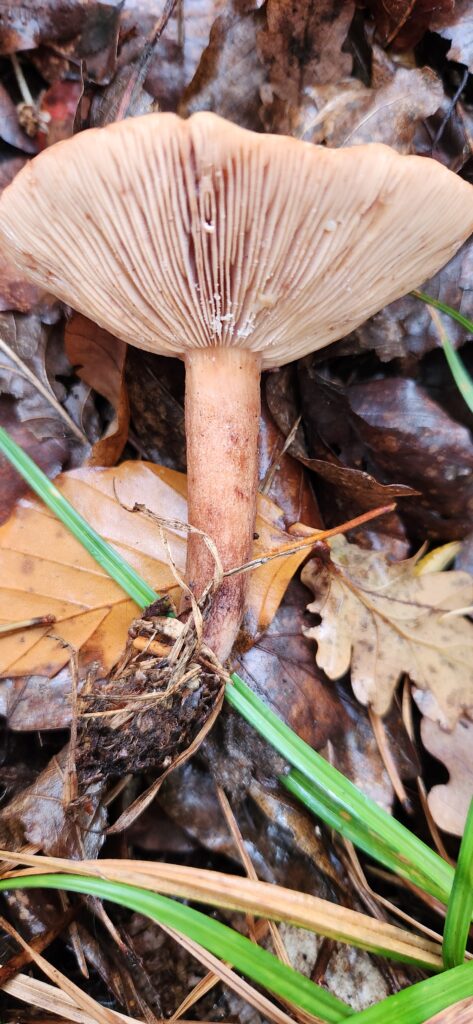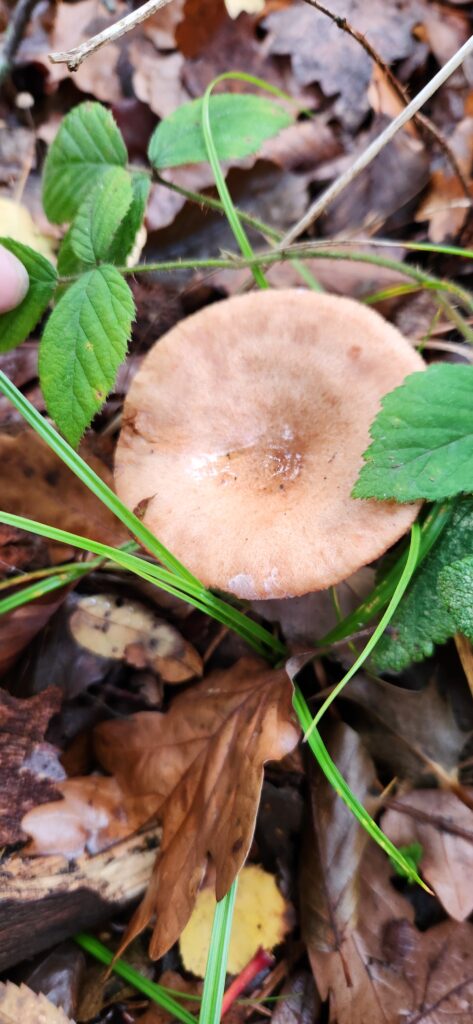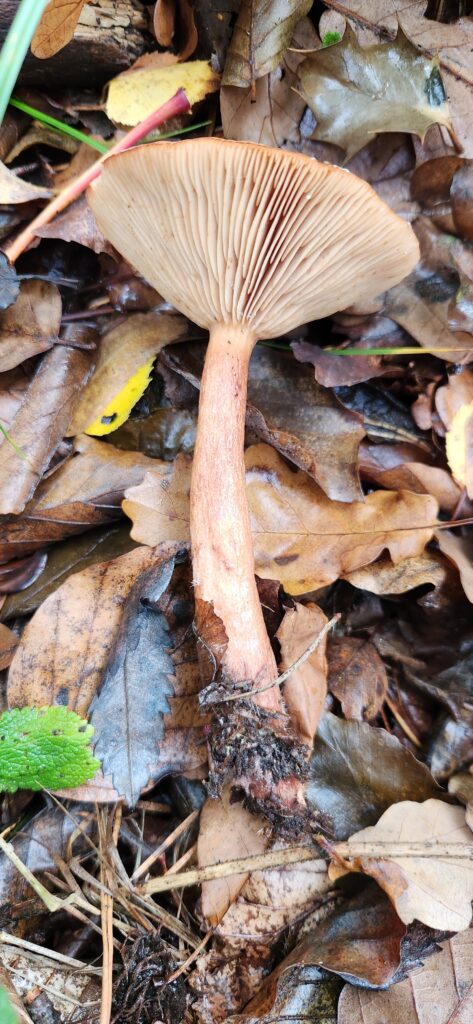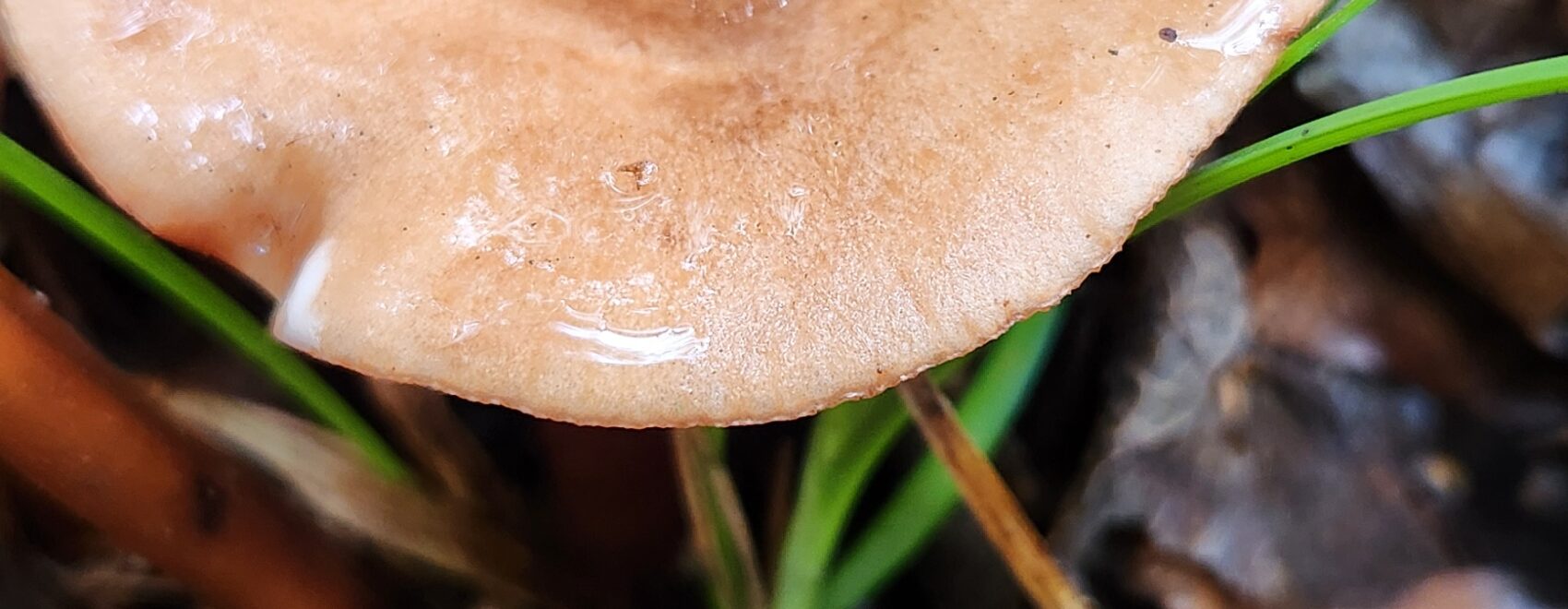
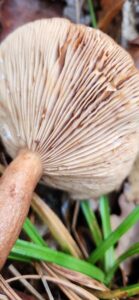
The Oakbug Milkcap (Lactarius quietus), also known as the Oak Milkcap or Quiet Milkcap, is a common woodland fungus found throughout the UK and much of Europe. True to its name, it grows almost exclusively beneath oak trees, forming an essential partnership with their roots. This brownish mushroom often appears in late summer and autumn, blending beautifully with fallen leaves. Its distinct, somewhat “bug-like” scent makes it one of the more easily recognised milkcaps for those who know what to sniff for!
Other names: Oak Milkcap, Quiet Milkcap, Oak-loving Milkcap
Not sure about mushroom identification? Join us for the next foraging event in Charnwood, Leicestershire.
Habitat
The Oakbug Milkcap is a mycorrhizal mushroom, forming a mutually beneficial relationship with oak trees. It can be found in broadleaf woodlands, parklands, and hedgerows, typically fruiting among fallen leaves where the ground is damp but well-drained. Its fruiting season runs from August through October, occasionally into November in milder weather.
Appearance
Cap Description
The cap is reddish-brown to ochre, often displaying faint, darker concentric rings. Young caps are convex, flattening with age and developing a slightly sunken centre. The surface is smooth and dry, and caps typically measure 4–8 cm across.
Gills
The gills are pale cream, later turning ochre with maturity. They are decurrent (running down the stem) and fairly close together. When damaged, they exude a white latex — a hallmark of milkcap species.
Stem
The stem is similar in colour to the cap, smooth and often hollow in older specimens, usually 3–6 cm tall. It may be slightly paler near the base.
Flesh
When cut, the flesh is pale cream, releasing white milk (latex) that does not change colour when exposed to air. Its distinctive scent, often described as reminiscent of bedbugs, curry leaves, or old grain, makes it stand out among other woodland fungi.
Edibility
The Oakbug Milkcap is technically edible, though not generally recommended due to its unpleasant smell and mediocre flavour. Some European foragers boil and discard the water before eating, but most consider it inedible or not worthwhile compared to more desirable species like the Saffron Milkcap (Lactarius deliciosus).
If experimenting, take great care — some milkcaps can cause gastric upset and are not suitable for consumption without proper identification.
Foraging Notes
When foraging for milkcaps:
- Look under oak trees — this species rarely grows elsewhere.
- Check for white latex by gently nicking the gills.
- Note the smell — an earthy, bug-like aroma is characteristic.
- Avoid old or soggy specimens, as they spoil quickly.
Foraging Season
The Oakbug Milkcap fruits from August to October, occasionally extending into early November. It’s one of the most common autumn milkcaps, and once you learn its scent and oak association, it becomes quite easy to spot.
Folklore & Interesting Facts
The name Lactarius comes from the Latin lac, meaning milk, due to the white latex exuded from the gills. The “oakbug” name refers to the unusual odour — reminiscent of bedbugs, known in old English as “oak bugs.”
While not prized for eating, the Oakbug Milkcap plays a vital ecological role, helping oak trees absorb nutrients from the soil. It’s a wonderful example of the hidden networks connecting trees and fungi beneath our feet.
Health Warning
Although Lactarius quietus is not poisonous, it’s best treated as inedible. Some individuals may experience digestive discomfort after consumption. Always ensure correct identification before tasting any wild mushroom, and remember that foraging for fungi on private land requires the landowner’s permission.
Join us for a foraging adventure in Charnwood, Leicestershire! Whether you’re a beginner or a seasoned forager, our events are a great way to learn about and identify edible fungi in their natural habitat.