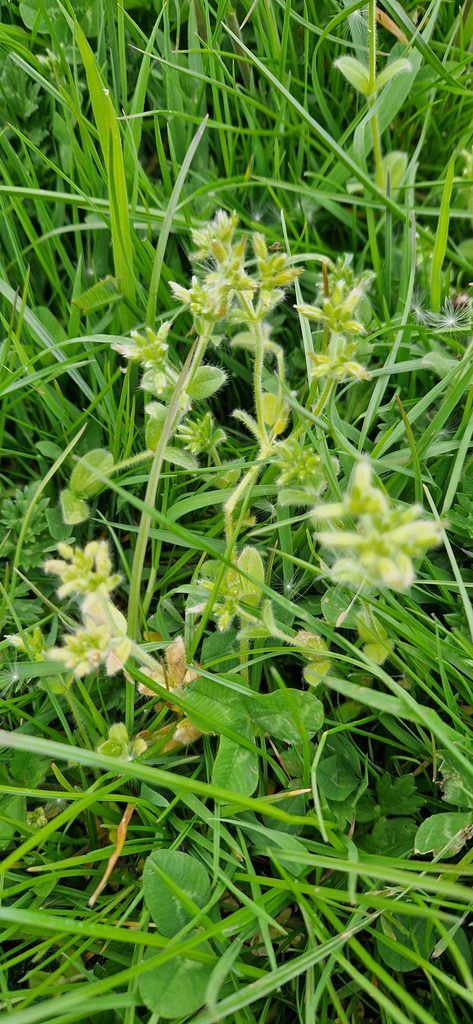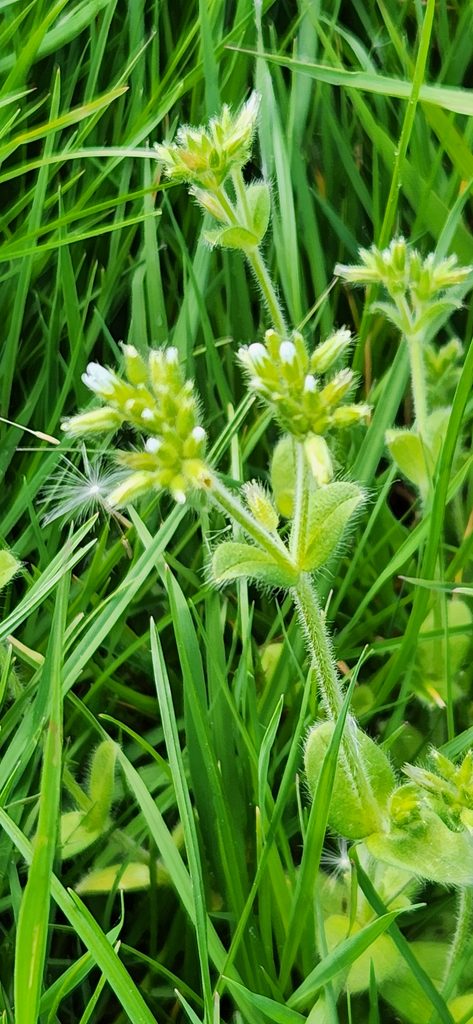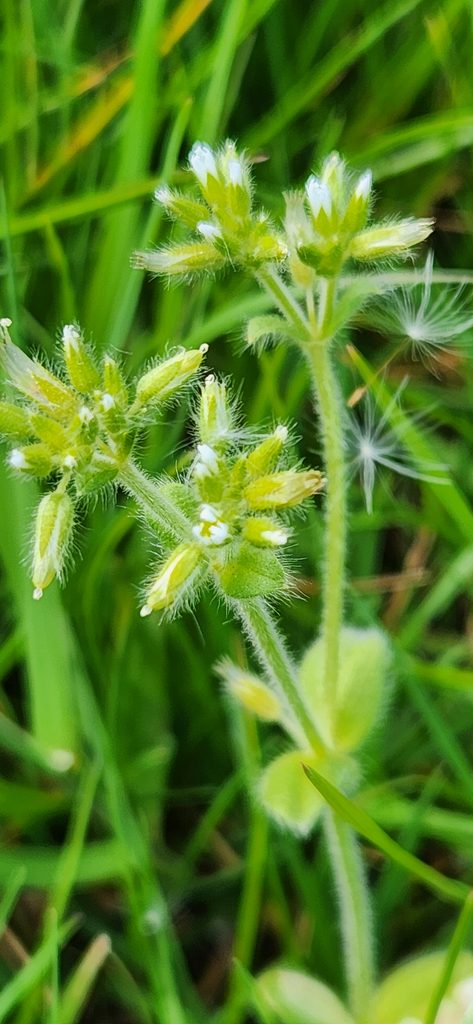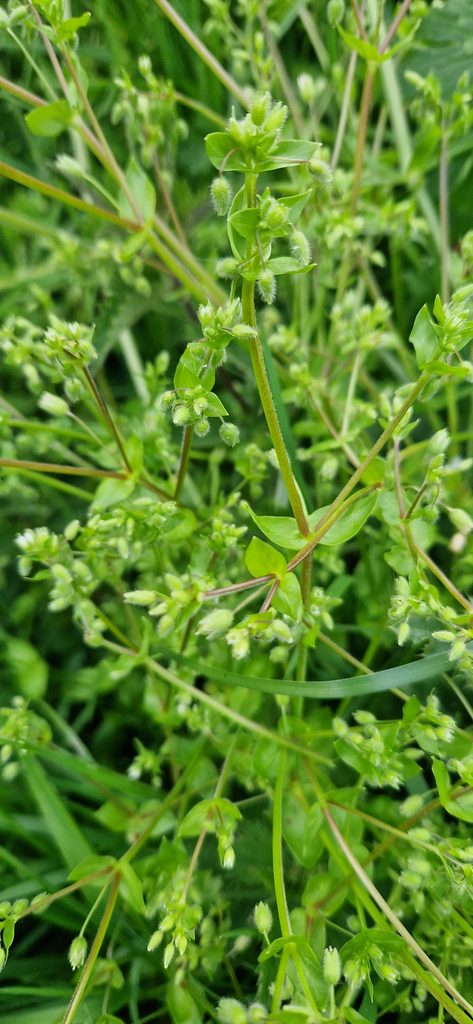
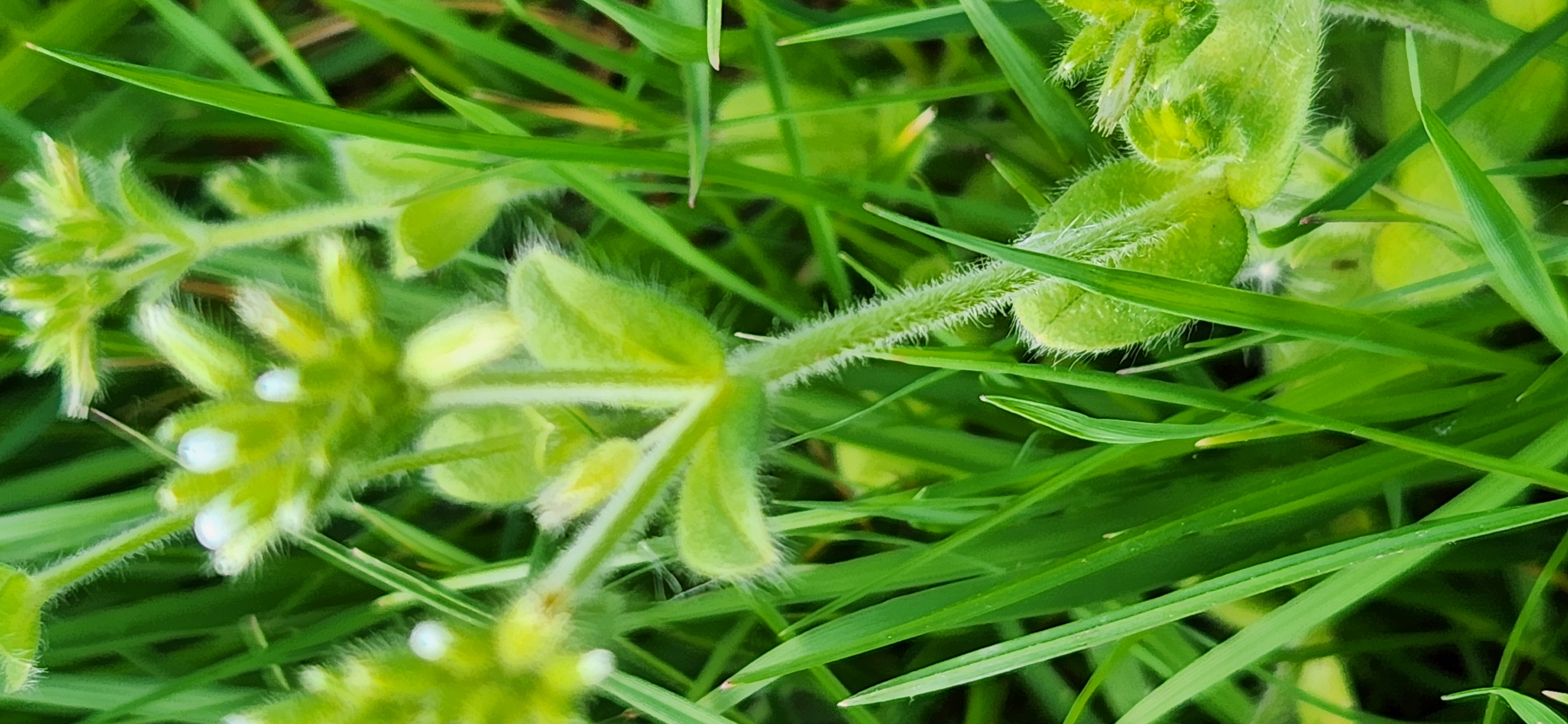
Small, soft and easily overlooked, mouse-ear chickweeds are common garden plants that often grow quietly between paving stones, in lawns and along paths. Their tiny white flowers may be modest, but they have an interesting place in the world of wild plants.
Not sure about plant identification? Join us for the next foraging course in Charnwood, Leicestershire, and learn how to safely identify wild plants.
Habitat
Mouse-ear chickweeds are commonly found in lawns, gardens, grassland, roadsides, walls and disturbed ground. They favour open, sunny places and can tolerate relatively dry, poor soils.
Several species occur in the UK, including Common Mouse-ear (Cerastium fontanum) and Sticky Mouse-ear (Cerastium glomeratum).
Identification Features
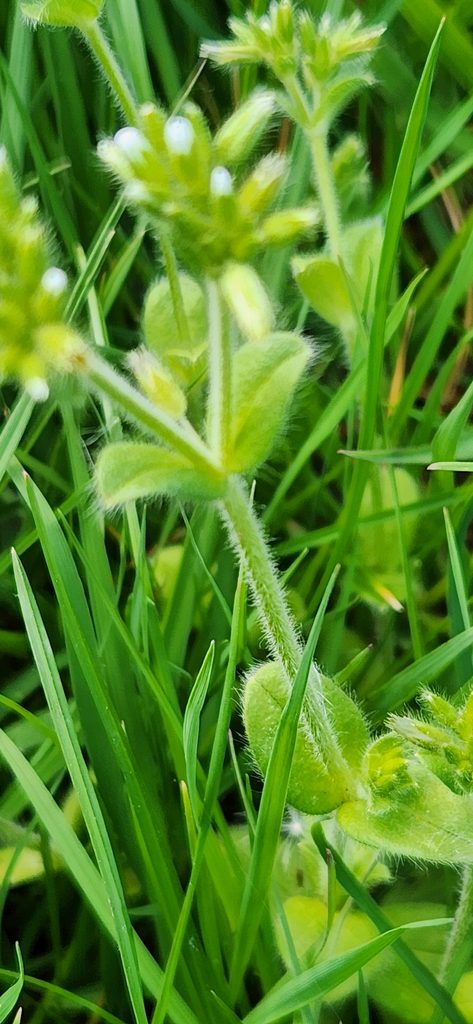
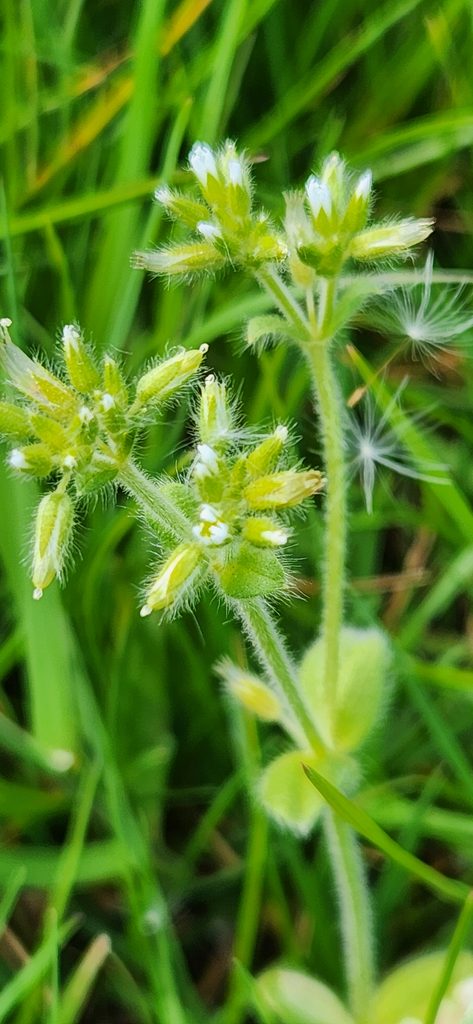
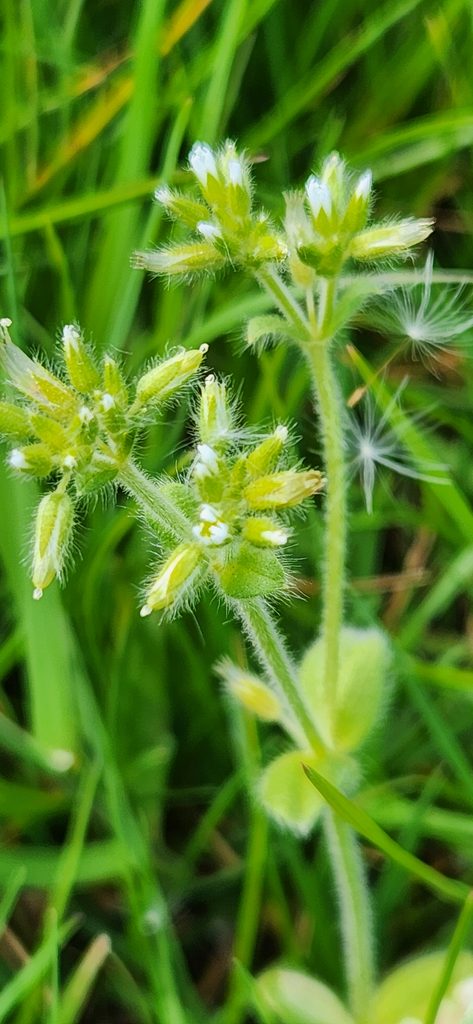
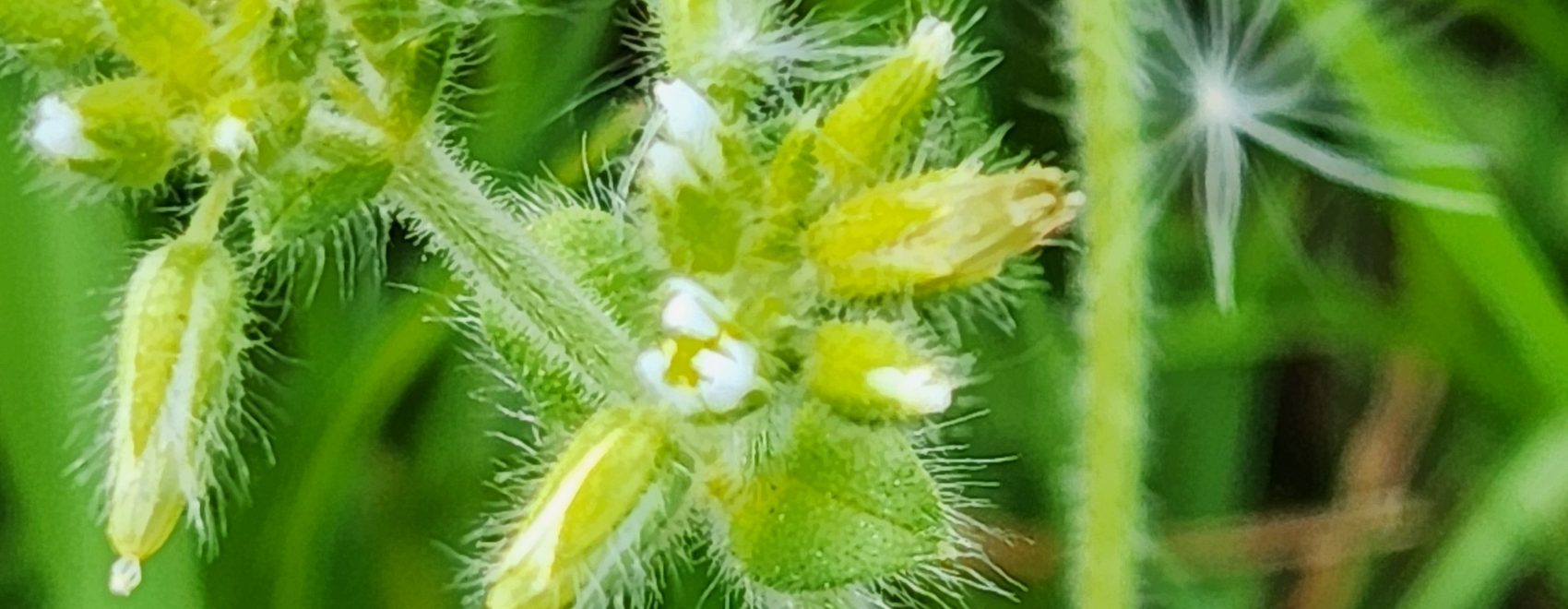
- Flowers: Small white flowers with five deeply divided petals, giving the impression of ten petals. They grow in loose clusters at the ends of stems.
- Leaves: Small, oval to spoon-shaped leaves, usually opposite one another along the stem.
- Stems: Often covered in fine hairs, giving the plant a soft or slightly woolly appearance.
- Growth: Low-growing or sprawling, sometimes forming loose mats. Some species have sticky hairs, particularly around the flower stalks.
- Fruit: Small, elongated seed capsules that open at the top when ripe.
Lookalikes
Mouse-ear chickweeds can be confused with other small members of the chickweed family, particularly Common Chickweed (Stellaria media).
Common Chickweed has more pointed leaves and a distinctive line of fine hairs running along just one side of its stem, changing sides at each leaf joint. Mouse-ear chickweeds are generally hairier, with hairs often covering the stems and leaves.
Correct identification can require close examination of the hairs, leaves and flowers, as several Cerastium species look very similar.
Edibility
Edible Parts: Young leaves and shoots are reported as edible in some mouse-ear chickweed species.
However, the different Cerastium species are not equally well documented as food plants, and they are not as commonly used as Common Chickweed.
Ecology & Traditional Uses
Mouse-ear chickweeds are valuable little plants for wildlife. Their flowers provide small amounts of nectar and pollen for insects, while their seeds can contribute to the diet of seed-eating birds.
The name Cerastium comes from the Greek word keras, meaning horn, referring to the shape of the plant’s seed capsules.
The common name “mouse-ear” is inspired by the soft, small leaves, which are said to resemble the ears of a mouse.
Despite their delicate appearance, these plants are often tough survivors, growing in places where larger plants struggle to establish.
Season
Mouse-ear chickweeds can be found for much of the year, depending on the species and weather. They typically flower from spring through summer, with some continuing into autumn.
Health Warning
Never eat a wild plant unless you are completely confident of its identification and suitability.
Several closely related species exist, and identification can be difficult.
Do not assume that all plants called mouse-ear chickweed have the same edible properties.
Avoid gathering plants from roadsides, treated lawns or contaminated ground.
Not sure about plant identification? Join us for the next foraging event in Charnwood, Leicestershire.