Monkey Puzzle Tree – An Ancient Giant with Edible Secrets
The Monkey Puzzle tree is a striking and prehistoric-looking conifer, native to South America but long planted in British gardens and estates for its unique appearance. With spiralled, scale-like leaves and a towering stature, this evergreen is more than just ornamental—it produces large cones that hide a nutritious and little-known edible treasure.
Other names: Chilean Pine, Araucaria
Not sure about tree identification? Join us for the next foraging event in Charnwood, Leicestershire!
Habitat
Monkey Puzzle trees are typically found in parks, botanical gardens, and large private estates across the UK, often planted as specimen trees for their architectural beauty. They prefer well-drained soils and sunny conditions and can live for hundreds of years. Though not native, they have become a familiar sight in temperate regions.
Identification features
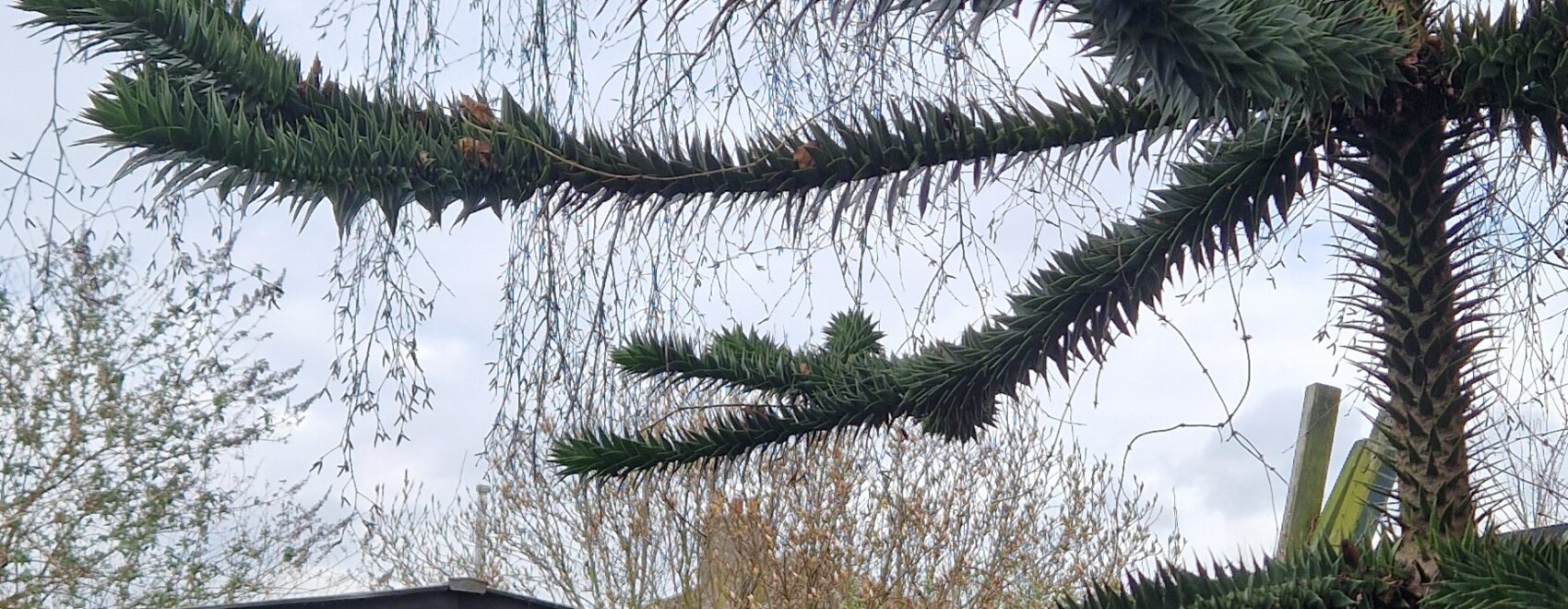
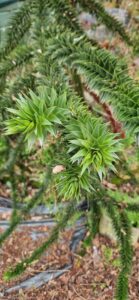
Leaves: Tough, sharp, and scale-like, arranged in spirals around the branches. They are dark green, glossy, and pointed—capable of staying on the tree for many years.
Bark: Grey-brown and fissured, often resembling scales or plates on older specimens.
Cones: Large and globular, around the size of a grapefruit, maturing over two years. When ripe, they fall apart to release edible seeds.
Seeds: Similar in size and appearance to large pine nuts, but longer and flatter. They are encased within the cone’s woody scales.
Height: Can grow up to 30–40 metres tall in ideal conditions, forming a tall trunk with horizontal or upward-curving branches.
Edibility
The seeds of the Monkey Puzzle tree are edible and were historically an important food source for the indigenous Mapuche people of Chile and Argentina. Rich in carbohydrates and protein, the seeds can be roasted, boiled, or eaten raw when freshly harvested. Their flavour is mild and nutty—comparable to chestnuts or pine nuts.
Cones are typically gathered when they fall to the ground in late summer to early autumn. Each cone can contain over 100 seeds, making them a valuable seasonal food if you’re lucky enough to find a productive tree.
Historical and cultural significance
Native to the Andes of Chile and Argentina, the Monkey Puzzle tree has been cultivated in Britain since the 18th century. It gained popularity during the Victorian era for its exotic, primeval appearance. The name “Monkey Puzzle” is said to come from a Victorian comment that its strange, spiky branches would “puzzle a monkey” trying to climb it.
In Mapuche culture, the tree is considered sacred, and its seeds—known as piñones—are celebrated in traditional feasts and festivals.
Ecological role
Though non-native, Monkey Puzzle trees provide year-round shelter for birds and can serve as a nesting site. The large seeds are a rare but valuable food source for squirrels and other seed-eating wildlife. In their native habitat, the seeds are dispersed by animals and play a role in forest regeneration.
Foraging season
The cones typically mature and begin to drop from late August through October, depending on the local climate. Once they fall and split open, the seeds should be collected quickly, as wildlife may get to them first.
Please note: The trees can take decades before they start producing cones, and male and female trees are separate—only female trees produce the edible cones.
Health warning
While the seeds of the Monkey Puzzle are edible and nutritious, care must be taken when collecting them. The cones are large and heavy, and falling cones can be dangerous—never stand directly underneath. Always ensure that seeds are collected from the ground and that you have permission to forage, especially on private land.
Discover the hidden edibles of exotic trees and traditional landscapes by joining one of our foraging events in Charnwood, Leicestershire! Learn how to identify unique species, explore their cultural history, and taste the wild side of nature with expert guidance in a friendly, supportive group.