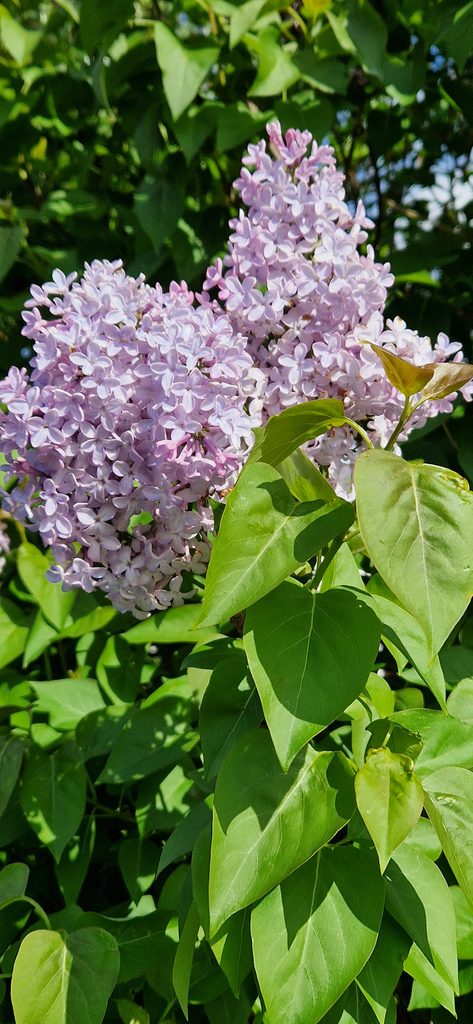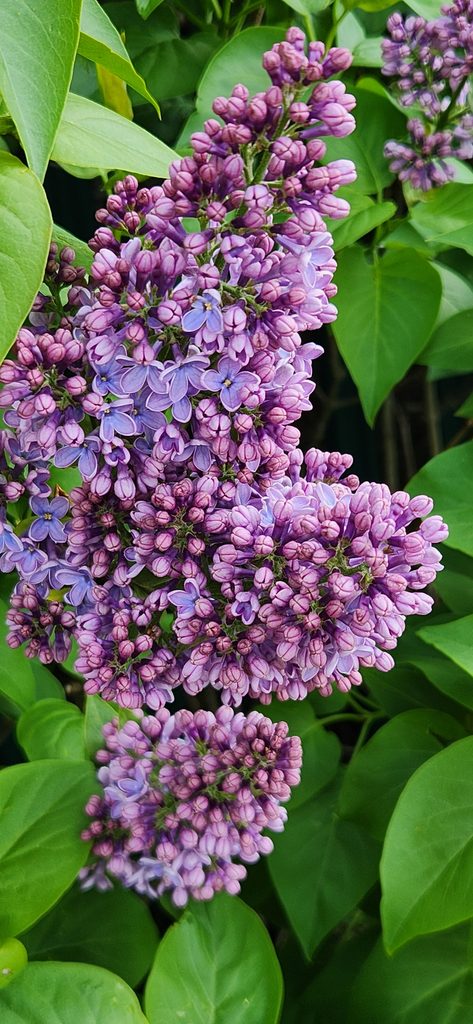
With its beautiful clusters of fragrant flowers and heart-shaped leaves, lilac is one of the most recognisable signs that spring has arrived. But this familiar garden shrub has a few surprises beyond its lovely scent.
Not sure about plant identification? Join us for the next foraging event in Charnwood, Leicestershire.
Habitat
Lilac is native to south-eastern Europe and the Balkans but has been widely planted in gardens, parks and churchyards across the UK. It thrives in sunny or partially shaded places, particularly in well-drained soil. Once established, it can survive for many years, and old shrubs are often found around abandoned gardens and historic buildings.
Identification Features
- Flowers: Dense, cone-shaped clusters of small, four-petalled flowers, usually lilac-purple but also white, pink or blue. They have a distinctive sweet fragrance.
- Leaves: Opposite, smooth-edged, heart-shaped leaves with pointed tips.
- Stems: A woody shrub or small tree with grey-brown bark.
- Growth: Can reach around 4–7 metres tall, although garden varieties are often smaller.
Lookalikes
Lilac is relatively easy to recognise when flowering. However, it may be confused with other ornamental shrubs with clusters of small flowers, such as privet (Ligustrum species). Privet has smaller, usually white flowers and narrower leaves.
Always identify plants carefully before considering them for food.
Edibility
Edible Parts: Flowers, which can be used sparingly to add fragrance and decoration to food.
Lilac flowers have a delicate floral flavour, sometimes described as slightly citrusy or bitter. They can be used to decorate cakes and desserts, infused into sugar or made into floral syrups.
Remove the individual flowers from their stems and use only correctly identified, untreated flowers. Avoid flowers from roadsides or areas that may have been sprayed with pesticides.
Ecology & Traditional Uses
Lilac is particularly loved for its fragrance, which has made it a popular garden plant for centuries. Its flowers attract bees, butterflies and other pollinating insects, providing an early-season source of nectar.
The name Syringa comes from the Greek word syrinx, meaning a pipe or tube. This is thought to refer to the hollow stems, which were traditionally used to make simple pipes and flutes.
Lilac also carries a rich language of flowers. In Victorian times, purple lilac was associated with first love and young romance, while white lilac was often linked with innocence and purity. In some traditions, lilac became a flower of remembrance.
Season
Lilac usually flowers from April to May, sometimes continuing into early June depending on the weather and variety. The fragrant flowers are best gathered when freshly opened.
Health Warning
Do not assume that other parts of the plant are edible.
Only use flowers from a positively identified lilac shrub.
Avoid plants treated with pesticides or growing beside busy roads.
Use flowers in moderation, as individual sensitivities can vary.
Not sure about plant identification? Join us for the next foraging event in Charnwood, Leicestershire.