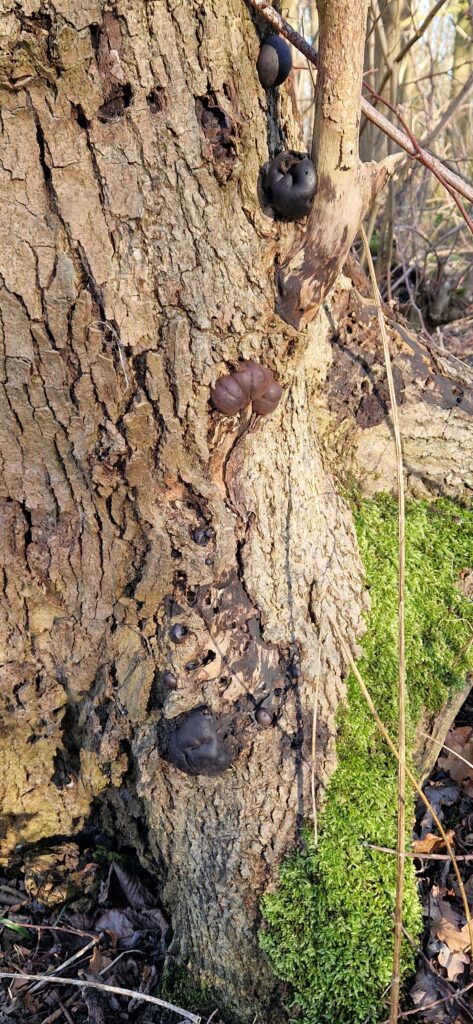
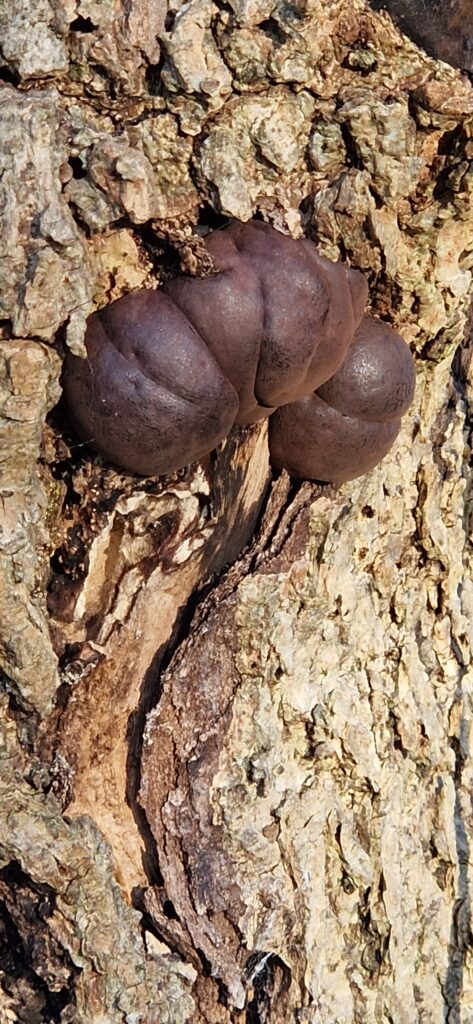
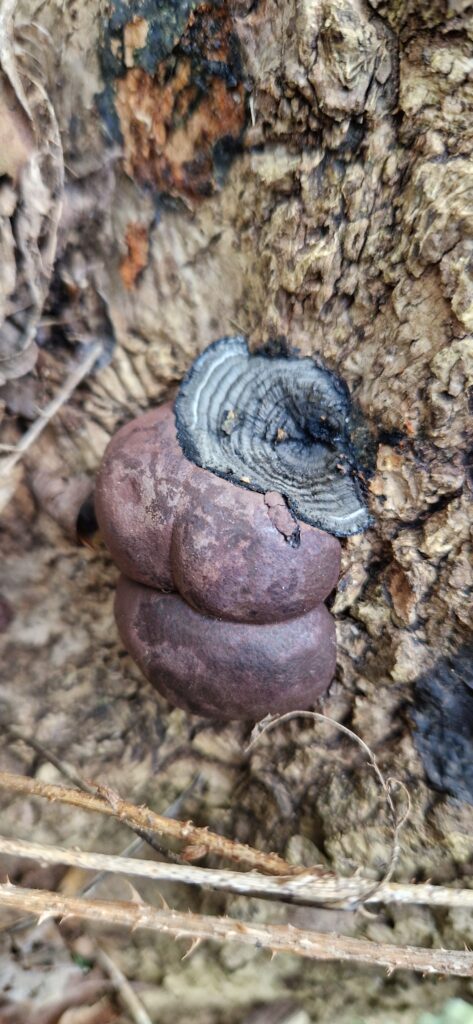
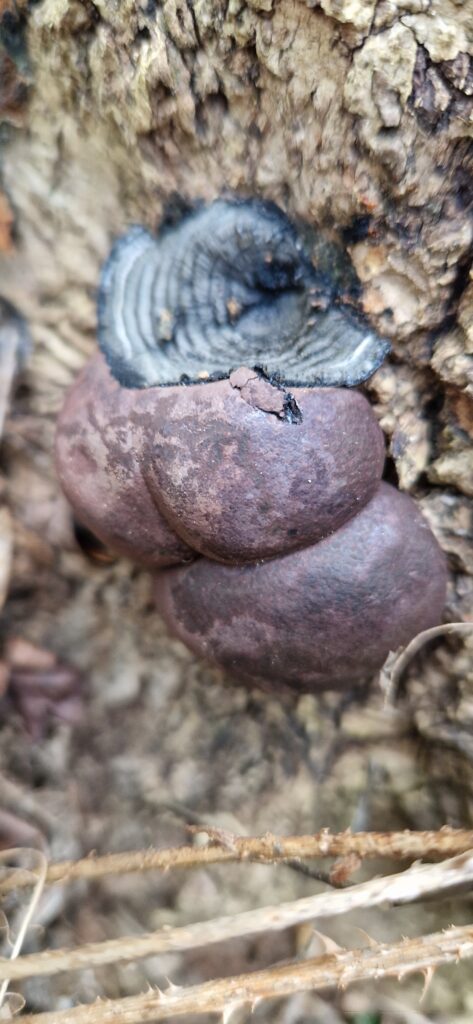
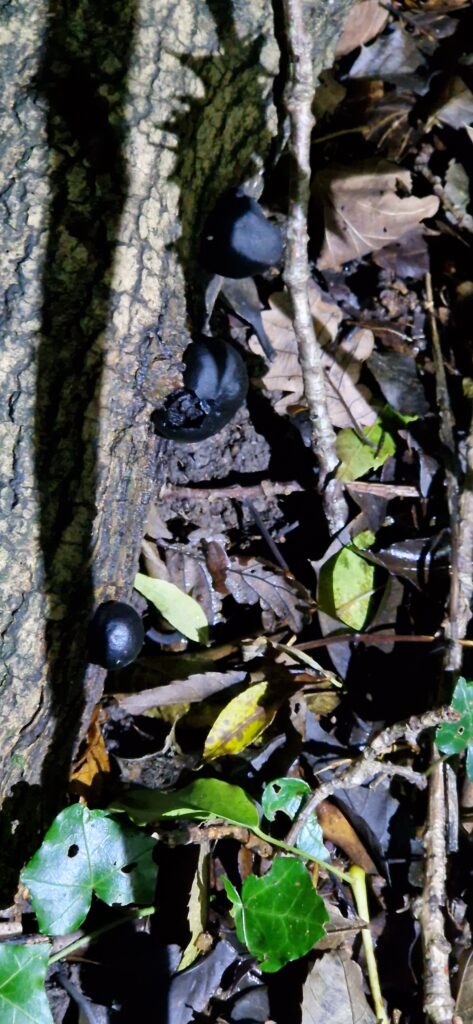
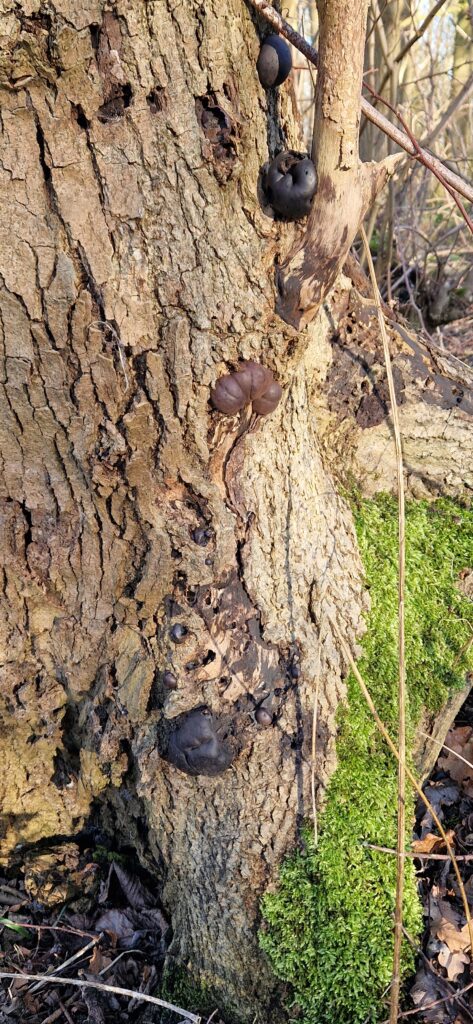
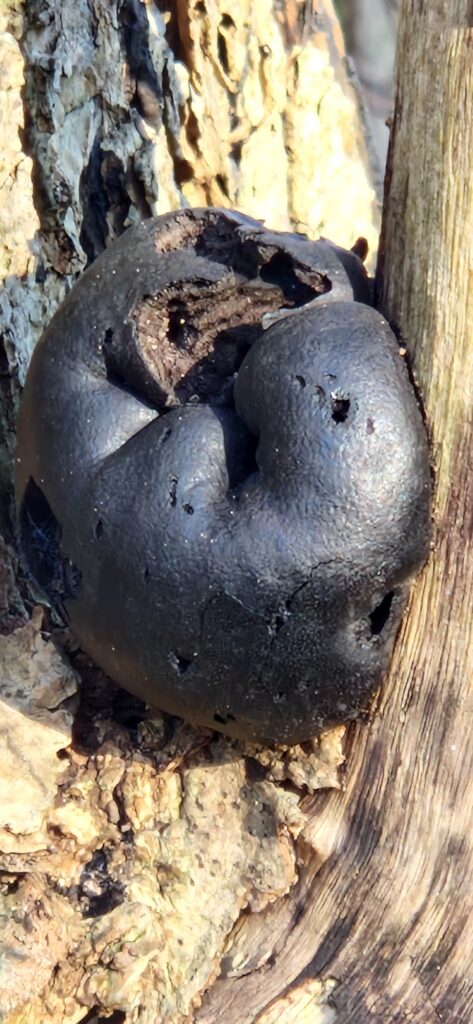
King Alfred’s Cakes, also known as Cramp Balls, are fascinating fungi with a charcoal-black appearance, often resembling burnt wood. This unique species is favored for its practical uses rather than its edibility, making it a valuable find for bushcraft enthusiasts.
Not sure about mushroom identification? Join us for the next foraging course in Charnwood, Leicestershire, and learn how to safely identify fungi in the wild.
Habitat
King Alfred’s Cakes grow primarily on dead and decaying hardwood, especially ash trees. They are commonly found in woodlands year-round, often clustered on fallen branches or tree trunks. These fungi prefer shaded, damp environments but are also resilient to drier conditions.
Identification Features
Fruitbody:
The fruitbody is rounded and hard, measuring 2–8 cm across. Initially dark brown, it matures to a deep black with a cracked, coal-like surface.
Texture:
The fungus is woody and very hard. When cut open, concentric rings resembling tree rings are visible, giving it its scientific name.
Spore Print:
The spore print is black, though this is rarely needed for identification.
Smell and Taste:
King Alfred’s Cakes have no distinctive smell or taste.
Lookalikes
Hypoxylon spp.:
Similar in appearance, but Hypoxylon species are usually smaller and lack the concentric rings inside.
Edibility
King Alfred’s Cakes are not considered edible. However, their dense, woody structure makes them an excellent natural tinder. When dried, they ignite easily and can smolder for extended periods, making them invaluable for fire-starting.
Ecological Role
As a saprotrophic fungus, King Alfred’s Cakes decompose dead wood, recycling nutrients back into the ecosystem. Their presence is a sign of healthy woodland regeneration.
Foraging Season
This fungus can be found year-round, with its durable fruitbodies persisting long after they have matured. They are most easily spotted in winter when deciduous trees have shed their leaves.
Health Warning
While King Alfred’s Cakes are not toxic, they are inedible and should not be consumed. Always exercise caution when identifying fungi, and avoid harvesting from polluted or pesticide-exposed areas.
Discover the practical uses of fungi like King Alfred’s Cakes by joining one of our foraging courses in Charnwood, Leicestershire.