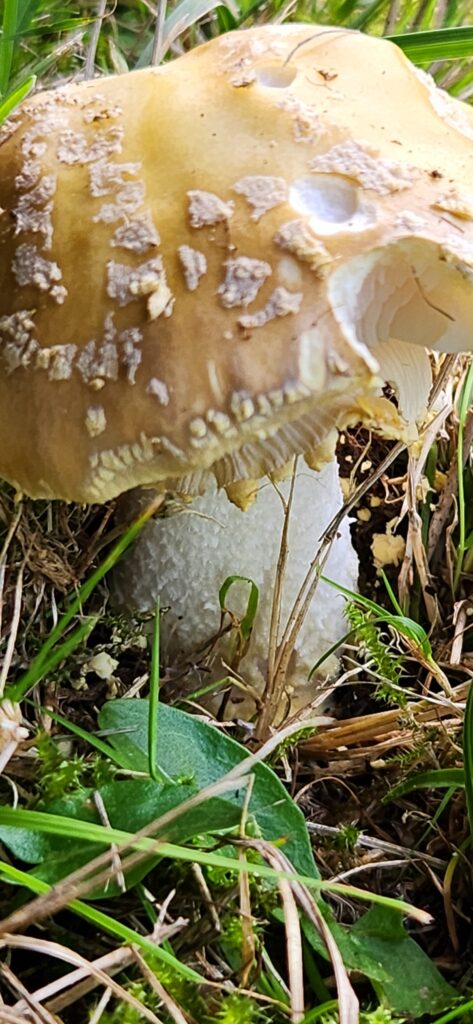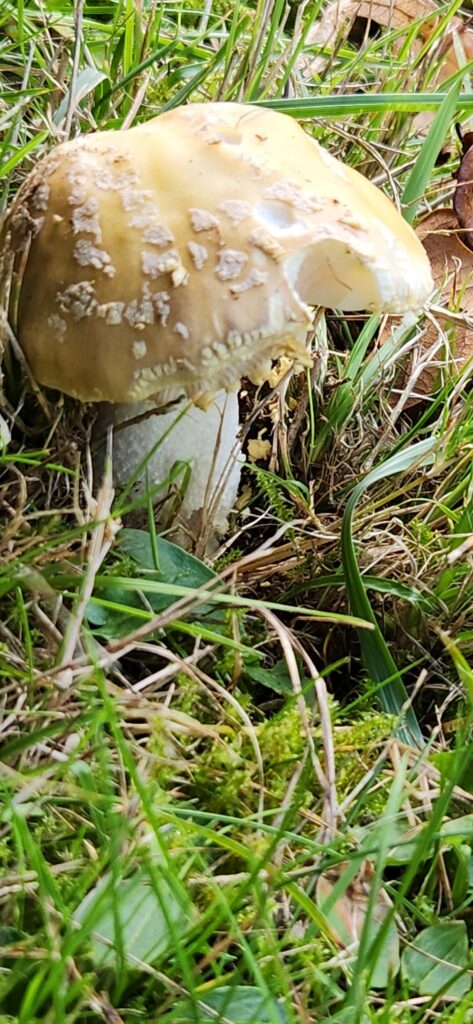
The Gemmed Amanita is a beautiful but potentially dangerous member of the Amanita family. With its glossy yellow cap dotted with pale flecks, it’s easy to mistake this species for an edible mushroom — but looks can be deceiving. Despite its attractive appearance, this species is toxic and not safe for consumption.
Other names: Gemmed Amanita, Jeweled Amanita, Jonquil Amanita.
Not sure about mushroom identification? Join us for the next foraging event in Charnwood, Leicestershire.
Habitat
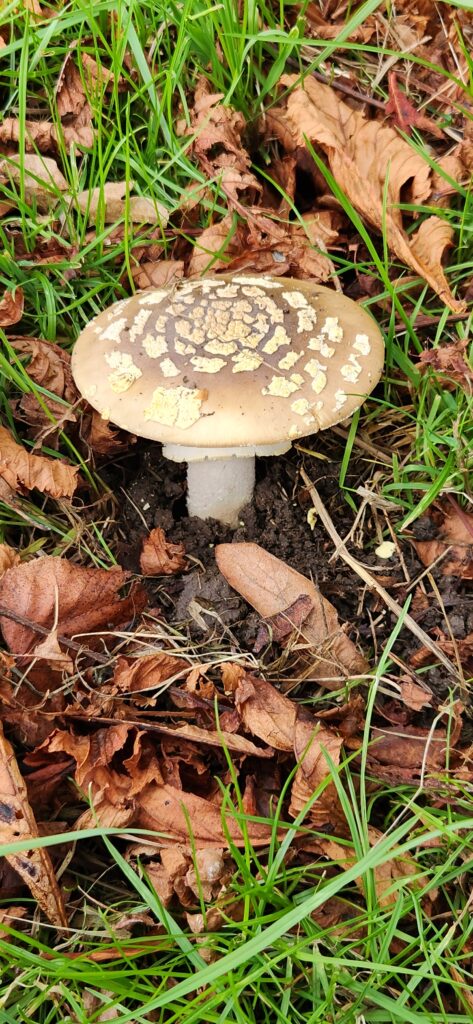
The Gemmed Amanita is commonly found in coniferous and mixed woodlands, especially around pine, spruce, and oak. It favours sandy, acidic soils and often appears singly or in small groups along woodland paths, mossy banks, and forest edges. Like other Amanita species, it forms mycorrhizal relationships with trees, exchanging nutrients and aiding woodland health.
Identification Features
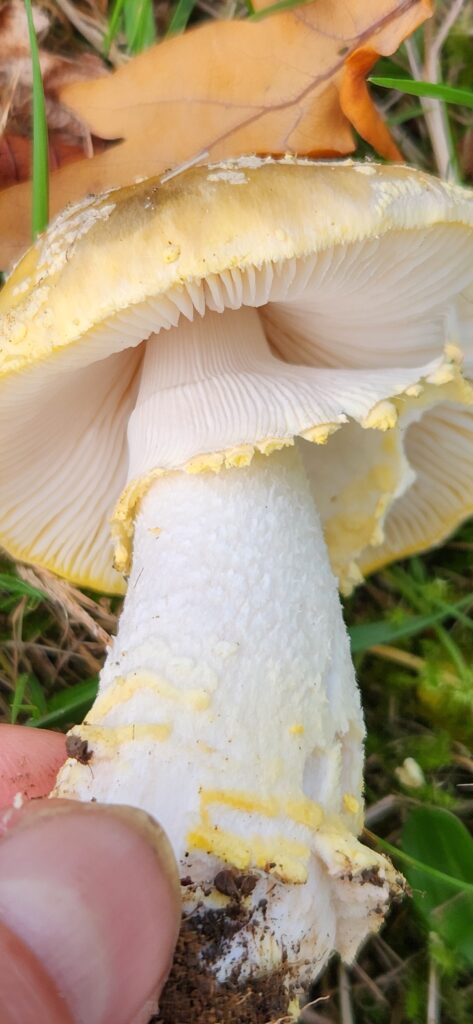
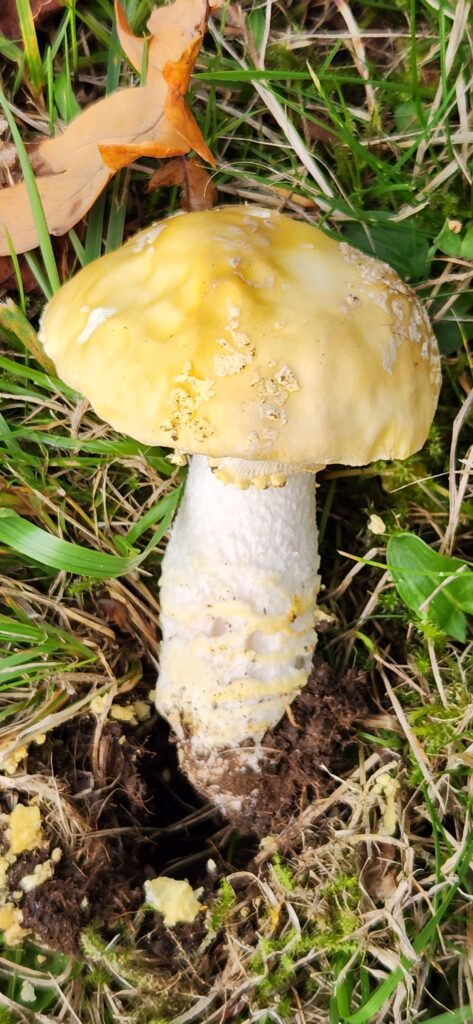
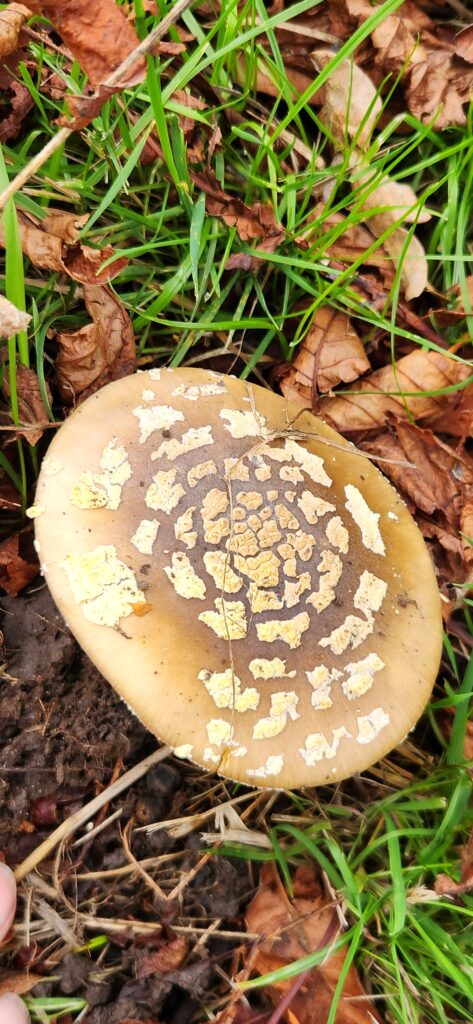
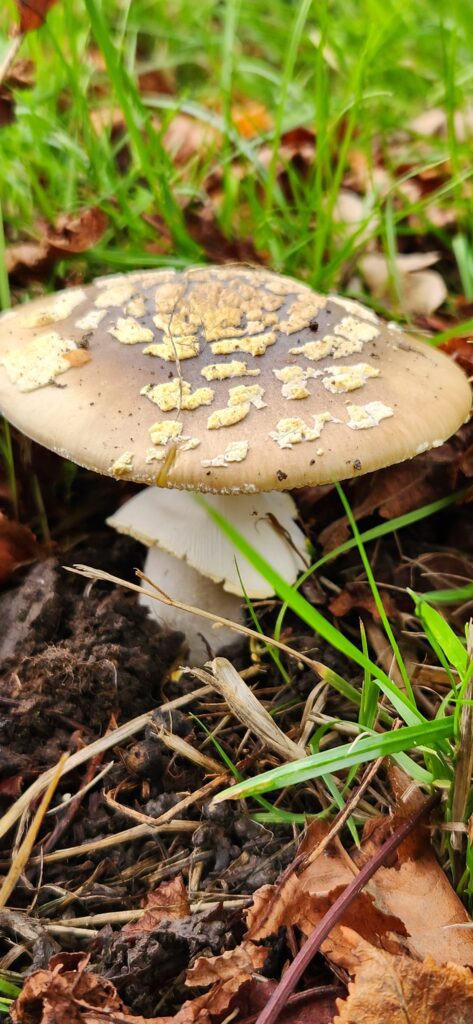
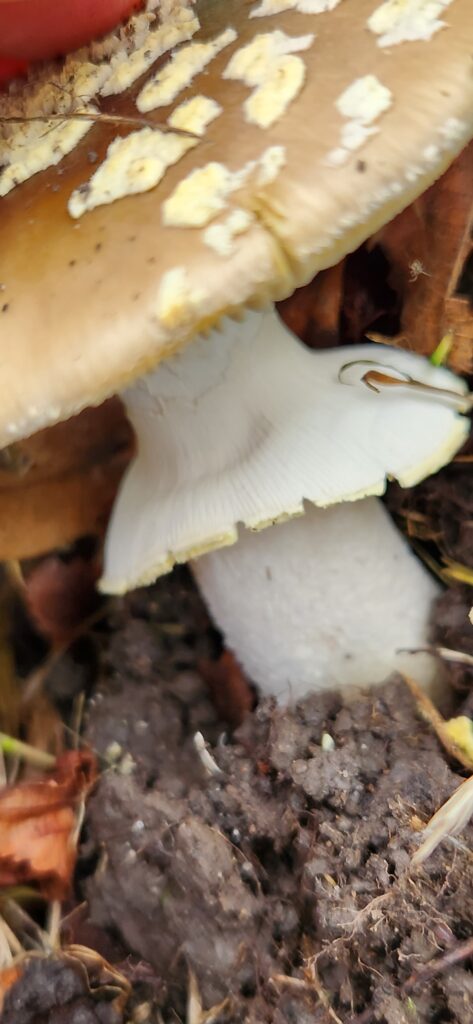
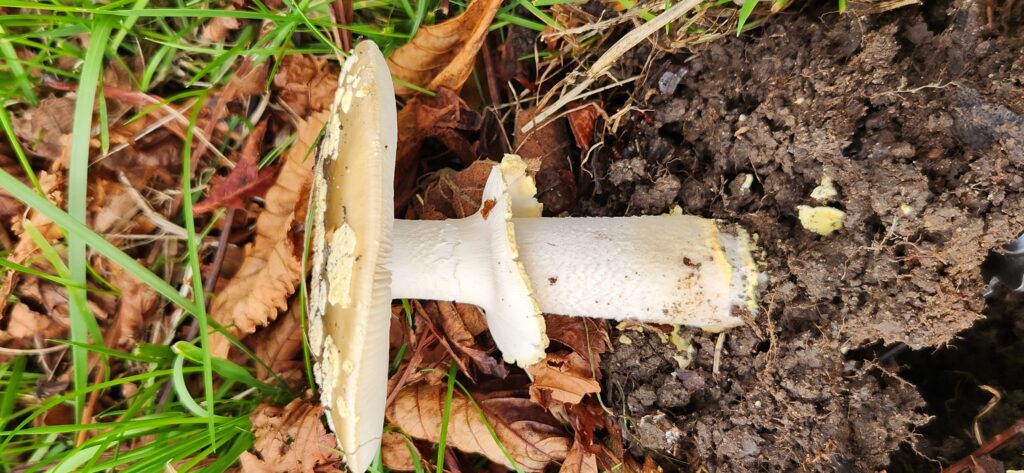
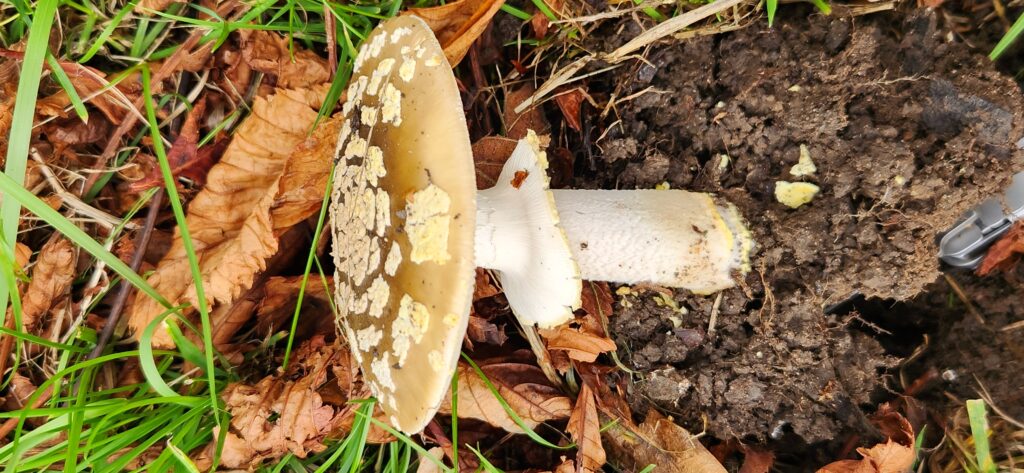
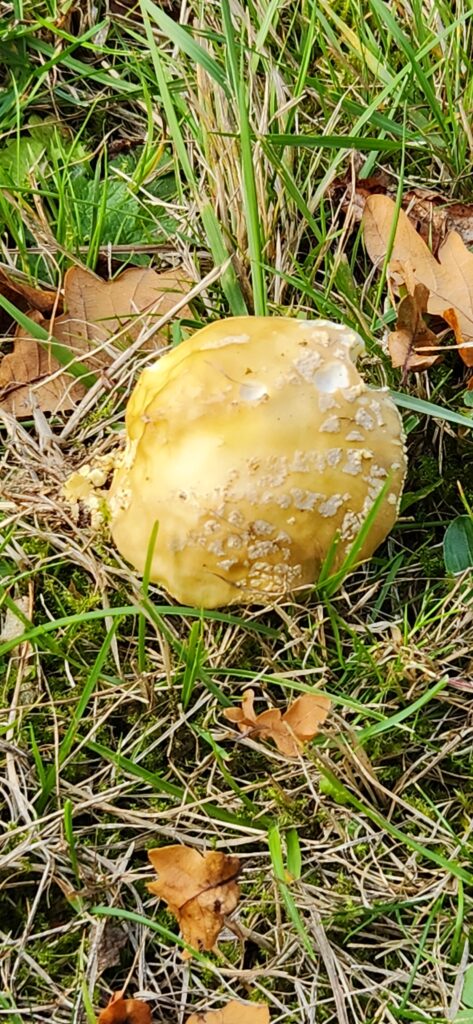
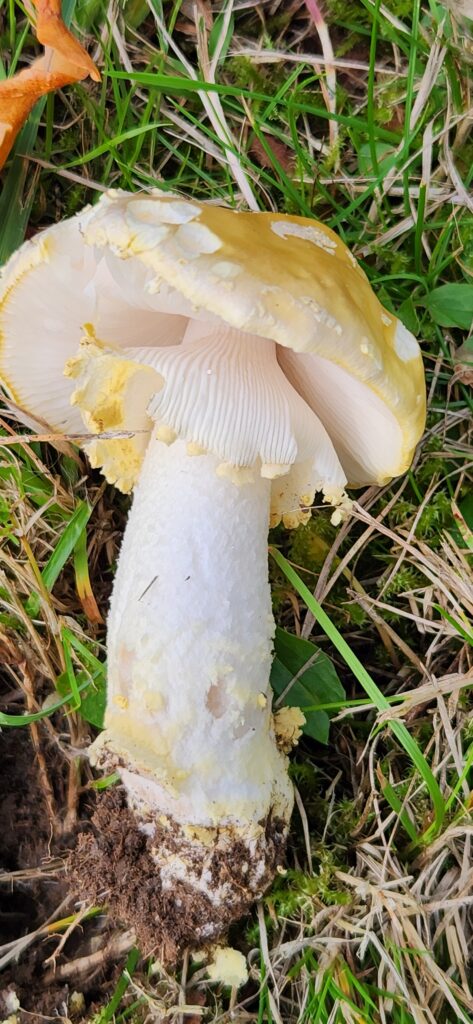
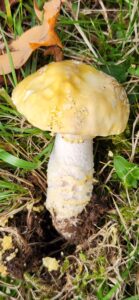
Cap: 4–10 cm across, bright yellow to golden-brown, often paler toward the margin and darker in the centre. The surface is smooth and sticky when damp, usually adorned with white or cream warty patches (remnants of the universal veil) that resemble tiny gems — hence the name.
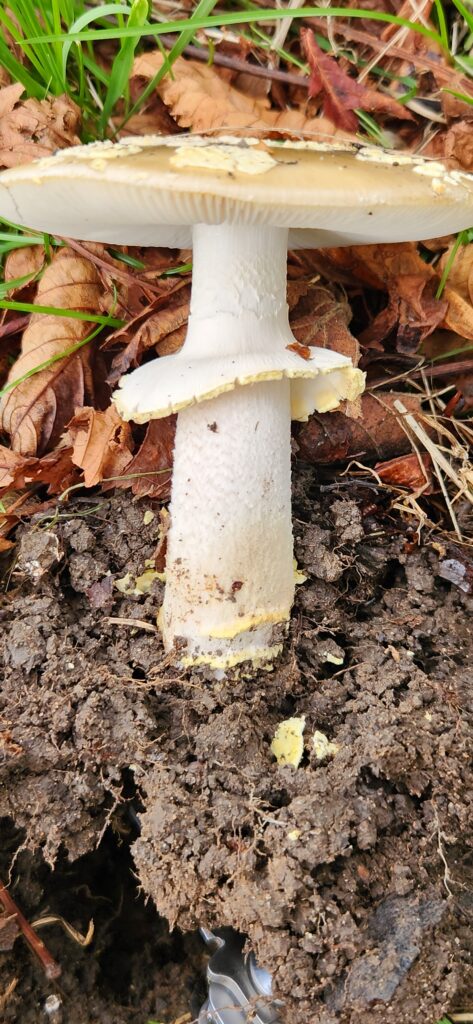
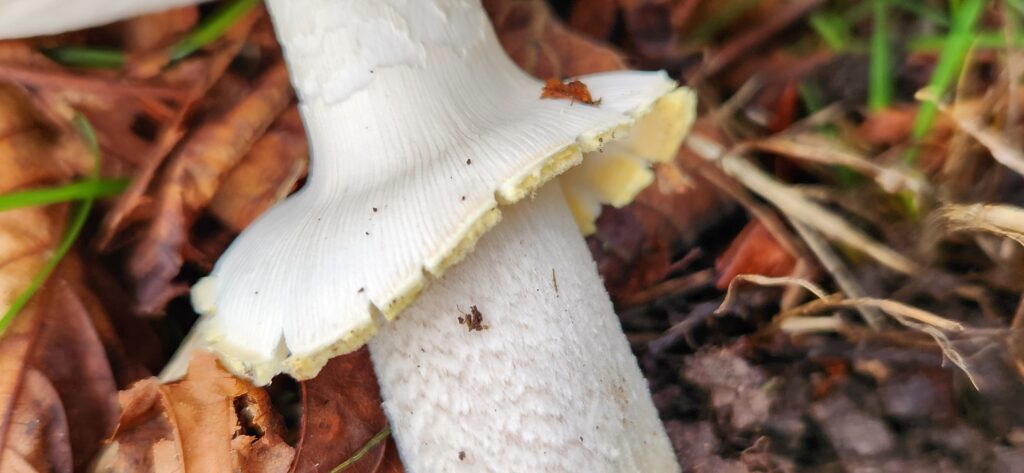
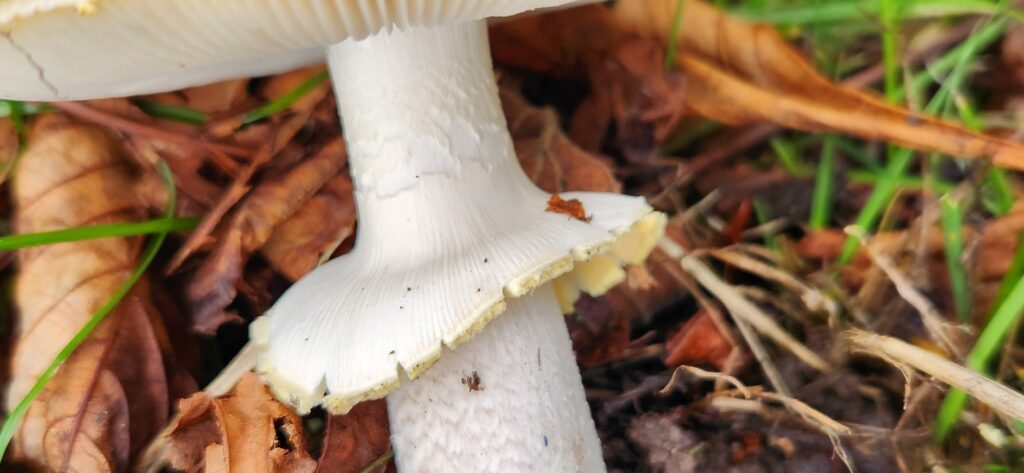
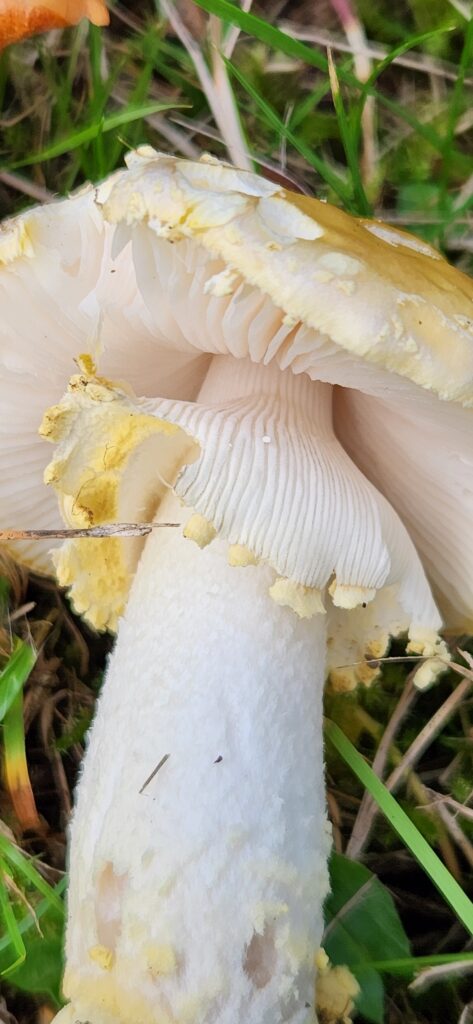
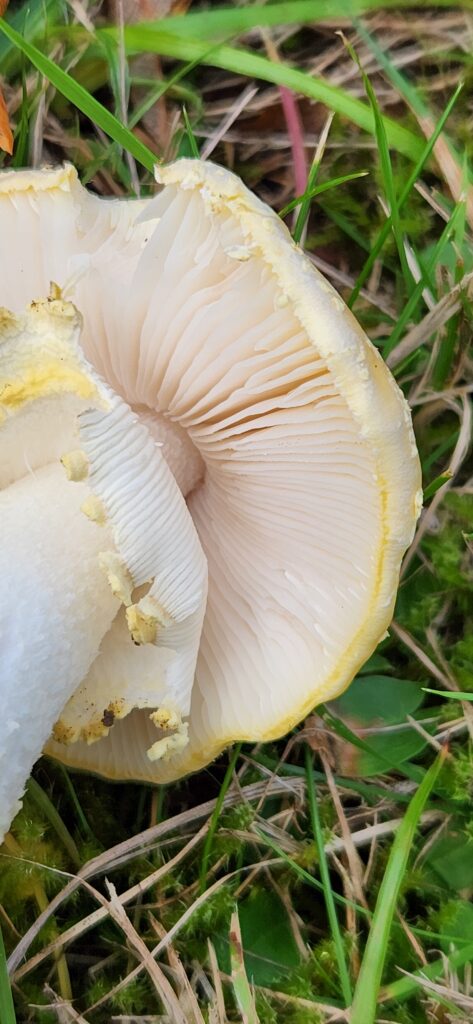
Gills: White, crowded, and free from the stem.
Stem: White to pale yellow, often slightly bulbous at the base, with a distinct skirt-like ring on the upper stem and a fragile volva at the base. The lower stem may be lightly flecked or scaly.
Flesh: White and firm, not changing colour when cut.
Smell: Sweet or slightly unpleasant, sometimes described as honey-like or chemical.
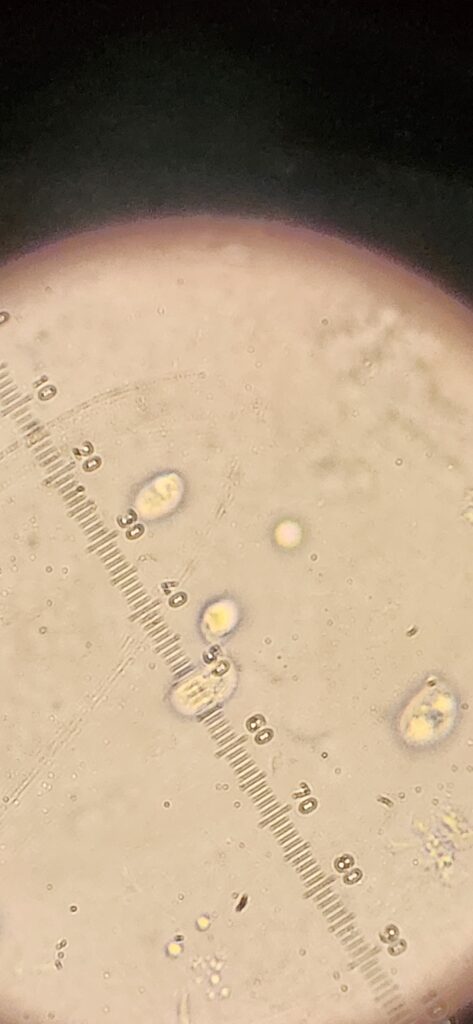
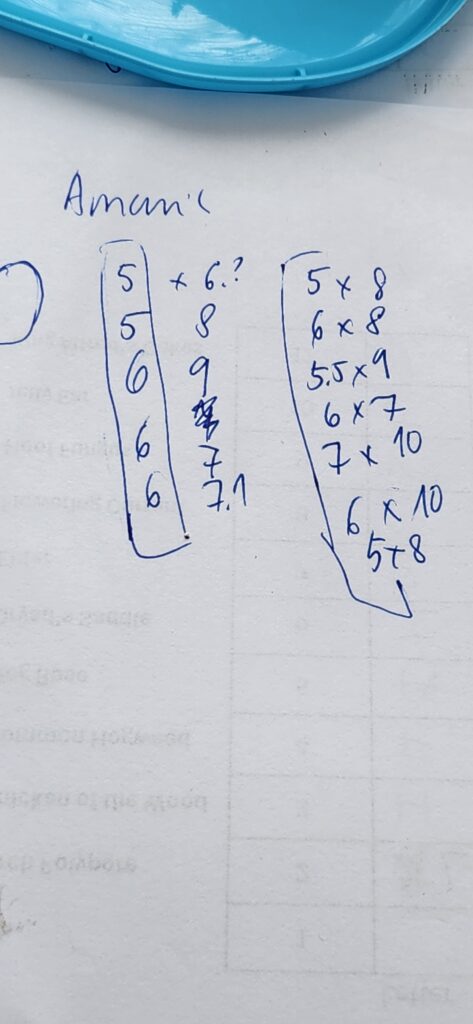
Spore Print: White.
Edibility
Despite its appealing appearance, the Gemmed Amanita is toxic. It contains compounds that can cause nausea, vomiting, dizziness, confusion, and hallucinations. In severe cases, ingestion can lead to serious poisoning.
Some sources have confused Amanita gemmata with other edible yellow species — but due to the risk of fatal confusion with deadly Amanitas, this mushroom should never be eaten under any circumstances.
Foraging Season
Fruits from late spring through autumn (May to October), particularly after rainfall. It’s most often seen in coniferous woodlands or along woodland paths where soil is sandy and well-drained.
Health Warning
Amanita gemmata is toxic and has been linked to cases of severe poisoning and hallucinations. It can also be confused with other deadly Amanita species, such as the Death Cap (Amanita phalloides) and the False Death Cap (Amanita citrina).
Never consume any Amanita unless you are absolutely certain of its identity — and even then, extreme caution is advised. Photograph and study these mushrooms instead of eating them.
Join us for a foraging adventure in Charnwood, Leicestershire! Whether you’re a beginner or a seasoned forager, our events are a great way to learn about and identify edible fungi in their natural habitat.