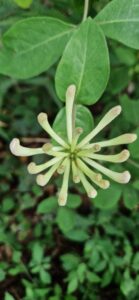
Honeysuckle (Lonicera periclymenum)
Famed for its sweetly scented flowers and twining growth, Honeysuckle is a beautiful and symbolic wild plant commonly found throughout the UK. While not a major wild food source, its nectar has been enjoyed by children and foragers for generations.
Overview
Latin Name: Lonicera periclymenum
Common Names: Woodbine, Common Honeysuckle, European Honeysuckle
Natural Habitat
Honeysuckle is typically found in the following environments:
- Woodland edges and clearings
- Hedgerows and scrubby field margins
- Twining through trees and shrubs in shaded areas
It thrives in well-drained soils and prefers partial shade. It is widespread in the UK and often grows along woodland trails, particularly in older deciduous woodlands.
Identification
Leaves
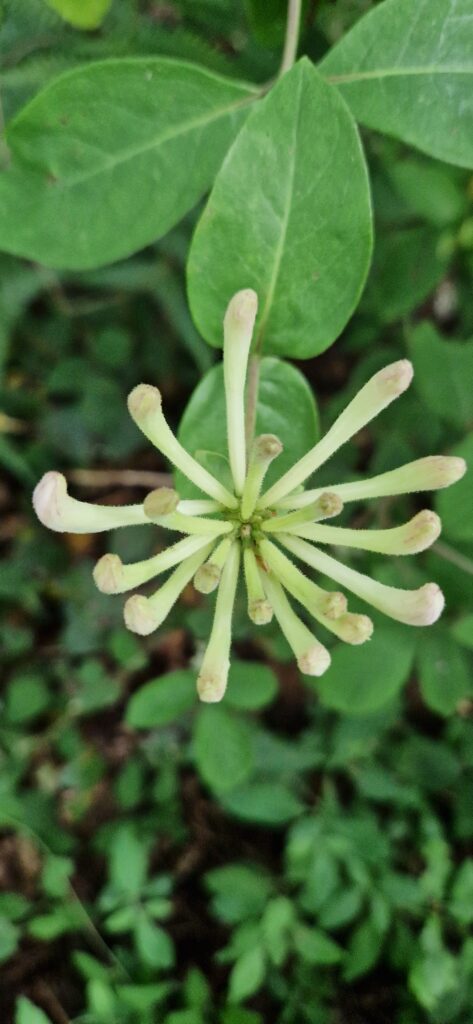
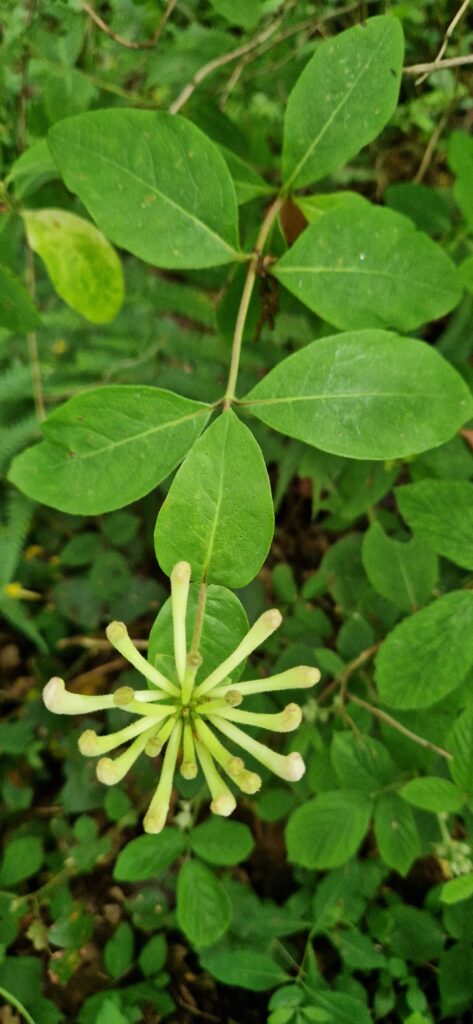
- Oval, opposite pairs along the stem
- Smooth-edged and slightly downy underneath
- Blue-green in colour, turning yellowish in autumn
Flowers
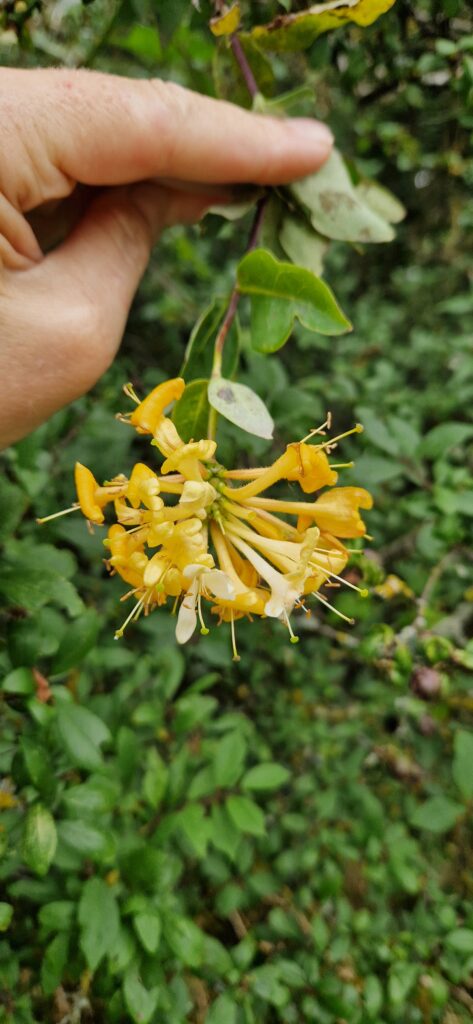
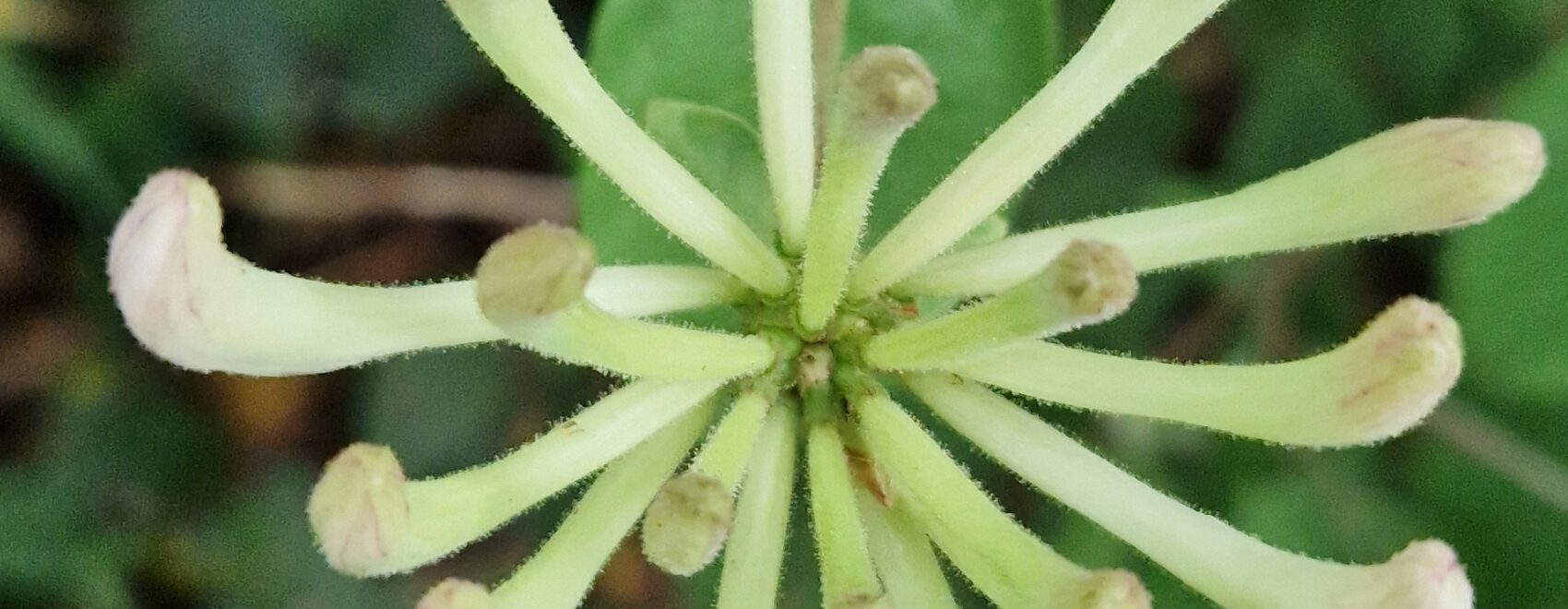
- Tubular and trumpet-shaped, often creamy white, yellow, or tinged with pink or purple
- Sweet, heady fragrance strongest in the evening
- Appear in clusters from late spring to early summer
Berries
- Bright red, shiny, and clustered
- Appear in late summer to early autumn
- Toxic to humans and should not be consumed
Edibility and Medicinal Uses
While not a food plant in the conventional sense, honeysuckle does offer a small foraging reward.
Edible Part:
- The nectar inside each flower is sweet and can be sipped by gently pulling the blossom from the base.
Important Note:
- The berries, leaves, and stems are toxic and should not be eaten. Only the nectar from Lonicera periclymenum is considered safe in very small quantities.
Medicinal Uses:
Traditionally, some honeysuckle species have been used in herbal remedies, especially in traditional Chinese medicine. However, this should be approached with great caution and guidance, as not all honeysuckle species are safe.
Preparation and Uses
Traditional Use:
- The nectar has been enjoyed as a novelty or treat, especially by children learning about nature.
- Occasionally, flowers are used decoratively or in floral waters, but not in culinary applications.
Do Not Use:
- Berries, leaves, or stems — these are not safe for consumption.
Foraging Tips
Best Harvesting Season:
- Late spring to early summer, when the flowers are in full bloom and nectar is plentiful.
Sustainability:
- As this is a low-impact foraging activity (just sipping nectar), it poses minimal risk to the plant or environment.
Pro Tip:
- Honeysuckle scent is strongest in the evening. That’s the perfect time to locate it by smell and enjoy a taste of nature’s perfume.
Folklore & History
Honeysuckle has long been associated with love, devotion, and protection in folklore. In Victorian flower symbolism, it represented the bonds of love. In European traditions, it was believed to keep away evil spirits when grown near the home.
The name “woodbine” refers to its habit of binding around trees — a symbol of attachment and resilience.
Safety Precautions
- Berries are toxic: Never consume honeysuckle berries — they can cause nausea, vomiting, and dizziness.
- Avoid confusion: Other ornamental species like Lonicera japonica may appear similar and carry different levels of toxicity.
- Not for medicinal use: Do not use honeysuckle for internal herbal remedies without professional guidance.
Conclusion
Honeysuckle is more a plant for the heart and senses than the stomach — its heady scent and delicate nectar are a joy to encounter in the wild. While its edible uses are minimal, it remains a favourite among foragers for its beauty and nostalgic charm. Just remember: enjoy the flowers, not the berries — and always forage mindfully and responsibly.
Want to learn more about foraging and edible plants? Join our foraging courses in Charnwood, Leicestershire.