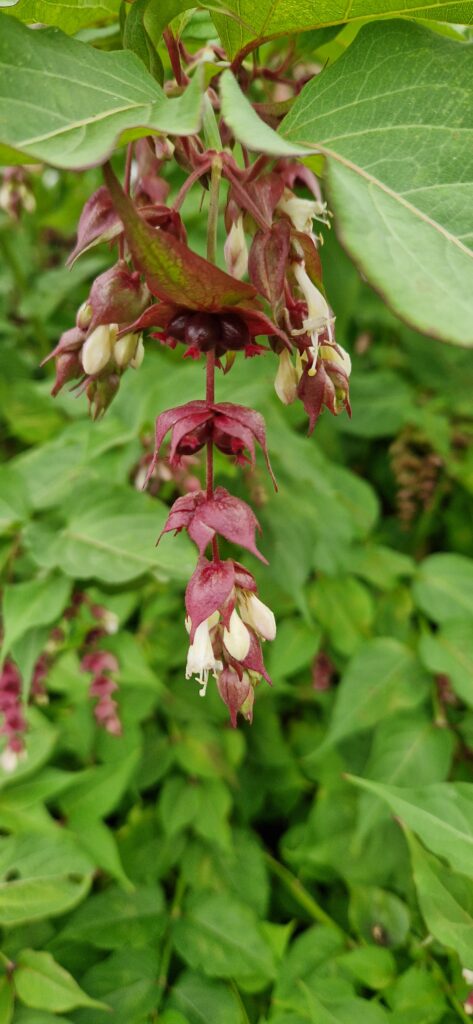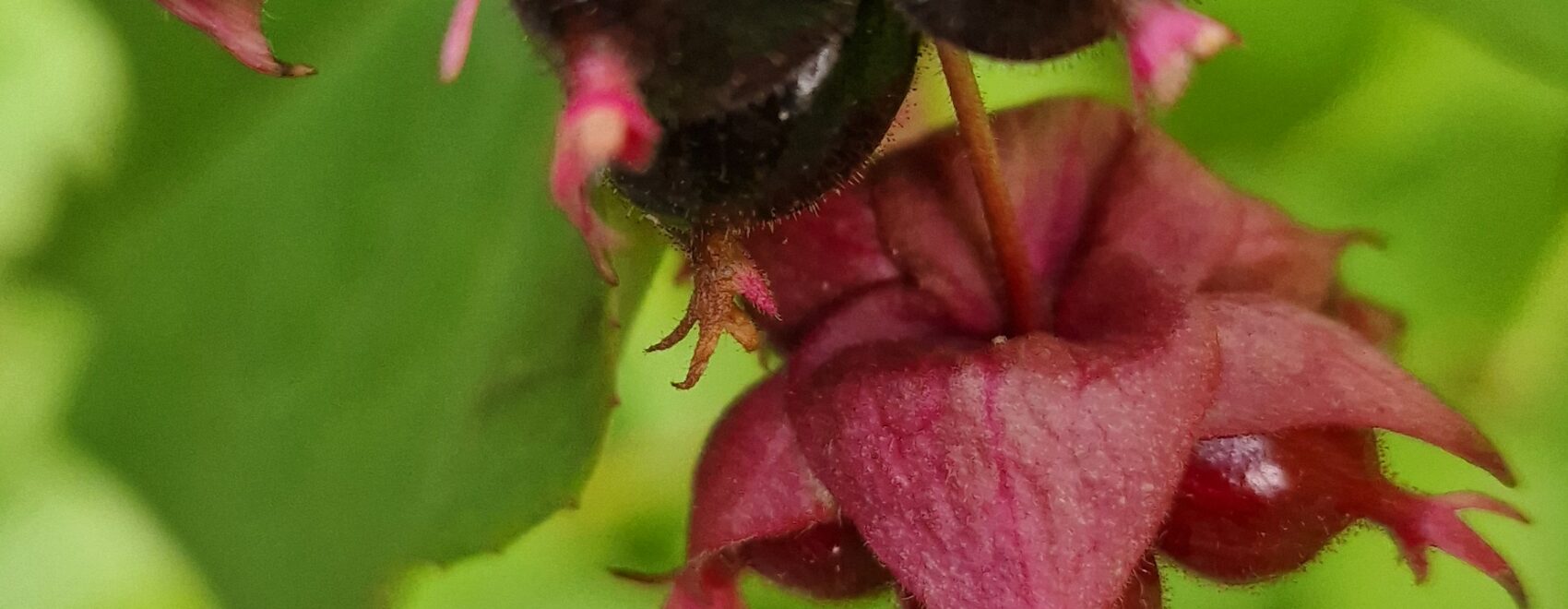

Himalayan Honeysuckle (Leycesteria formosa) is a striking shrub known for its beautiful flowers, vibrant berries, and ornamental value. This hardy plant is often found in gardens and woodland edges, but it can also be spotted in the wild. With its edible berries and unique appearance, it has both aesthetic and practical uses.
Overview
Latin Name: Leycesteria formosa
Common Names: Himalayan Honeysuckle, Pheasant Berry, Flowering Nutmeg
Family: Lamiaceae (Mint family)
Natural Habitat
Himalayan Honeysuckle thrives in:
- Woodland edges and shaded areas
- Hedgerows and roadsides
- Gardens and parks, often planted for ornamental purposes
It prefers moist, well-drained soils and partial shade. Native to the Himalayas, it has naturalized in various parts of the UK and Europe.
Identification Features
Leaves
- Size: Medium-sized, around 10-20 cm long.
- Shape: Oval or lance-shaped with a serrated edge.
- Color: Dark green with a slightly glossy texture.
Flowers
- Appearance: Tubular, pink to purple flowers arranged in hanging clusters, with white bracts underneath.
- Bloom Time: Summer to autumn (June to September).
Berries
- Feature: Small, dark purple to black berries that form in clusters after flowering.
- Taste: Slightly sweet and sour, often used for making jams and syrups.
Height
- Can grow up to 2 meters tall in its natural habitat.
Edibility and Culinary Uses
The berries of Himalayan Honeysuckle are edible and can be used in various culinary creations. While not widely known, the plant’s berries are a tasty addition to jams, jellies, and syrups. The leaves and stems, however, are not recommended for consumption due to their potential toxicity.
Culinary Tips
- Berries: Harvest in late summer or early autumn, when they are fully ripe. The berries can be eaten raw or used in cooking.
- Jam & Syrup: The sweet-tart berries make excellent preserves and can be used in desserts or as a topping for pancakes.
Recipe Ideas
- Himalayan Honeysuckle Jam
- Pheasant Berry Syrup
- Wild Berry Pie (mix with other wild berries)
Nutritional Value & Health Benefits
Nutritional Content
- Rich in antioxidants, vitamin C, and dietary fiber.
- Low in calories and high in water content.
Medicinal Benefits
- Antioxidant Properties: The berries are known to have antioxidant qualities that support overall health.
- Anti-inflammatory: The plant has been traditionally used for its anti-inflammatory benefits.
- Digestive Aid: The berries are sometimes used to help with digestive issues, though this should be done cautiously.
Foraging Tips
Best Harvesting Season:
- Berries: Late summer to early autumn when they are ripe and fully colored.
Sustainability:
- Always harvest responsibly, ensuring you leave enough berries for wildlife and future growth.
Legal Note:
- Foraging is only permitted on private property with the owner’s permission.
Folklore & History
Himalayan Honeysuckle is admired for its aesthetic qualities and was introduced to Europe in the 19th century as an ornamental shrub. It’s also sometimes linked to old herbal traditions and used in gardens as a symbolic plant of resilience, adapting well to a variety of conditions.
Safety Precautions
While the berries are generally safe to eat in moderation, avoid consuming the leaves and stems, as they may have mild toxic properties. Always ensure proper identification and avoid foraging from areas that may be contaminated by pollutants.
Conclusion
Himalayan Honeysuckle (Leycesteria formosa) is a beautiful, useful, and interesting plant to find in the wild or in your garden. With its vibrant berries and unique appearance, it offers culinary possibilities while adding ornamental value to your landscape.
Want to learn more about identifying and using wild plants like Himalayan Honeysuckle? Join us for a foraging course in Charnwood, Leicestershire!