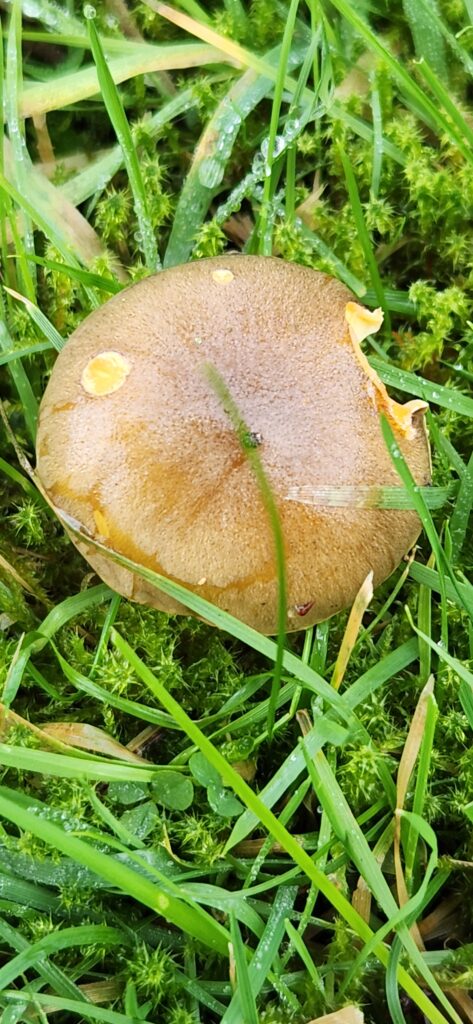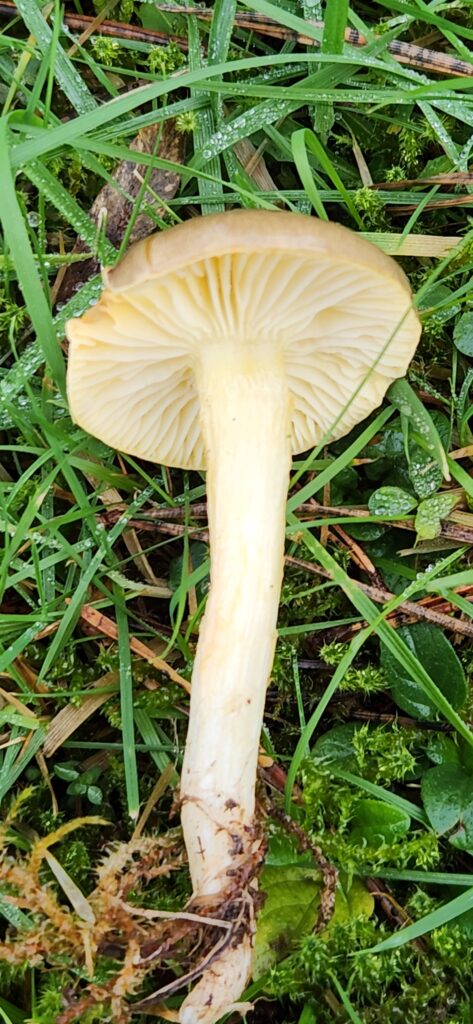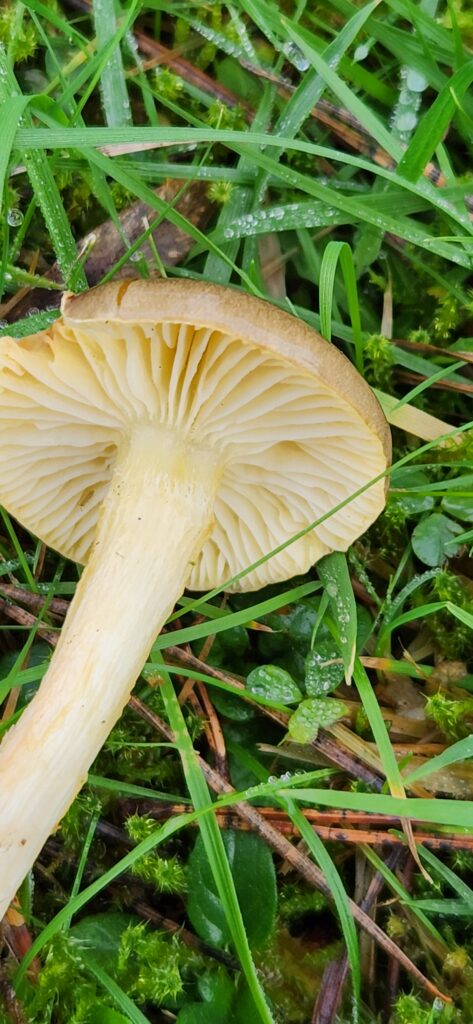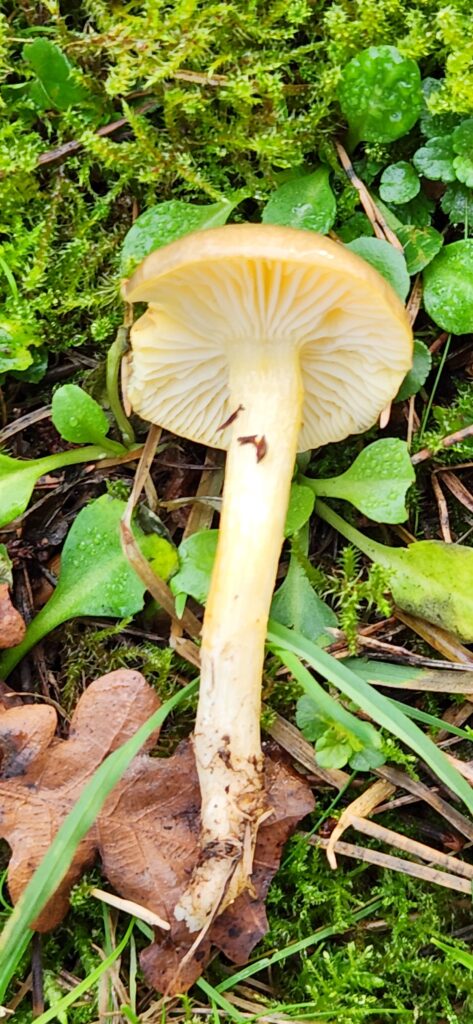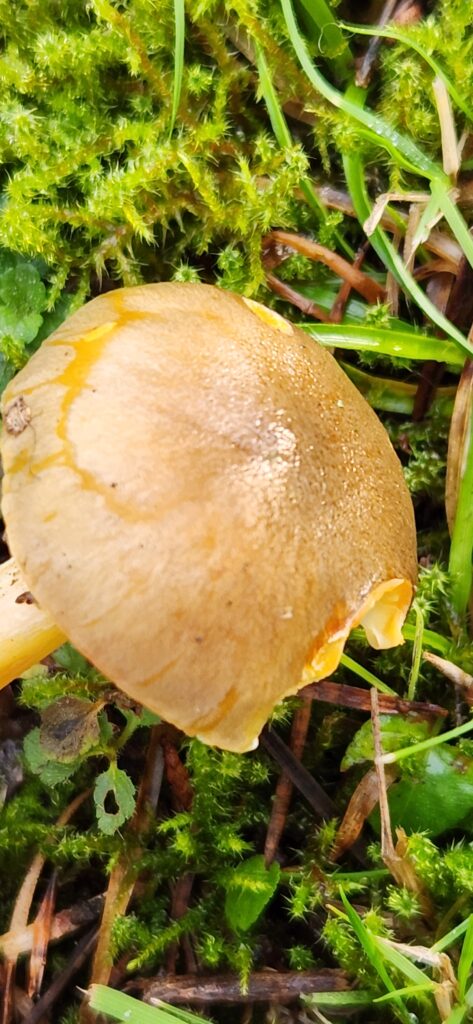
The Herald of Winter is a charming late-season mushroom, named for its habit of appearing as autumn gives way to winter. With its slimy cap, warm brown tones, and association with pine, it is a reliable indicator of colder weather and one of the more approachable waxy-gilled fungi to identify.
Not sure about mushroom identification? Join us for the next foraging course in Charnwood, Leicestershire, and learn how to safely identify fungi in the wild.
Habitat
Herald of Winter grows in pine woods and conifer plantations, particularly under Scots pine. It prefers acidic, sandy soils and often appears in small groups or scattered troops. This species fruits late in the year, frequently when few other mushrooms remain.
Identification features
Cap:
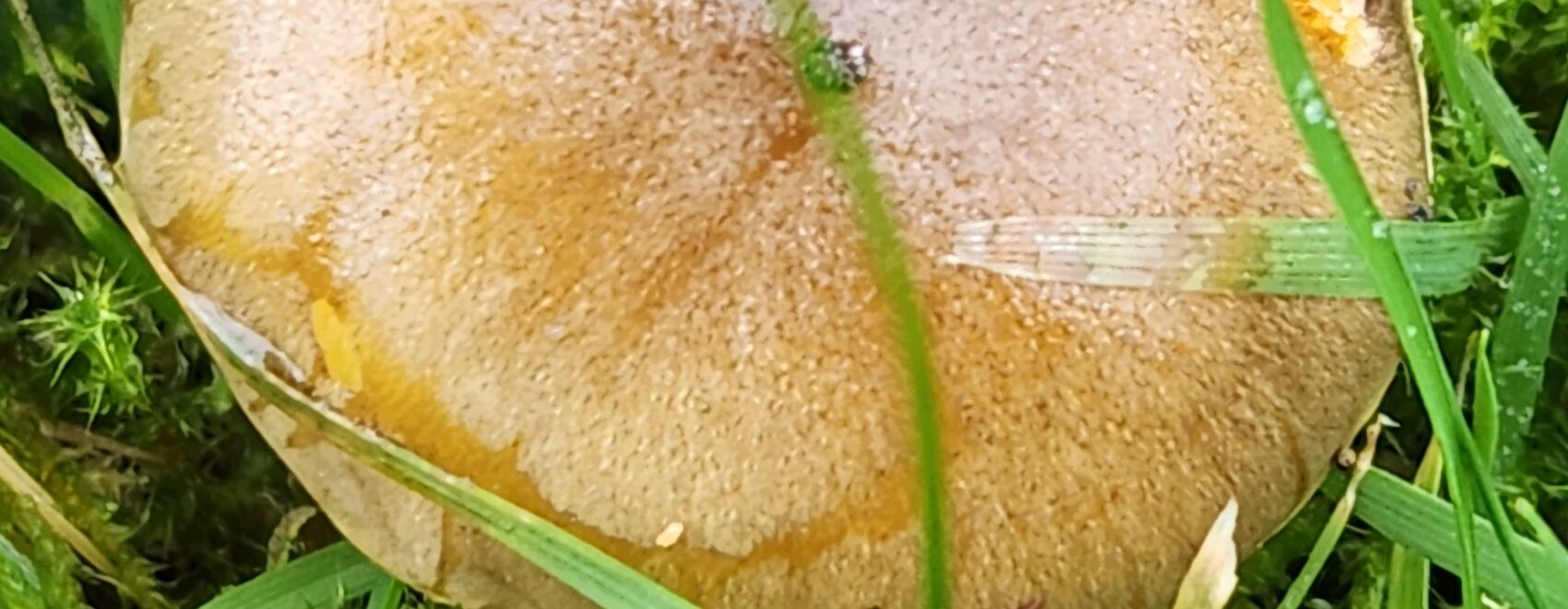
The cap measures 3–8 cm across, starting convex before flattening with age. It is yellow-brown to olive-brown, often darker at the centre, and distinctly slimy or greasy, especially in wet weather.
Gills:
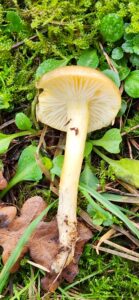
The gills are pale yellow to cream, waxy, and adnate to slightly decurrent, typical of the Hygrophorus genus. They are fairly thick and well spaced.
Stem:
The stem is slender, smooth, and sticky, usually 4–8 cm tall, and similar in colour to or paler than the cap. It may show faint yellow tones toward the base.
Flesh:
Pale, soft, and waxy, without significant colour change when cut.
Spore Print:
White.
Smell and Taste:
Mild and pleasant, not distinctive.
Lookalikes
- Other Hygrophorus species – many are edible but differ in habitat and season
- Slimy caps of other genera – habitat under pine is an important clue
Herald of Winter is one of the easier waxcaps to separate due to its late season and pine association.
Edibility
Herald of Winter is considered edible and mild tasting, though not a strong-flavoured mushroom. It is best used fresh and simply cooked, such as lightly sautéed or added to mixed mushroom dishes. As with all wild fungi, try a small amount first.
Ecological role
This species is mycorrhizal, forming beneficial relationships with pine trees. It helps trees absorb nutrients while receiving sugars in return, making it an important part of healthy conifer woodland ecosystems.
Foraging season
Herald of Winter typically appears from October through December, often after frosts, making it a valuable species for late-season foraging.
Health warning
Always ensure correct identification before consumption. While this species is considered edible, individual reactions vary, and all wild mushrooms should be thoroughly cooked. Never eat unless you are 100% confident in identification.ues. Never eat wild mushrooms unless you are 100% confident in their identification, and always seek expert guidance when learning.
Join us for a foraging adventure in Charnwood, Leicestershire! Whether you’re a beginner or a seasoned forager, our events are a great way to learn about and identify edible fungi in their natural habitat.