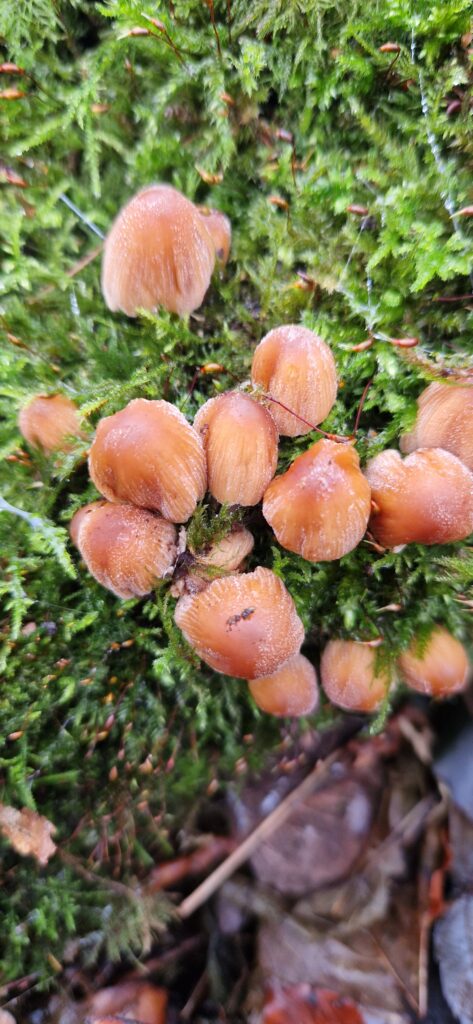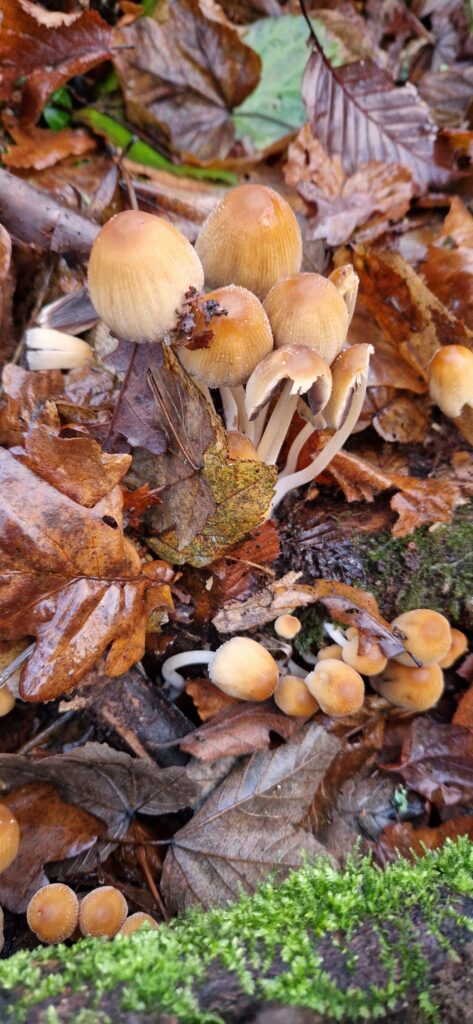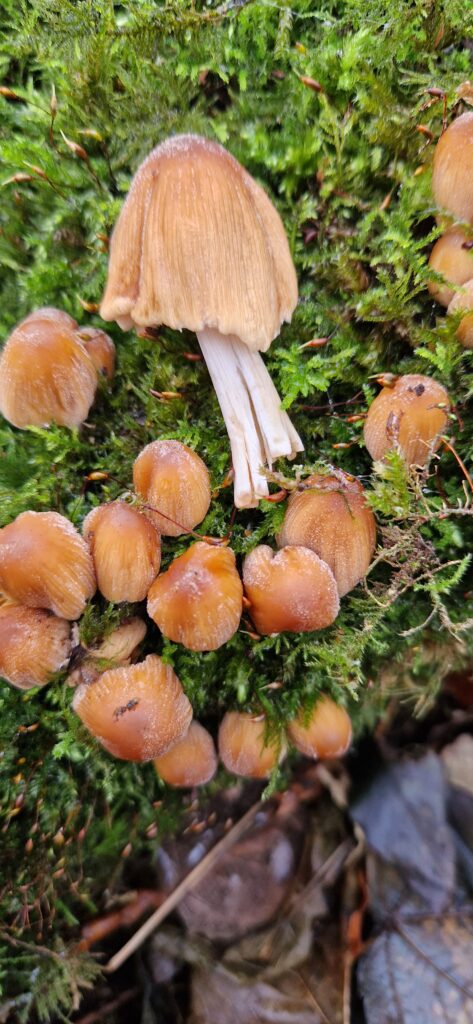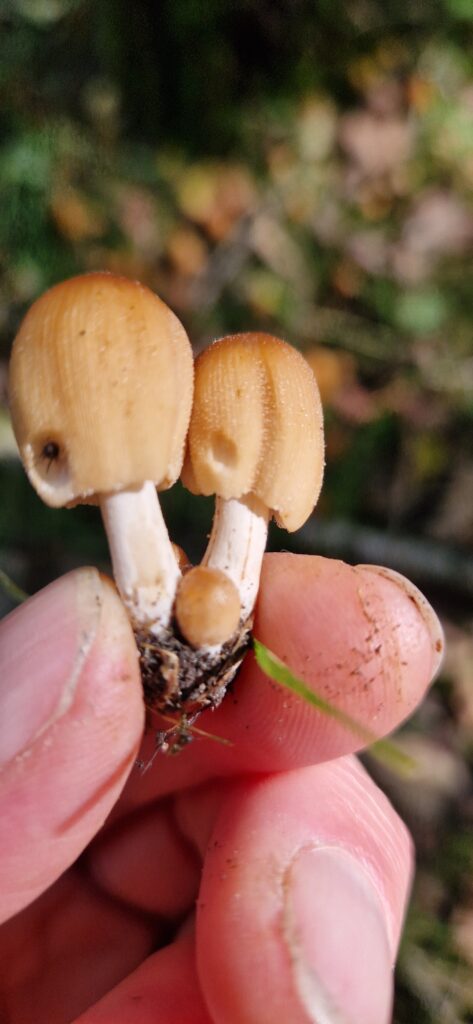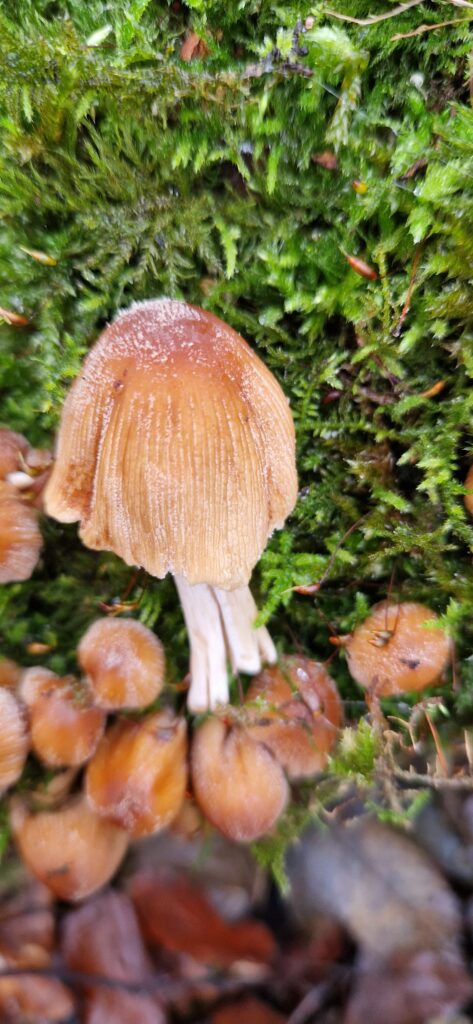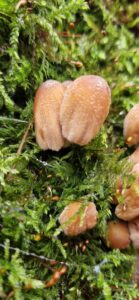
Glistening Inkcap (Coprinus micaceus) is a fascinating and distinctive mushroom known for its shiny, mica-like cap. While not commonly consumed, it holds ecological value and is admired by foragers for its unique appearance and role in breaking down decaying organic material.
Other names: Mica Inkcap, Shiny Inkcap.
Not sure about mushroom identification? Join us for the next foraging event in Charnwood, Leicestershire.
Habitat
The Glistening Inkcap thrives in woodland areas, on decaying wood, stumps, and sometimes on fallen branches. It prefers damp, shaded conditions and is often seen growing in clusters or small groups, particularly in late autumn and early winter. This species is widespread across Europe and North America, typically appearing during periods of wet weather.
Identification features
Cap: The cap of the Glistening Inkcap is conical or bell-shaped, with a smooth, shiny, mica-like surface that glistens when wet. The cap can reach 3-6 cm in diameter and is light brown or honey-colored, fading to a more translucent hue as it matures.
Gills: Close and white, turning black and liquefying as the mushroom matures, creating a distinctive “ink” that gives the species its name.
Stem: The stem is thin, white to pale brown, and slightly fibrous. It can grow up to 10 cm tall, with a delicate, fragile structure.
Spore Print: Black (due to the ink-like liquid released during decomposition).
Smell: Mild, earthy, and non-distinctive.
Lookalikes
- Common Inkcap (Coprinopsis atramentaria): A closely related species that also turns into a black “ink” as it matures, but with a more distinct, unpleasant odor. The Glistening Inkcap’s shiny cap and more fragile stem set it apart from this lookalike.
- Coprinus species: Other species in the Coprinus genus may resemble the Glistening Inkcap, but the key difference lies in the shiny, mica-like appearance of the cap and the texture of the stem.
Edibility
While the Glistening Inkcap is not typically consumed, it is occasionally noted for its mild taste when cooked. However, it is often confused with other toxic Inkcap species, such as the Common Inkcap, which contains compounds that can cause illness if consumed with alcohol. Therefore, it’s best to admire this mushroom for its beauty rather than its culinary potential.
Ecological role
The Glistening Inkcap plays a crucial role in the decomposition of dead wood, helping break down organic matter and recycle nutrients back into the ecosystem. Its ability to rapidly decompose and release nutrients helps maintain forest health, promoting new plant growth and enriching soil conditions.
Foraging season
The Glistening Inkcap can be found from late autumn through early winter, particularly after rainy spells. It is commonly seen in clusters on decaying wood, often appearing as though it has just emerged from the ground.
Health warning
While the Glistening Inkcap is not considered toxic, it can be easily confused with the Common Inkcap, which contains harmful substances when consumed with alcohol (resulting in a reaction similar to that of the “coprine effect”). Therefore, accurate identification is crucial, and foragers are advised to avoid consumption until they are confident in their identification skills.
Join our foraging events in Charnwood, Leicestershire, to learn more about the diverse and intriguing world of mushrooms! Whether you’re a novice or a seasoned forager, there’s always something new to discover.