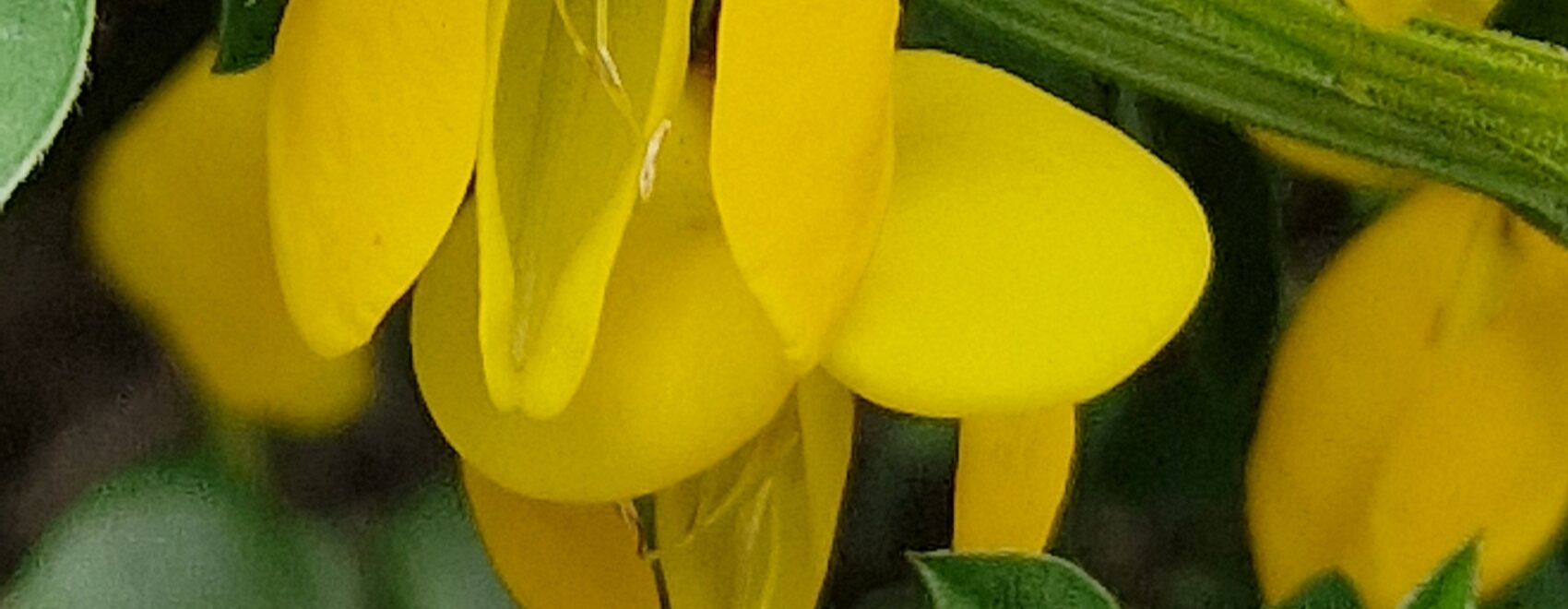
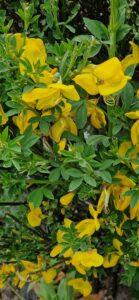
UK growing broom – latin name is Cytisus Scoparius. Do not confuse with toxic Spanish broom (Spartium Junceum).
Habitat
Common on most of the British Isles in dry, acidic habitats such as heath and scrub, sometimes grassland.
Appearance
Leaf Description:
- Small trifoliate leaves. (Toxic Spanish version has needle like leaves.)
Flower Description:
- Yellow pea like edible flowers along all the length of the branches. (Toxic Spanish version has toxic flowers!)
Stem Description:
- Spineless shrub reaching up to 2.2m in height with stiff (Toxic Spanish version has flexible stems!), branching five-sides stems.
Fruit/Seed Description:
- Broom will produce small pea like pods which are toxic. These dark pods will contain black seeds.
Edibility
- Only flower buds and flowers are edible.
- All other parts of the plant are reported to be toxic, containing quinolizidine alkaloids which affect nervous system.
Recipes
Vitamins Content/Health Benefits
- No known health benefits or vitamins
- The Scots used to hang garlands of the flowers around their necks to stem a nosebleed.
Foraging season
Flower buds – late spring/early summer
Folklore/Interesting Info
- The name Plantagenet (as Henry II and his descendants were called) came from the name for broom Genista, Planta meaning plant, and Genista, specifically the broom. Its first official appearance in British history was on the Great Seal of Richard I; Richard Plantagenet.
Health warning
- It has also been used to stimulate uterine contractions for women in labour and given after a birth to reduce blood flow. Broom also contains tyramine which can heighten or lower blood pressure. It can be dangerous and should only be taken under medical supervision. Pregnant and lactating women should not use it..