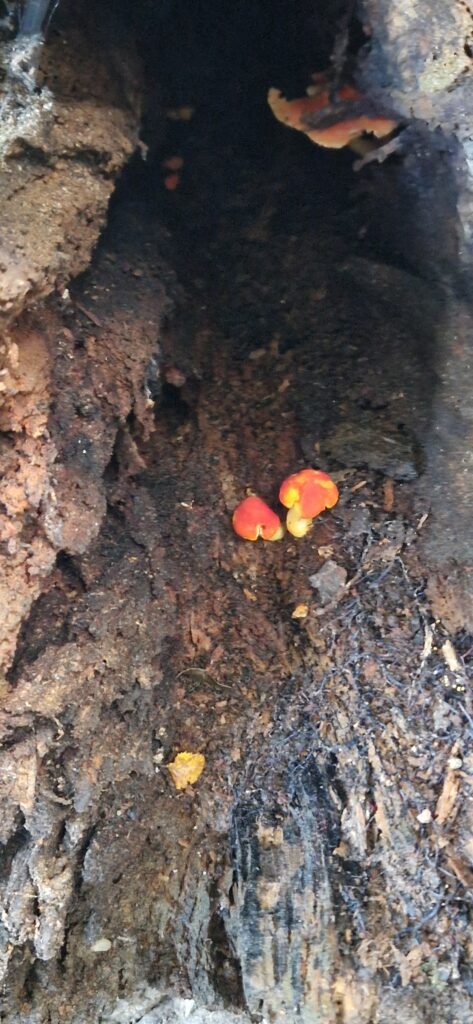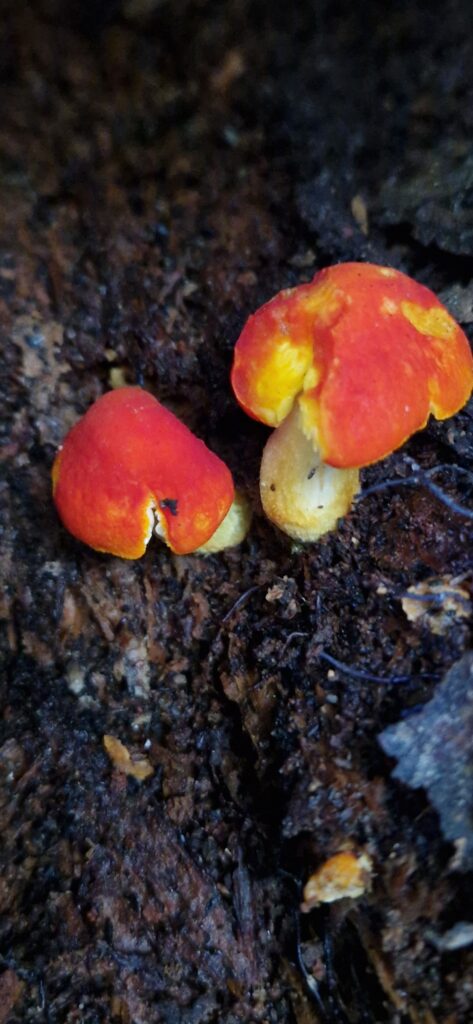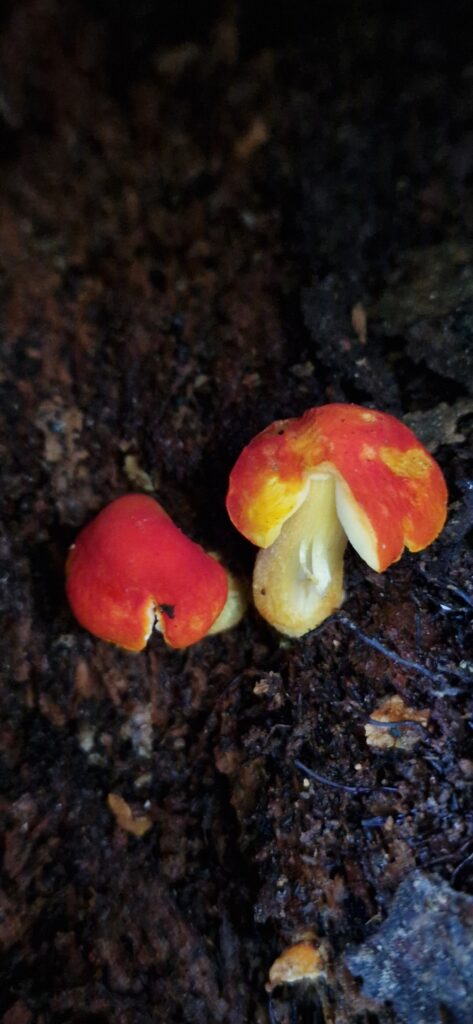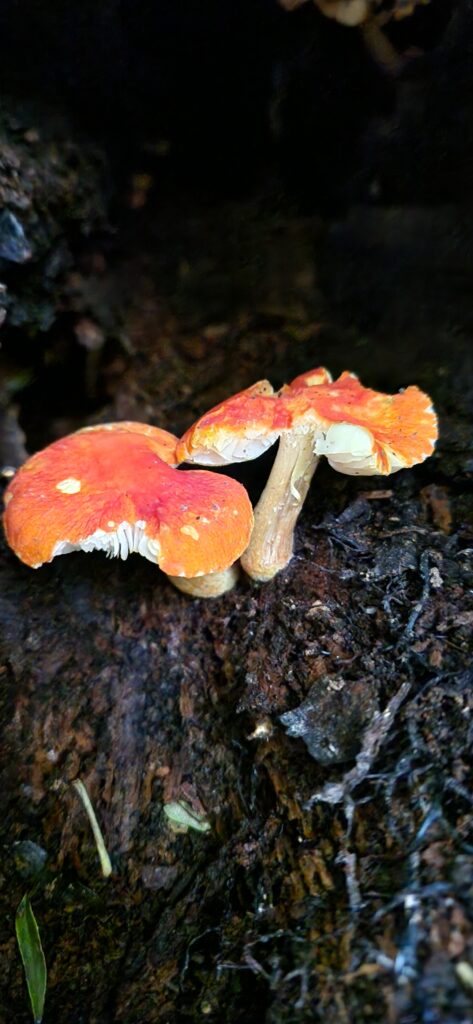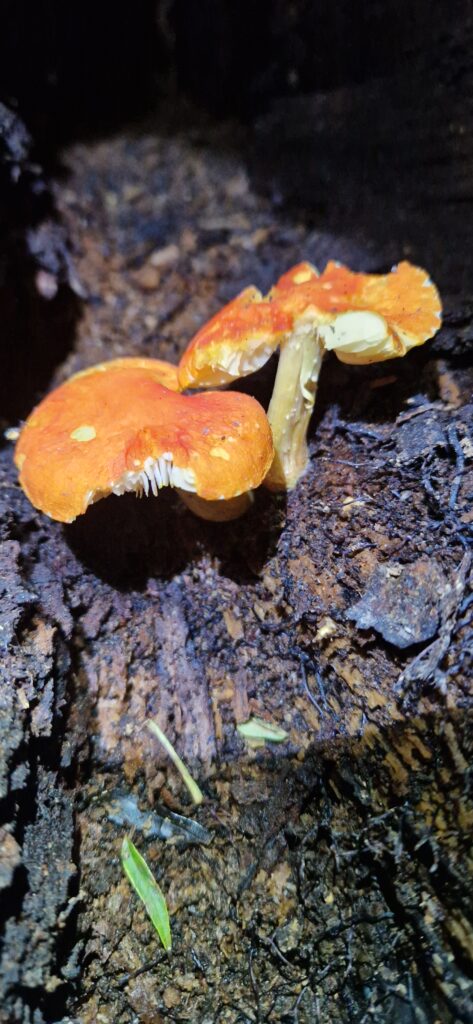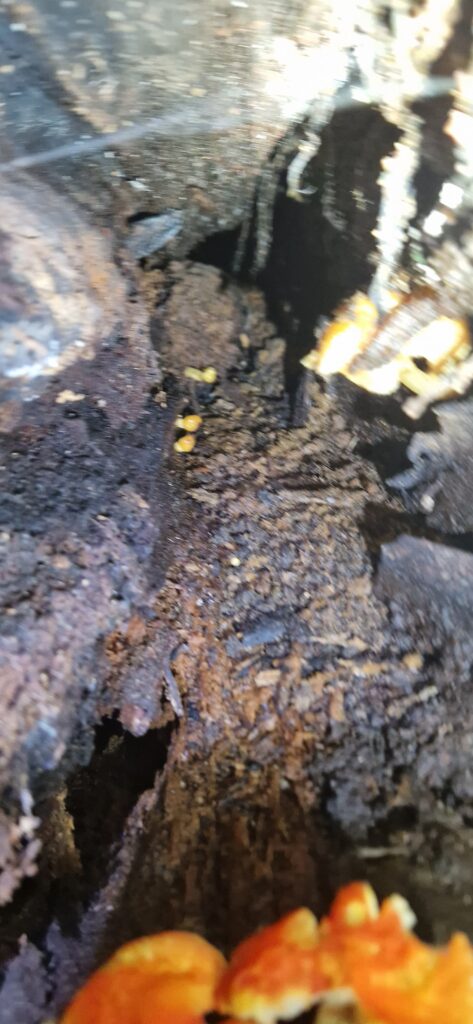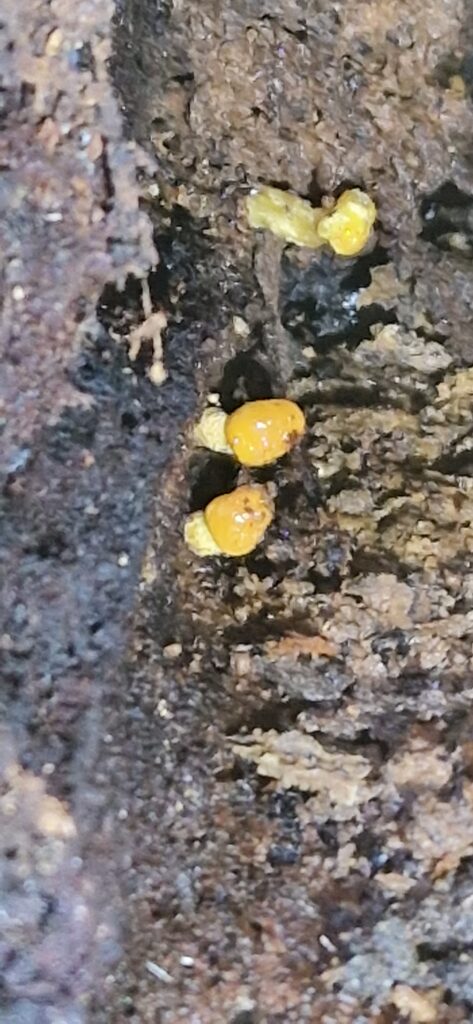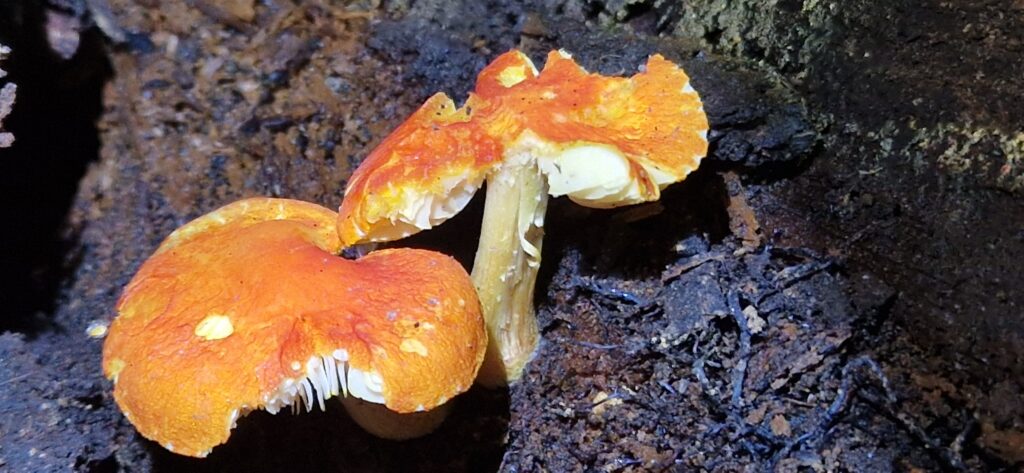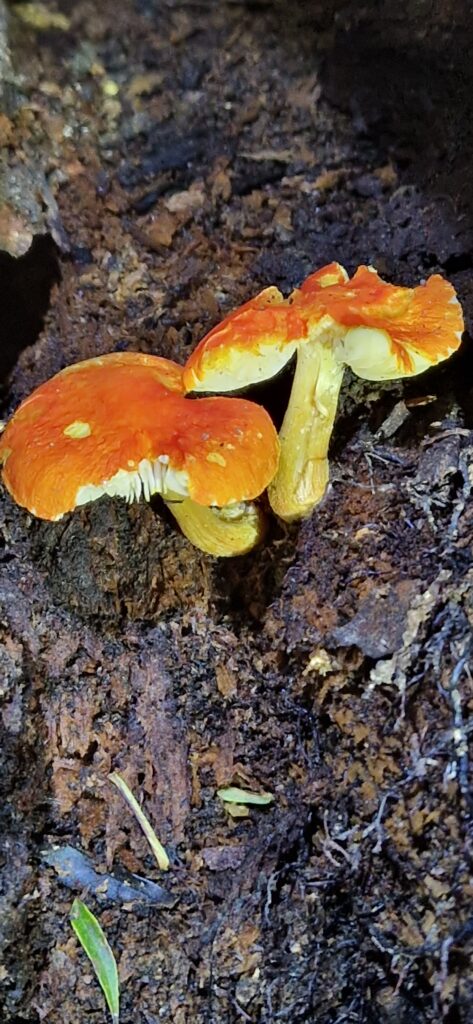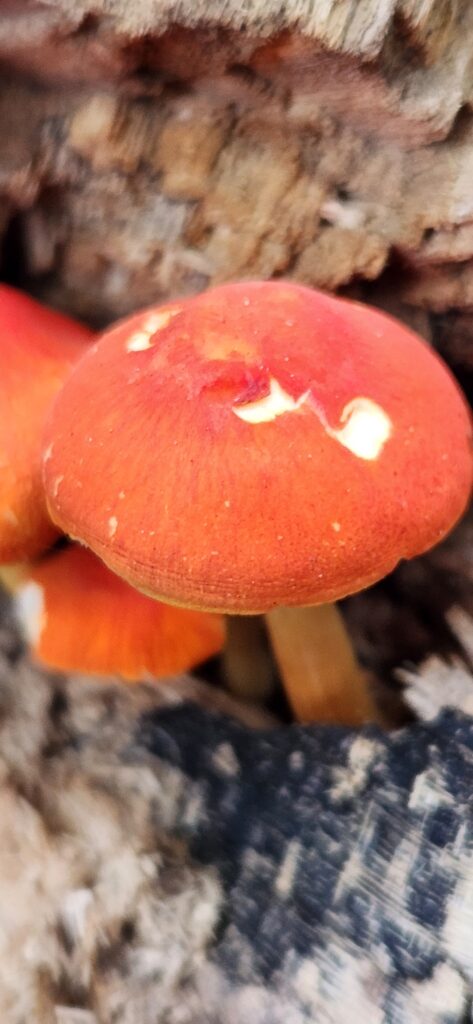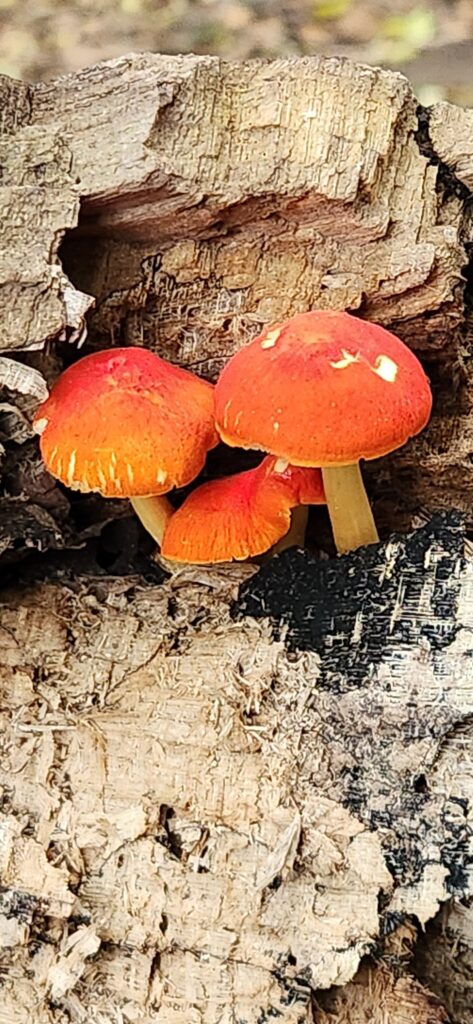
Flame Shield Mushroom (Pluteus aurantiorugosus) is a rare and visually striking mushroom with its fiery orange-red cap. Found primarily on decaying wood, this species is a mycological gem that excites foragers and mushroom enthusiasts alike. While considered edible, its rarity means it is better admired than harvested, as it plays an essential ecological role in nutrient recycling.
Other names: Orange Shield Mushroom.
Not sure about mushroom identification? Join us for the next foraging event in Charnwood, Leicestershire, to learn how to safely identify wild fungi.
Habitat
Flame Shield Mushroom typically grows on decaying hardwood logs, branches, or stumps in deciduous forests. It thrives in nutrient-rich environments and is most often found during late summer through autumn. This species is rare but widely distributed across Europe and parts of North America. Look for it in shaded, damp areas, often appearing singly or in small groups.
Identification features
Cap:
The cap is the most striking feature of the Flame Shield Mushroom, measuring 3–8 cm in diameter. It starts as convex but flattens as it matures. The surface is smooth and bright orange to red, sometimes fading to yellowish-orange with age. The cap’s vibrant coloration often has a slightly wrinkled or veined texture.
Gills:
The gills are free from the stem and are initially white, gradually turning pink as the spores mature. This pinkish hue is a characteristic feature of the Pluteus genus.
Stem:
The stem is pale yellow to orange, slender, and cylindrical, typically 3–7 cm in height. It is smooth or slightly fibrous and lacks a ring. The base of the stem may have faint yellow tones.
Spore Print:
The spore print is pink, which is a key identifying feature of the Pluteus genus.
Smell and Taste:
The mushroom has a mild, pleasant odor, and its taste is also mild, though it is not commonly sought after for culinary purposes due to its rarity so please do not try to consume this rare find if you discover one.
Lookalikes
- Pluteus leoninus (Lion Shield): This species has a yellow to golden cap and shares the pink gills of the Pluteus genus. However, it lacks the intense orange-red coloration of the Flame Shield Mushroom and has a more muted appearance.
- Pluteus cervinus (Deer Shield): The Deer Shield has a brown cap and pink gills, making it a possible lookalike for novice foragers. However, it is much more common and lacks the bright orange-red coloration of the Flame Shield Mushroom.
Edibility
The Flame Shield Mushroom is considered edible, with a mild flavor and tender texture. However, due to its rarity and ecological significance, foragers are encouraged to appreciate it in its natural habitat rather than harvest it. As with all wild mushrooms, proper identification is essential before consumption, as misidentification can lead to accidental poisoning.
Ecological role
As a saprotrophic fungus, Flame Shield Mushroom plays an important role in breaking down decaying wood and recycling nutrients back into the ecosystem. Its presence indicates healthy forest systems, and it contributes to the decomposition of organic material, supporting the growth of plants and other organisms.
Foraging season
The Flame Shield Mushroom can be found from late summer through autumn, depending on the climate and region. It typically appears after periods of rainfall when conditions are moist and favorable for fungal growth.
Health warning
While Flame Shield Mushroom is considered edible, it is rare, and its conservation should take precedence over foraging. Ensure accurate identification, as there are many mushrooms with orange or reddish caps that may be toxic. If you are unsure, seek guidance from an experienced mycologist or join a guided foraging walk to learn more.
Join us for a foraging courses in Charnwood, Leicestershire, and learn more about the fascinating world of mushrooms.