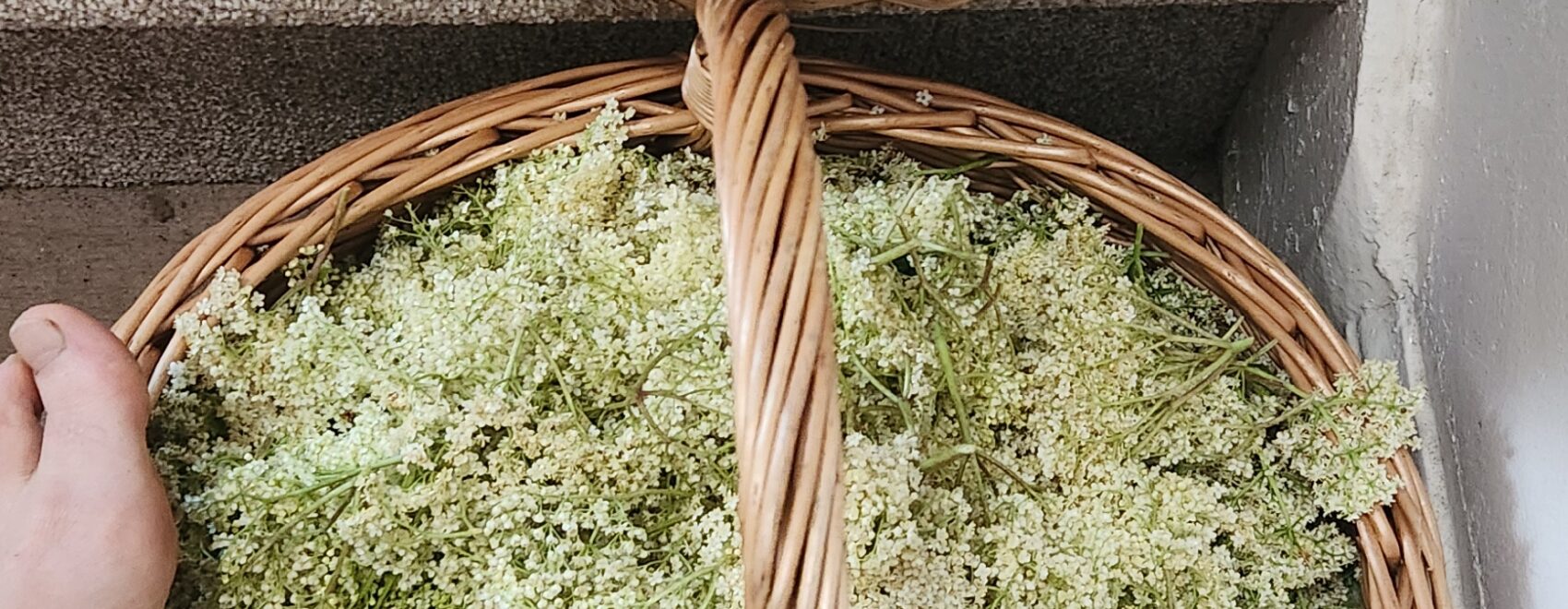

A beautifully simple, sugar-free way to capture the fresh flavour of elderflowers
Sometimes the simplest recipes are the best. This refreshing cold infusion uses just fresh elderflowers and water — no sugar, no cooking, and no complicated preparation.
Leave the flowers to steep slowly in cold water in the fridge overnight, and by morning you will have a delicately floral drink that tastes of early summer.
🌿 Forage for
Fresh Elderflowers from Elder (Sambucus nigra)
Choose freshly opened, creamy-white flower heads with a beautiful strong fragrance. Use your nose — some trees smell much better than others!
📅 Foraging Time
Late May to June depending on location and weather.
📍 Foraging Site
- Hedgerows
- Woodland edges
- Parks and green spaces
- Countryside paths
Avoid flowers growing close to busy roads or in areas that may have been sprayed.
⏳ Patience Required
⭐ (Very easy) – prepare in minutes and leave overnight
🧺 Ingredients
- Fresh elderflower heads
- Cold drinking water
That’s it — no sugar needed!
👩🍳 To Do
- Choose fragrant flowers
Select fresh, strongly scented elderflower heads, ideally picked on a dry day. - Check for insects
Gently shake the flowers and allow any small insects time to crawl away. Avoid washing if possible, as washing can remove some of the delicate fragrance. - Fill your container
Add plenty of elderflower heads to a clean jug, jar, or container. The more flowers you use, the stronger the infusion. - Add cold water
Pour over enough cold drinking water to cover the flowers. - Steep overnight
Cover and place in the fridge overnight. - Strain
The next day, strain carefully through a fine sieve or muslin. - Enjoy cold
Drink chilled and enjoy the fresh, delicate flavour of elderflower.
🍽️ Serving Suggestions
- Serve straight from the fridge
- Add ice cubes
- Add a slice of lemon
- Mix with sparkling water
- Add fresh mint
- Freeze into floral ice cubes
💪 Nutritional Benefits
This infusion contains no added sugar, making it a light and refreshing alternative to traditional cordial.
Elderflowers also have a long history of traditional herbal use, particularly in seasonal preparations.
⚠️ Safety & Foraging Note
Always ensure correct identification before consuming any wild plant.
Use only correctly identified Elder flowers. Remove as much thick green stalk material as practical, and do not use the leaves.
Because this is a fresh, unpasteurised infusion with no sugar or preservatives, keep it refrigerated and consume promptly — ideally within 24 hours after straining or freeze for use later in the year.
Harvest responsibly, taking only some flower heads from each tree and leaving plenty to develop into elderberries later in the year.
🌿 Join a Foraging Course
Simple recipes like this show that wild food does not need to be complicated. Sometimes all you need is a handful of flowers, some water, and a little patience.r flowers to dark autumn berries, with many traditional food and drink uses along the way.
If you’d like to learn more about edible plants, trees, flowers and fungi safely and practically, join one of our foraging courses: