
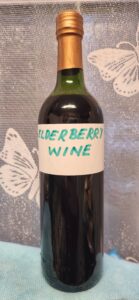
A wonderfully warming homemade wine made by reusing the elderberries and spices left after making cordial
This is one of our favourite zero-waste foraging recipes. After making elderberry cordial, don’t throw away the cooked elderberries and spices — there is still plenty of rich fruit flavour left in them!
The secret is not to squeeze the cordial mixture completely dry. Strain and press it, but leave the berries slightly moist, so they still hold enough juice and flavour for a second life.
And here is where the real magic happens: if your elderberry cordial was made with warming spices such as cloves, cinnamon and other festive spices, those flavours carry through into the fermentation. The finished elderberry wine can taste beautifully spiced — almost like mulled wine straight from the bottle.
Magic mulled wine, no mulling required! 🍷✨
🌿 Forage for
Fully ripe Elderberries from Elder (Sambucus nigra)
Choose:
- Fully ripe, dark purple-black berries
- Heavy clusters of mature fruit
- Clean berries gathered away from busy roads and sprayed areas
📅 Foraging Time
Late summer to autumn, typically August to September depending on location and weather.
📍 Foraging Site
- Hedgerows
- Woodland edges
- Parks and green spaces
- Countryside paths
Avoid areas exposed to heavy traffic pollution or chemical spraying.
⏳ Patience Required
⭐⭐⭐⭐⭐ (High) – easy to start, but fermentation and maturation need time
🧺 Ingredients
For approximately 4.5 litres / 1 gallon:
- The moist elderberry fruit and spice mixture left after making elderberry cordial
- Approximately 1–1.3 kg granulated sugar, depending on how much sugar and flavour remain in the fruit and your desired wine style
- Water to make up approximately 4.5 litres
- 1 sachet red wine or general-purpose wine yeast
- Yeast nutrient, according to packet instructions
- Optional lemon juice or citric acid to adjust acidity if needed
Your leftover cordial mixture may already contain wonderful warming spices such as:
- Cloves
- Cinnamon
- Star anise
- Ginger
- Cardamom
- Other favourite mulling spices
Do not add more automatically — taste and smell your mixture first. The spices left from cordial making may already be enough.
👩🍳 To Do
- Make your elderberry cordial first
Prepare your usual elderberry cordial using ripe elderberries and your favourite warming spices. - Strain — but don’t squeeze it completely dry
Remove the fruit and spice mixture from the cordial. Press out most of the liquid, but deliberately leave the mixture slightly moist. This is important — you want plenty of flavour left behind for the wine. - Save everything flavourful
Transfer the cooked elderberries and suitable spices into a clean, sanitised fermentation vessel. - Prepare the sugar solution
Dissolve the sugar in some hot water, then allow it to cool. - Combine
Pour the sugar solution over the leftover elderberry mixture and add enough water to bring the total volume towards approximately 4.5 litres. - Taste before adding more spice
Remember that your fruit has already been cooked with cloves, cinnamon or other spices. Those flavours can become beautifully pronounced in the finished wine. - Allow to cool completely
Make sure the mixture is at a yeast-safe temperature before continuing. - Add yeast and nutrient
Add the wine yeast and yeast nutrient according to the packet instructions. - Primary fermentation
Cover with suitable fermentation equipment and allow the mixture to ferment for several days. Stir daily with a clean, sanitised spoon. - Strain the fruit
Once the initial fermentation has extracted the remaining colour and flavour, strain out the elderberry pulp and spices. - Transfer to a demijohn
Pour or siphon the liquid into a clean, sanitised demijohn and fit an airlock. - Allow fermentation to continue
Leave until fermentation is fully complete. This may take several weeks. - Rack the wine
Once sediment forms, siphon the wine into a clean demijohn, leaving the sediment behind. - Mature
Give the wine time. The fruit, spice and warming flavours often become smoother and more rounded with age. - Bottle only when fermentation is complete
Once completely stable, transfer into clean, sanitised bottles. - Wait for the magic
Leave the bottles to mature for several months if possible. Then open one and discover what those leftover cordial spices have created: Mulled wine flavour — straight from the bottle! 🍷✨
🍽️ Serving Suggestions
- Serve at room temperature
- Gently warm in winter — without needing to add extra spices
- Enjoy beside a fire
- Serve with cheese
- Pair with rich autumn and winter dishes
- Bring out at Christmas as your own homemade wild “mulled” wine
- Give as a very special homemade gift
♻️ Why We Love This Recipe
This recipe is a perfect example of how foraging and preserving can work together.
First, the elderberries and spices make elderberry cordial.
Then, instead of throwing away the strained fruit mixture, we use it again to make elderberry wine.
One harvest. Two completely different drinks. Very little waste.
And sometimes the “leftovers” create something even more exciting than the original recipe!
💪 Nutritional Benefits
Elderberries are naturally rich in dark pigments and plant compounds and have a long history of traditional seasonal use.
However, fermentation changes the original ingredients and this recipe produces an alcoholic drink, so the finished wine should be enjoyed responsibly rather than treated as a medicinal preparation.
⚠️ Safety & Foraging Note
Always ensure correct identification before consuming any wild plant.
Use only correctly identified, fully ripe Elderberries. Raw or inadequately cooked elderberries and other parts of the Elder plant can cause gastrointestinal illness, so the berries used here should already have been properly cooked during cordial preparation.
Remove stems, leaves and other green plant material as thoroughly as practical.
All fermentation vessels, spoons, strainers, demijohns and bottles should be thoroughly cleaned and sanitised.
Never bottle while fermentation is still active. Pressure can build inside sealed bottles and may cause them to burst.
This recipe produces alcohol and is intended for adults of legal drinking age.
🌿 Join a Foraging Course
Recipes like this are at the heart of what we love about foraging — learning not only what we can eat, but how to preserve seasonal abundance, experiment with flavour and make the most of every harvest.
If you’d like to learn more about edible plants, trees, flowers and fungi safely and practically, join one of our foraging courses: