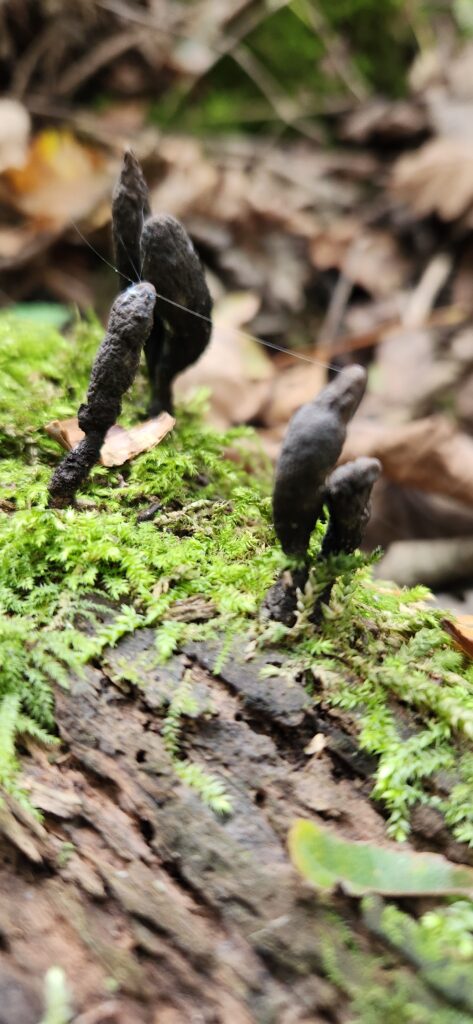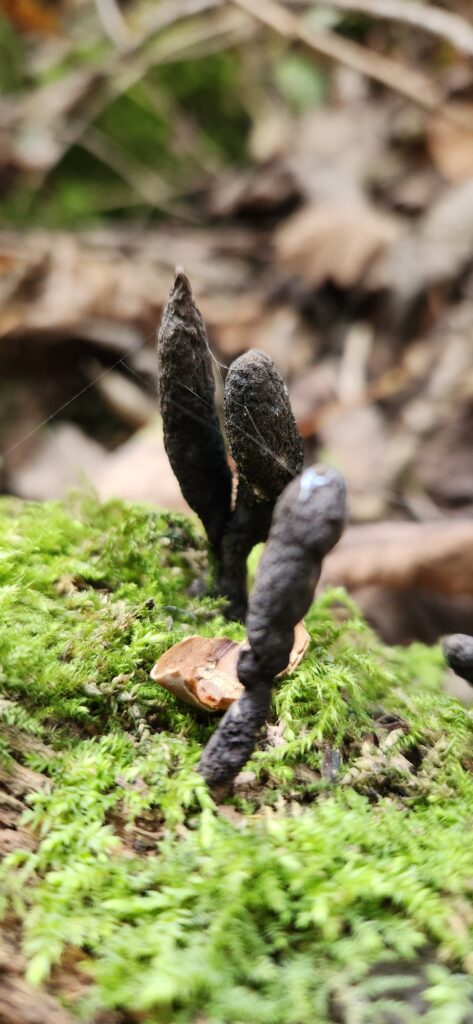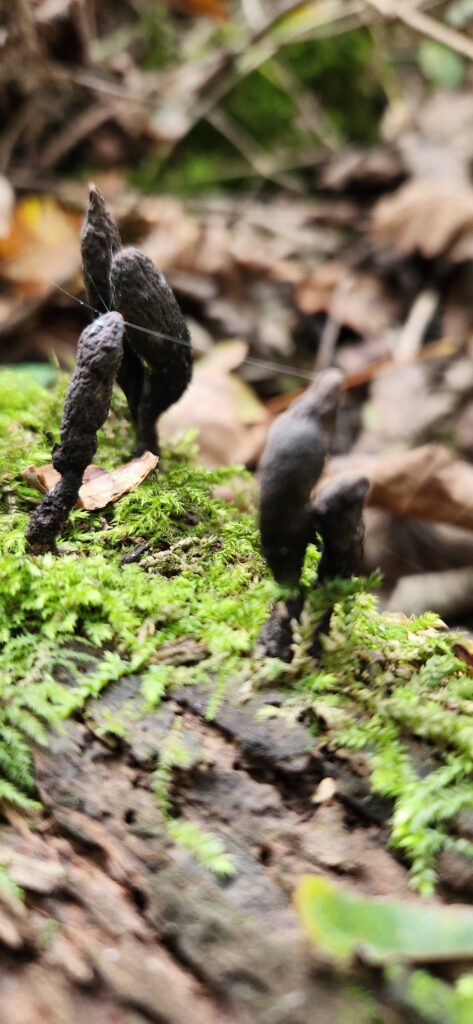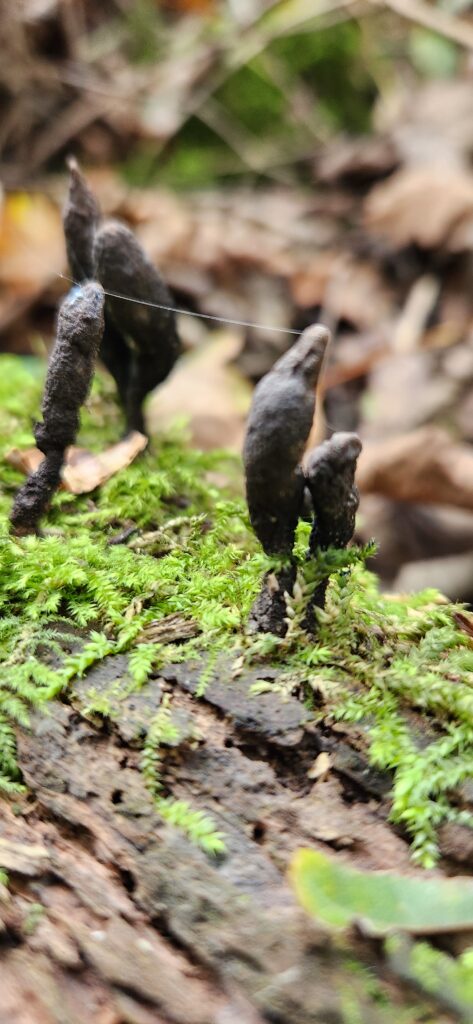

Dead Moll’s Fingers (Xylaria longipes)
Dead Moll’s Fingers is a dark, finger-like fungus closely related to the better-known Dead Man’s Fingers (Xylaria polymorpha). This mysterious species appears on decaying hardwood and is one of the most recognisable fungi in UK woodlands. Although inedible, it plays a valuable ecological role in breaking down deadwood and supporting woodland biodiversity.
Other names: “Dead Moll’s Hand” or simply “Xylaria.”
Not sure about mushroom identification? Join us for the next foraging course in Charnwood, Leicestershire.
Habitat
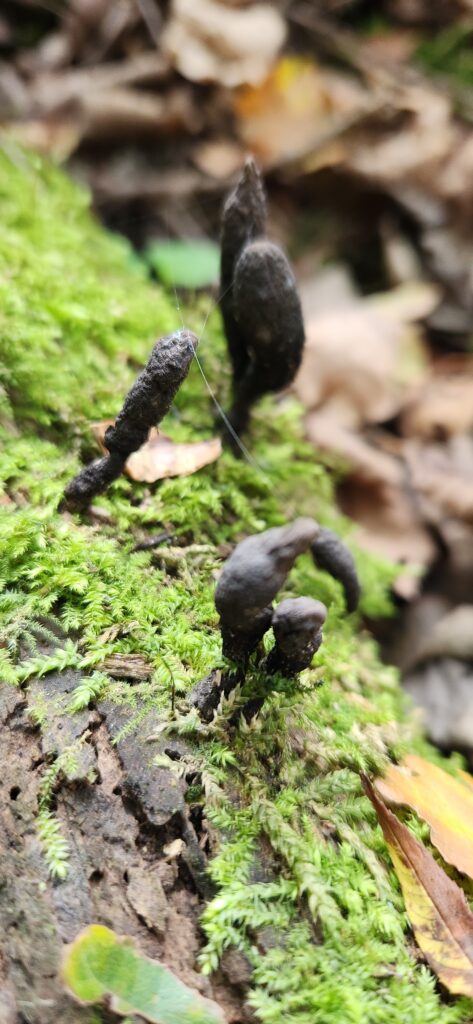
Dead Moll’s Fingers typically grows on fallen or decaying hardwood branches, especially beech, sycamore, and sometimes maple. It prefers moist, shaded woodland habitats and is often found emerging from the sides of logs or stumps, rather than from buried roots like its larger cousin, Dead Man’s Fingers.
This species is widespread across the UK and Europe, appearing throughout the year, though it’s most visible from spring to late autumn.
In Leicestershire, you can often spot it in mature woodlands or shaded paths, growing on fallen branches that have begun to decompose.
Identification Features
Shape:
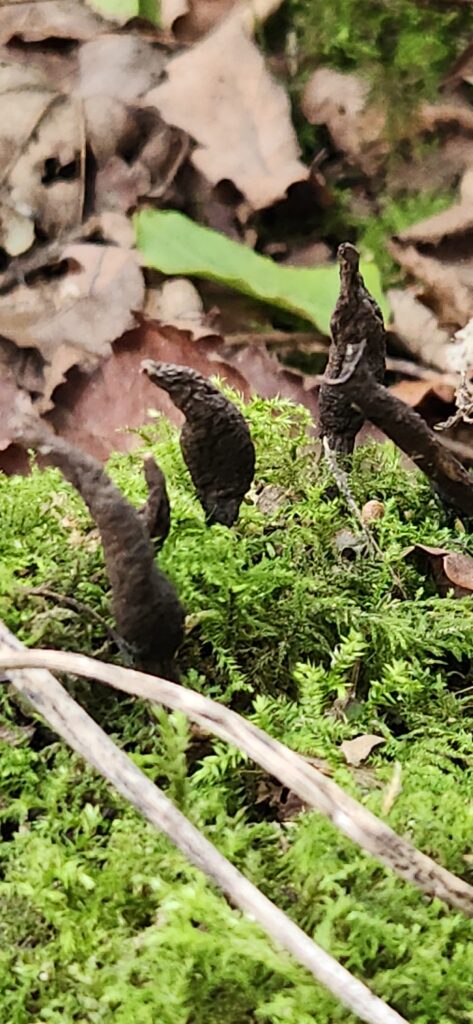
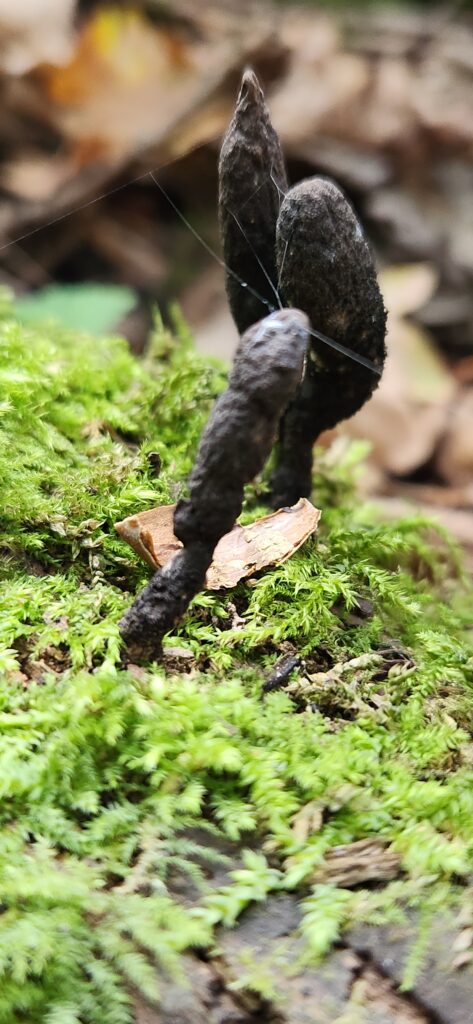
Slender, finger-like or club-shaped fruiting bodies, typically growing in small clusters or occasionally singly.
Colour:
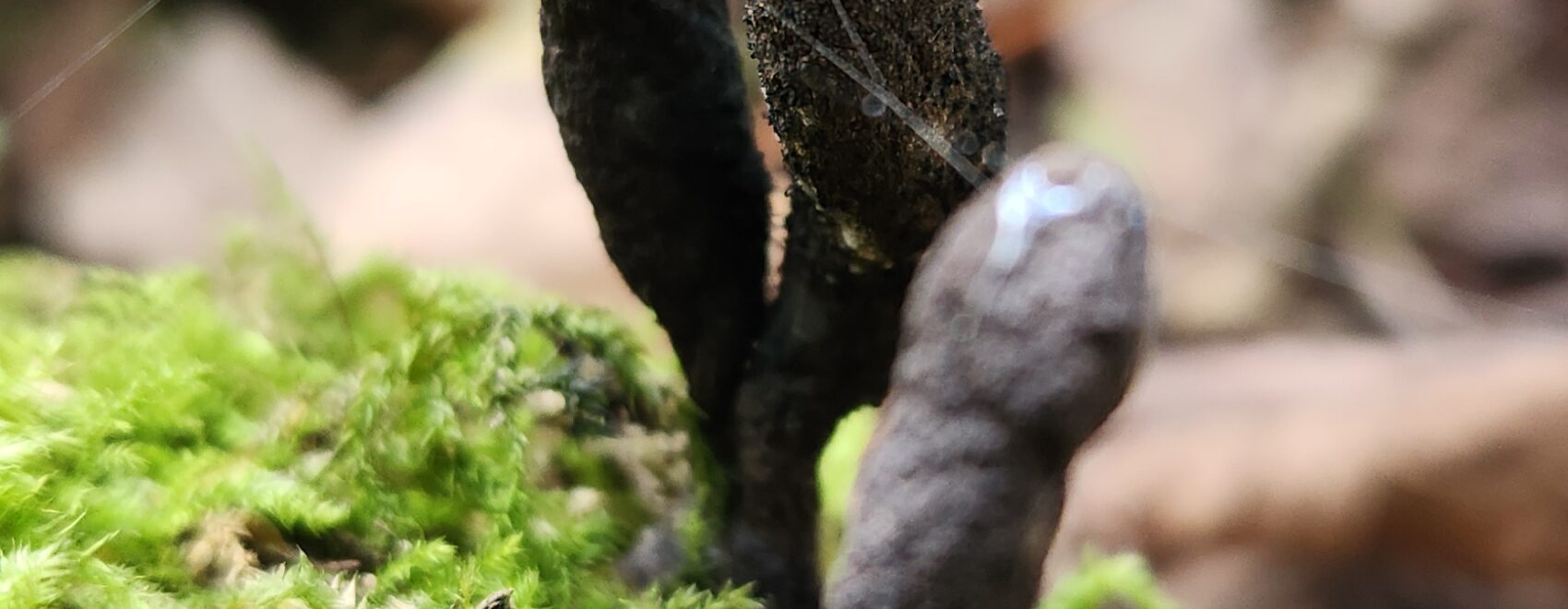
Young specimens are greyish to brown, covered in a thin whitish coating (asexual spore layer), becoming dark brown or black and slightly roughened with age.
Size:
Usually 2–8 cm tall and 0.5–2 cm thick, smaller and more delicate than Xylaria polymorpha (Dead Man’s Fingers).
Texture:
Tough, woody, and dry when mature. Older specimens may appear cracked or wrinkled.
Interior:
White when young, turning dark and woody inside as the fungus ages.
Similar Species
- Dead Man’s Fingers (Xylaria polymorpha):
Larger, thicker, and often emerges from tree bases or buried roots. - Candlesnuff Fungus (Xylaria hypoxylon):
More branched with white-tipped ends, commonly found on smaller twigs and sticks.
Dead Moll’s Fingers sits somewhere between these two species — more delicate than Dead Man’s Fingers, but stouter and less branched than Candlesnuff Fungus.
Edibility
Dead Moll’s Fingers is inedible due to its hard, woody texture. It is not toxic, but it has no culinary value. Instead, it should be admired for its unusual appearance and its important ecological function within the woodland ecosystem.
Ecological Role
This fungus is saprotrophic, meaning it feeds on dead and decaying wood. By decomposing hardwood, Xylaria longipes helps to recycle nutrients and maintain the health of the forest floor.
It also provides microhabitats for insects, lichens, and mosses, supporting biodiversity within UK woodland ecosystems.
Dead Moll’s Fingers can sometimes be found fruiting alongside other wood-decaying fungi, such as Turkey Tail (Trametes versicolor) and Birch Polypore (Fomitopsis betulina), forming part of a complex community of woodland decomposers.
Foraging Season
Dead Moll’s Fingers can be seen throughout the year, but spring through autumn is the best time to find it in good condition. Even when dormant, the blackened fruiting bodies often remain visible during the winter months.
If you’re foraging in Leicestershire, check fallen branches and decaying logs along shaded woodland paths — especially those of beech and sycamore trees.
Folklore and Curiosity
The name Dead Moll’s Fingers adds a touch of dark humour to this species’ eerie appearance. “Moll” was once a common term for a woman, so the name evokes the image of a smaller, feminine counterpart to Dead Man’s Fingers.
Its ghostly, finger-like shapes have long inspired folklore and superstition, with some believing their presence signified spirits or omens lurking in the forest. Today, it’s appreciated as one of Britain’s most visually intriguing fungi — and a sign of healthy, decomposing woodland.
Health Warning
While not poisonous, Dead Moll’s Fingers should never be eaten. Always take care when handling or collecting fungi for study — and only harvest from areas where you have permission.
If you’re new to mushroom identification, it’s best to learn alongside an experienced guide. Misidentifying wild fungi can be dangerous.
Join a Foraging Course
👉 Join our next foraging course in Charnwood, Leicestershire Whether you’re a beginner or a seasoned forager, there’s always something new to discover!