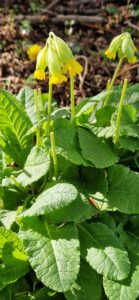
A beautiful spring wildflower long associated with traditional countryside meadows
Cowslip is one of the true signs of spring, producing cheerful golden-yellow flowers that brighten grasslands and roadside banks. Once far more common across the countryside, this much-loved native plant has strong links to traditional meadows, folklore, and old herbal uses.
Its delicate flowers are edible and have historically been used in wines, teas, and desserts.
Not sure about plant identification? Join us for the next foraging course in Charnwood, Leicestershire, and learn how to safely identify wild plants.
🌳 Habitat
Commonly found in:
- Old meadows and pasture
- Chalk and limestone grassland
- Road verges and embankments
- Sunny open grassy areas
Cowslips favour well-drained soils and are often associated with unimproved traditional grasslands.
🔍 Identification Features
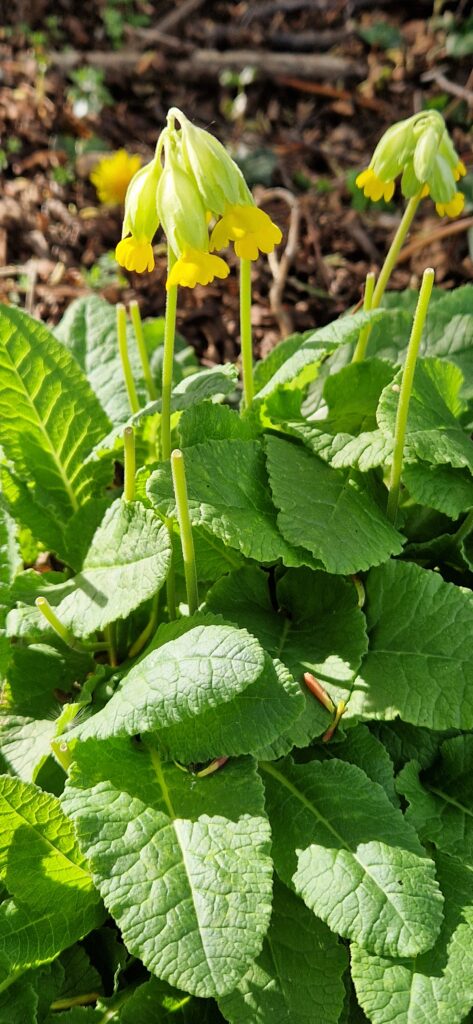
- Low-growing perennial forming a basal rosette
- Soft, wrinkled green leaves with slightly crinkled texture
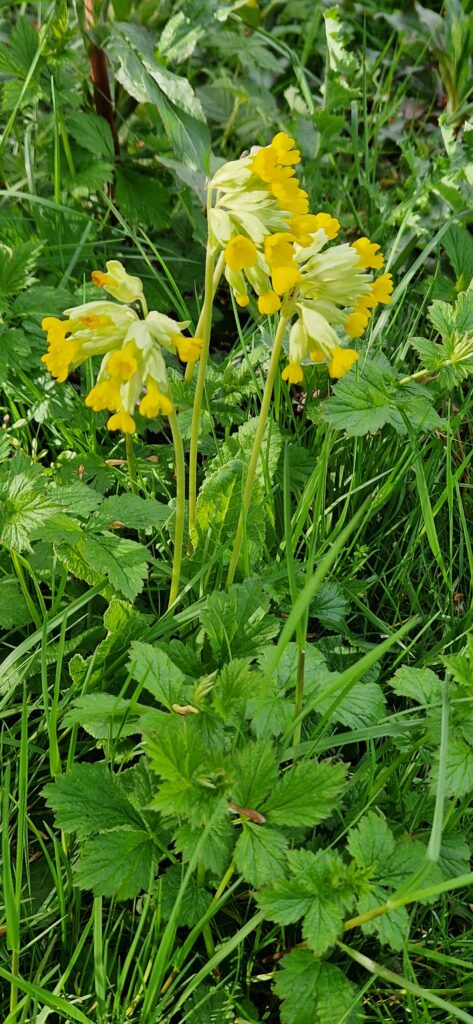
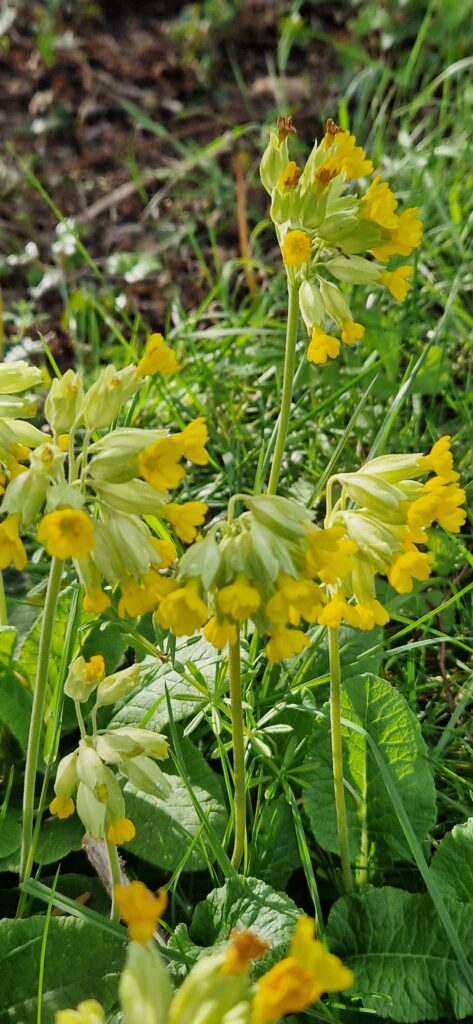
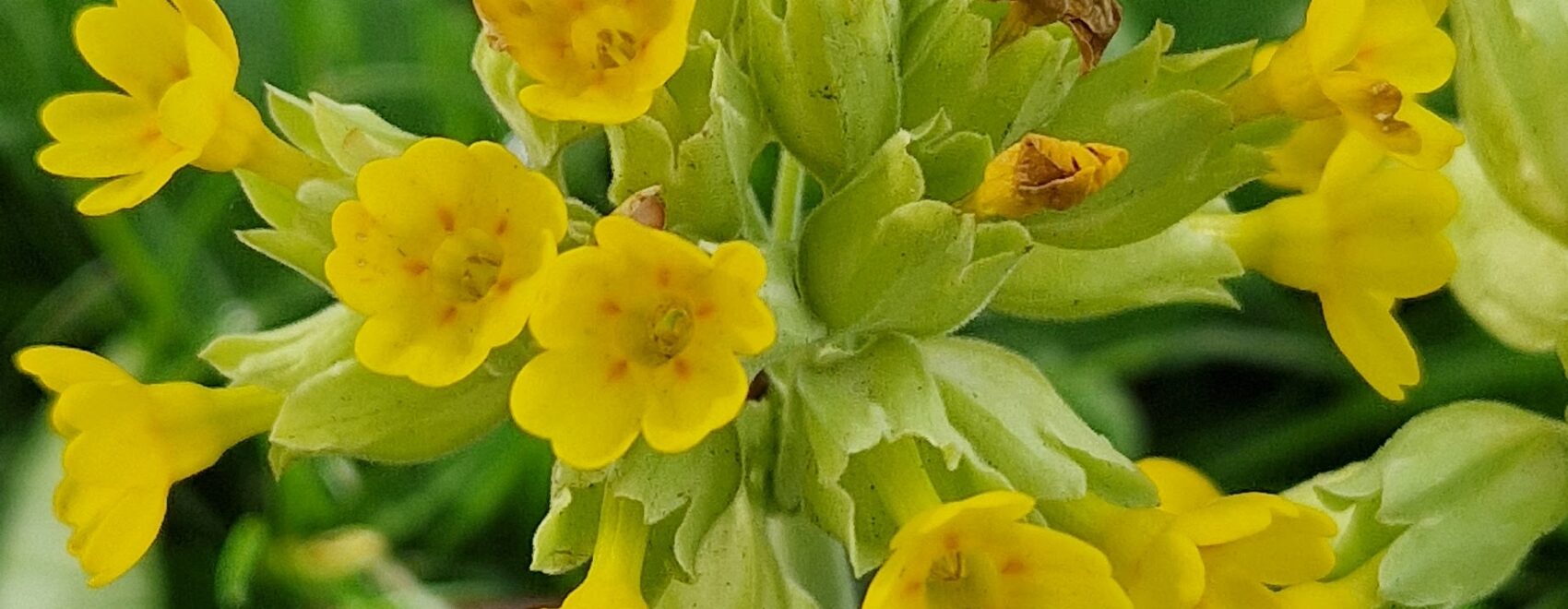
- Clusters of nodding yellow flowers held on a single upright stem
- Flowers have deeper orange markings in the centre
- Distinct sweet, honey-like fragrance
The flowers appear in loose umbels, often all facing slightly downward.
⚠️ Lookalikes
- Primrose (Primula vulgaris) – usually pale yellow flowers borne singly rather than clustered
- Oxlip (Primula elatior) – rarer and intermediate in appearance
While confusion is generally low risk, careful identification is still important.
🍴 Edibility
The flowers are edible and can be used in:
- Salads
- Cakes and desserts
- Infused drinks and teas
- Traditional country wines
Young leaves have also been used historically, though the flowers are the most commonly gathered part.
As always, harvest lightly and sustainably, leaving plenty for pollinators and seed production.
🌿 Ecology & Folklore
Cowslip has deep roots in British folklore and was once associated with luck, fairies, and May celebrations.
Ecologically, it is an important nectar source for early pollinators and a valuable indicator of old, species-rich grassland habitats.
Loss of traditional meadows has reduced its abundance in many areas, making respectful foraging especially important.
📅 Season
- Leaves: Early spring
- Flowers: April to May
⚠️ Health Warning
Although generally considered safe, some people may experience mild allergic reactions from handling or consuming cowslip flowers.
Always ensure correct identification before consuming any wild plant.
Only forage where the plant is abundant and never strip entire patches.
Not sure about plant identification? Join us for the next foraging event in Charnwood, Leicestershire.