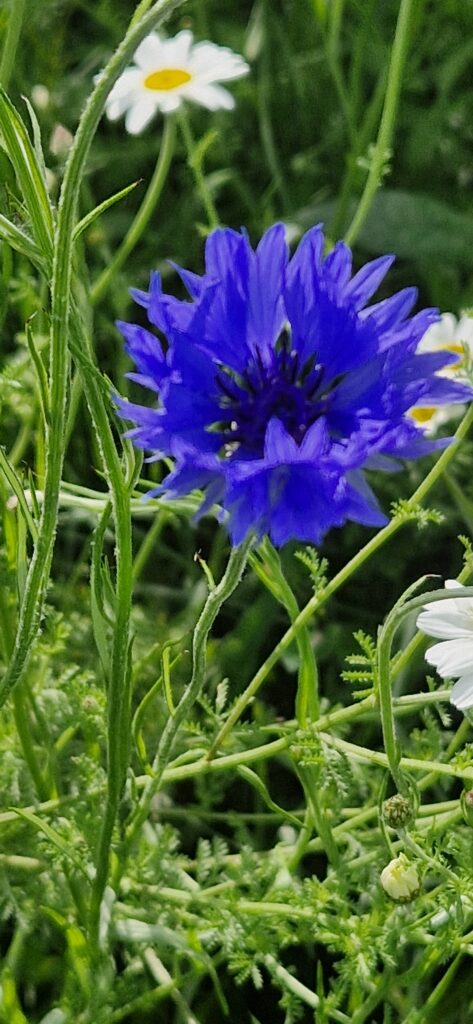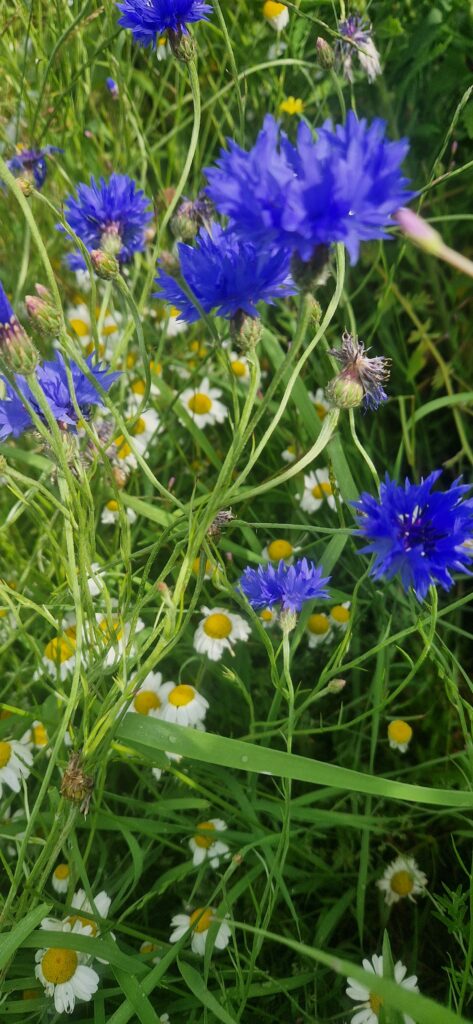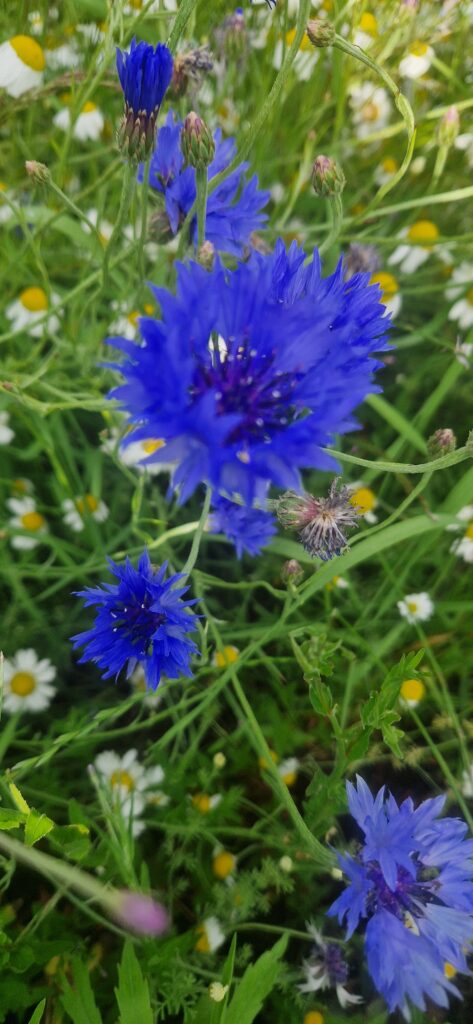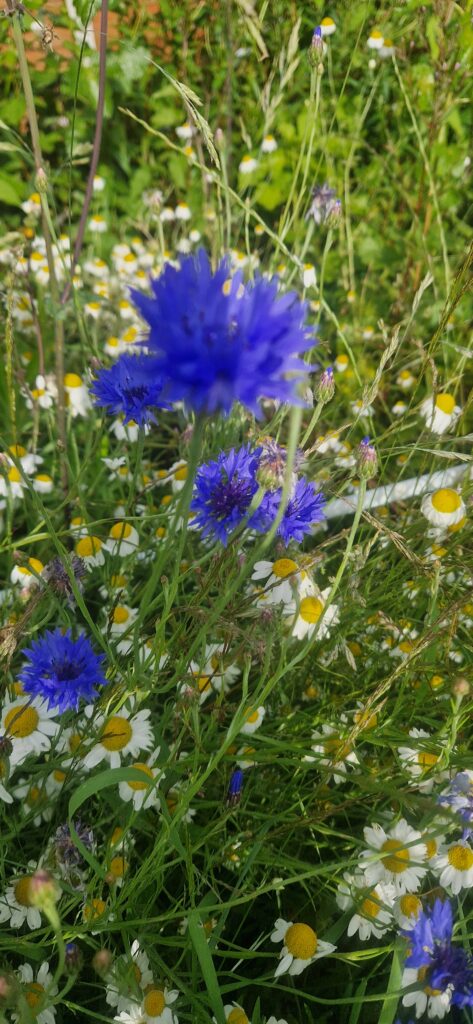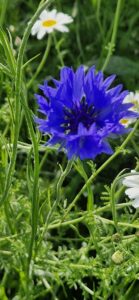
Cornflower (Centaurea cyanus), known for its striking blue petals, is a beautiful wildflower with both culinary and medicinal uses. Often found in meadows and fields, this vibrant plant has a rich history and offers several practical applications in foraging.
Overview
- Latin Name: Centaurea cyanus
- Common Names: Bachelor’s Button, Bluebottle, Knapweed
Natural Habitat
Cornflower thrives in a variety of environments, including:
- Open fields and meadows
- Roadside verges
- Farmland and disturbed soils
It prefers well-drained, slightly alkaline soil and is typically found blooming during the summer months.
Identification
- Leaves:
Narrow, lance-shaped, and often covered in fine hairs, with a slightly greyish-green color. - Flowers:
The striking blue flower heads (sometimes pink or white) grow at the end of long, thin stems. They have a distinctive, ragged appearance with numerous petal-like structures. - Height:
Typically grows between 12 to 36 inches tall, often with multiple stems branching from a single base.
Edibility and Medicinal Uses
Cornflower petals are edible and are known for their vibrant color and mildly spicy flavor. They have been used in both culinary and medicinal applications throughout history.
Culinary Benefits
- Petals: Mildly spicy with a slight sweetness, they are commonly used to garnish salads, cakes, and desserts. They can also be added to herbal teas for a splash of color.
- Seeds: Though edible, the seeds are often left unused in favor of the flowers.
Medicinal Benefits
- Anti-inflammatory: Cornflower has been traditionally used to relieve minor eye irritations and inflammation.
- Digestive Aid: It is believed to have mild digestive benefits, particularly in soothing bloating and mild stomach discomfort.
Preparation and Uses
- Tea: Steep a few fresh or dried petals in hot water for a refreshing, mildly floral drink.
- Compress: Cornflower can be used as a cold compress for irritated eyes or skin.
Foraging Tips
- Best Harvesting Season: Cornflower flowers are best harvested in full bloom, typically in late spring to early summer.
- Sustainability: Harvest only from abundant populations to ensure the plant thrives. Make sure to have permission when foraging on private land.
Pro Tip:
Cornflower petals can be dried and stored for later use in both culinary and medicinal preparations.
Folklore & History
Cornflower has been symbolic of love and devotion in folklore, often associated with the blue color of loyalty. In medieval times, the flower was used as a charm to attract a lover or as a token of affection.
Safety Precautions
- Moderation: Cornflower petals are safe in moderate amounts, but should be used with caution by those allergic to other members of the Asteraceae family.
- Pregnancy and Children: It is recommended to consult with a healthcare provider before using Cornflower for medicinal purposes, especially during pregnancy or in young children.
Conclusion
Cornflower is a beautiful, versatile plant with a rich history of use in both the kitchen and herbal medicine. Whether you’re adding color to your dishes or looking for a soothing remedy, this wildflower is a must-have in your foraging repertoire.
Want to learn more about foraging and medicinal plants? Join our foraging courses in Charnwood, Leicestershire.