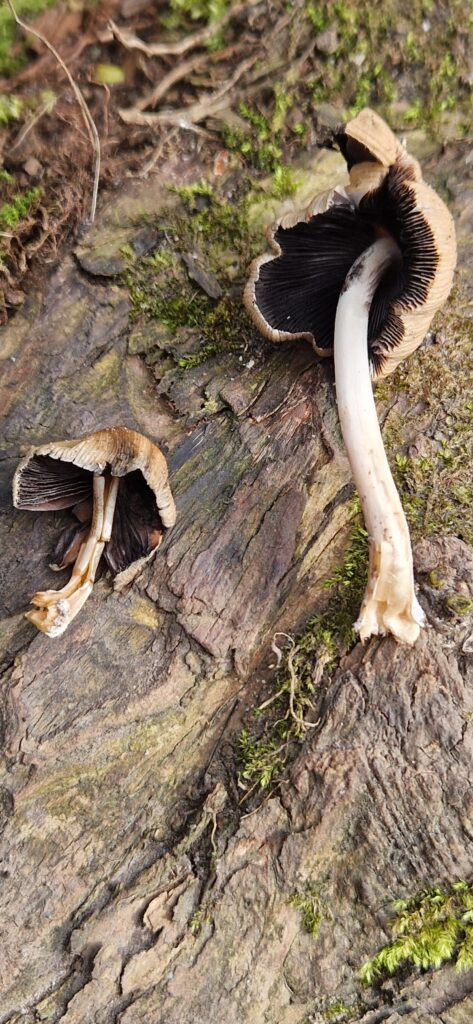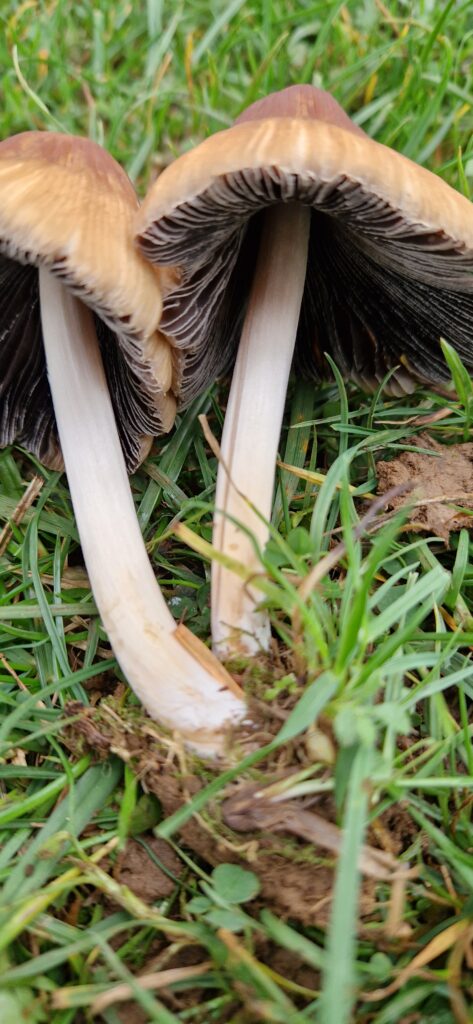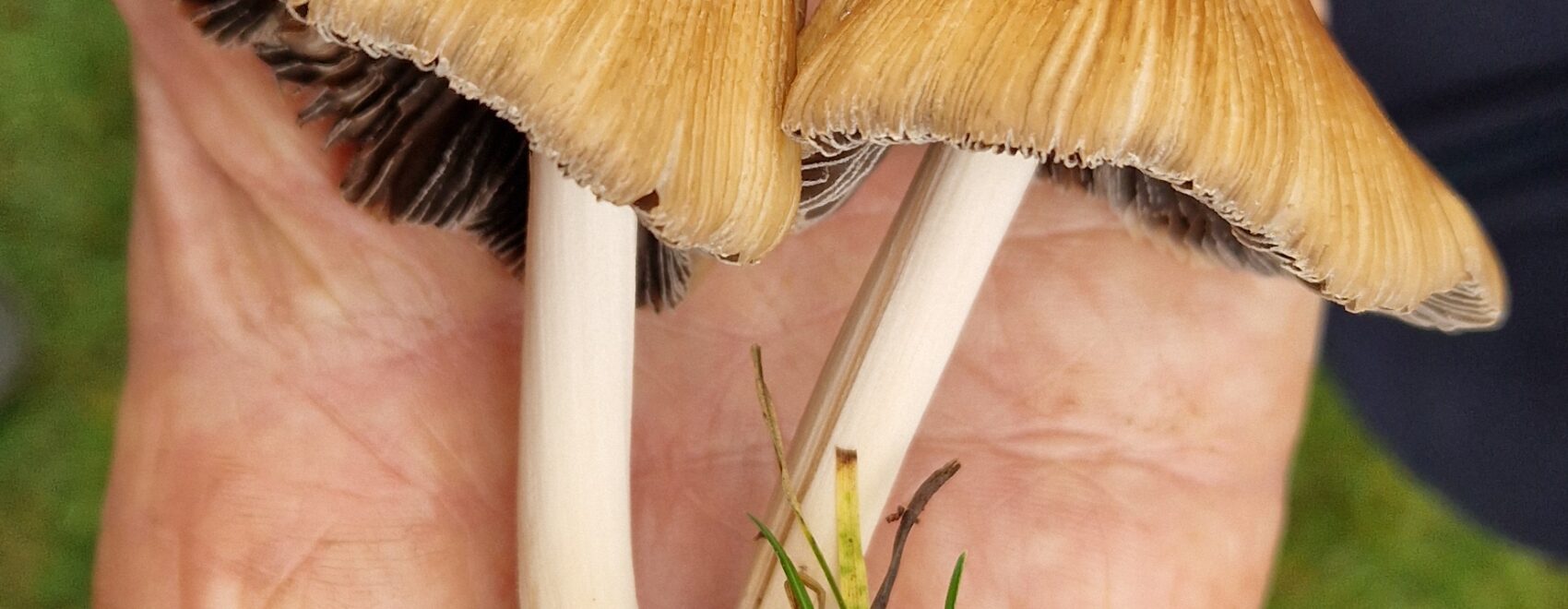

The Common Ink Cap (Coprinopsis atramentaria), sometimes called the Inky Cap or Tippler’s Bane, is a familiar fungus often found in clusters on grassy verges, woodland edges, and gardens across the UK and Europe. Its tall grey-brown caps appear after rain and are well known for a remarkable transformation — as they age, the caps dissolve into a black, inky liquid, a process called deliquescence.
Although once considered edible, this mushroom is now best admired rather than eaten due to its toxic reaction with alcohol and more recent concerns about potential long-term health risks.
Similar and also edible
The Common Ink Cap can be mistaken for the Shaggy Ink Cap (Coprinus comatus), a larger and edible species with a shaggy white cap. The Common Ink Cap, by contrast, has a smooth grey-brown surface and breaks down rapidly into ink. It’s also the only one known to cause a dangerous alcohol interaction, making correct identification essential.
Not sure about mushroom identification? Join us for the next foraging event in Charnwood, Leicestershire.
Habitat
This species favours nutrient-rich, disturbed soil and often grows where buried wood or organic matter is present. You’ll commonly find it in lawns, gardens, and woodland edges, frequently in dense groups or rows. It typically fruits in spring and autumn, especially after wet weather.
Identification features
Cap:
When young, the cap is egg-shaped and greyish-brown, gradually expanding into a bell shape about 5–7 cm wide. As the mushroom matures, the edges curl and begin to turn black, eventually liquefying into an inky fluid.
Gills:
The gills are white at first, then darken to grey and finally black, dissolving as the spores mature.
Stem:
The stem is smooth, white, and hollow, growing 5–12 cm tall and up to 1.5 cm thick. It has no ring or volva, and the base is often slightly fibrous.
Flesh:
Soft, thin, and delicate, with a mild earthy scent.
Edibility and Toxicity
The Common Ink Cap can cause severe poisoning if consumed with alcohol — even small amounts — up to 48 hours before or after eating it. The reaction is triggered by a chemical called coprine, which interferes with the body’s ability to process alcohol. Symptoms can occur even from trace exposures, such as alcohol-based mouthwash or aftershave.
Although older field guides once listed it as edible when alcohol was avoided, modern research has identified additional toxins that may have carcinogenic effects. Because of this, many experts now advise against consuming it altogether.
Typical symptoms of poisoning include:
- Flushing and sweating
- Nausea and vomiting
- Rapid heartbeat
- Dizziness and weakness
Given these risks, the Common Ink Cap should be regarded as unsafe for eating.
Historical Uses
Long before modern ink was available, people took advantage of the mushroom’s natural “inking” process. The black liquid produced as the cap deliquesces was historically boiled with water and cloves — or sometimes urine — to create a crude but usable ink for writing and drawing.
Nutritional and Health Notes
While the Common Ink Cap likely contains small amounts of vitamins and minerals like most wild mushrooms, its toxic chemistry outweighs any nutritional benefit. It serves best as a fascinating example of fungal biology rather than as food.
Foraging Season
This species typically fruits from April to November, flourishing after rainfall. It is commonly seen in lawns, grassy clearings, and woodland edges, forming clusters that quickly turn to black ink as they mature. Because of its fragile structure and potential toxicity, it’s one to observe, not harvest.
Health Warning
⚠️ The Common Ink Cap is no longer considered safe for consumption.
It can cause serious poisoning when alcohol is consumed up to 48 hours before or after eating it, and some studies suggest it may contain carcinogenic compounds. Even minimal alcohol exposure, such as aftershave or hand gel, can cause a reaction.
For these reasons, the Common Ink Cap should be treated as toxic and never eaten.
Join us for a foraging adventure in Charnwood, Leicestershire! Whether you’re a beginner or a seasoned forager, our events are a great way to learn about and identify edible fungi in their natural habitat.