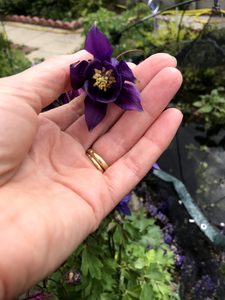
With its beautiful, intricate flowers resembling a gathering of tiny doves, Columbine is one of the most enchanting plants in the garden. But behind its delicate appearance lies a fascinating history of romance, spirituality and a rather important warning – this is a plant best admired rather than eaten!
Not sure about plant identification? Join us for the next foraging event in Charnwood, Leicestershire.
Habitat
Common Columbine is found in woodland edges, hedgerows, damp meadows and shady places. It is also a popular cottage-garden plant and frequently escapes into the surrounding countryside.
It grows well in partial shade, particularly in moist, well-drained soil. Many cultivated varieties are now found in gardens in shades of blue, purple, pink, white and even almost black.s often associated with woodland conditions rather than open sunny ground.
🔍 Identification Features
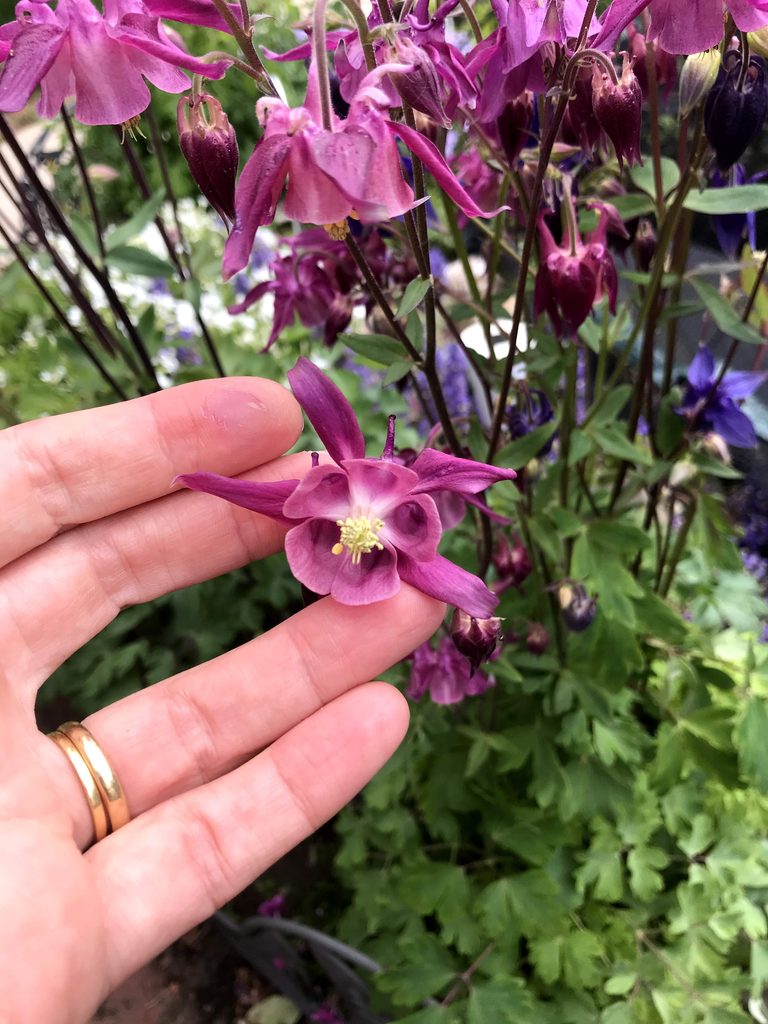
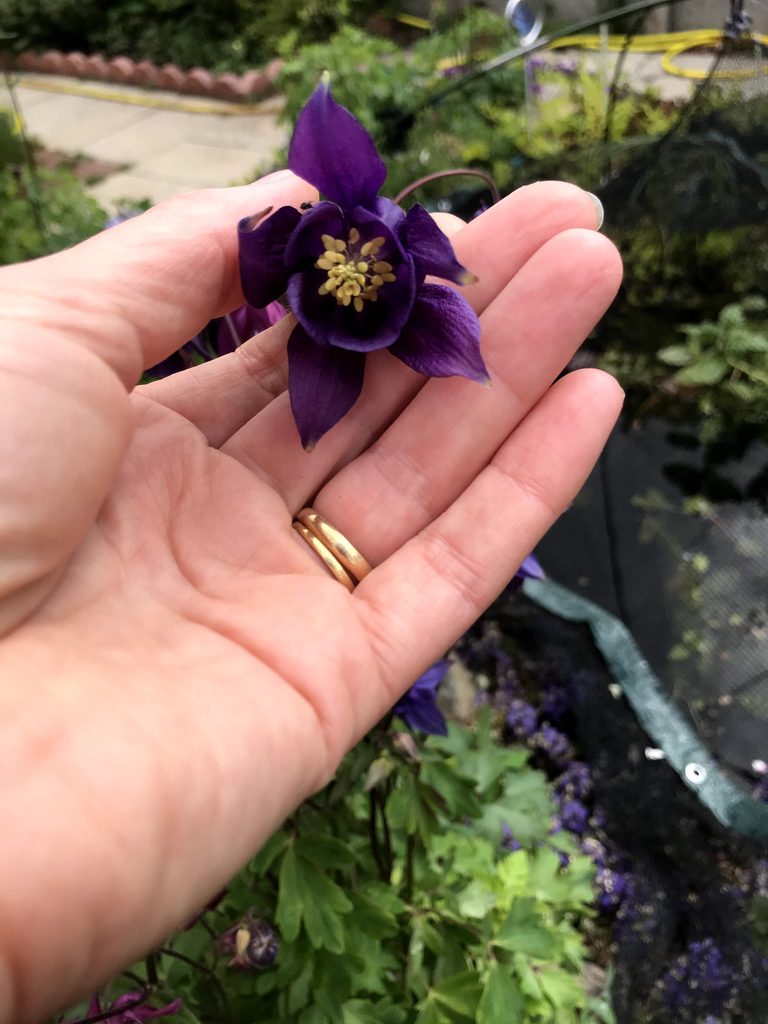
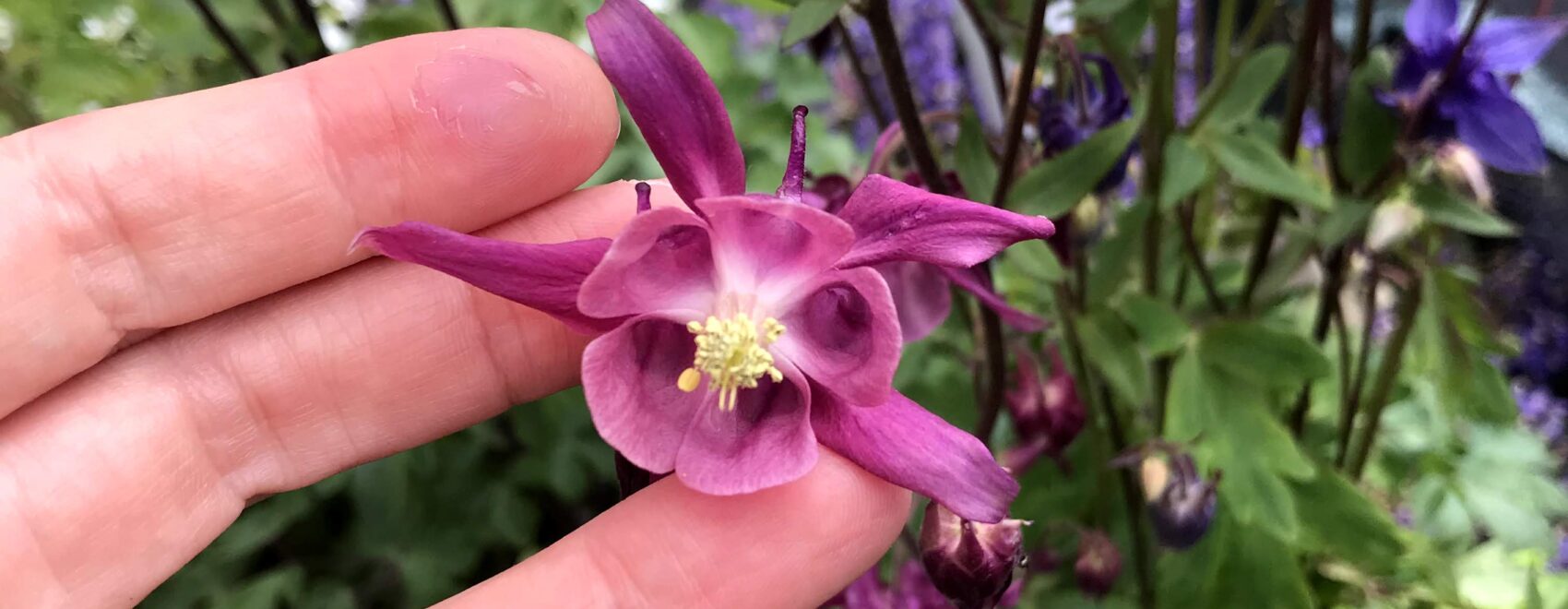
- Flowers: Distinctive nodding flowers with five outer petal-like sepals and five inner petals, each with a backward-pointing nectar spur.
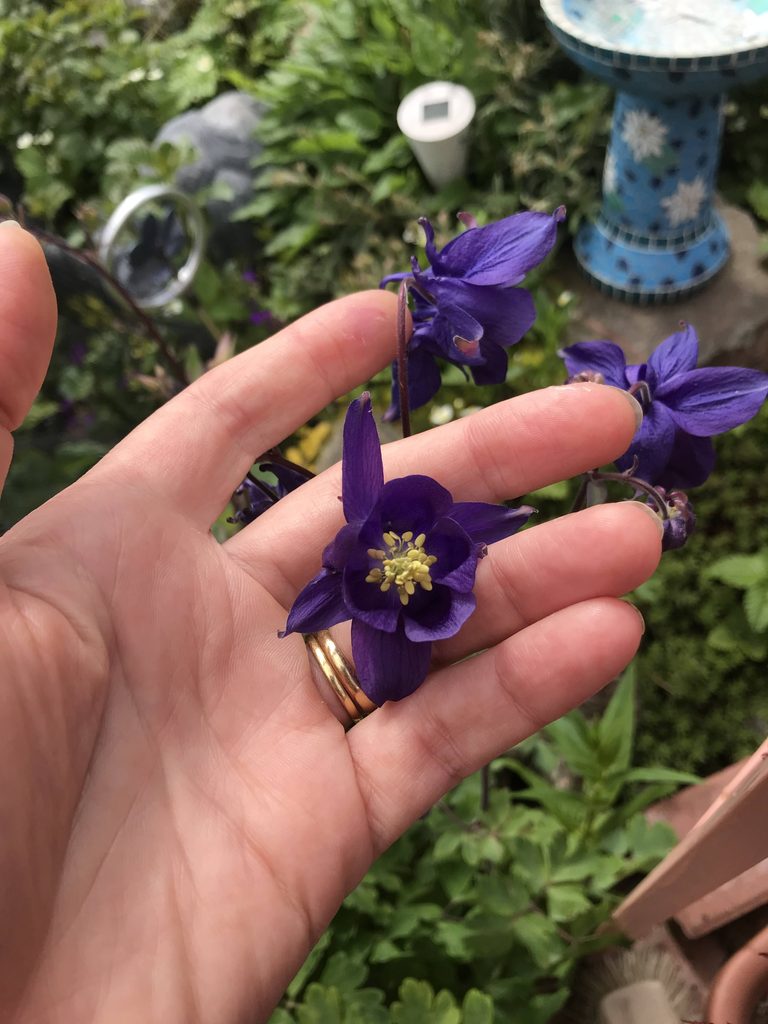
- Colours: Traditionally violet-blue or purple, but cultivated varieties come in many colours.
- Leaves: Soft green, divided into three groups of rounded, lobed leaflets, giving them a delicate, fern-like appearance.
- Stems: Upright, branching stems which can reach around 1 metre tall.
- Flowers: Often resemble little bonnets, doves or tiny clusters of birds.
Lookalikes
Columbine is quite distinctive when in flower, but its divided leaves can sometimes be confused with other members of the Buttercup family (Ranunculaceae).
Its flowers are particularly recognisable because of their five distinctive backward-pointing spurs.
Different Aquilegia species and garden hybrids can look very similar, so identifying the exact species from flowers alone can sometimes be difficult.
Edibility
Edible Parts: The flowers can occasionally be used decoratively, but leaves, roots and seeds should not be eaten.
Key Vitamins & Nutrients: No significant nutritional contribution worth highlighting.
Medicinal Uses: Historically used in herbal medicine, including preparations for sore throats and other complaints. However, it is no longer considered a safe medicinal plant because of its toxic compounds.
Ecology & Traditional Uses
Columbine flowers attract pollinating insects, particularly bees and other nectar-seeking visitors. Their distinctive spurs hold nectar, which provides a reward for suitable pollinators.
Folklore & Stories:
The common name Columbine comes from the Latin word columba, meaning dove.
If you look closely at the flower, its five inner petals are said to resemble five little doves gathered together, their heads facing towards the centre.
This resemblance gave the flower strong Christian symbolism, representing the Holy Spirit, peace and spirituality.
Another popular name is Granny’s Bonnet, inspired by the flower’s resemblance to the old-fashioned bonnets worn by women.
The botanical name Aquilegia comes from the Latin aquila, meaning eagle. This is thought to refer to the backward-pointing flower spurs, which resemble an eagle’s claws.
Two very different birds in one flower – doves and eagles!
Season
- Spring: Leaves emerge and flowering stems begin to develop.
- Late Spring – Early Summer: Main flowering season, usually May and June.
- Summer: Flowers develop into distinctive seed pods containing numerous small black seeds.
- Autumn: Seeds mature and can scatter, allowing the plant to self-seed around the garden.
Health Warning
- Columbine belongs to the Buttercup family (Ranunculaceae), which includes several plants containing naturally occurring toxic compounds.
- The plant contains potentially harmful compounds, including cyanogenic glycosides.
- Do not eat the leaves, roots, seeds or flowers.
- Avoid using Columbine in homemade teas, tinctures or medicinal preparations.
- Ingestion may cause digestive upset and other toxic effects.
Best enjoyed with your eyes rather than your plate!
🌿 Join a Foraging Course
Wall Lettuce is a wonderful example of a plant that many people walk past without noticing. Once you learn its delicate branching shape and tiny five-floreted flowers, it becomes a fascinating addition to your wild plant knowledge.