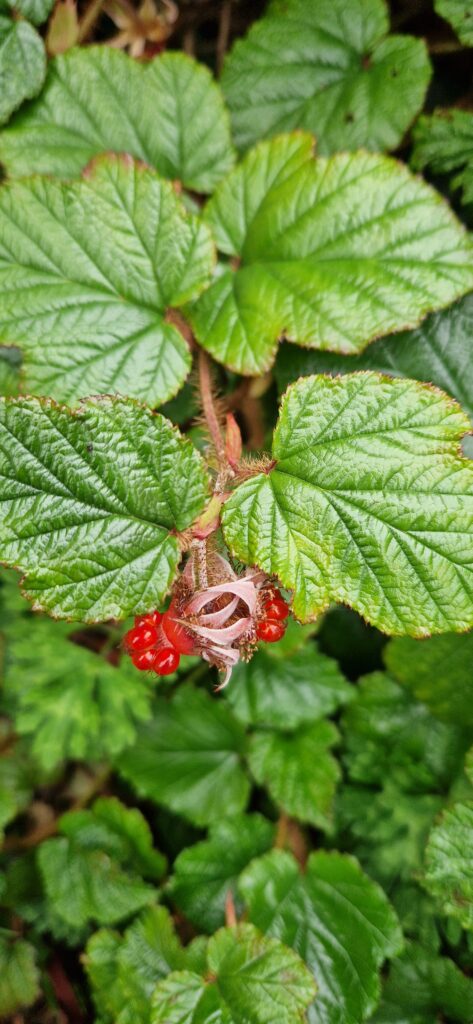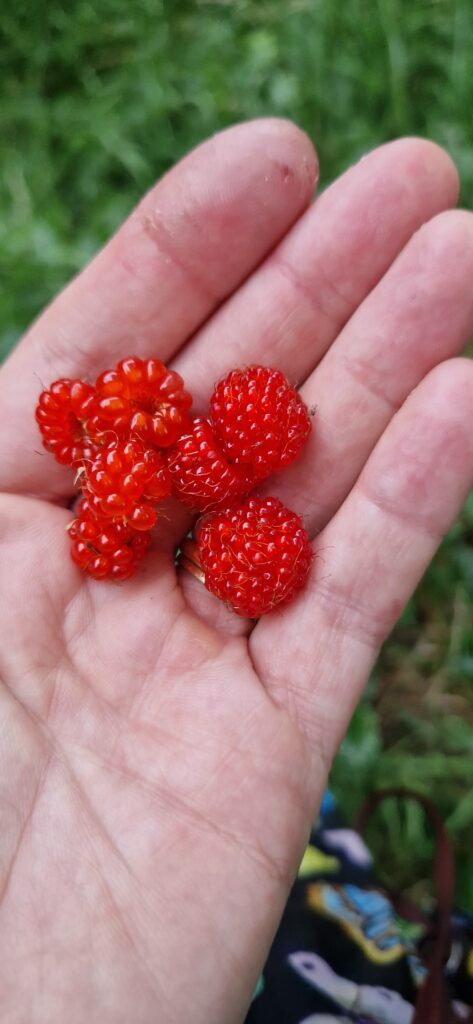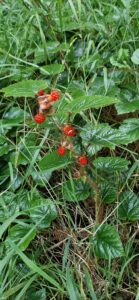
The Chinese bramble (Rubus tricolor) is a versatile and resilient plant native to China, valued for its edible fruits, ornamental appeal, and ground-covering abilities. This low-growing shrub is a hidden gem for gardeners and foragers alike, offering sweet, tangy berries and attractive foliage.
Overview
Latin Name: Rubus tricolor
Common Names: Chinese Bramble, Creeping Bramble
Natural Habitat
Chinese bramble thrives in a variety of environments and is often found in:
- Woodland edges and clearings
- Riverbanks and slopes
- Well-drained soils in sunny or partially shaded areas
Its creeping growth habit makes it an excellent ground cover, particularly in areas prone to erosion.
Identification
Leaves
- Evergreen, glossy, and palmate with three distinct lobes.
- Underside is covered in a soft, white, felt-like texture.
Flowers
- Small, white, and delicate with five petals.
- Bloom in late spring to early summer, attracting pollinators.
Fruits
- Small, juicy, red berries resembling raspberries.
- Ripen in mid to late summer, turning a deeper shade as they mature.
Stems
- Long, trailing, and thorny, often rooting at nodes where they touch the ground.
Edibility and Culinary Uses
The berries of the Chinese bramble are sweet and slightly tangy, making them a delightful addition to various recipes. Common culinary uses include:
- Raw Consumption: Enjoy fresh as a snack or in fruit salads.
- Desserts: Incorporate into pies, tarts, and crumbles.
- Preserves: Make jams, jellies, or syrups.
- Beverages: Use in smoothies, infuse in teas, or ferment into wines and cordials.
Recipe Ideas:
- Chinese Bramble Berry Tart
- Homemade Bramble Syrup
- Wild Berry and Yogurt Parfait
- Foraged Berry Crumble
Nutritional Value & Health Benefits
Chinese bramble berries are a nutrient-rich treat with several health benefits:
Nutritional Content
- Vitamins: High in vitamin C and a source of vitamin K.
- Minerals: Contains manganese and potassium.
- Fiber: Promotes digestion and supports gut health.
Medicinal Benefits
- Rich in antioxidants that help combat oxidative stress.
- Traditionally used in herbal remedies for inflammation and immune support.
- May aid in maintaining healthy skin and vision.
Foraging Tips
- Best Harvesting Season: Mid-summer to early autumn when berries are fully ripe.
- Sustainability: Harvest responsibly, leaving some berries for wildlife and plant regeneration.
- Pro Tip: Wear gloves to protect against thorns when picking berries.
Folklore & History
Chinese bramble has been cultivated for centuries in its native regions for both its fruit and ornamental qualities. Its robust nature and ability to stabilize soil have made it a popular plant in gardens and landscapes worldwide.
Safety Precautions
- Properly identify berries before consumption to avoid confusion with similar-looking, non-edible species.
- Ensure plants have not been exposed to pesticides or pollutants.
Conclusion
Chinese bramble is more than a resilient ground cover; it’s a source of delicious berries and a plant with ecological benefits. Whether you’re foraging its fruits for culinary creations or appreciating its role in the landscape, this versatile shrub offers beauty, nutrition, and utility. Add Chinese bramble to your foraging adventures or garden for a taste of the wild that’s both practical and rewarding.
Not sure about plant identification? Join us for the next foraging event in Charnwood, Leicestershire.