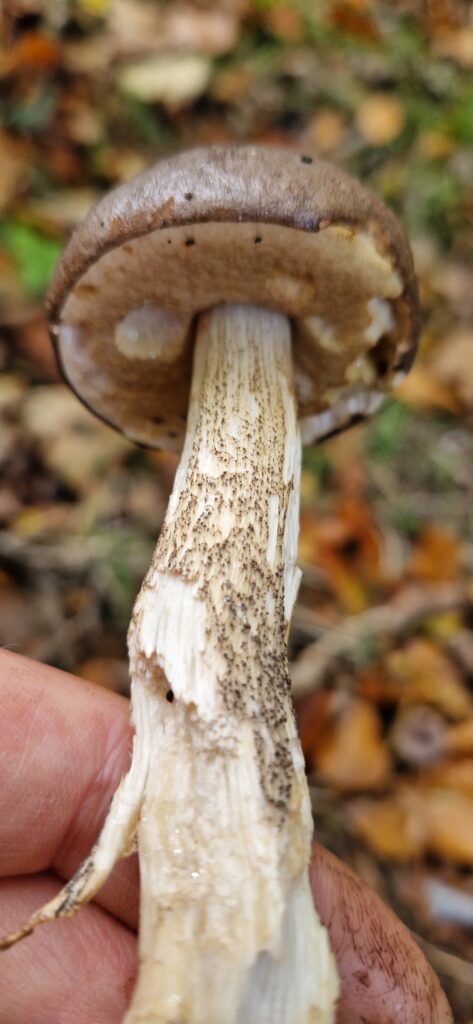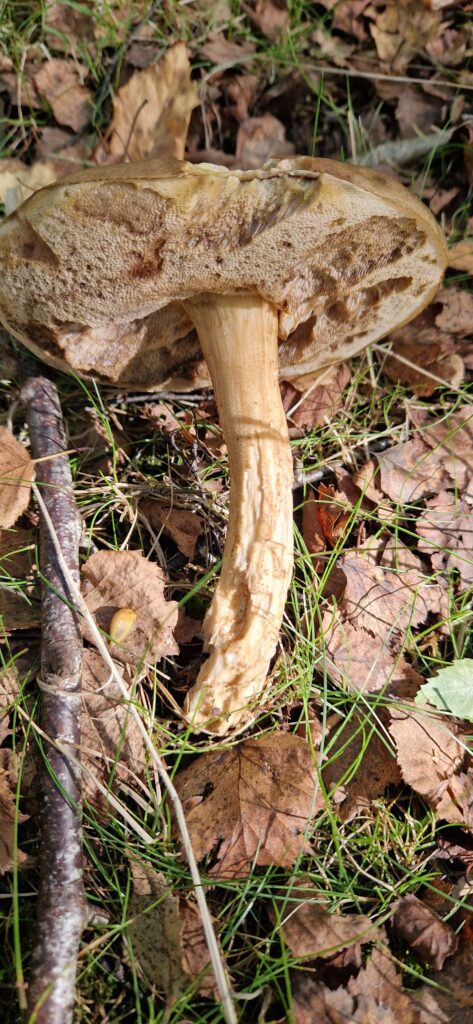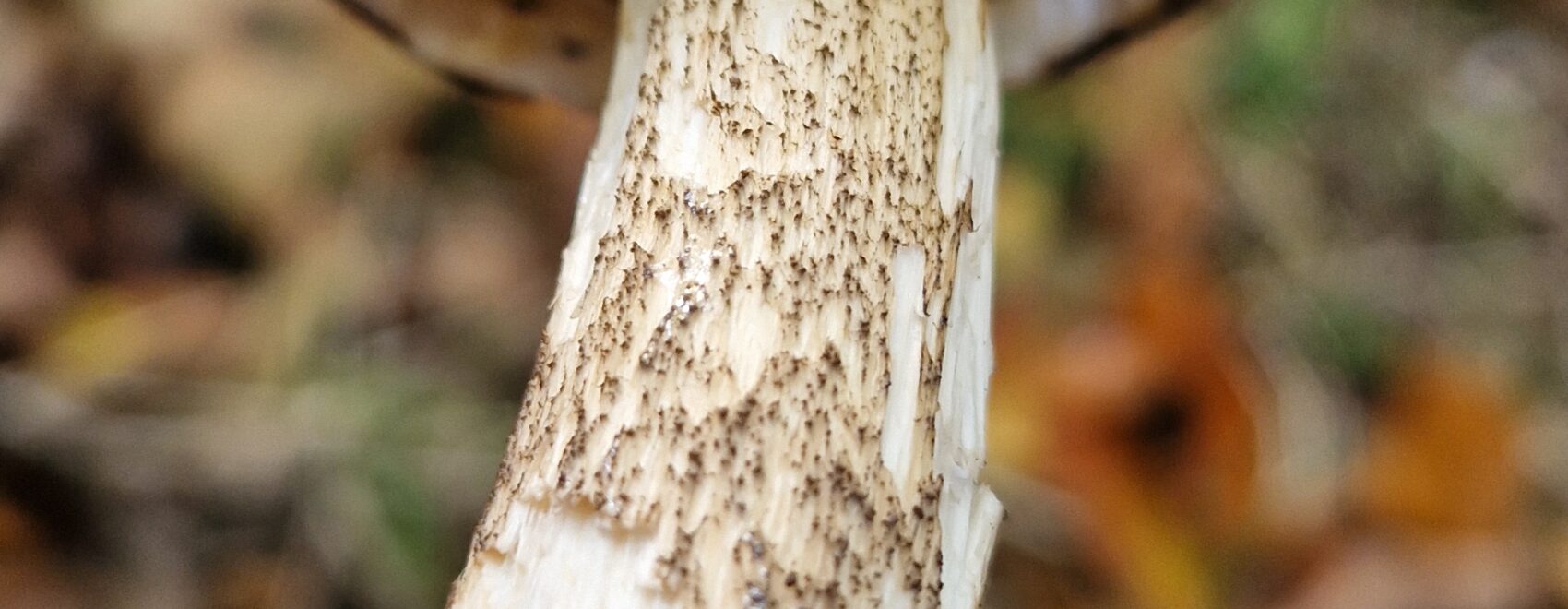

Brown Birch Bolete (Leccinum scabrum) is a distinctive and attractive mushroom commonly found in association with birch trees. Known for its rough, scaly stem and robust appearance, it is a popular find among foragers, although its flavor is considered more mild compared to other bolete species.
Other names: Scaly Bolete, Birch Bolete.
Not sure about mushroom identification? Join us for the next foraging event in Charnwood, Leicestershire.
Habitat
The Brown Birch Bolete is commonly found in birch forests and woodlands, often growing at the base of birch trees, though it can also be found in mixed woodlands with a variety of deciduous trees. This species thrives in nutrient-rich, well-drained soils and is typically found in the Northern Hemisphere, including Europe, North America, and parts of Asia. The Brown Birch Bolete fruits from late summer to autumn, typically appearing after periods of rain.
Identification features
Cap: The cap is medium to large, ranging from 5 to 15 cm in diameter. It is initially convex but becomes flat with age, and the color ranges from light brown to dark reddish-brown. The surface is smooth to slightly sticky when wet, and it often has a slightly wrinkled appearance, especially around the edges.
Pores: The underside of the cap is covered with fine, white to yellowish pores that turn darker, from yellow to greenish-brown as the mushroom matures. The pores are spongy, a key characteristic of boletes.
Stem: The stem is distinctive with its scaly, rough texture, and it is typically pale or white at the top, gradually darkening towards the base. The stem is often 8–15 cm tall and 1–3 cm wide, with a swollen base. It may also have a slight reddish tint near the top, and the scaly texture can be felt by touch.
Spore Print: Olive-brown to greenish-brown.
Smell and Taste: The smell is mild but pleasant, and the taste is also mild with a slightly nutty flavor. It is edible, though it is not as highly regarded as other boletes.
Lookalikes
- Red-Capped Scaly Bolete (Leccinum aurantiacum): Similar in appearance but with a bright red-orange cap. The Red-Capped Scaly Bolete has a more vibrant color, and the stem is often a more pronounced orange-red. The spore print also tends to be a deeper brown.
- Bay Bolete (Imleria badia): This species has a more reddish-brown cap and a redder stem but is similar in shape and size to the Brown Birch Bolete. It is also edible and has a similar mild taste but with a slightly richer flavor.
Edibility
The Brown Birch Bolete is edible, though it is often considered less flavorful than other boletes, such as the Penny Bun (Boletus edulis). It can be used in a variety of dishes, including soups, stews, and sauces. The mushroom should be cooked thoroughly before consumption, as with all wild mushrooms. Some foragers prefer it dried and rehydrated for use in various recipes.
Ecological role
The Brown Birch Bolete is a mycorrhizal fungus, meaning it forms a mutually beneficial relationship with the roots of birch trees. This relationship is essential for the health of birch forests, as the fungus helps trees absorb nutrients, while the trees provide the fungus with sugars. The Brown Birch Bolete plays an important role in forest ecosystems, contributing to the overall biodiversity of the area.
Foraging season
The Brown Birch Bolete fruits from late summer to autumn, typically appearing in August through October. It is most often found near birch trees, but may also be found in mixed woodland with birch trees as part of the ecosystem. After rainstorms, look for this mushroom in damp, shaded areas where the fungi thrive.
Health warning
The Brown Birch Bolete is considered safe to eat when cooked, but like all wild mushrooms, proper identification is crucial.
Join us for a foraging adventure in Charnwood, Leicestershire to explore the fascinating world of boletes and other wild mushrooms!
Whether you’re a beginner or an experienced forager, our guided walks are the perfect way to learn more about identifying edible mushrooms and their ecological roles in the wild.