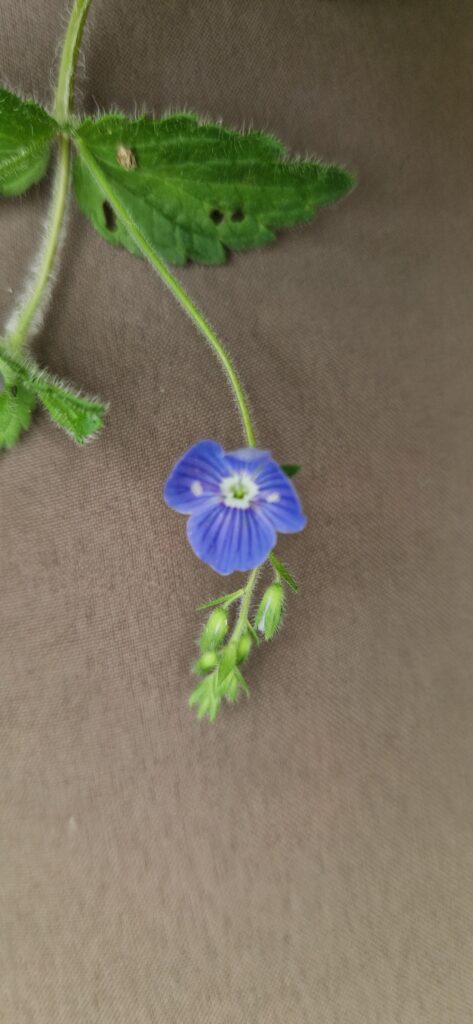
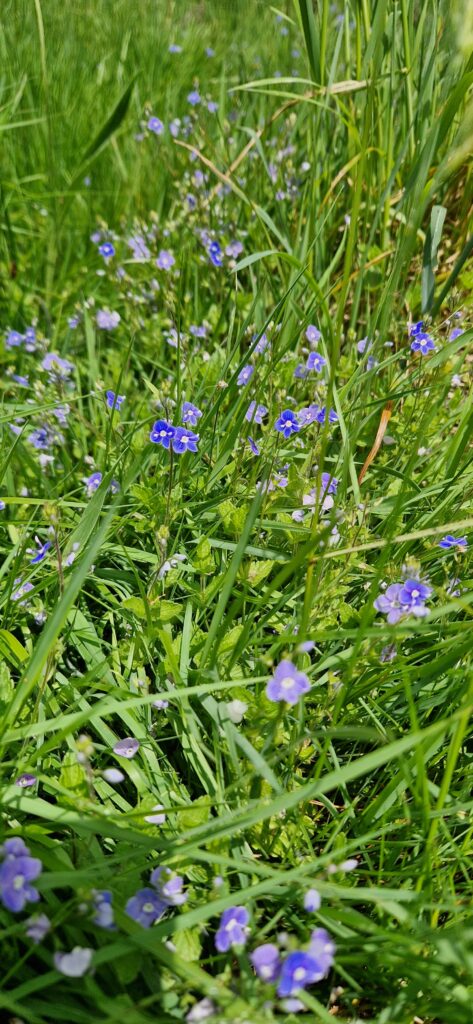
Germander Speedwell (Veronica chamaedrys) is a charming wildflower found in grassy habitats, hedgerows, and woodland clearings across the UK. Its bright blue, two-lipped flowers with distinct white centres are a common sight from spring through summer. Though sometimes mistaken for its aquatic cousin Brooklime (Veronica beccabunga), Germander Speedwell is a terrestrial plant with its own unique appeal and a mild, green flavor that lends itself to gentle culinary experimentation.
Overview
- Latin Name: Veronica chamaedrys
- Common Names: Germander Speedwell, Bird’s-eye Speedwell
Natural Habitat
Germander Speedwell thrives in drier, well-drained locations. You’re most likely to find it in:
- Grassy verges and meadows
- Woodland edges and glades
- Hedges and open scrub
- Gardens and parkland
Unlike Brooklime, Germander Speedwell is not an aquatic plant and does not grow in waterlogged areas.
Identification
Leaves:
- Pairs of hairy, rounded-toothed leaves growing opposite each other on the stem
- The leaves are oval to heart-shaped, usually with a soft texture
- Leaf pairs are slightly offset at each node, giving the stem a slightly zigzag appearance
Flowers:
- Vivid blue flowers with four petals, one smaller than the others, and a bright white centre
- Found on long, slender flower stalks emerging from the leaf axils
- Flowering period: typically from April to July
Stems:
- Slender and hairy, with long trailing or ascending growth
- Can root at the nodes when in contact with soil, helping it spread
Edibility and Culinary Uses
Germander Speedwell is not widely used as a food plant, but the young leaves and flowers are edible in small amounts:
- Flavour: Mild, grassy, slightly green-tasting with no bitterness
- Use: Best used raw as a garnish or mixed into salads. The flowers add a pop of colour.
Common Uses
- Salads: Use small amounts of young leaves and flowers for freshness and colour
- Herbal Tea: Traditionally steeped as a mild tea, though it’s more for tradition than strong flavour
- Garnish: The vibrant blue flowers are perfect for decorating cakes or summer drinks
Nutritional and Medicinal Information
Note: While Germander Speedwell has a folk history of medicinal use, it is used less today and should be consumed in moderation.
Traditional Uses:
- Coughs and colds: Once valued as a mild expectorant
- Skin health: Sometimes infused in ointments for minor wounds or irritations
- Digestive aid: Mild tea was occasionally used to support digestion
Foraging Tips
- Best Time to Harvest: Late spring to early summer when flowers are at their peak
- Sustainability: Harvest sparingly—this low-growing plant is best admired in its natural setting
- Preparation: Rinse gently to remove dust or insects before using fresh
Folklore & History
The name “Speedwell” is said to come from the plant’s traditional use as a good-luck charm and healing herb, particularly to speed recovery. In Victorian flower language, it symbolised fidelity and good fortune. Though no longer common in herbal medicine, it was once treasured in household remedies.
Safety Precautions
- Identification: Be careful not to confuse with similar Veronica species — look for the signature blue flower with white eye
- Allergic reactions: As with all wild plants, try a small amount first
- Not for heavy medicinal use: While mild, Germander Speedwell should not be used as a regular remedy without guidance
Conclusion
Germander Speedwell (Veronica chamaedrys) is a delightful wildflower of hedgerows and grassy places. Its beauty adds charm to the landscape, and its subtle edibility and herbal history make it a gentle addition to a forager’s knowledge. Harvest mindfully, enjoy the flowers’ cheerful presence, and let this humble plant remind you of nature’s quiet gifts.
Want to learn more about foraging? Join our courses in Charnwood, Leicestershire, to explore the wild plants growing around us.