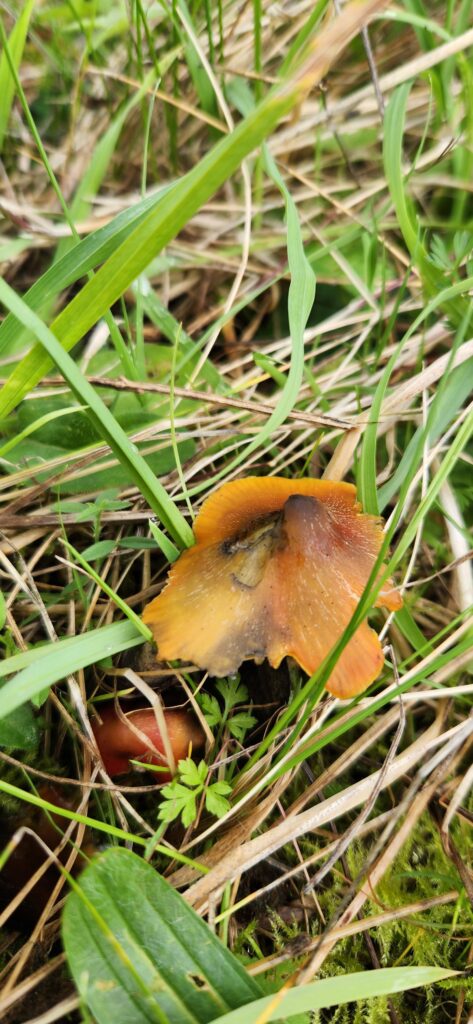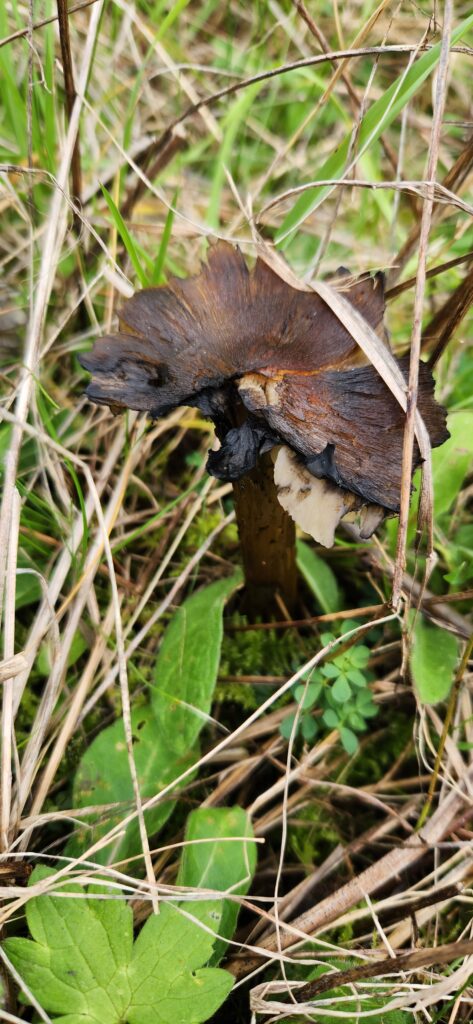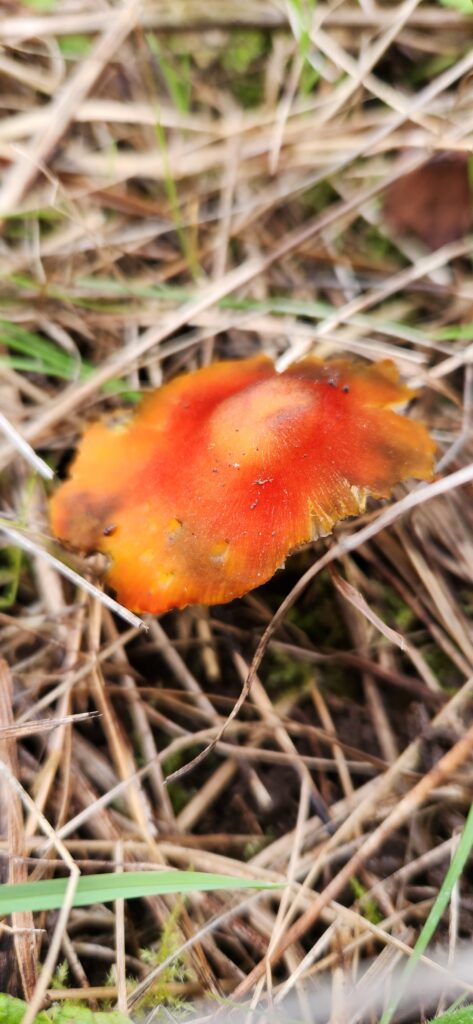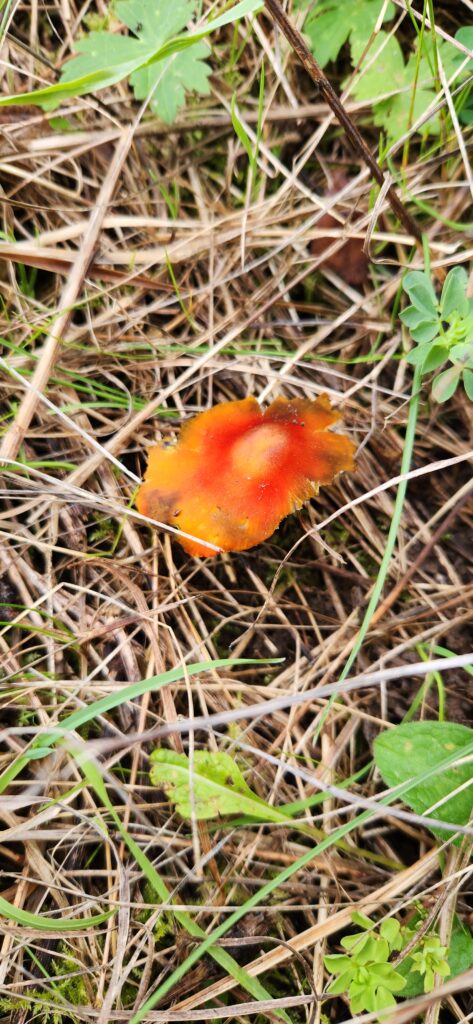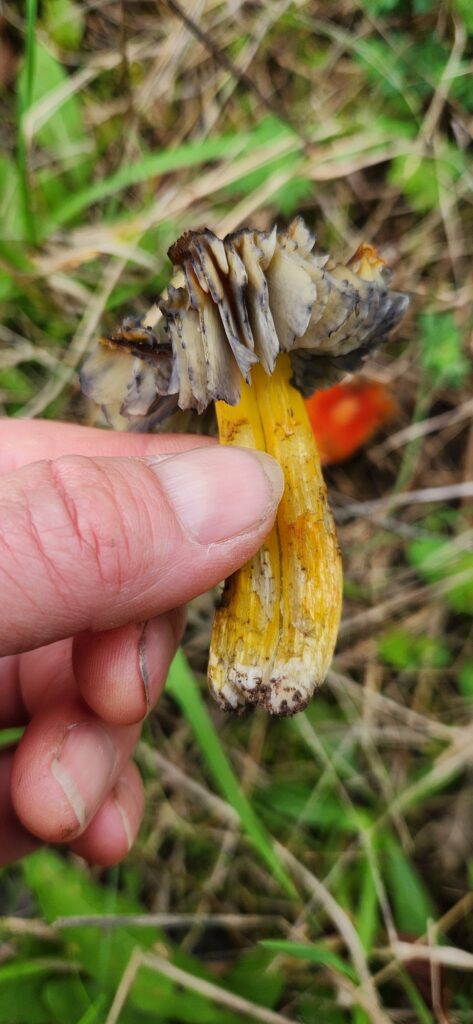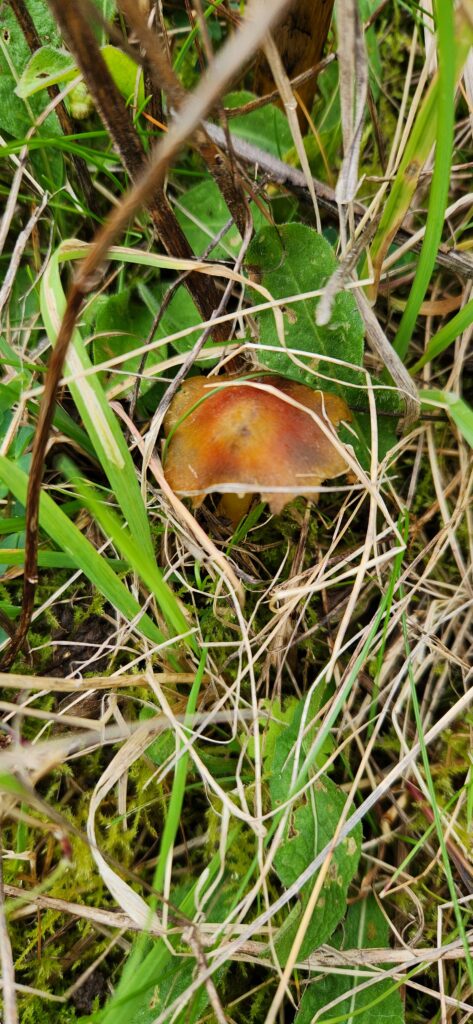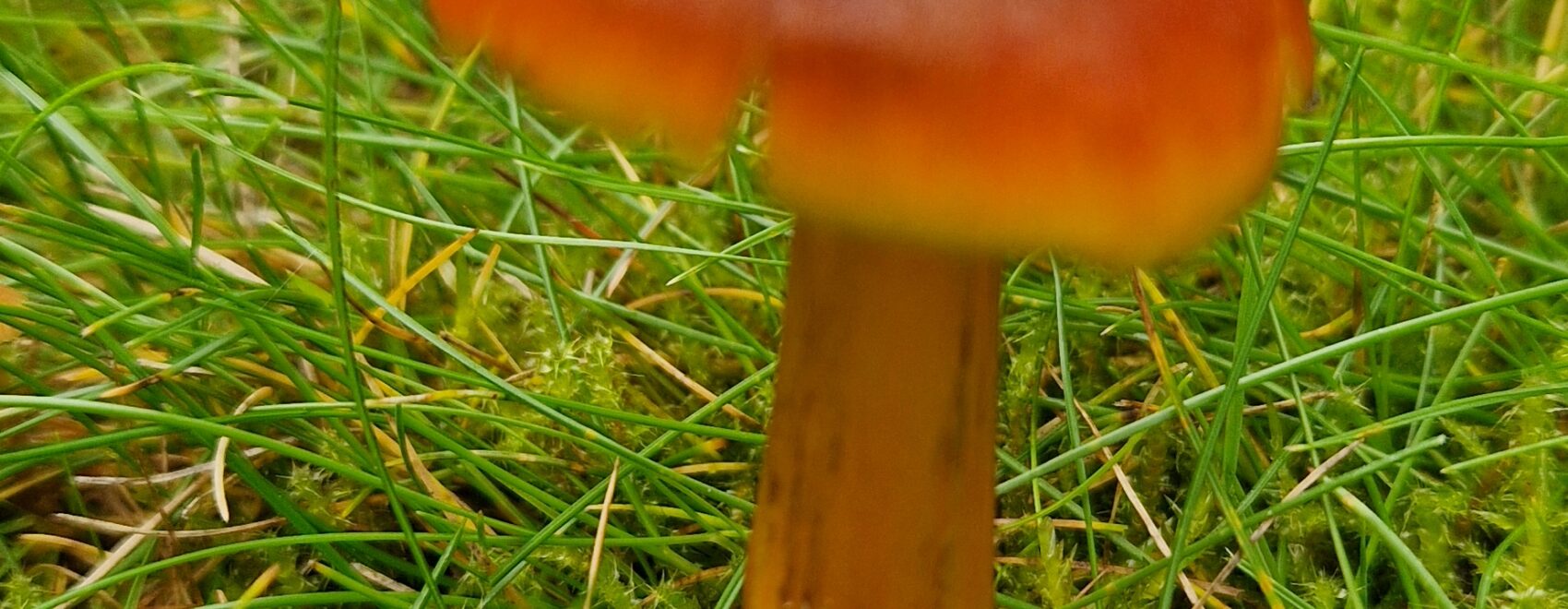
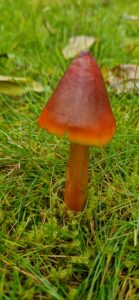
Blackening Waxcap (Hygrocybe conica) is a distinctive and striking mushroom known for its dramatic color change as it matures. Initially vibrant, the cap of this waxcap turns dark brown or black as it ages, making it one of the most fascinating fungi to encounter in the wild.
Other names: Black Witches’ Hat, Conical Waxcap.
Not sure about mushroom identification? Join us for the next foraging event in Charnwood, Leicestershire.
Habitat
The Blackening Waxcap is typically found in unimproved grasslands, such as pastures, meadows, and lawns that are free from fertilizers and pesticides. It prefers nutrient-poor soils and is often found in areas that are grazed or mown. This species is widespread across Europe and North America, fruiting from late summer through autumn.
Identification features
Cap: Initially bright yellow, orange, or red, the cap darkens to brown or black with age, becoming conical or bell-shaped. The cap is smooth, and the edges may be rolled inwards when young, often with a slight waxy sheen. It measures around 2–5 cm in diameter.
Gills: Free from the stem, widely spaced, and initially yellow or orange, turning a darker color as the mushroom ages. The gills are waxy in texture.
Stem: Slender and smooth, typically bright yellow or orange, which gradually darkens as the mushroom matures, matching the darkening cap. The stem is usually 3–8 cm tall and about 0.5 cm wide.
Spore Print: White to pale yellow.
Smell and Taste: Mild, with no distinctive odor or strong flavor.
Lookalikes
- Orange Waxcap (Hygrocybe aurantiaca): Similar in size and color when young, but does not exhibit the blackening characteristic of the Blackening Waxcap. The cap and stem remain orange throughout its life.
- Fool’s Funnel (Clitocybe rivulosa): A toxic mushroom that can be confused with the Blackening Waxcap due to its white, funnel-shaped appearance, but it has a different habitat and gill structure.
Edibility
The Blackening Waxcap is considered edible, though it is not particularly sought after due to its mild flavor. It can be used in mixed mushroom dishes, especially when young, before it begins to blacken. As with all wild mushrooms, correct identification is crucial before consumption.
Ecological role
The Blackening Waxcap is an important species in nutrient-poor grasslands, helping to break down organic matter and contributing to the overall biodiversity of its habitat. It thrives in undisturbed environments and is a good indicator of healthy ecosystems that have minimal human interference.
Foraging season
The Blackening Waxcap fruits from late summer through autumn, with peak season typically occurring after wet weather. It is commonly found in groups or clusters on mossy, grassy ground in pastures, meadows, or lawns.
Health warning
Although the Blackening Waxcap is edible, its mild flavor and tendency to deteriorate quickly as it ages mean it is not highly valued in foraging. Always ensure proper identification, as it shares its habitat with other waxcap species that may not be edible or could be toxic. Harvest responsibly to protect this fascinating species.
Explore the captivating world of waxcaps and other fungi by joining our foraging events in Charnwood, Leicestershire! Whether you’re just starting or you’re an experienced forager, our foraging course offer a fantastic opportunity to learn about fungi in their natural habitat.