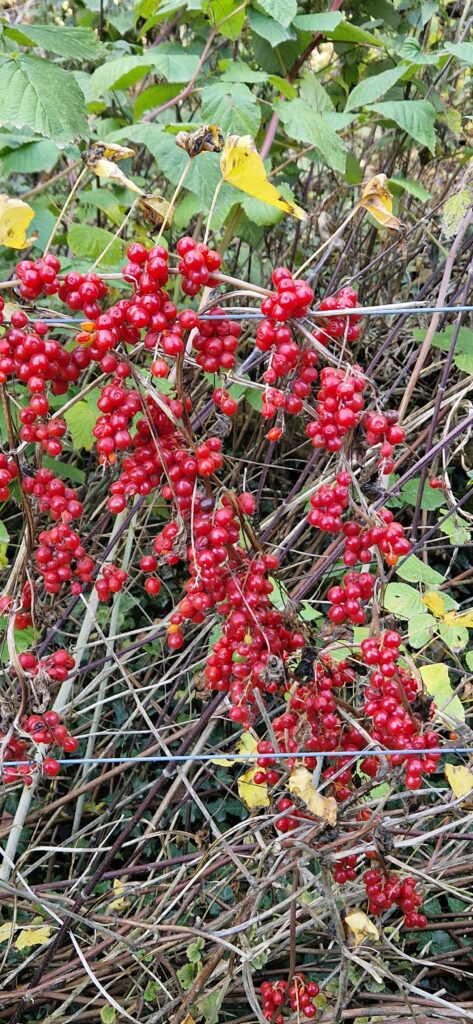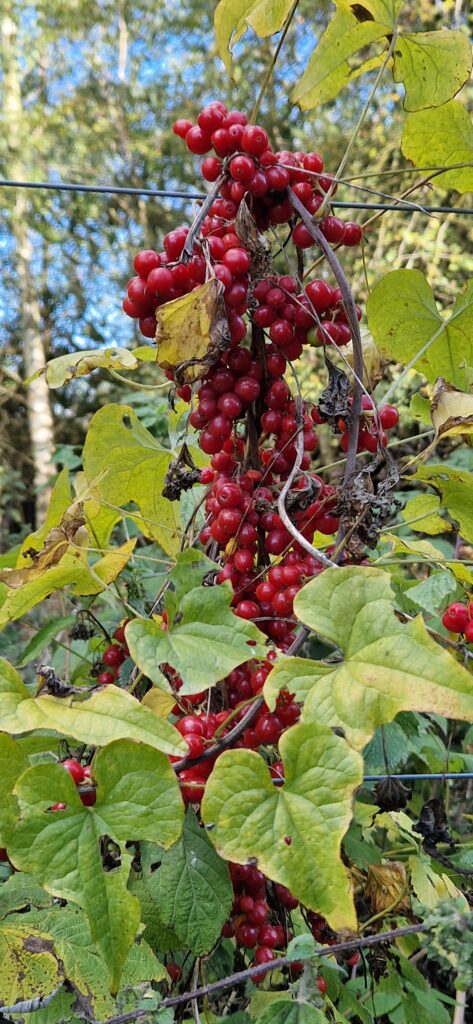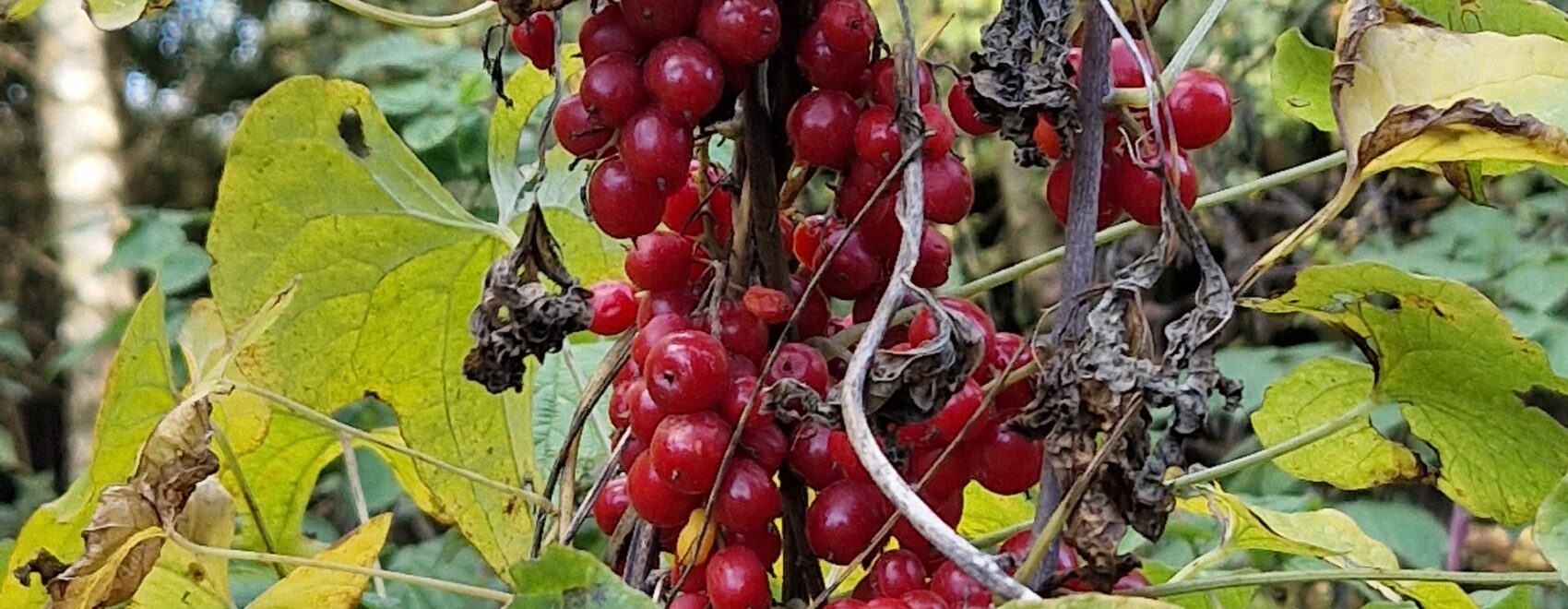
Black Bryony is a striking yet highly poisonous climbing plant found in hedgerows and woodlands across the UK. Its glossy red berries and heart-shaped leaves make it an eye-catching addition to the autumn landscape, but foragers should take great care, as all parts of the plant are toxic.
Other names: Lady’s Seal, Wild Hop.
Not sure about plant identification? Join us for the next foraging event in Charnwood, Leicestershire!
Habitat
Black Bryony thrives in hedgerows, woodland edges, scrubland, and other sunny or partially shaded habitats. It often twines around shrubs and trees, forming an intricate climbing vine that can reach several meters in height. This plant is native to Europe and prefers well-drained soils.
Identification features
Leaves: Shiny, heart-shaped, and dark green, growing alternately along the vine. The leaves can be up to 10 cm long.
Flowers: Small, greenish-yellow, and inconspicuous, appearing in clusters during late spring to early summer.
Fruit: Bright red, glossy berries appearing in late summer to autumn. These berries grow in clusters and are highly poisonous.
Stems: Twining and smooth, with no spines or tendrils.
Edibility
Although some sources suggest that the young shoots of black bryony may be edible when carefully cooked (similar to asparagus) in certain countries, this is not recommended due to the plant’s high toxicity. Even small amounts of the raw plant can cause severe symptoms, including nausea, vomiting, and abdominal pain. For safety reasons, it is best to avoid consuming any part of black bryony.
Historical and cultural significance
Black Bryony has long been regarded with caution due to its toxicity. In folklore, it was sometimes used in magical rituals or as a remedy, though such uses were risky and often outweighed by its poisonous nature. Its vivid berries and climbing vines also made it a notable feature in traditional hedgerows.
Ecological role
Despite its danger to humans, black bryony plays a role in the ecosystem. Birds, particularly thrushes, can consume the berries without harm, helping to disperse the seeds. The plant’s dense foliage provides shelter for small animals and insects.
Foraging season
Black Bryony is most noticeable from late summer to autumn when its bright red berries are fully formed. However, its leaves and climbing stems can be identified earlier in the year.
Health warning
All parts of black bryony are highly toxic to humans and should never be consumed raw or cooked. Symptoms of poisoning include severe stomach pain, nausea, vomiting, and in extreme cases, can lead to serious complications. If accidental ingestion occurs, seek medical help immediately.
Stay safe while exploring the wild! Learn more about plants to avoid and safe foraging practices by joining our guided events in Charnwood, Leicestershire.