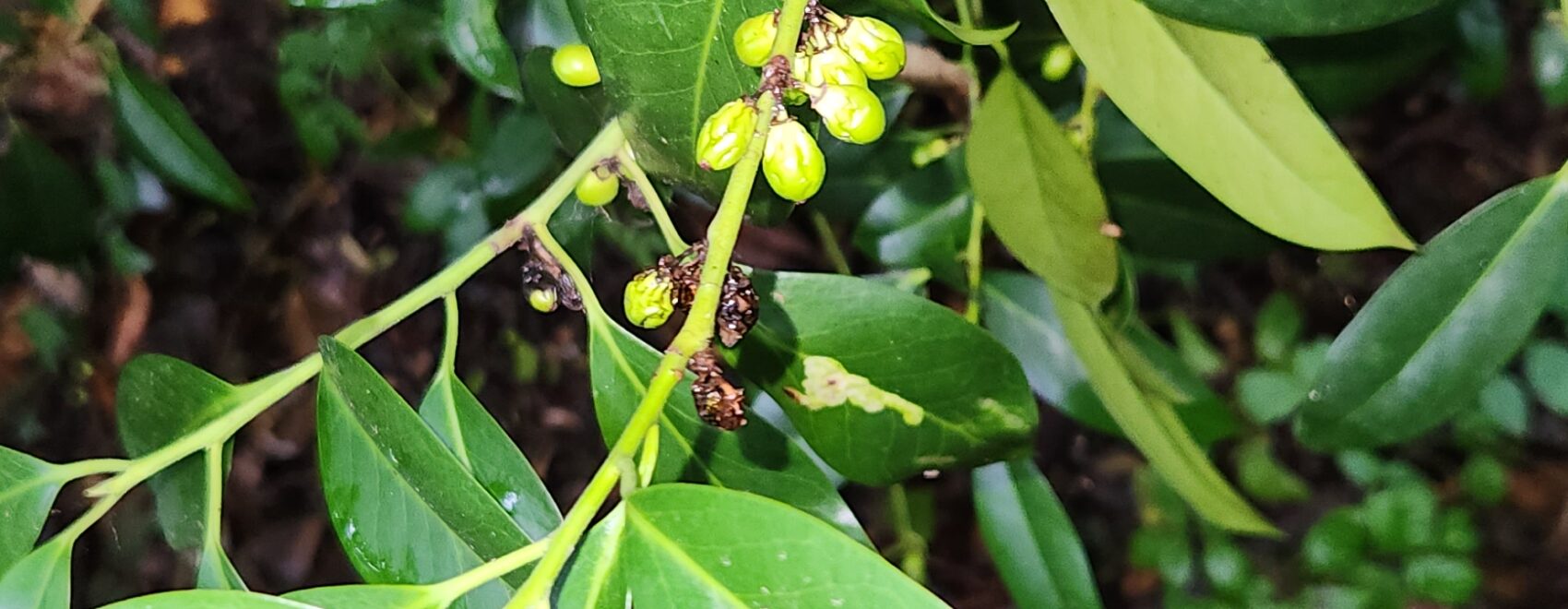

An aromatic evergreen with glossy leaves, Mediterranean origins and a well-earned place in the kitchen
Bay Laurel is a familiar culinary herb, but it is also a beautiful evergreen tree that can be found growing in gardens, parks and sheltered areas across the UK. Its strongly aromatic leaves are used fresh or dried to add depth and fragrance to soups, stews, stocks, sauces and marinades.
It is particularly important when foraging to distinguish true Bay Laurel from Cherry Laurel, as these are completely different plants and should not be confused.
Not sure about plant identification? Join us for the next foraging course in Charnwood, Leicestershire, and learn how to safely identify wild plants.
🌳 Habitat
Originally native to the Mediterranean region, Bay Laurel is widely cultivated in the UK and can be found in:
- Gardens and herb gardens
- Parks and landscaped areas
- Sheltered woodland edges
- Hedgerows and boundaries
- Containers and patios
- Warm, sheltered urban locations
It prefers sun or light shade and well-drained soil and is particularly suited to sheltered positions.
🔍 Identification Features
- Evergreen shrub or small tree
- Can eventually become a substantial tree if left unpruned
- Dark green, glossy, leathery leaves
- Leaves are narrow to oval-shaped with pointed tips
- Strong aromatic smell when the leaves are crushed
- Leaves usually have a slightly wavy edge
- Small pale greenish-yellow flowers appear in spring
- Female plants can produce glossy black berries
The aromatic, leathery leaves are one of the most useful identification features.
⚠️ Lookalikes
The most important lookalike is:
- Cherry Laurel (Prunus laurocerasus)
Cherry Laurel is commonly planted as a hedge and can look superficially similar to Bay Laurel because both have dark, glossy evergreen leaves.
However, they belong to completely different plant families. Do not assume that an evergreen laurel is culinary Bay.
Bay Laurel has a distinctive aromatic smell when a leaf is crushed, while Cherry Laurel has different leaf characteristics and contains cyanogenic compounds.
This is particularly important when foraging near gardens and hedges, where Cherry Laurel is extremely common.
🍴 Edibility
The leaves of true Bay Laurel (Laurus nobilis) are edible and widely used as a culinary herb. They can be used fresh or dried in:
- Soups and stews
- Stocks and sauces
- Marinades
- Pickles
- Rice and grain dishes
- Bouquet garni
- Slow-cooked dishes
Fresh leaves have a stronger, more pungent flavour, while drying produces a slightly more subtle flavour.
The leaves are generally used to flavour food rather than eaten whole and are normally removed before serving because they remain tough and leathery after cooking.
Do not confuse Bay Laurel with Cherry Laurel.
🌿 Ecology & Traditional Uses
Bay Laurel has been valued for thousands of years around the Mediterranean.
The evergreen tree has a long association with victory, honour and achievement, with laurel wreaths famously used to crown poets, athletes and victorious leaders.
As a culinary herb, its aromatic leaves are particularly useful for adding a warm, complex background flavour to slow-cooked dishes.
The small spring flowers can also provide a food source for pollinating insects.
📅 Season
- Leaves: Available all year
- Flowers: Spring
- Berries: Autumn, on female plants
Because Bay Laurel is evergreen, the leaves can be harvested throughout the year.
⚠️ Health Warning
Only use Bay Laurel when you are completely certain that you have correctly identified Laurus nobilis.
Cherry Laurel is not a substitute for culinary Bay Laurel and should never be used simply because it has similar-looking leaves.
Bay leaves are normally removed from food before eating because they remain hard and can cause choking if swallowed whole.
Always ensure correct identification before consuming any wild plant.