
Barberry – A Tangy Treasure Hidden in the Hedges
Barberry is a small, thorny shrub that produces clusters of bright red berries, prized for their sharp, citrusy flavour and traditional medicinal uses. Though often overlooked, these little gems have been used in cooking and herbal remedies for centuries across Europe and Asia. A resilient hedgerow plant with vivid autumn colour and wildlife value, barberry is a forager’s delight for both flavour and history.
Other names: Common Barberry, European Barberry, Jaundice Berry
Not sure about plant identification? Join us for the next foraging event in Charnwood, Leicestershire!
Habitat
Barberry thrives in dry, well-drained soils, often found in hedgerows, woodland edges, railway embankments, and scrubland. It’s a hardy shrub that favours full sun but can tolerate partial shade. Though once widespread, it became less common in the UK due to its historical link to cereal crop diseases, but is now regaining ground in gardens and rewilding projects.
Identification features
Berries: Small, oblong, bright red, and slightly translucent when ripe. Found in hanging clusters in autumn. Each berry contains tiny black seeds.
Leaves: Oval with finely toothed edges, arranged in clusters along the branches. In autumn, they turn shades of yellow, orange, and red.
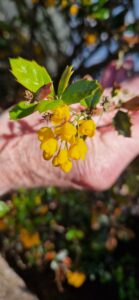
Flowers: Small, yellow, cup-shaped, with six petals, blooming in late spring and often found in drooping clusters.
Thorns: Each node has three sharp spines, making gloves a useful accessory when foraging!
Height: Typically grows as a dense shrub up to 2–3 metres tall.
Edibility
Barberries are tart but edible and can be harvested once bright red in late summer to autumn. They can be eaten raw in small amounts, though they’re most often dried or cooked due to their sharp flavour. Common in Middle Eastern cuisine, barberries add a bright, tangy note to rice dishes, meat stews, and sauces. They’re also used in jams, cordials, and herbal teas.
The berries are safe when consumed ripe and in moderation. Avoid the leaves, bark, and roots unless properly trained, as they contain alkaloids with strong medicinal effects.
Historical and cultural significance
Barberries have been used medicinally for over 2,500 years. In European herbalism, they were prized for treating jaundice and digestive complaints. The plant contains berberine, an alkaloid with antibacterial and anti-inflammatory properties.
In culinary traditions, particularly Persian and Kurdish cuisines, dried barberries (known as zereshk) are used in celebratory dishes like zereshk polo (barberry rice with saffron and chicken). In medieval England, barberries were also used to make tart jellies and syrups.
Barberry was heavily reduced in the UK in the 19th century due to its role in spreading wheat rust fungus, but it’s now being reintroduced carefully as awareness of its ecological value grows.
Ecological role
The barberry shrub offers a dense refuge for birds and small mammals. Its flowers provide nectar for early pollinators, and the berries are a late-season food source for birds. As a native species (in some areas) and an excellent hedging plant, it contributes to biodiversity and landscape resilience.
Foraging season
Berries ripen from August to October. Look for bright red clusters that pull easily from the stem. Take care when harvesting—those spines are sharp! Gloves and long sleeves are recommended.
Health warning
While ripe berries are edible and safe in moderation, unripe berries and other parts of the plant (particularly the bark and root) are strong in alkaloids and should not be consumed without professional guidance. Always ensure accurate identification, as barberry may be confused with non-edible ornamental varieties.
Rediscover traditional hedgerow flavours with our guided foraging courses in Charnwood, Leicestershire! Learn how to safely identify edible plants like barberry, explore their uses, and gain confidence in connecting with the wild food landscape around you.


