A majestic native tree whose young leaves, seeds, and history have made it a valued part of the British landscape for centuries
Ash is one of Britain’s most recognisable native trees, traditionally valued for its strong, flexible timber and its importance to wildlife. Once one of the commonest trees in the countryside, Ash is sadly now under severe threat from Ash Dieback, making the preservation of healthy specimens increasingly important.
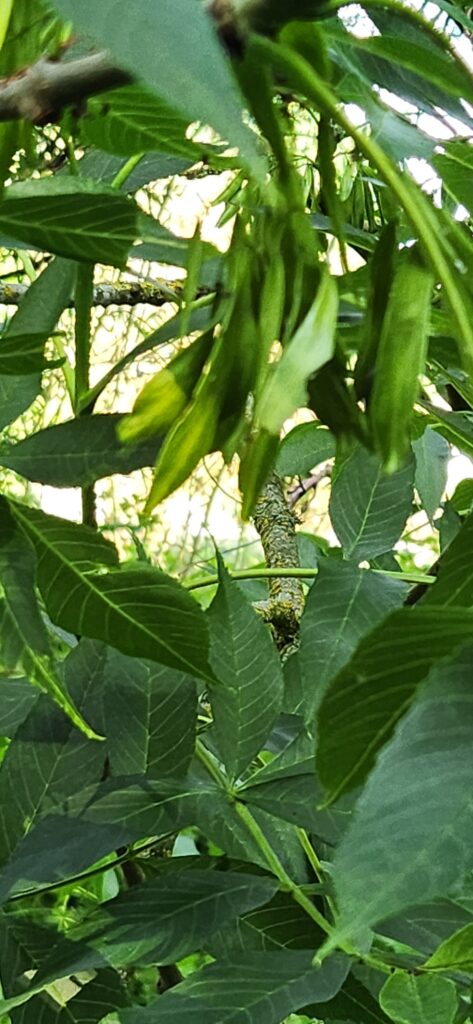
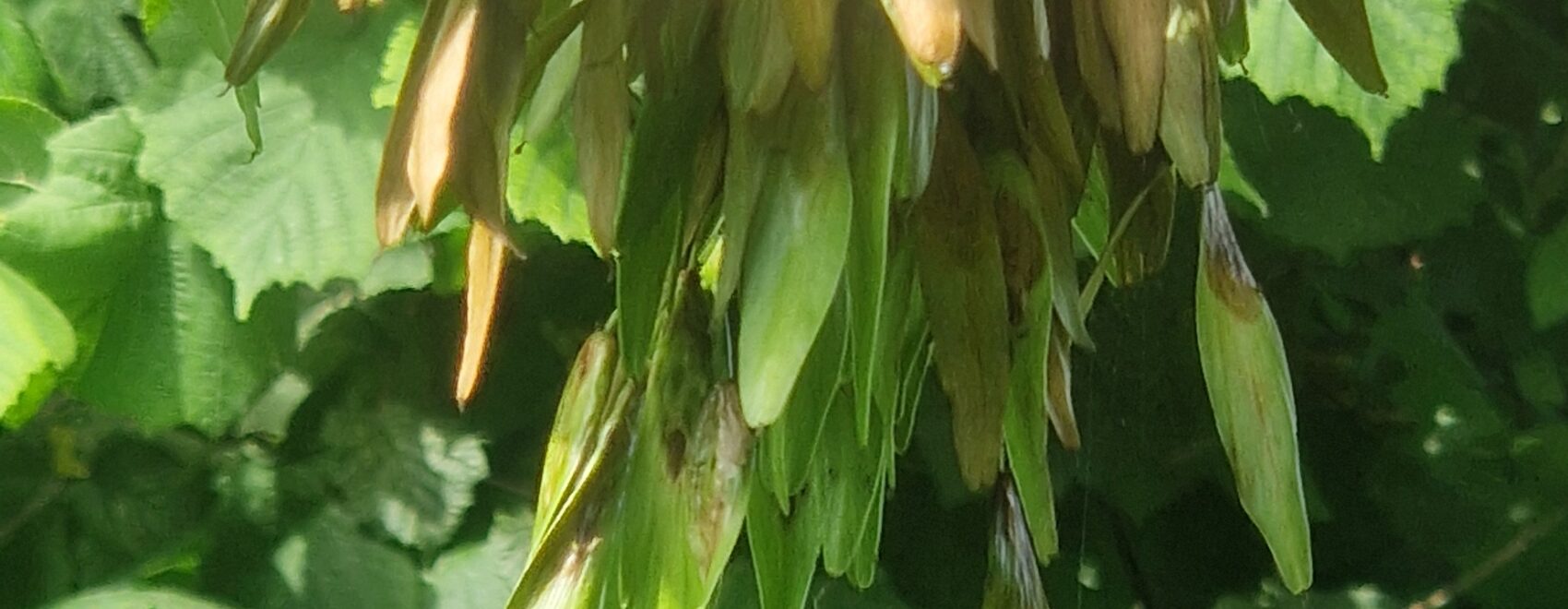
For foragers, Ash is best known for its young leaves and the traditional pickling of its immature seeds, often known as “Ash Keys.”
🌳 Habitat
Commonly found in:
- Woodland and woodland edges
- Hedgerows
- Parkland
- Roadside verges
- Limestone and chalk landscapes
Ash thrives in fertile, well-drained soils and is often found growing alongside oak, hazel, and hawthorn.
🔍 Identification Features
- Large deciduous tree with a tall, open crown
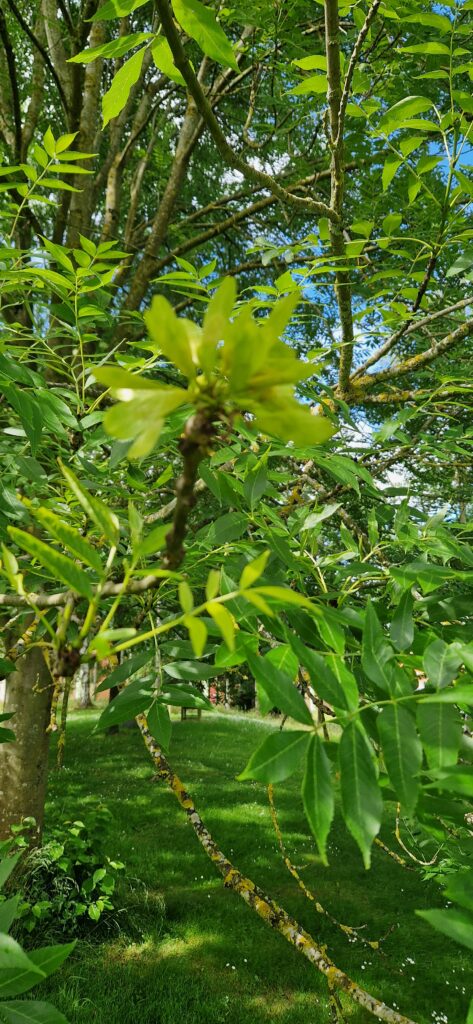
- Leaves arranged opposite each other on the stem
- Each leaf consists of 7–13 leaflets
- Distinctive black buds in winter
- Smooth grey bark when young, becoming fissured with age
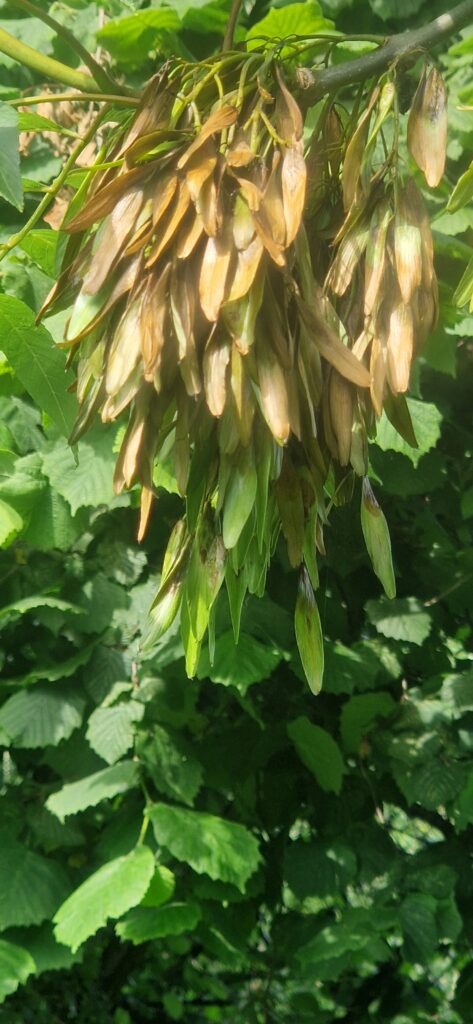
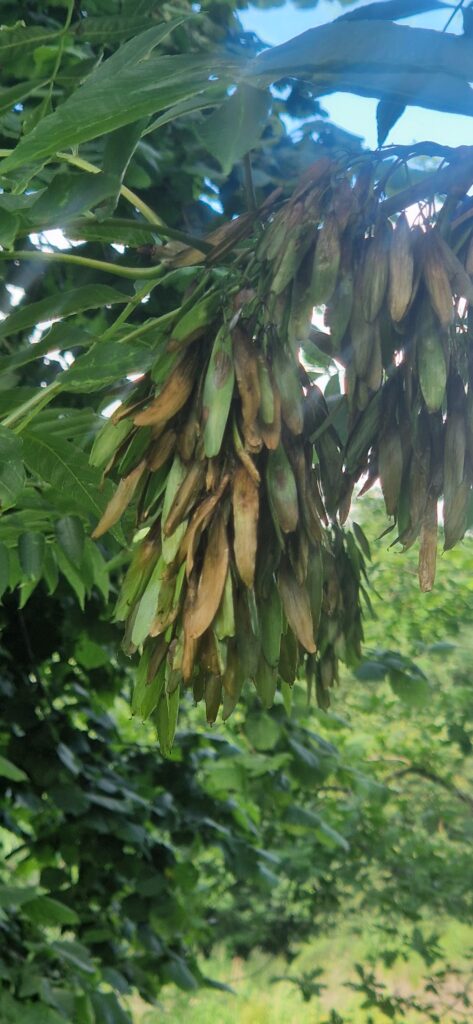
- Produces winged seeds known as “keys”
The black winter buds are one of the easiest ways to identify Ash outside the growing season.
⚠️ Lookalikes
- Elder (Sambucus nigra) – also has compound leaves but lacks the characteristic black buds
- Rowan (Sorbus aucuparia) – similar leaf structure but produces clusters of red berries
- Walnut species – can have similar compound leaves
The combination of opposite buds and black winter buds makes Ash relatively easy to identify.
🍴 Edibility/Recipes
Several parts of the tree have been used traditionally:
- Young spring leaves can be eaten in small quantities and have a fresh, slightly nutty flavour
- Immature Ash keys can be pickled and used similarly to capers
- Historically used in herbal preparations
The young leaves are generally considered the best edible part.
🌿 Ecology & Traditional Uses
Ash supports hundreds of species of insects, lichens, mosses, and fungi, making it one of the UK’s most important wildlife trees.
Historically its timber was prized for:
- Tool handles
- Walking sticks
- Furniture
- Sports equipment
- Cart construction
Ash wood combines strength with flexibility, leading to the saying:
“Oak before Ash, we’re in for a splash. Ash before Oak, we’re in for a soak.”
This traditional weather proverb refers to the timing of leaf emergence in spring.
Unfortunately, Ash populations are being severely affected by Ash Dieback, a fungal disease caused by Hymenoscyphus fraxineus.
📅 Season
- Young leaves: April to May
- Immature Ash keys: May to July
- Mature keys: Late summer to autumn
- Black buds visible throughout winter
⚠️ Health Warning
Always ensure correct identification before consuming any wild plant.
When harvesting Ash keys, collect only young green seeds, as older seeds become tough and less palatable.
Take care not to damage young trees, particularly given the ongoing impact of Ash Dieback across the UK.