Identification
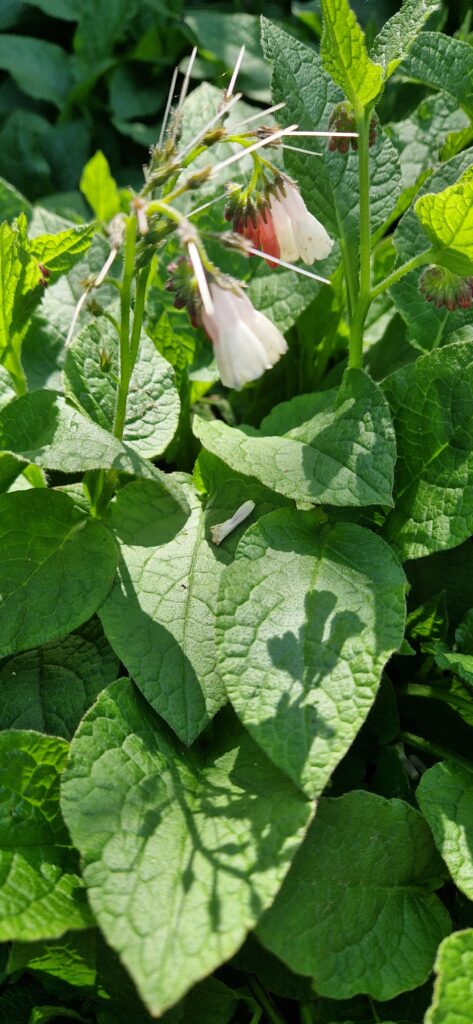
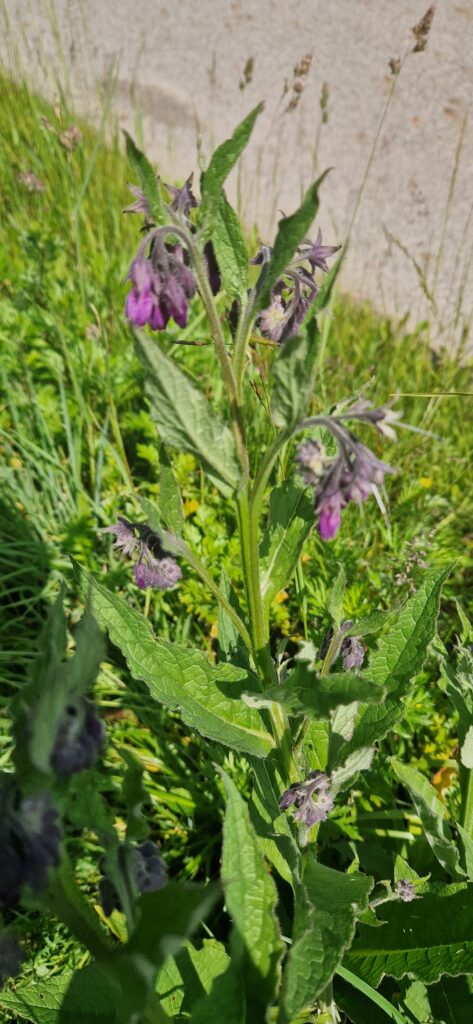
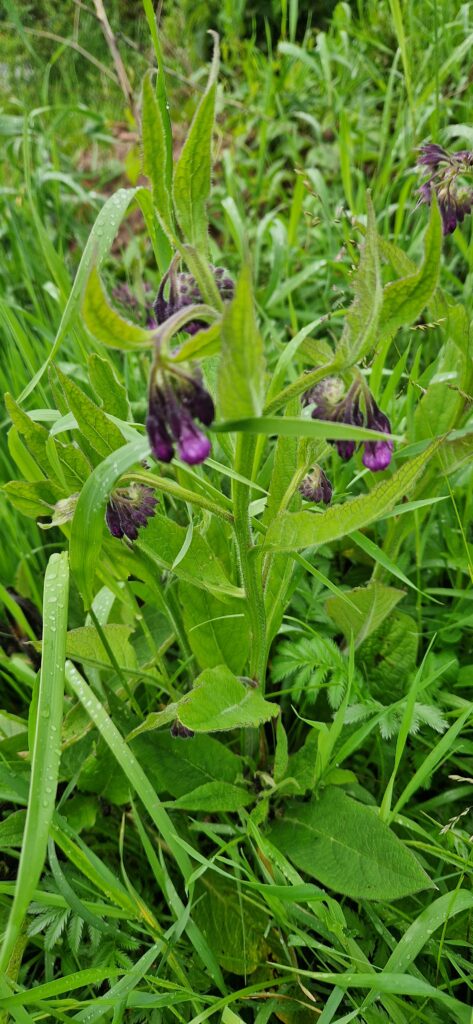
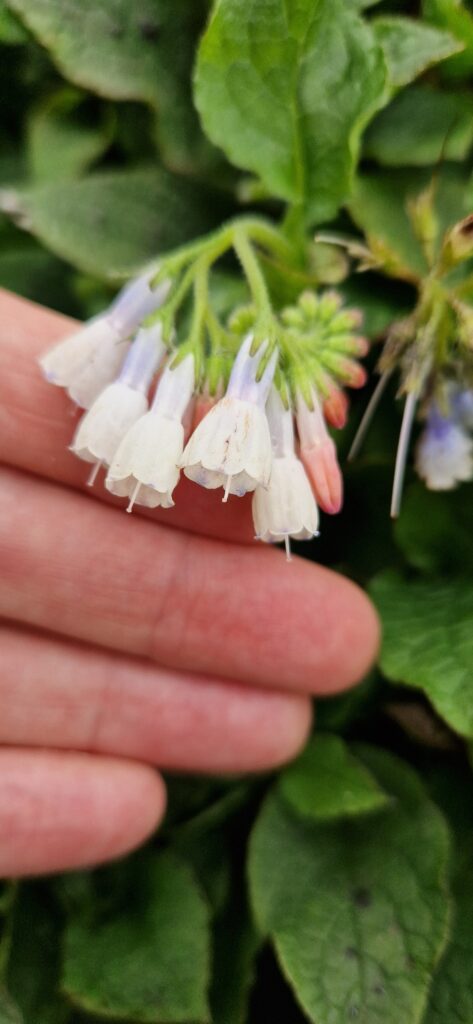
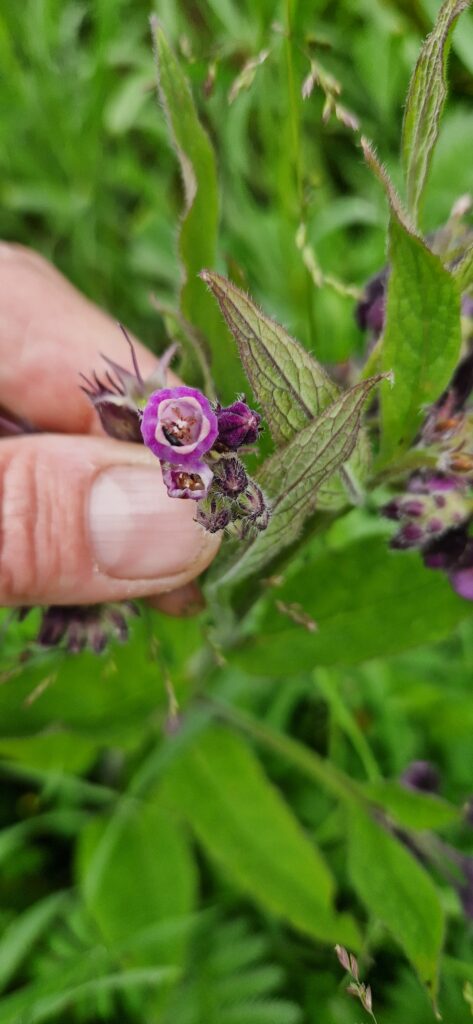
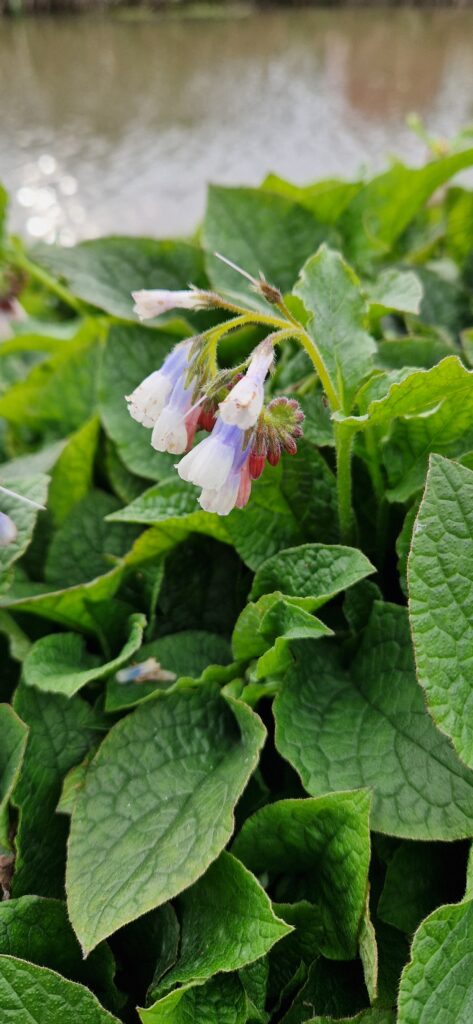
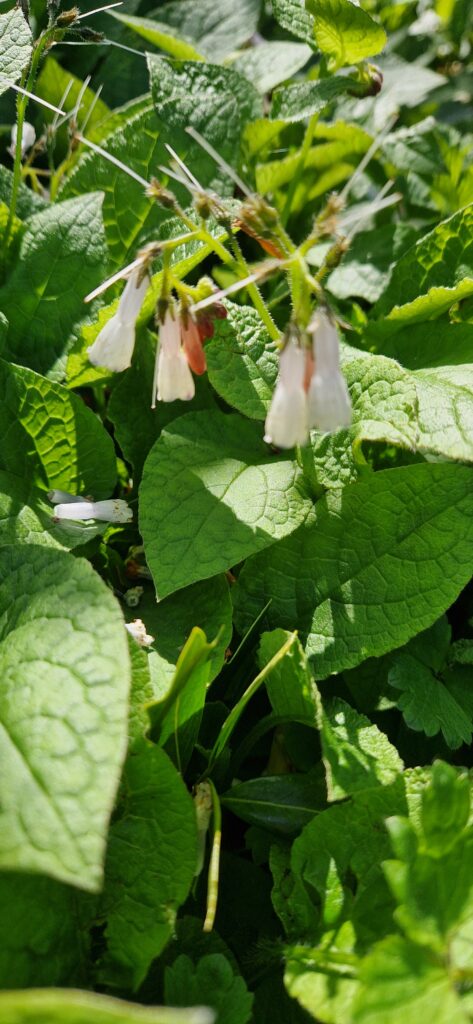
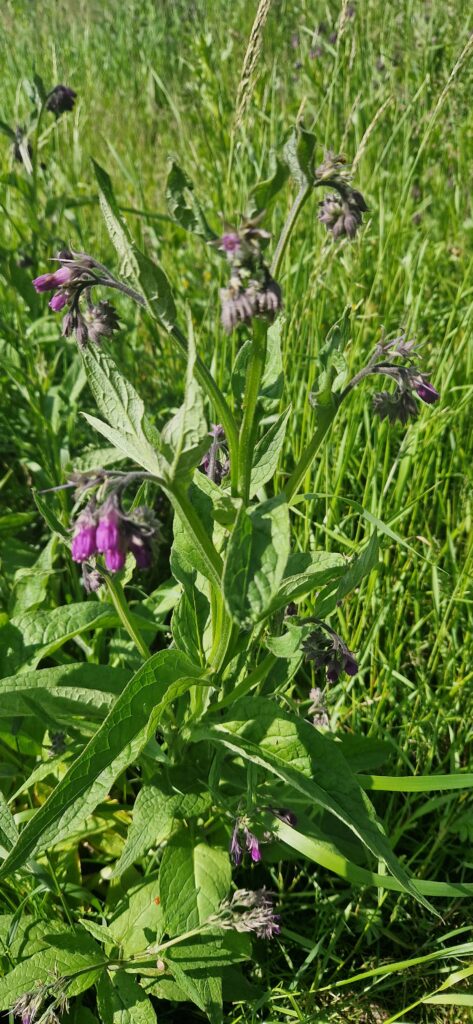
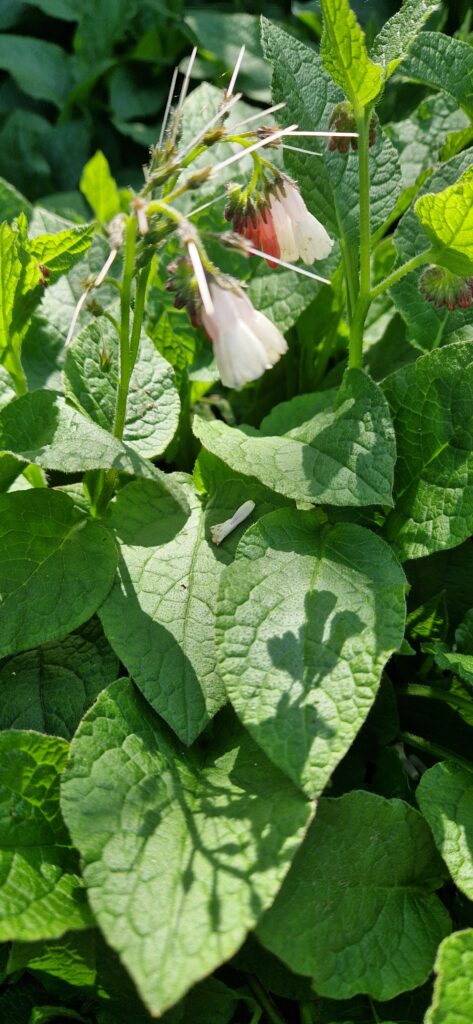
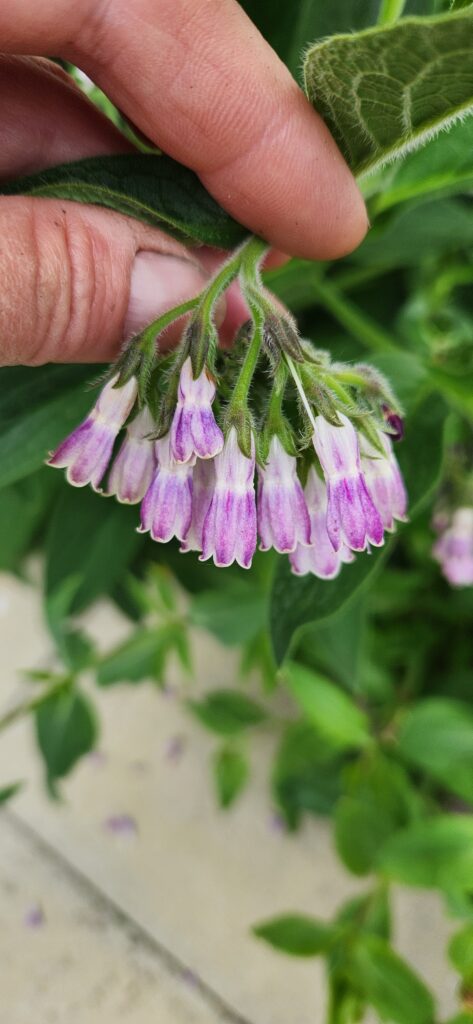
Comfrey is a tall, perennial herb that can reach up to 1.5 metres in height. It has large, broad, lance-shaped leaves that are rough and hairy to the touch. The plant produces clusters of bell-shaped flowers, usually purple, pink, or creamy-white, which hang downwards in small bunches. Its stems are sturdy and slightly winged. A key identifying feature is the coarse, bristly texture of its leaves and stems.
Habitat & Season
Comfrey thrives in damp, nutrient-rich soils and is often found along riverbanks, ditches, meadows, and the edges of woodlands. It is a common plant across much of the UK. Its leaves appear in spring, and it flowers from May to August. The roots can be found year-round, but remember that foraging for roots is only permitted on private land with the owner’s consent.
Foraging Time (Season)
April – September, depending on local growing conditions.
Comfrey leaves generally emerge in spring, with flowers commonly appearing from May through summer.
For educational identification, flowering plants are particularly useful.
Foraging Site
Damp grasslands, riverbanks, ditch edges, hedgerows and woodland margins.
Comfrey prefers moist, nutrient-rich soil and can be recognised by its large, rough, hairy leaves and clusters of tubular, bell-shaped flowers, often purple, pink or cream.
Important: Only observe or harvest plants you can confidently identify, from clean locations away from busy roads, animal fouling and pesticide-treated areas.
Comfrey belongs to the borage family (Boraginaceae). Several related plants share similar hairy leaves and flowers, so identification should consider the whole plant.
Edible & Culinary Uses
Although comfrey has a long history of being used as food, modern advice is to avoid eating it. The plant contains pyrrolizidine alkaloids, which are toxic to the liver. In the past, the young leaves were occasionally used as a cooked green or dipped in batter to make “comfrey fritters.” However, due to safety concerns, comfrey is not recommended for consumption today.
Medicinal & Historical Uses
Comfrey’s traditional nickname is “knitbone” because of its historical use in healing broken bones, sprains, and bruises. Poultices and compresses were made from the leaves and roots, applied externally to reduce swelling and support healing. It was also used as a remedy for skin irritations and wounds. While comfrey is still used in some herbal ointments and creams, it should only be applied externally, never taken internally.
Traditional Comfrey Botanical Balm
Cautions & Lookalikes
- Cautions: Comfrey contains toxic compounds that can cause liver damage if ingested. Avoid using it as a food. Use only externally and with care.
- Lookalikes: It may be confused with foxglove (Digitalis purpurea), which also has tall spikes and downy leaves. However, foxglove leaves are softer, more oval-shaped, and it produces upright tubular flowers rather than drooping bells.
Final Notes
Comfrey is a beautiful and useful plant in the garden, valued for its ability to improve soil health and as a natural fertiliser when its leaves are steeped in water to create a “comfrey tea” for plants. While it has fascinating historical uses, its role today is mainly external medicine and gardening rather than food.
Want to learn more about foraging and edible plants? Join our foraging courses in Charnwood, Leicestershire.