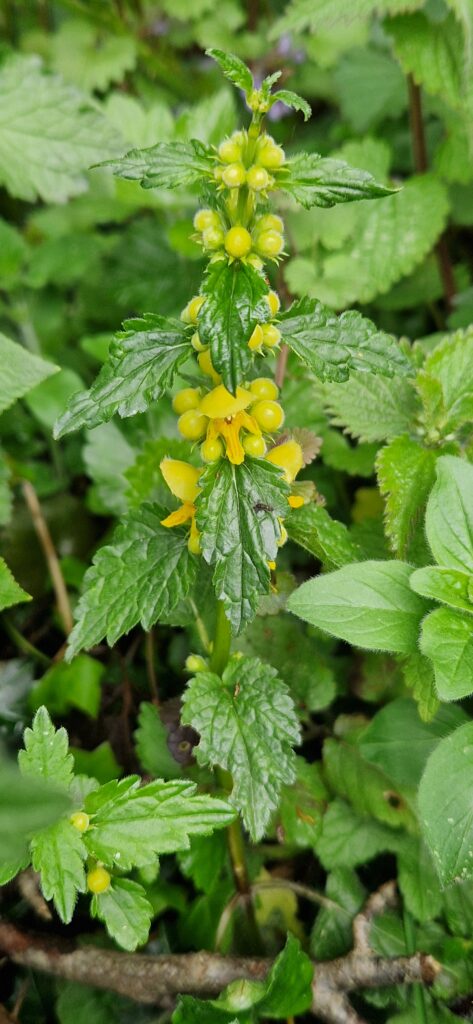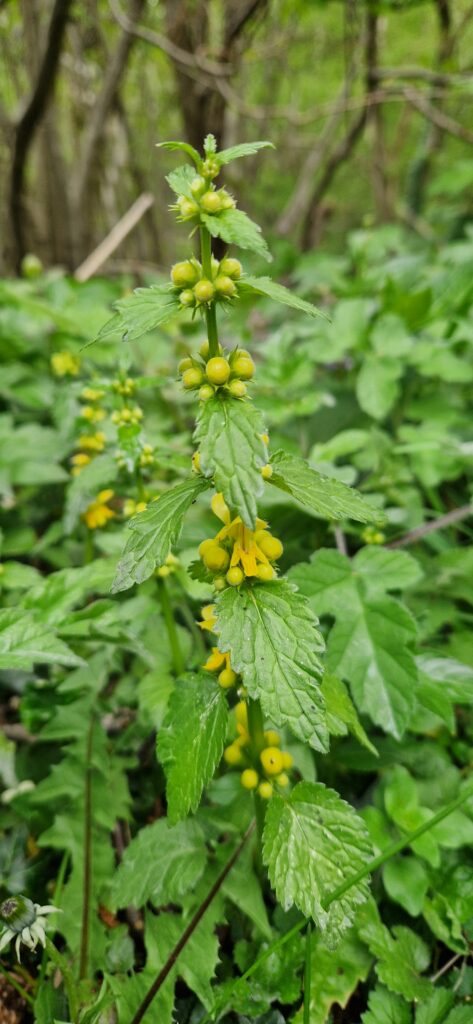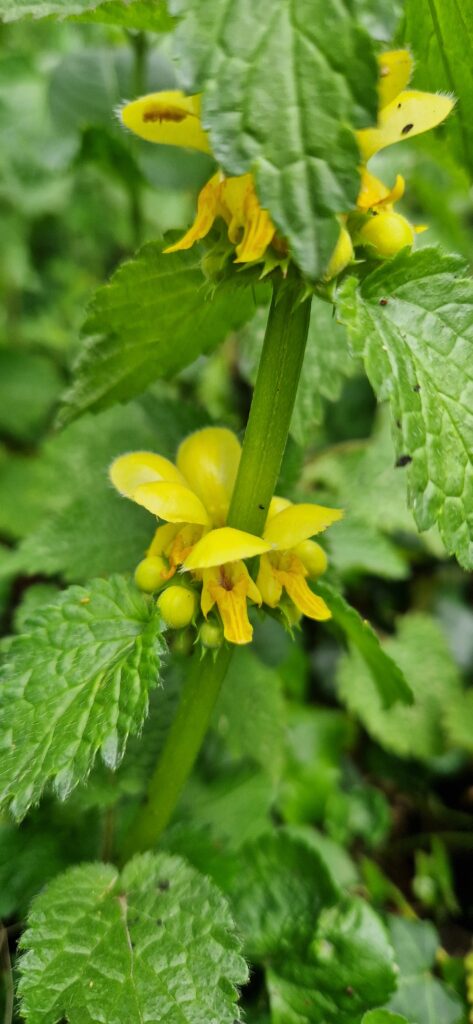
Yellow Deadnettle (Lamium galeobdolon), also known as Golden Archangel, is a striking and underrated wild plant from the mint family. With its bright yellow flowers and variegated leaves, it brightens up woodlands in spring — and offers both edible and medicinal uses for the observant forager.
Overview
Latin Name: Lamium galeobdolon
Common Names: Yellow Deadnettle, Golden Archangel, Yellow Archangel
Natural Habitat
Yellow Deadnettle thrives in shaded, nutrient-rich soils and is commonly found in:
- Deciduous woodlands and forest edges
- Hedgerows and shaded field margins
- Parks, gardens, and churchyards
It prefers damp but well-drained ground and often forms dense ground cover, especially in ancient woodland.
Identification
Leaves:
Heart-shaped and toothed like stinging nettle, but soft and stingless. Often variegated with silvery patterns on the upper surface. Arranged opposite on square stems.
Flowers:
Bright golden-yellow flowers with a hooded upper lip and speckled lower lip. They grow in whorls at the upper leaf joints from April to June.
Stem:
Square and slightly hairy — a typical trait of plants in the mint family (Lamiaceae).
Height:
Generally grows 30–60cm tall and spreads vigorously via underground runners.
Edibility and Medicinal Uses
While not widely used today, Yellow Deadnettle has a gentle history of culinary and folk medicinal use, much like its white-flowered cousin.
Culinary Benefits
Flowers:
- Edible and sweet, containing nectar enjoyed by bees and foragers
- Can be eaten raw or used to decorate salads and desserts
- Add a subtle floral sweetness to herbal teas
Young Leaves:
- Can be cooked as a mild green when young
- Best blanched or steamed to reduce bitterness
- Traditionally used in spring soups or wild pestos
Medicinal Benefits
In traditional herbal medicine, Yellow Deadnettle has been used for:
- Soothing inflamed skin – crushed leaves used as a poultice
- Mild astringent effects – useful in cases of diarrhoea or skin eruptions
- Spring tonic – considered a cleansing herb for gentle seasonal detoxification
Like other deadnettles, it is not strongly medicinal, but can be useful in simple home remedies.
Preparation and Uses
Tea:
Infuse a few fresh or dried flowers and young leaves in hot water for 5–10 minutes. The flavour is mild and grassy with a hint of honeyed sweetness.
Cooked Greens:
Harvest young leaves in early spring, cook lightly, and use as you would spinach or nettle — in soups, omelettes, or with grains.
Poultice:
Mash fresh leaves and apply to minor rashes, stings, or cuts.
Foraging Tips
Best Harvesting Season:
- Flowers: April to June
- Leaves: March to May, before flowering or shortly after
Sustainability:
- Only take a small amount from dense patches
- Avoid ornamental or garden cultivars, which may be less palatable
- Be mindful not to disturb ground cover in sensitive woodland habitats
Pro Tip:
This plant spreads via runners — if you find a patch, you’ll likely have plenty. Take leaves from new growth and flowers just as they open for best flavour.
Folklore & History
Yellow Deadnettle’s alternate name, Golden Archangel, reflects both its bright appearance and its reputation as a protector and purifier in old European folklore. It was once planted near homes and monasteries to ward off evil and bring peace, and was believed to bloom on May Day as a sign of renewal.
Its presence in ancient woodland is sometimes used as an indicator of long-established natural areas.
Safety Precautions
- Safe and mild: Suitable for beginners.
- Misidentification: Be sure not to confuse it with Yellow Nettle (Urtica species), which does sting. Yellow Deadnettle has no sting and a gentler texture.
Conclusion
Yellow Deadnettle is a cheerful and gentle springtime plant, offering subtle flavours, mild herbal benefits, and a splash of golden beauty to the woodland floor. It’s easy to identify, sting-free, and one of the first floral offerings of spring for both foragers and pollinators alike.on and well-being.
Want to learn more about foraging and medicinal plants? Join our foraging courses in Charnwood, Leicestershire.