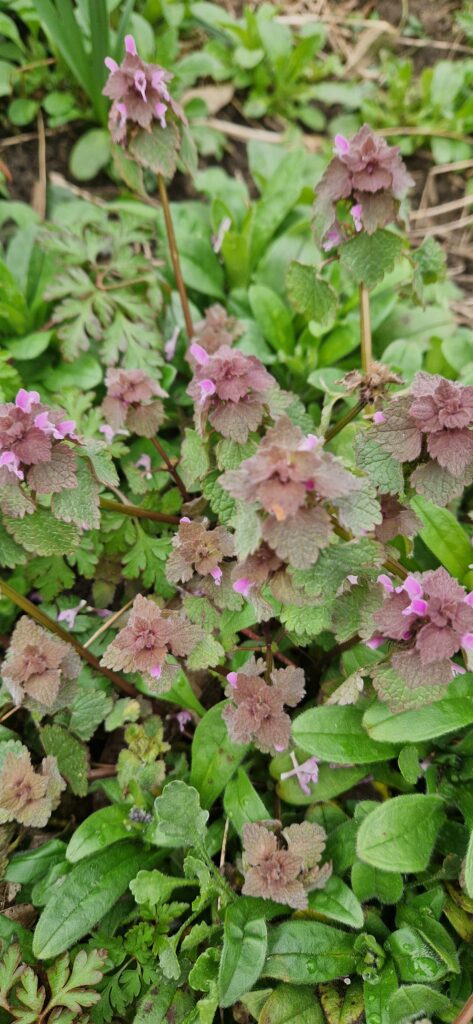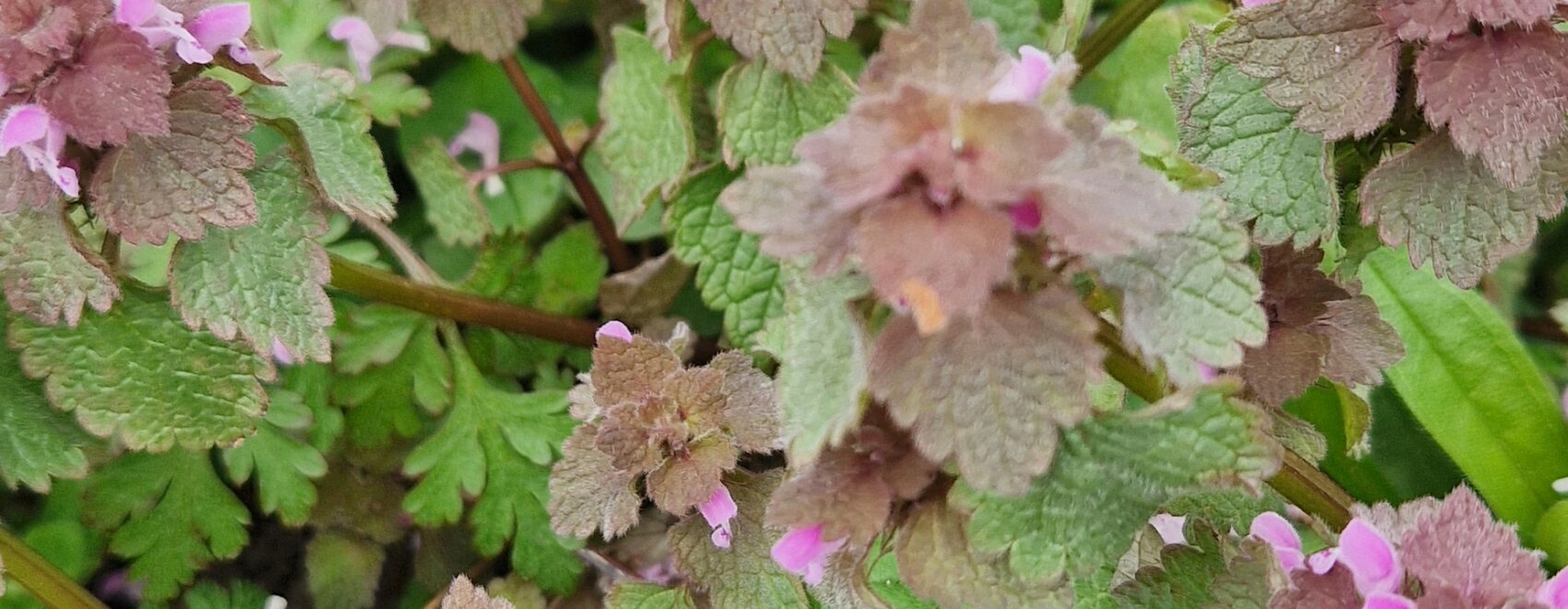
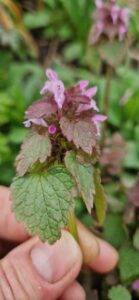
Red Dead Nettle (Lamium purpureum), a member of the mint family, is a common wild edible plant found across the UK. Despite its name, it is unrelated to true nettles and lacks their characteristic sting. This resilient plant thrives in a variety of environments and is valued for its mild, earthy flavor and medicinal benefits.
Overview
Latin Name: Lamium purpureum
Common Names: Red Dead Nettle, Purple Dead Nettle, Purple Archangel
Natural Habitat
Red Dead Nettle is a hardy plant that flourishes in disturbed soils and waste grounds. It is commonly found in:
- Hedgerows and field margins
- Gardens and allotments
- Roadsides and meadows
- Woodland edges and damp pastures
It prefers well-drained soil and grows in both full sun and partial shade. Due to its adaptability, it often appears in early spring, providing one of the first nectar sources for pollinators.
Identification
Leaves
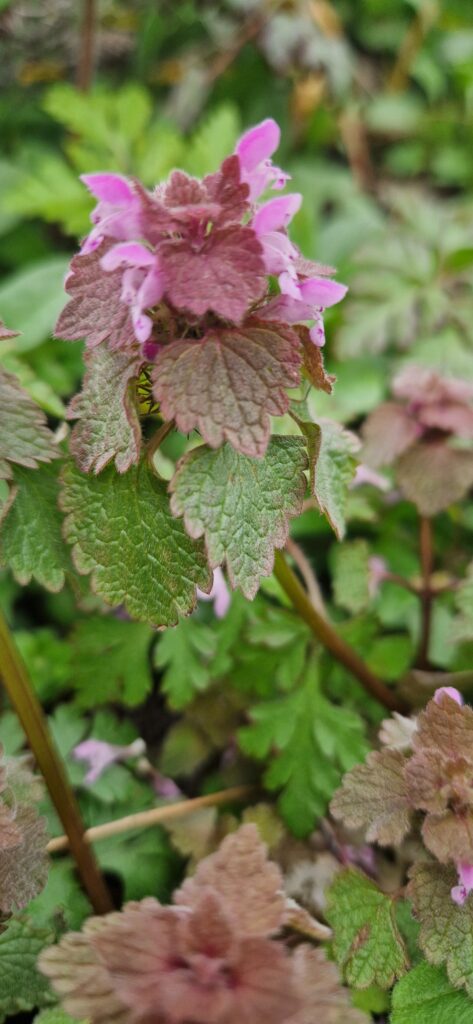
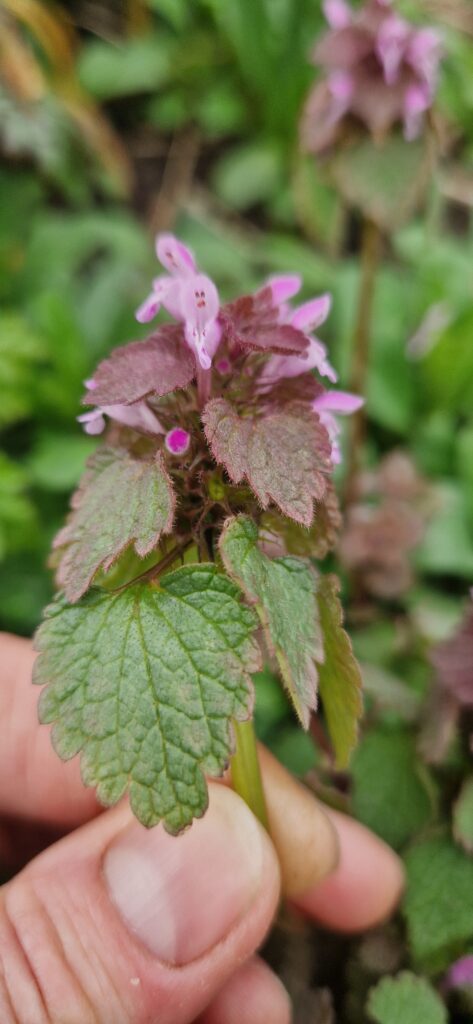
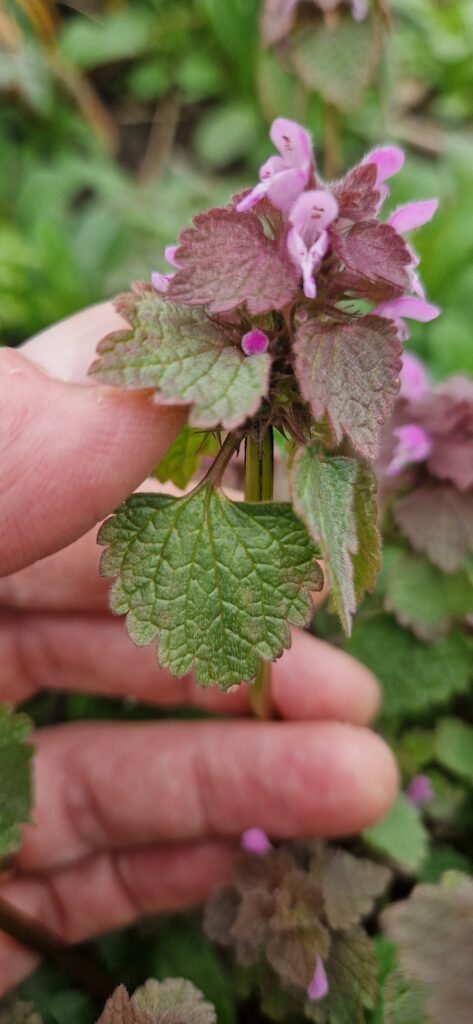
- Heart-shaped to triangular with serrated edges
- Soft, hairy texture
- Purplish tinge on upper leaves, especially in cooler weather
- Opposite leaf arrangement along the stem
Flowers
- Small, tubular, and pinkish-purple in color
- Arranged in whorls around the upper stem
- Bloom from early spring to late autumn
- Rich in nectar, attracting bees and other pollinators
Stems
- Square-shaped, typical of the mint family
- Soft and slightly hairy
- Can grow up to 30 cm tall
Edibility and Culinary Uses
Red Dead Nettle is a nutritious wild green with a mild, slightly sweet, and earthy flavor. Both the leaves and flowers are edible and can be used in various culinary applications.
Common Uses
- Salads: Add fresh young leaves for a mild, nutritious boost.
- Soups and Stews: Use as a leafy green in broths and stews.
- Pesto: Blend with garlic, nuts, and olive oil for a wild green pesto.
- Teas: Steep the leaves and flowers for a mild, soothing herbal tea.
- Smoothies: Mix with other greens for an added nutritional boost.
Recipe Ideas
Nutritional Value & Health Benefits
Nutritional Content
- High in vitamins A and C, supporting immune health
- Rich in iron, magnesium, and calcium, essential for overall well-being
- Contains antioxidants that help combat oxidative stress
Medicinal Benefits
- Anti-inflammatory: Traditionally used to help with minor aches and pains.
- Supports Digestion: May aid in soothing digestive discomfort.
- Wound Healing: Used in herbal poultices for minor cuts and scrapes.
- Detoxifying Properties: Believed to support the body’s natural detoxification processes.
Foraging Tips
Red Dead Nettle is an easily identifiable plant that appears early in the foraging season. When gathering, consider the following:
- Best Harvesting Season: Early spring through autumn.
- Sustainability: Harvest only what you need and leave plenty for pollinators.
- Location Considerations: Avoid areas near roadsides or chemically treated fields.
Pro Tip:
The younger leaves are the most tender and flavorful, making them ideal for raw consumption.
Folklore & History
Red Dead Nettle has a long history of use in traditional medicine. It was often associated with protection and healing. Some folklore suggests that carrying a sprig of the plant could ward off negativity and bad luck. Its early flowering habit has also made it a symbol of renewal and the coming of spring.
Safety Precautions
- Allergic Reactions: Rare but possible—try a small amount first.
- Proper Identification: Ensure correct identification, as it resembles some other members of the mint family.
- Medicinal Use: While it has health benefits, always consult a healthcare professional before using it medicinally, especially if pregnant or on medication.
Conclusion
Red Dead Nettle (Lamium purpureum) is an underrated wild edible that offers both nutritional and medicinal benefits. With its early spring appearance and mild, pleasant flavor, it is a fantastic plant for beginner foragers to explore. Whether used in salads, teas, or as a healing herb, this common wild green is a valuable addition to any forager’s repertoire. for relaxation and well-being.
Want to learn more about foraging and medicinal plants? Join our foraging courses in Charnwood, Leicestershire.