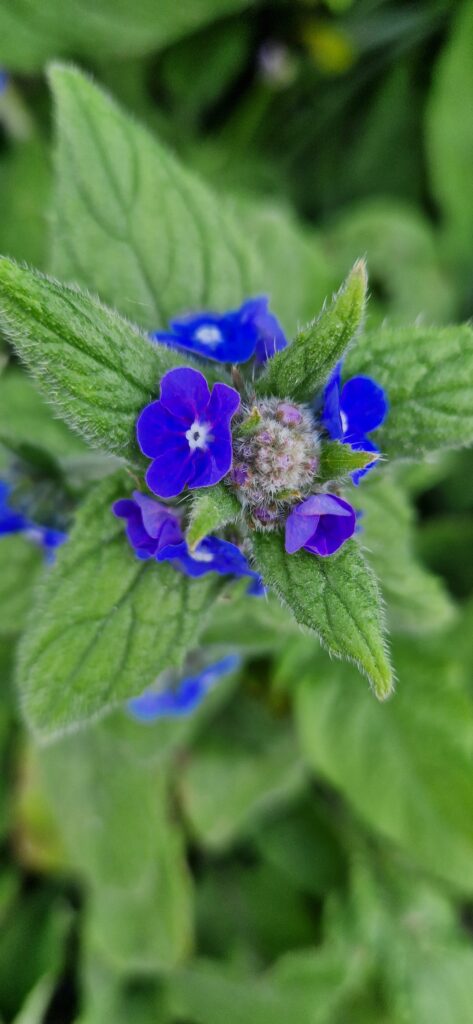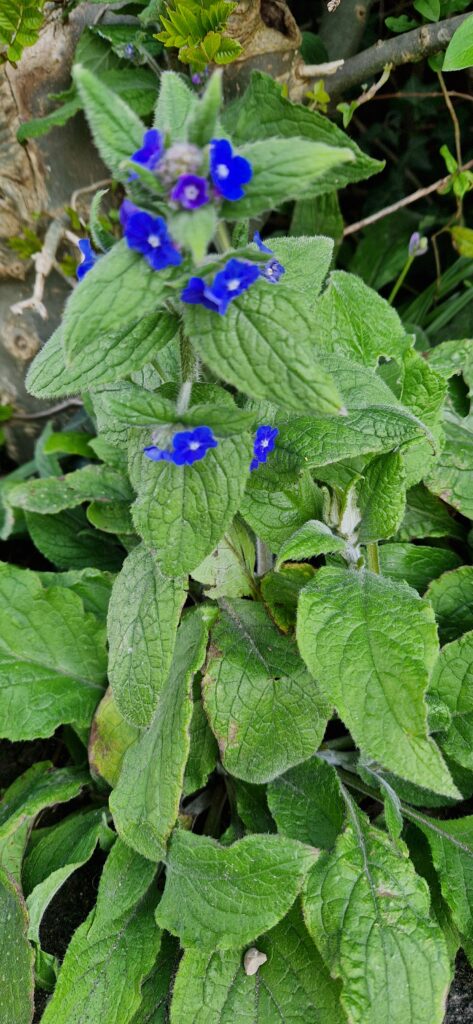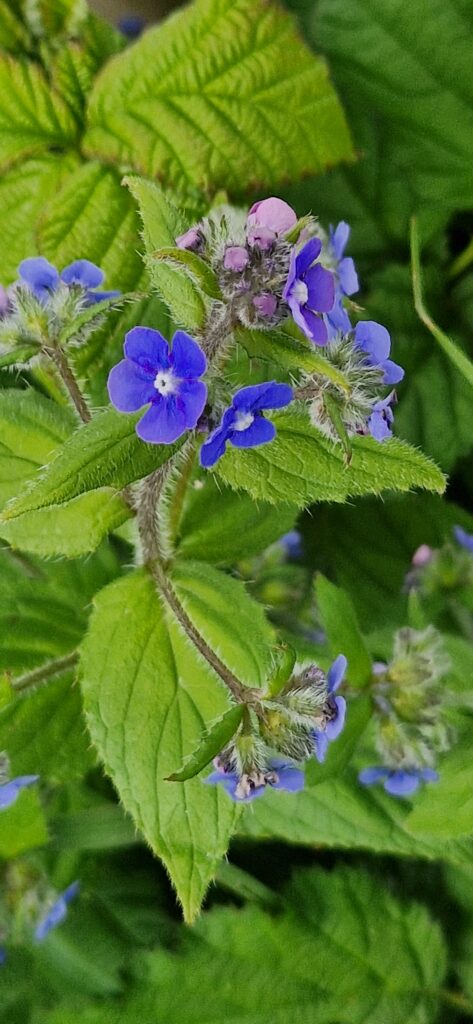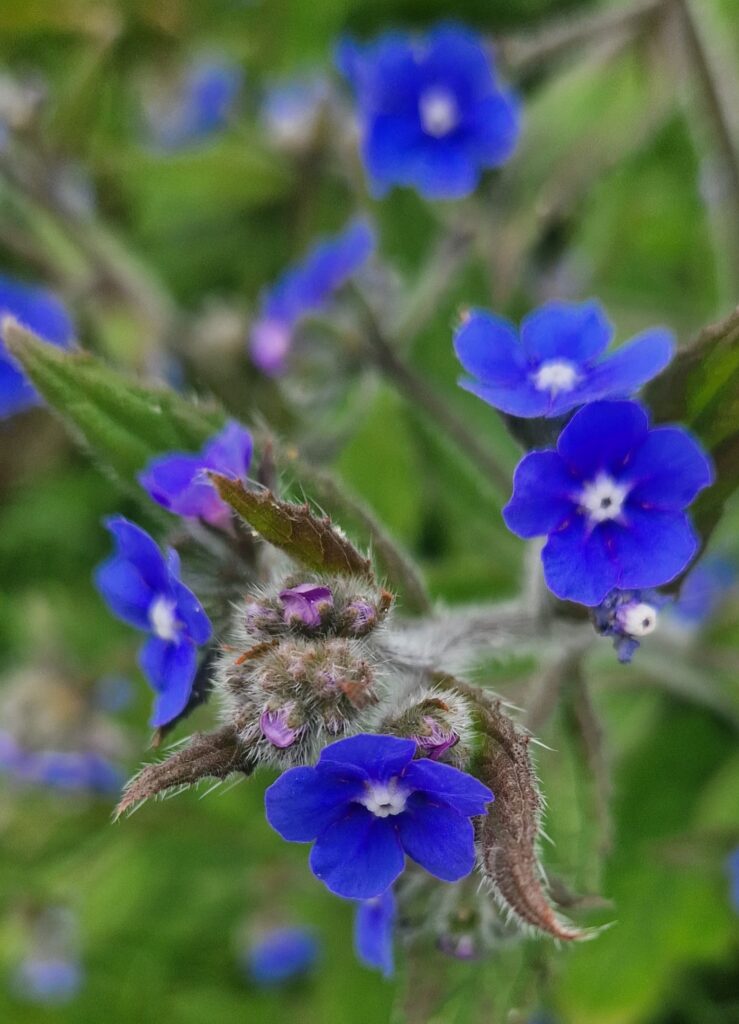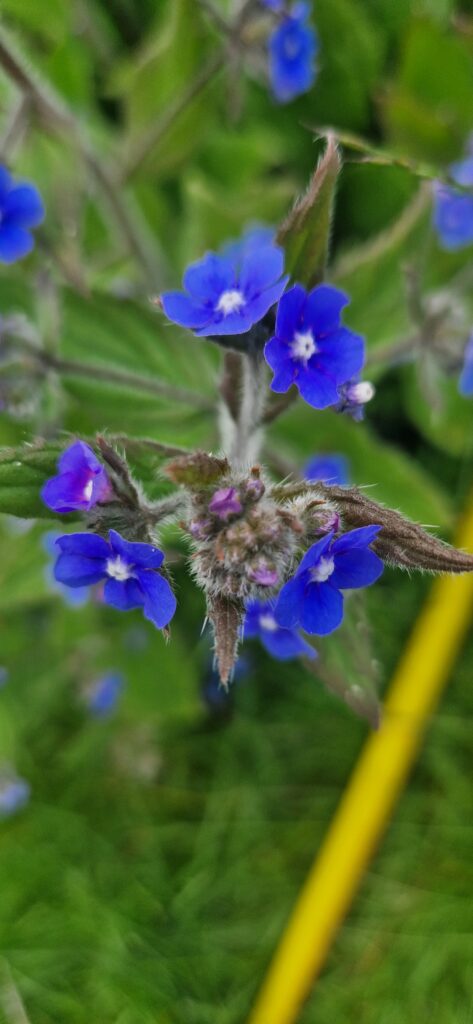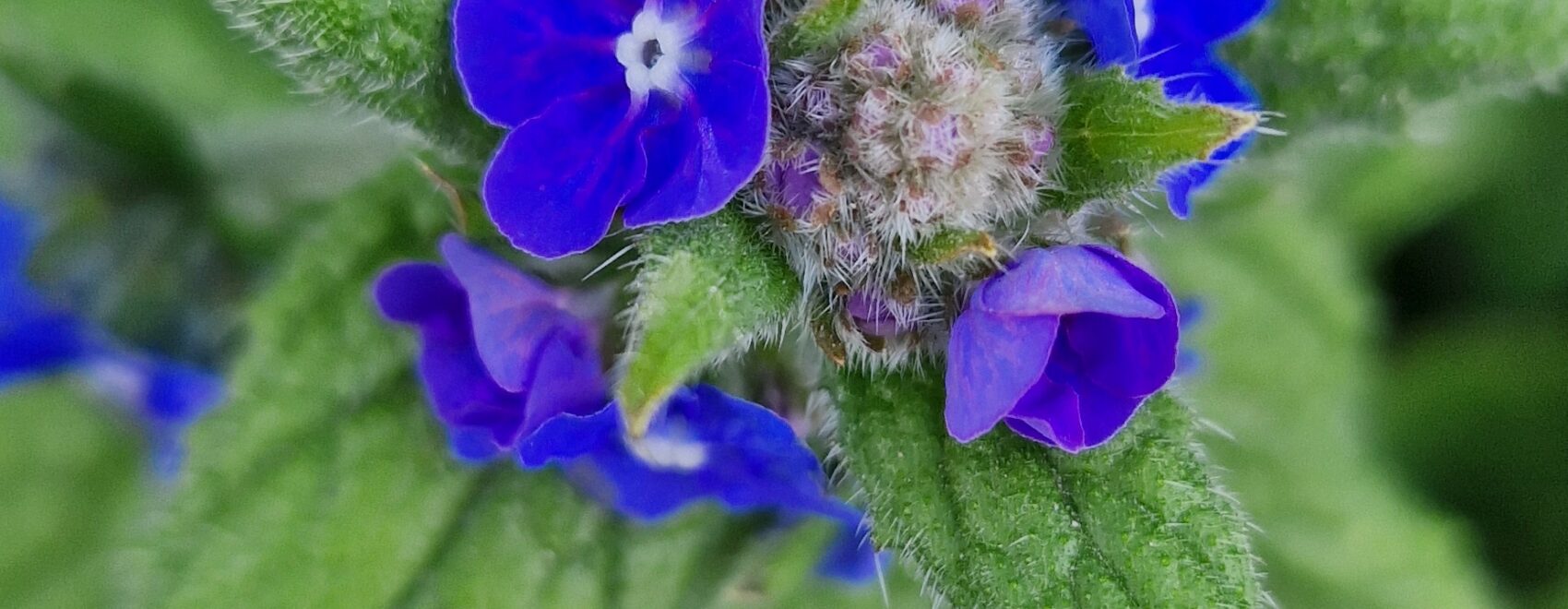
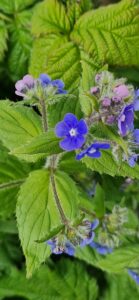
Green Alkanet (Pentaglottis sempervirens) is a rugged, perennial herb often found in woodland areas and along roadsides. Known for its striking blue flowers, this plant has a lesser-known yet valuable edible component in its young leaves. Green Alkanet has long been used in traditional herbal remedies, and with proper preparation, it can also be incorporated into a variety of dishes.
Overview
Latin Name: Pentaglottis sempervirens
Common Names: Green Alkanet, Evergreen Alkanet
Natural Habitat
Green Alkanet thrives in damp, shaded environments and is commonly found in:
- Woodland clearings and edges
- Roadsides and disturbed areas
- Hedge banks and stream banks
It prefers moist, fertile soils, often growing in the wild alongside other woodland herbs and plants.
Identification
Leaves
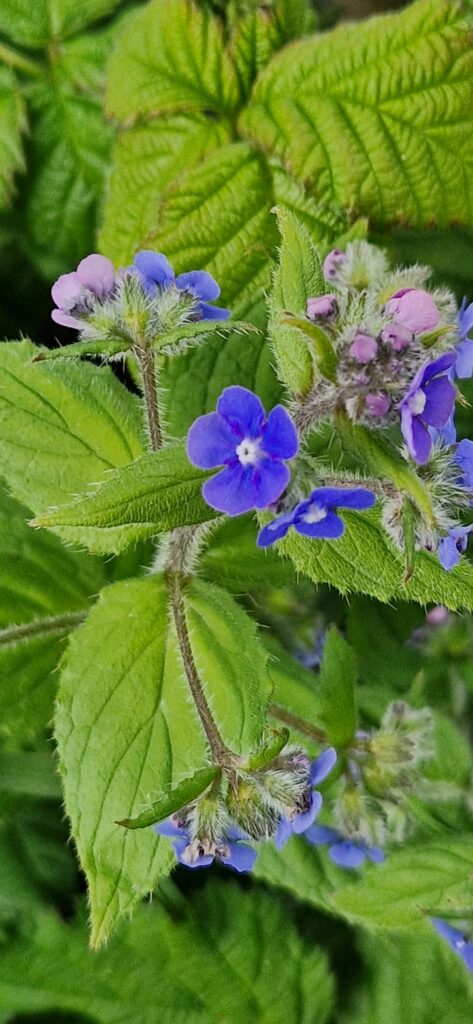
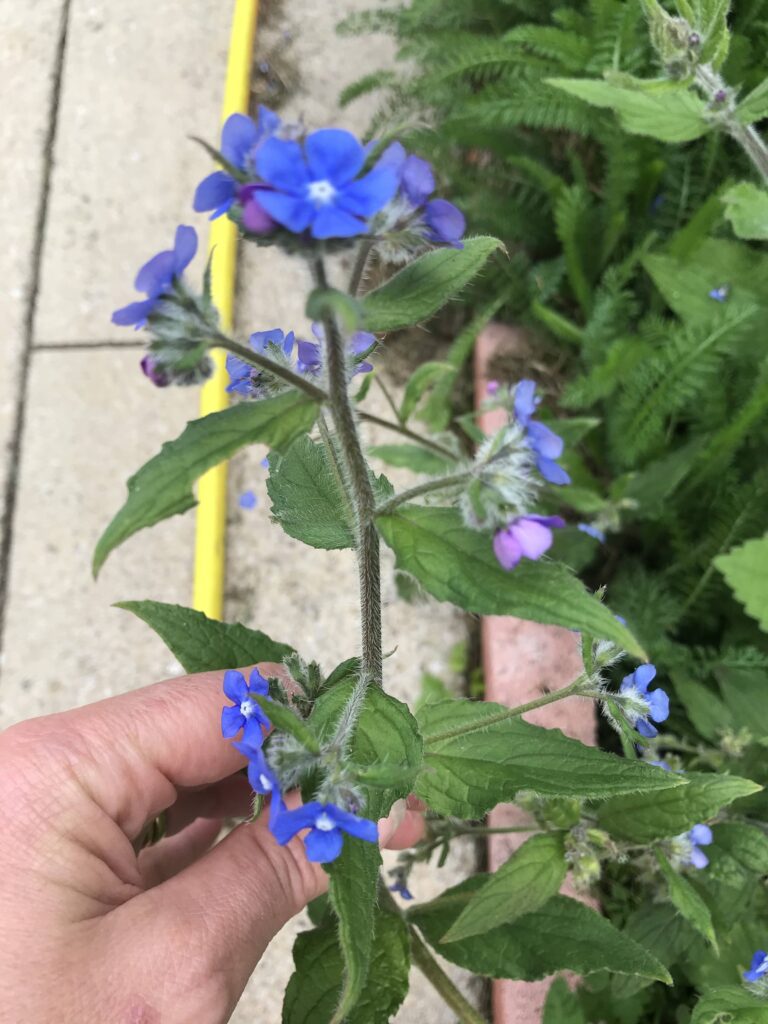
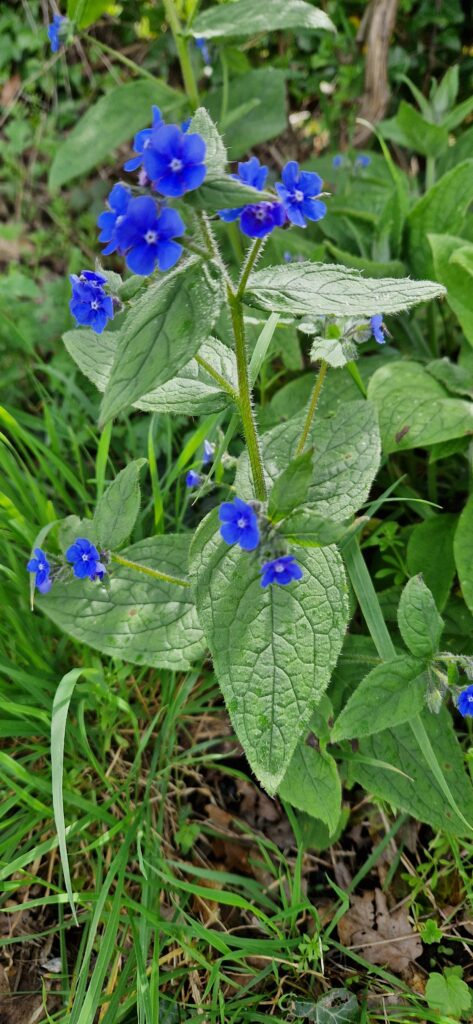
- Rough, dark green leaves, heart-shaped or ovate, with serrated edges.
- Covered in fine hairs, giving them a coarse texture.
- Leaves form in rosettes at the base of the plant before the flowering stems emerge.
Flowers
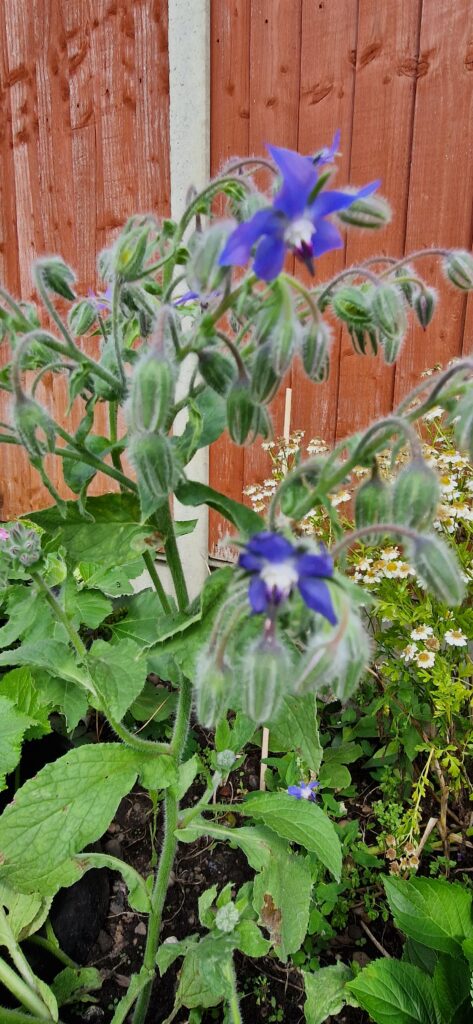
- Bright blue, star-shaped flowers that grow in loose clusters.
- Blooms in early to mid-spring, often lasting into summer.
Stems
- Tall, upright, and bristly, often reaching up to 1 meter in height.
- The stems may be slightly purplish, particularly near the base.
Edibility and Culinary Uses
While Green Alkanet is not as widely known as other wild edibles, its young leaves can be a nutritious and flavorful addition to various dishes. However, it’s important to cook the leaves before consuming, as they contain pyrrolizidine alkaloids that can be harmful in large quantities if eaten raw. Flowers are also edible but tasteless so only good for decoration.
Common Uses
- Cooked Greens: Boil or sauté young leaves and use them as you would spinach or other leafy greens.
- Soups and Stews: Add to broths and stews for a unique herbal flavor.
- Pesto: Blend cooked leaves into a wild herb pesto.
- Frittatas: Incorporate cooked Green Alkanet leaves into egg-based dishes.
Recipe Ideas
- Green Alkanet Leaf Soup with Garlic and Cream
- Wild Herb Pesto with Green Alkanet
- Sautéed Green Alkanet Leaves with Lemon and Olive Oil
- Wild Greens Frittata with Green Alkanet
Nutritional Value & Health Benefits
Nutritional Content
- Rich in vitamins A and C.
- A source of fiber, which promotes digestive health.
Medicinal Benefits
- Anti-inflammatory: Traditionally used in herbal medicine to ease inflammation.
- Liver Support: The plant has been used in traditional medicine for its liver-supporting properties, though care must be taken due to the alkaloids.
- Skin Healing: Historically used in poultices for healing wounds and skin irritations.
Foraging Tips
- Best Harvesting Season: Spring to early summer, when the young leaves are most tender.
- Sustainability: Harvest leaves sparingly, as this plant can be slow to regenerate.
- Pro Tip: Always cook the leaves before consumption to neutralize any potential toxins.
Folklore & History
Green Alkanet has been historically used for both medicinal and cosmetic purposes. Its roots were once used to create a blue dye, and the plant was believed to have magical properties in some cultures. While it has fallen out of widespread use today, it remains an important part of traditional herbal practices.
Safety Precautions
- Cooking Required: Always cook the leaves to reduce the risk of harmful effects from pyrrolizidine alkaloids.
- Moderation: Due to the presence of alkaloids, consume in moderation.
- Identification: Ensure correct identification, as some plants can resemble Green Alkanet but may not be edible.
Conclusion
Green Alkanet is a wild plant with a rich history and a surprising culinary use. By carefully preparing the young leaves, foragers can enjoy this hardy herb in a variety of dishes, gaining its health benefits and unique flavor.
Interested in learning more about wild edible plants? Join our foraging courses in Charnwood, Leicestershire.