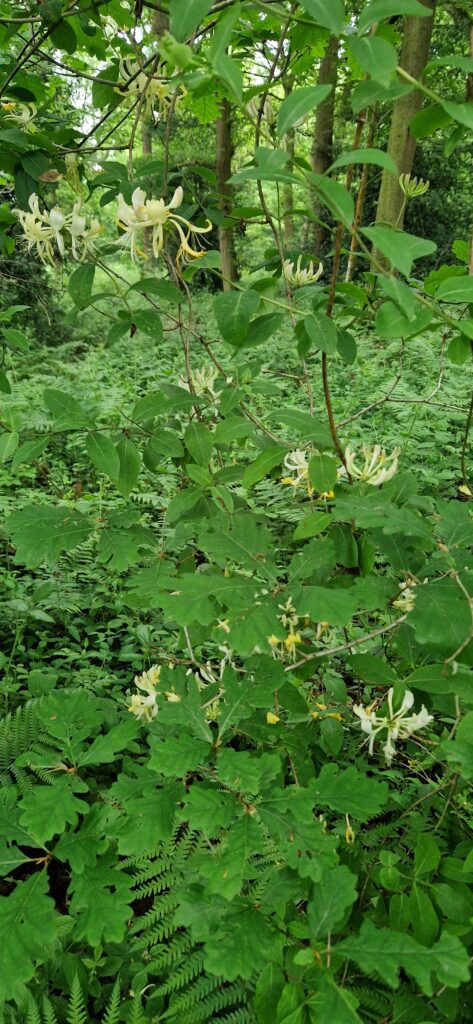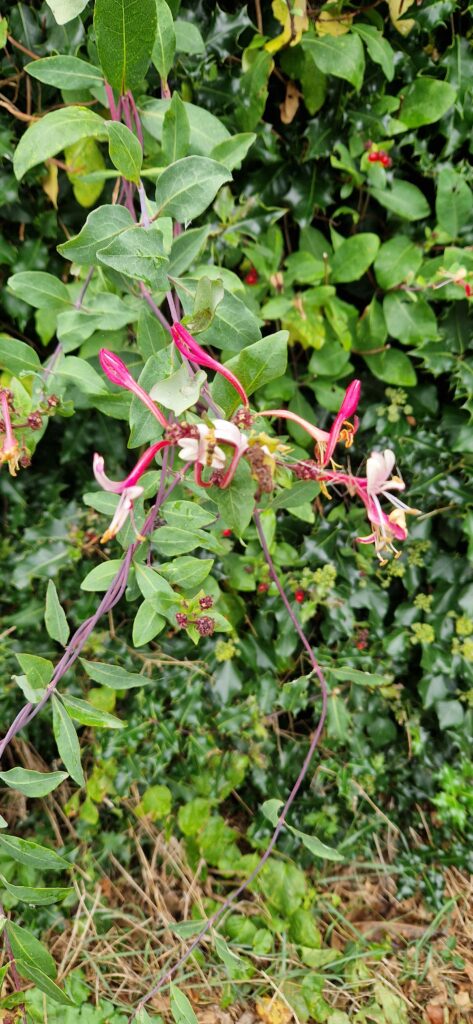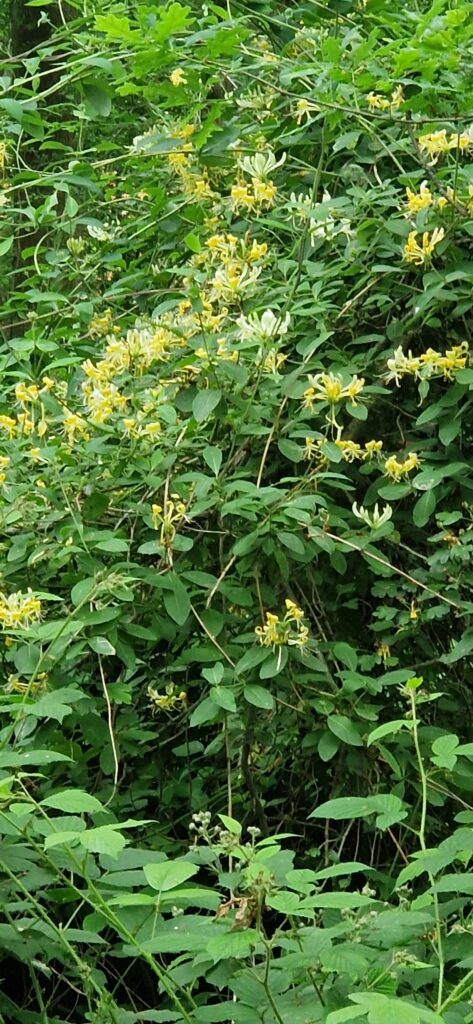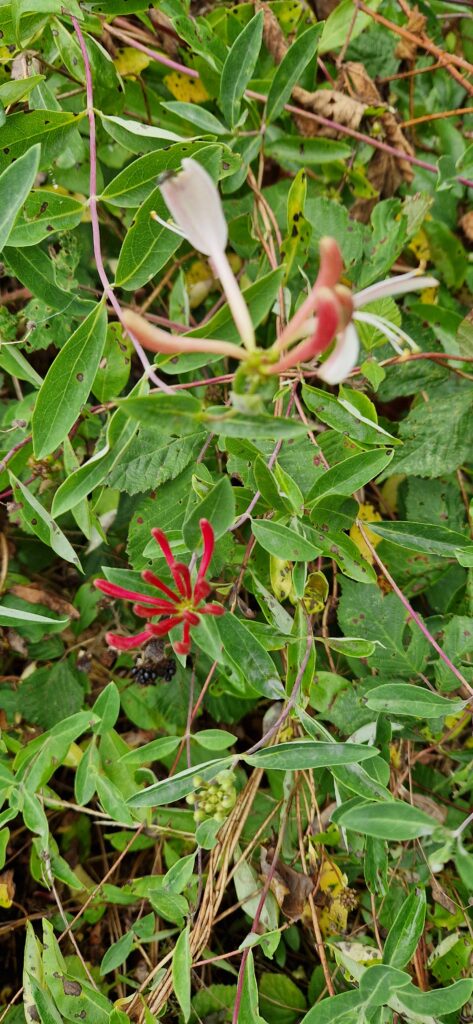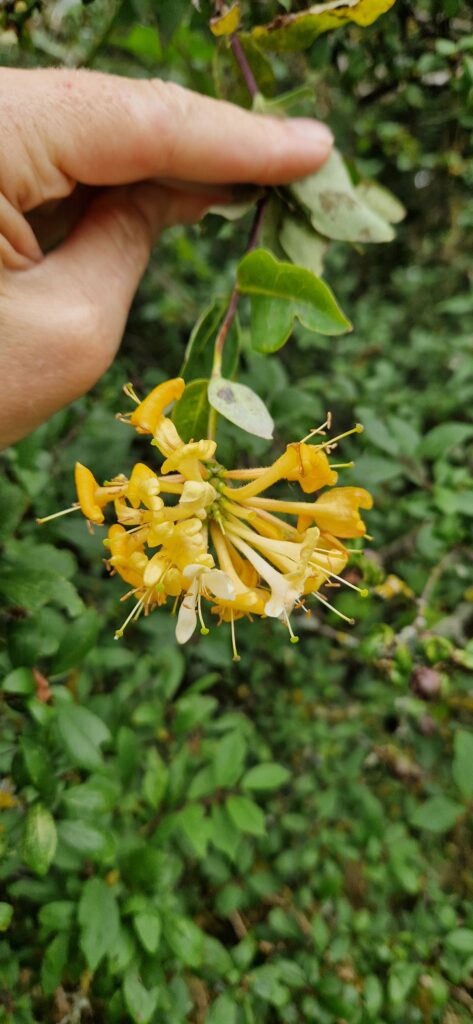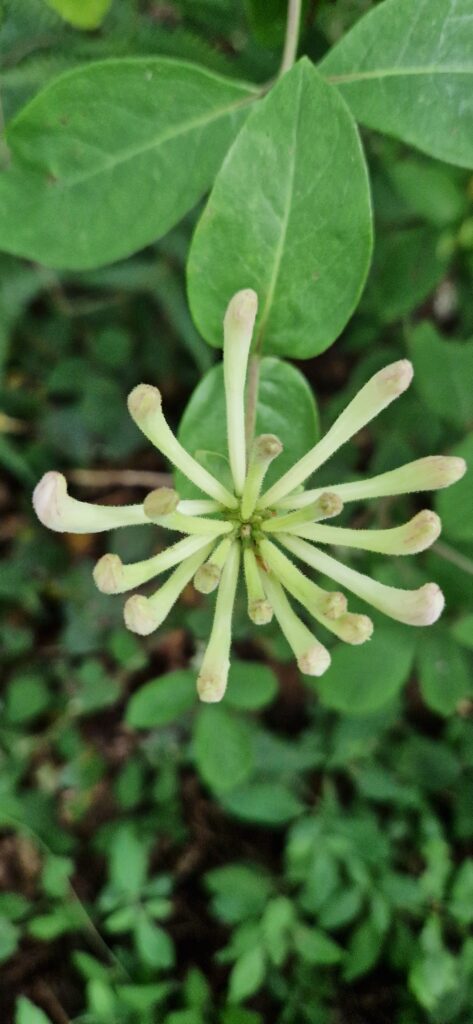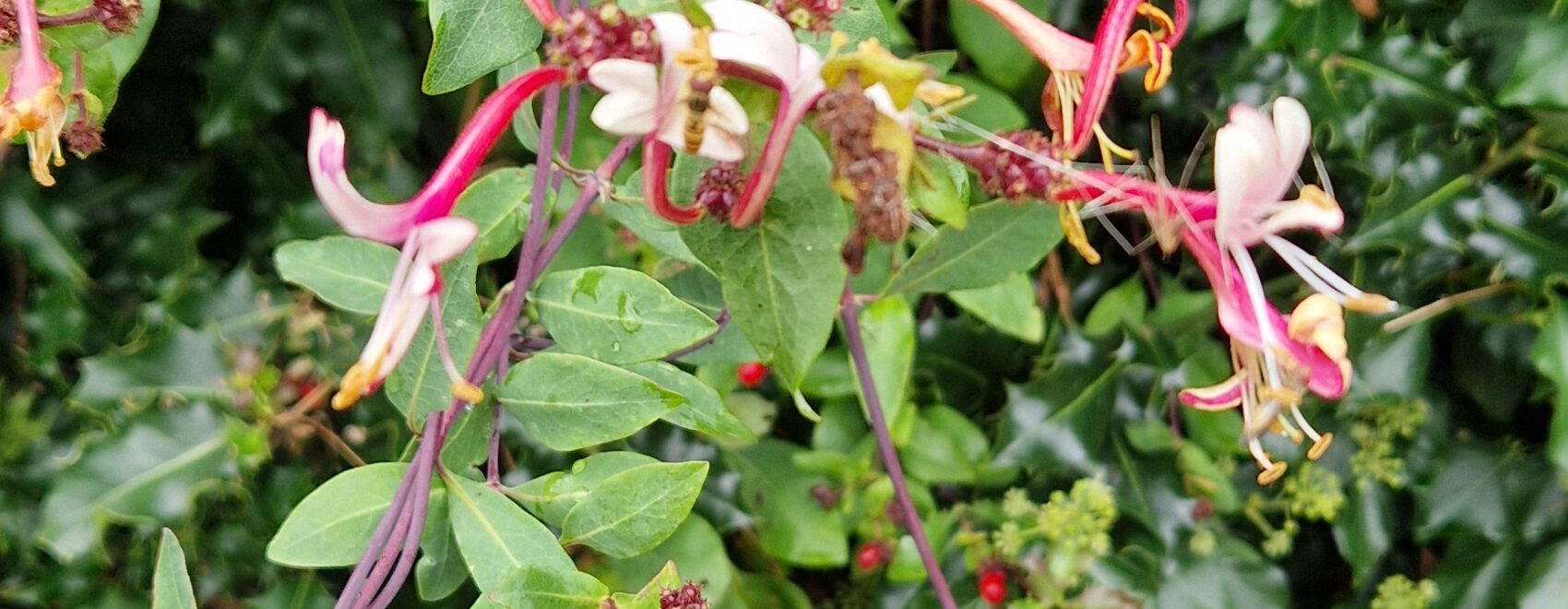
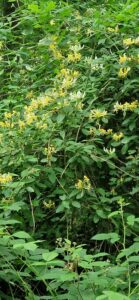
Common Honeysuckle (Lonicera periclymenum) is a fragrant, climbing plant renowned for its beautiful, tubular flowers and sweet scent. Often found growing in hedgerows, woodlands, and gardens, this native plant is a favorite for both wildlife and foragers. Its edible flowers and berries make it a versatile plant in both culinary and herbal uses.
Overview
Latin Name: Lonicera periclymenum
Common Names: Common Honeysuckle, Woodbine, English Honeysuckle
Family: Caprifoliaceae (Honeysuckle family)
Natural Habitat
Common Honeysuckle thrives in:
- Hedgerows, woodlands, and forest edges
- Scrubby areas and countryside gardens
- Climbs over shrubs and trees, often seen twining up fences or trellises
It prefers well-drained, moderately fertile soils and grows in full sun to partial shade. Native to the UK and much of Europe, it’s commonly found in both rural and suburban areas.
Identification Features
Leaves
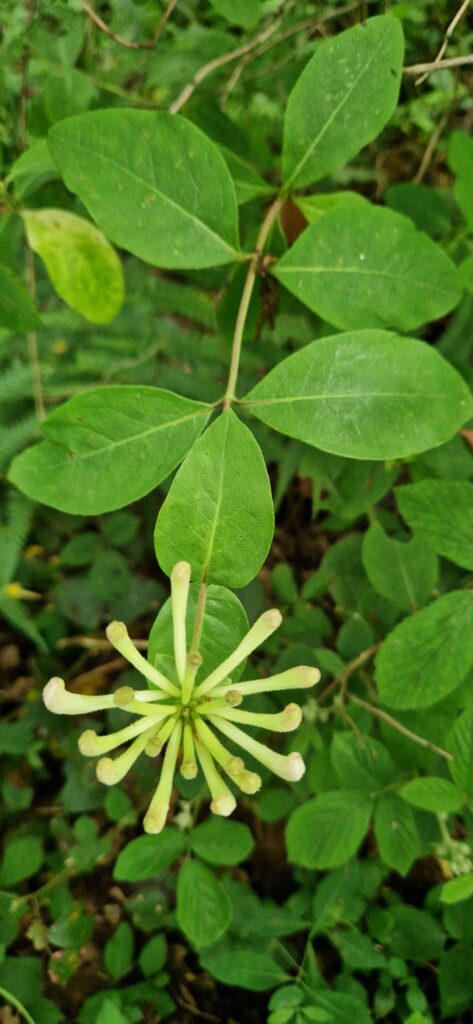
- Size: Oval to lance-shaped, around 3-7 cm long.
- Shape: Opposite, with smooth edges.
- Color: Dark green above, paler underneath.
Flowers
- Appearance: Fragrant, tubular flowers that are white to pale yellow, turning pink as they mature. They are arranged in pairs along the stems.
- Bloom Time: Late spring to early summer (May to July).
Berries
- Feature: Small, red to black berries that form after flowering. These are toxic to humans when raw but are used in traditional remedies in small quantities when cooked.
- Taste: Bitter when raw, can be consumed safely after cooking.
Height
- Can grow up to 6 meters long when climbing or spreading.
Edibility and Culinary Uses
The flowers of Common Honeysuckle are edible and can be used in a variety of culinary applications. They are sweet and fragrant, often used to flavor drinks, syrups, and desserts. However, the berries should only be consumed after cooking, as they can be toxic when raw.
Culinary Tips
- Flowers: The flowers can be eaten raw, used in syrups, or added to salads for a sweet, floral flavor. They are also perfect for making Honeysuckle Cordial.
- Berries: Harvest only when fully ripe and use in jams, jellies, or as a flavoring for sauces. Never eat them raw, as they may cause discomfort.
Recipe Ideas
- Honeysuckle Syrup
- Honeysuckle and Lemonade
- Honeysuckle Infused Honey
Nutritional Value & Health Benefits
Nutritional Content
- Rich in antioxidants, vitamins C and A, and trace minerals.
- Flowers are a good source of flavonoids, compounds known for their anti-inflammatory properties.
Medicinal Benefits
- Antioxidant & Anti-inflammatory: Used in traditional herbal remedies to soothe respiratory issues and support immune health.
- Digestive Aid: Honeysuckle is known for its mild laxative properties and can help relieve constipation when used appropriately in tea form.
- Cough Relief: The flowers are sometimes used in herbal syrups to ease coughs and colds.
Foraging Tips
Best Harvesting Season:
- Flowers: Late spring to early summer when they are in full bloom.
- Berries: Harvest in late summer (August) when the berries are ripe, but cook before consumption.
Sustainability:
- Harvest responsibly and sparingly to allow the plant to thrive. Honeysuckle is important for pollinators, so always leave enough flowers for bees and other insects.
Legal Note:
- Foraging is only permitted on private property with the owner’s permission.
Folklore & History
Common Honeysuckle has a rich history in folklore, often seen as a symbol of love and devotion. It was traditionally planted around doorways to ward off evil spirits and protect the home. In herbal medicine, it has been used for centuries to treat a range of ailments, particularly for soothing the throat and easing respiratory discomfort.
Safety Precautions
While the flowers are safe to consume in moderation, avoid eating the berries raw as they contain compounds that can be toxic. Always cook them before consumption. Additionally, as with all foraged plants, proper identification is crucial to avoid confusion with toxic species such as Deadly Nightshade (Atropa belladonna).
Conclusion
Common Honeysuckle (Lonicera periclymenum) is a versatile, fragrant, and beautiful plant that offers both aesthetic and practical benefits. With its edible flowers and uses in traditional medicine, it’s a rewarding find for any forager.
Want to learn more about identifying and using wild plants like Common Honeysuckle? Join us for a foraging course in Charnwood, Leicestershire!