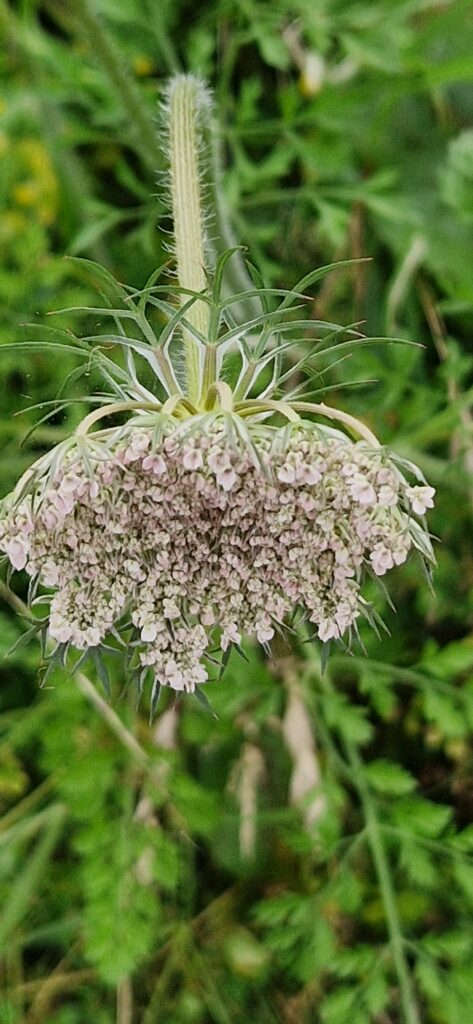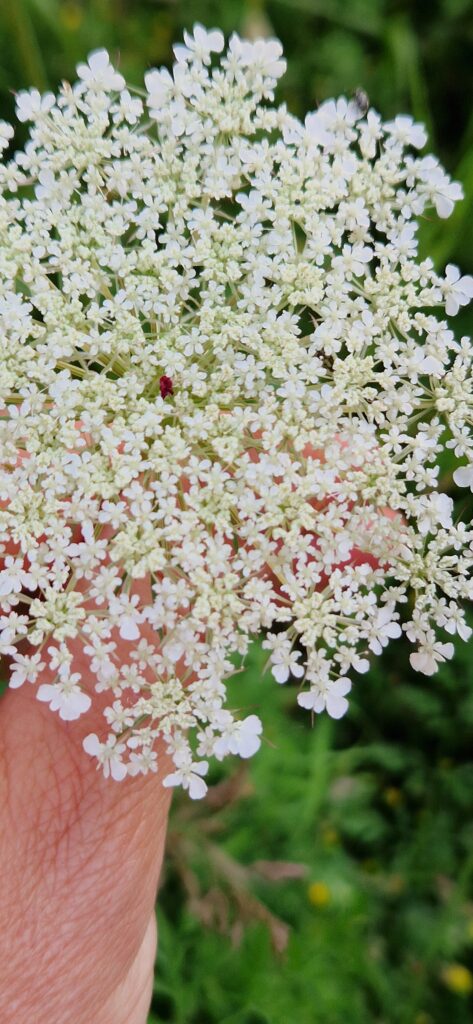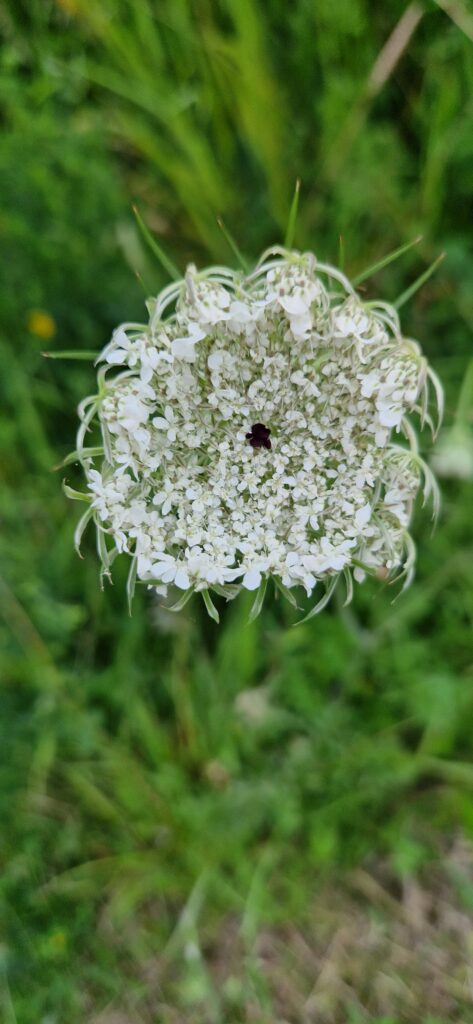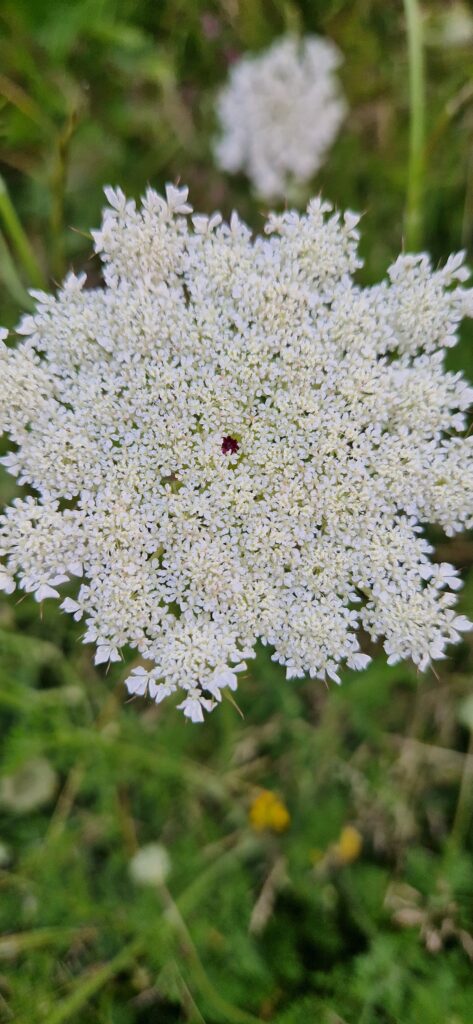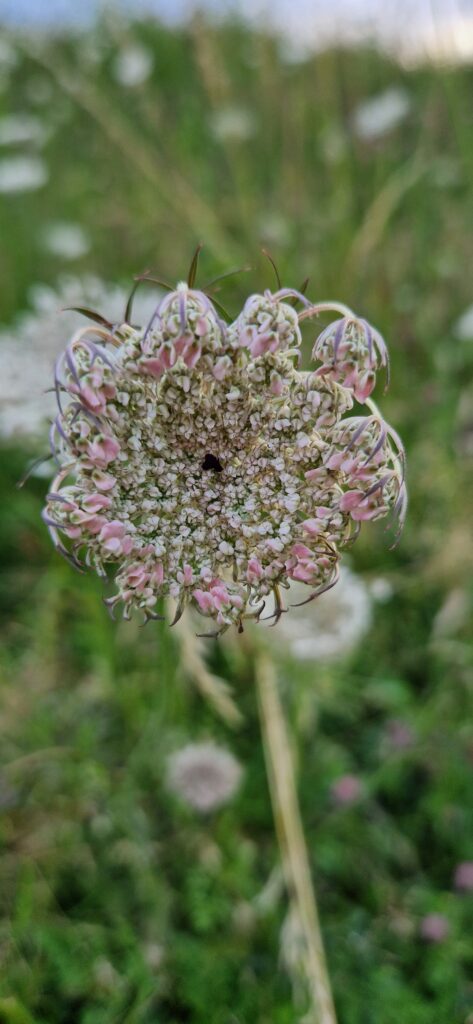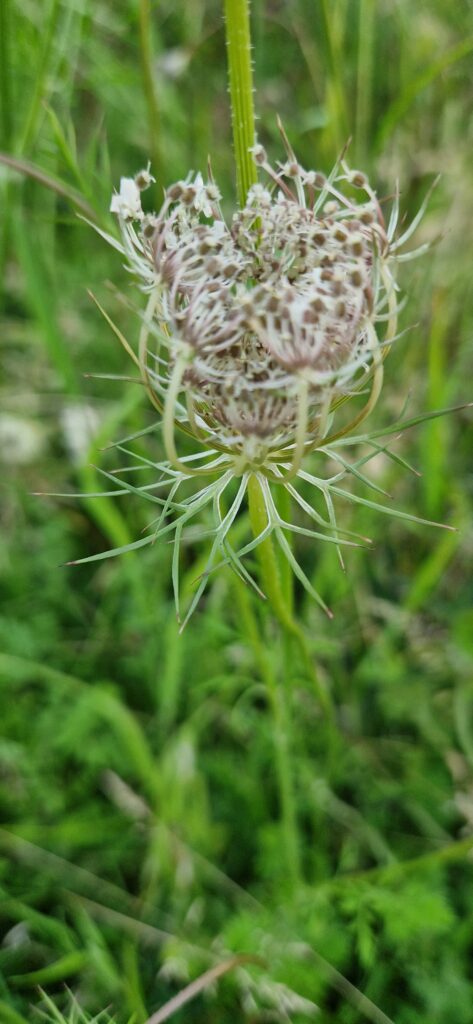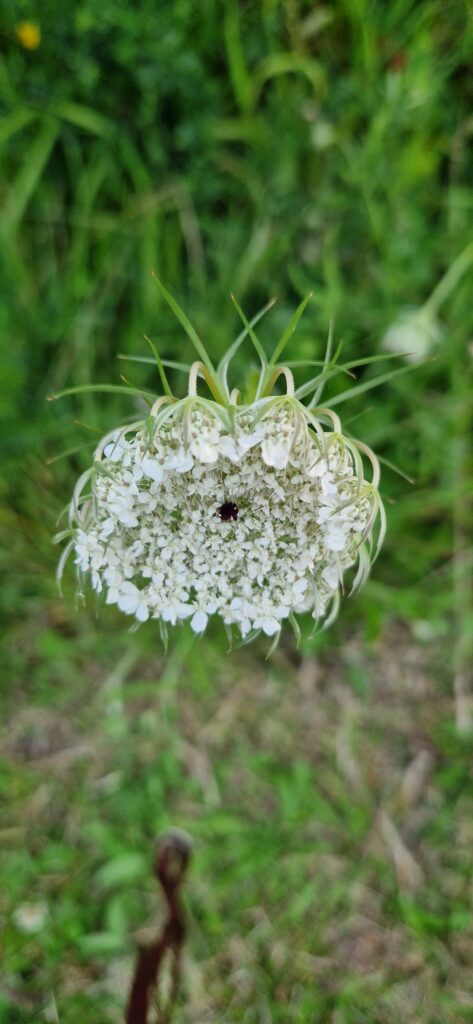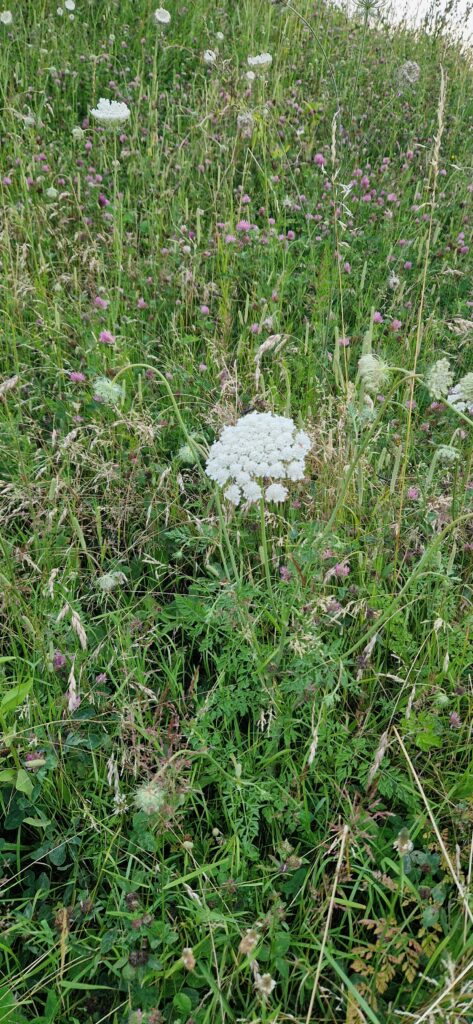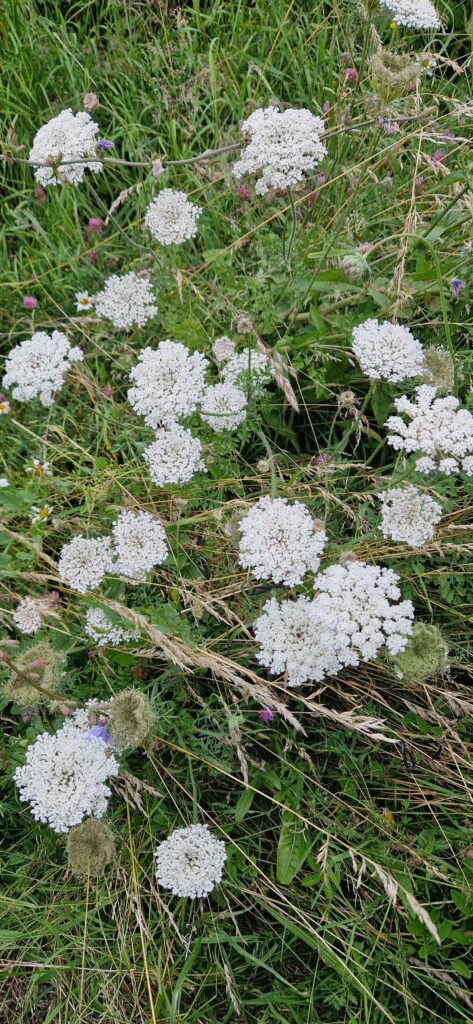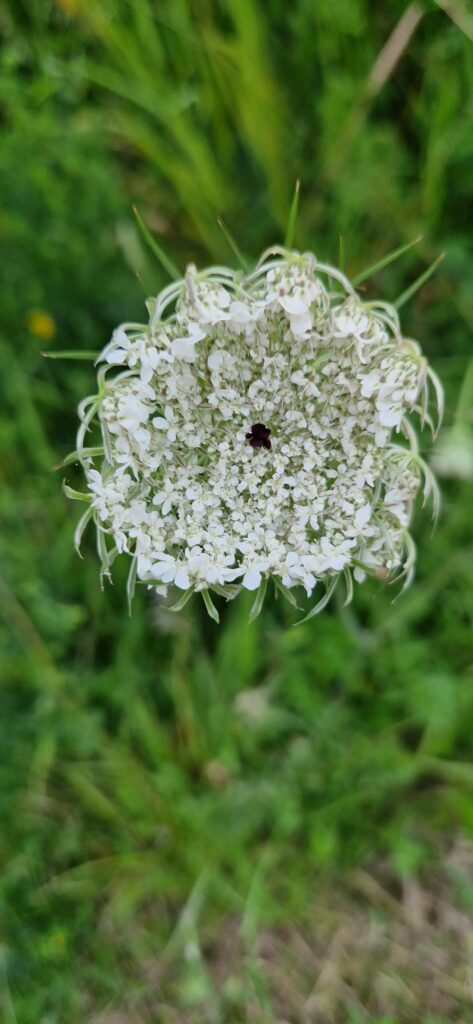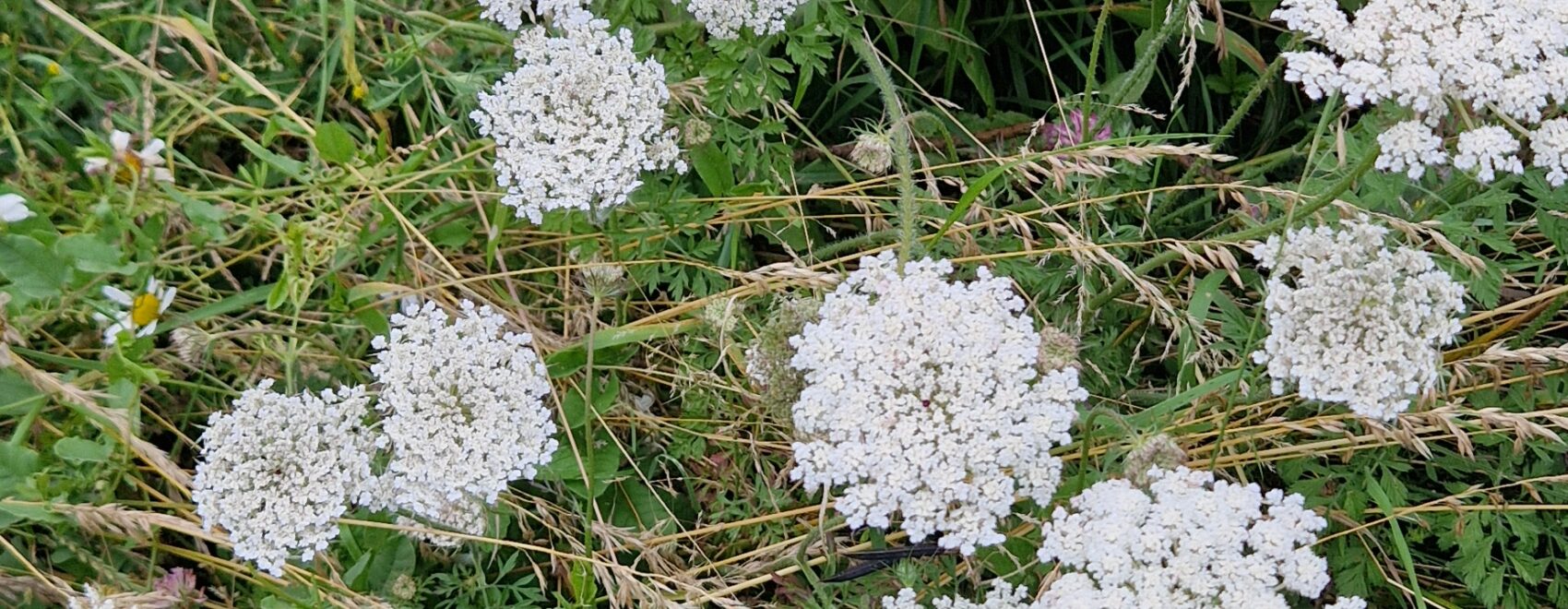
Queen Anne’s Lace, also known as Wild Carrot, is a delicate and elegant wildflower renowned for its lacy, umbrella-shaped clusters of tiny white flowers. Found in fields, meadows, and along roadsides, it’s a favorite among foragers for its culinary and medicinal potential, as well as its striking appearance.
Other names: Bird’s Nest, Bishop’s Lace, Wild Carrot.
Not sure about plant identification? Join us for the next foraging event in Charnwood, Leicestershire!
Habitat
Queen Anne’s Lace thrives in sunny, well-drained areas such as meadows, grasslands, and roadsides. It prefers nutrient-poor soils and can often be found growing in clusters, especially in disturbed ground. This plant is native to Europe and Asia but has naturalized in many parts of North America.
Identification features
Flowers: Flat, umbrella-shaped clusters (umbels) of tiny white flowers, with a single dark red or purple flower often found in the center.
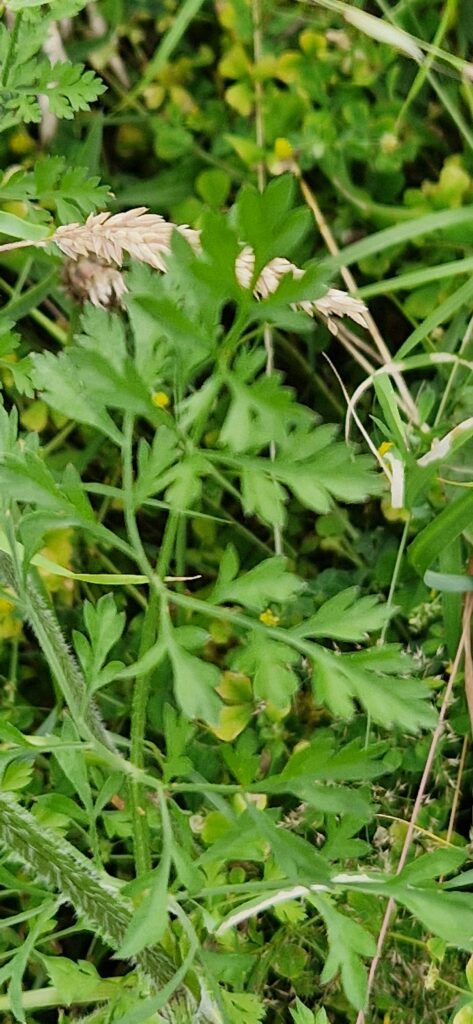
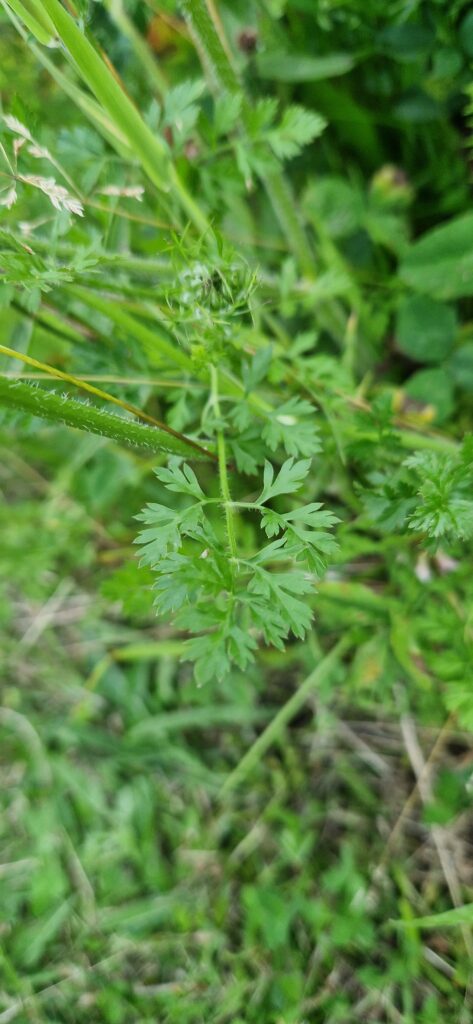
Leaves: Finely divided, feathery, and carrot-like, with a distinctive aroma when crushed.
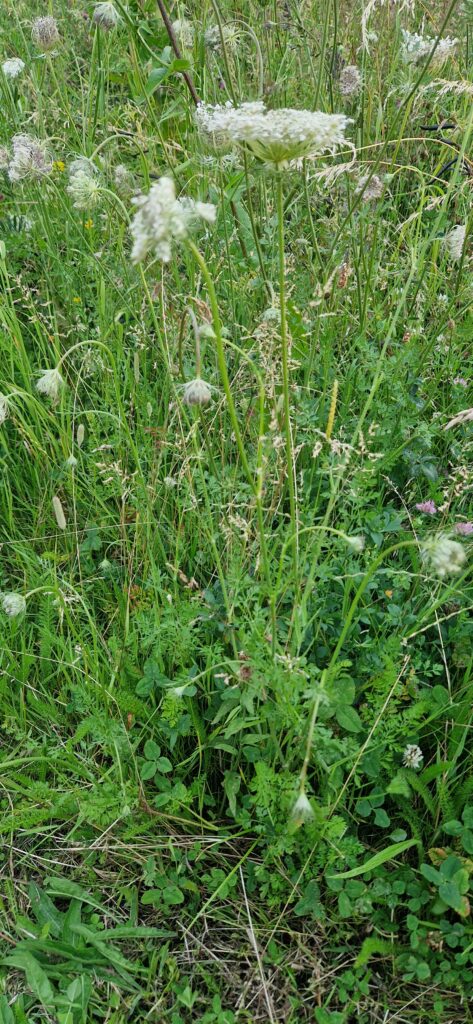
Stem: Green, slender, and covered in fine hairs.
Root: Thin, whitish, and carrot-scented, but woody and inedible in older plants.
Height: Grows between 30–120 cm tall.
Lookalikes
- Poison Hemlock (Conium maculatum): Highly toxic and similar in appearance but has smooth stems with purple blotches and no carrot scent.
- Fool’s Parsley (Aethusa cynapium): Also toxic, with shinier leaves and no distinctive carrot aroma.
Edibility
The young taproot of Queen Anne’s Lace is edible when the plant is in its first year (before flowering) and has a mild carrot flavor. The seeds are aromatic and can be used as a spice or to make teas. However, caution is necessary due to its similarity to poisonous lookalikes.
Ecological role
Queen Anne’s Lace provides nectar and pollen for a variety of pollinators, including bees, butterflies, and hoverflies. Its deep taproot helps improve soil structure and retain moisture, making it an important plant for ecosystem health.
Foraging season
The best time to harvest young roots is in late autumn or early spring, before the plant begins to flower. Seeds can be collected in late summer when the umbels curl into their characteristic bird’s nest shape.
Health warning
Extreme caution must be taken when foraging Queen Anne’s Lace due to its resemblance to deadly plants like Poison Hemlock. Proper identification is essential, and beginners should seek guidance from experienced foragers.
Explore the wonders of wild plants by joining our foraging events in Charnwood, Leicestershire! Whether you’re new to foraging or a seasoned enthusiast, our guided courses are the perfect way to discover the edible and medicinal treasures of the natural world.
Not sure about plant identification? Join us for the next foraging event in Charnwood, Leicestershire.